Opisthotonos: What Patients Need to Know

Opisthotonos is a symptom, not a diagnosis. It usually involves severe arching of the back, neck, and head due to muscle spasm.
Key Takeaways
- Opisthotonos is a symptom, not a diagnosis.
- It usually involves severe arching of the back, neck, and head due to muscle spasm.
- Possible causes include brain or nervous system problems, infections, toxins, medication reactions, and metabolic disturbances.
- Diagnosis focuses on finding the underlying cause quickly and safely.
- Treatment depends on the cause and may involve emergency care, medicines, and supportive monitoring.
- Immediate medical attention is important, especially if breathing changes, fever, seizures, or reduced responsiveness are present.
Opisthotonos is an abnormal body posture caused by strong muscle spasms, typically with the back arched and the head and neck pulled backward. It is not a disease itself, but a sign of a serious underlying problem that should be assessed promptly by a doctor.
Overview: what opisthotonos means
Opisthotonos is a distinctive abnormal posture caused by powerful muscle contractions. A person’s back may arch strongly, while the head and neck are pulled backward and the body becomes stiff. This posture can happen suddenly and can be frightening to witness, but the key point is that it signals a problem affecting the brain, nerves, or muscles rather than being a condition on its own.
In clinical practice, opisthotonos is most often treated as an urgent sign that needs prompt medical assessment. It may appear in infants, children, or adults, although the possible causes can vary by age and medical history. Doctors focus first on keeping the person safe, checking breathing and consciousness, and then identifying why the spasms are happening.
Because opisthotonos can occur with serious illnesses such as severe infections, toxic exposures, seizures, or reactions to medications, it should not be ignored or managed at home without advice. Early evaluation can help reduce complications and guide treatment toward the underlying cause.
How opisthotonos looks and feels
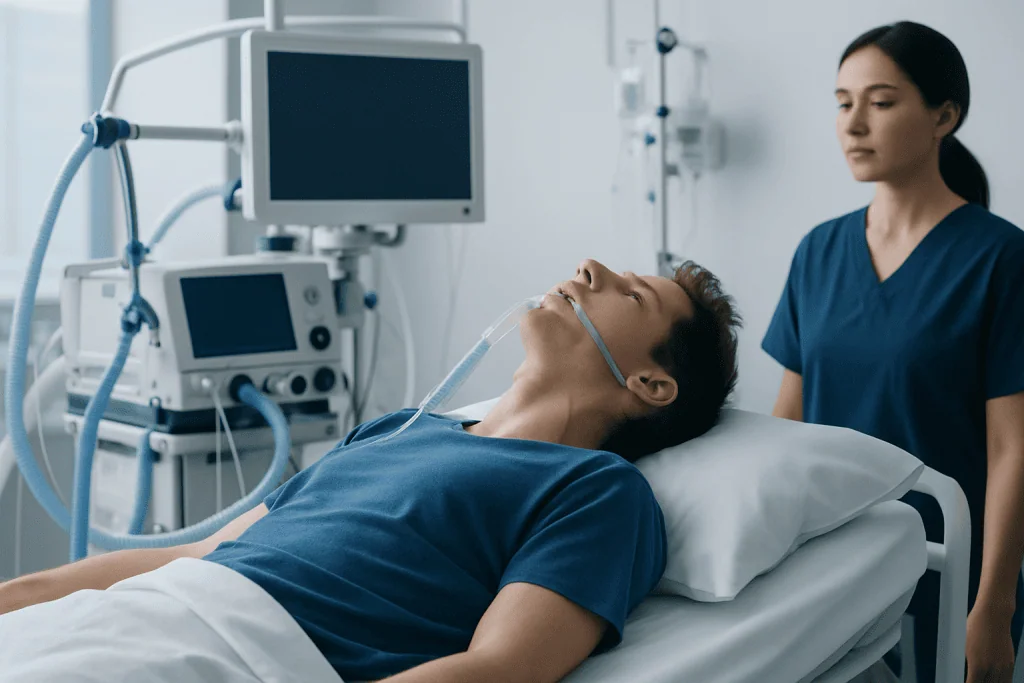
The most recognizable feature of opisthotonos is marked arching of the body. The shoulders and heels may bear much of the body’s weight, while the trunk curves upward. The neck may be rigid, the jaw may clamp, and the muscles of the arms and legs may also become tense. In some cases, the posture comes in episodes; in others, it may be more sustained.
People who are awake during an episode may feel intense stiffness, pain, cramping, or loss of control over their muscles. If the cause also affects the brain, there may be confusion, agitation, reduced alertness, or unresponsiveness. Infants may show unusual irritability, poor feeding, a high-pitched cry, or repeated backward arching.
Other symptoms often appear alongside opisthotonos and can offer important clues about the cause. These may include:
- Fever or signs of infection
- Seizures or jerking movements
- Difficulty swallowing
- Trouble breathing
- Severe headache
- Vomiting
- Recent injury or trauma
- Exposure to a new medicine or toxin
Because the posture can reflect many different medical problems, the overall pattern of symptoms matters. Timing, age, recent illnesses, and medication use all help doctors interpret what they are seeing.
Causes and risk factors
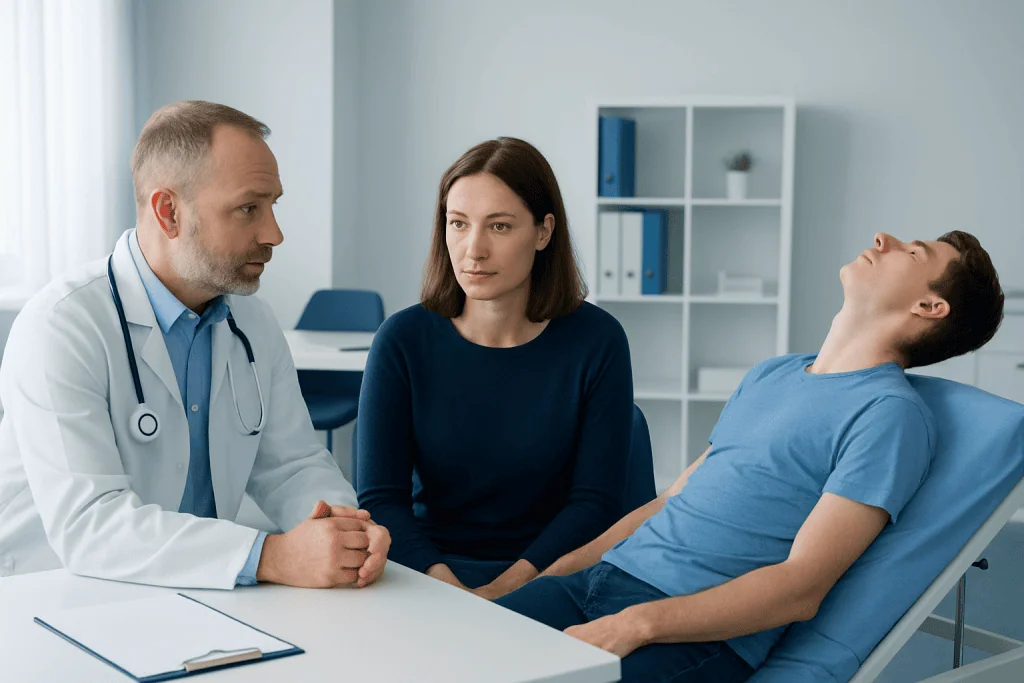
Opisthotonos can develop when the nervous system is overstimulated or injured in a way that triggers severe muscle spasm. One classic cause is tetanus, a toxin-mediated infection that affects nerve signaling and can lead to painful muscle rigidity and spasms. Opisthotonos may also occur with serious brain infections such as meningitis or encephalitis, where inflammation disrupts normal brain function. In these contexts, doctors may also evaluate for other urgent neurologic conditions, including meningitis.
Medication reactions are another important cause. Some drugs that affect dopamine signaling, especially certain antipsychotics and anti-nausea medicines, can trigger acute dystonic reactions with abnormal postures. Toxin exposure, severe metabolic imbalance, low oxygen levels, intracranial bleeding, head injury, and some seizure-related or neurodegenerative conditions can also be involved. In newborns and infants, birth-related brain injury, severe jaundice affecting the brain, and inherited neurologic disorders may be considered.
Risk factors depend on the underlying problem rather than on opisthotonos itself. These can include incomplete vaccination against tetanus, recent wounds contaminated by soil, current or recent use of specific medications, known seizure disorders, serious infections, brain injury, or a history of neurologic disease. People with weakened immune systems may also be at higher risk for certain infections that affect the nervous system.
Although opisthotonos is uncommon, it is significant because some causes can progress quickly. This is why doctors typically assess it urgently, especially when it appears with fever, altered mental state, breathing changes, or seizures.
How doctors diagnose the cause
Diagnosis begins with stabilization. The medical team first checks breathing, heart rate, oxygen level, body temperature, and level of consciousness. If spasms are severe, the immediate priority is to protect the airway and prevent injury. Once the person is stable, the doctor asks about recent illness, wounds, vaccinations, new medications, substance exposure, seizures, trauma, and how the symptoms started.
A neurologic examination is usually central to the evaluation. Depending on the situation, doctors may order blood tests to look for infection, inflammation, electrolyte or metabolic abnormalities, or toxin exposure. Imaging such as MRI or CT scan may be used if there is concern about bleeding, injury, swelling, or another structural brain problem.
If infection of the brain or spinal fluid is suspected, a lumbar puncture may be considered after the medical team determines that it is safe to do so. An EEG may help if seizure activity or abnormal brain electrical activity is suspected. In medication-related cases, the timeline of drug use and symptom onset may strongly point toward the diagnosis.
The aim is not simply to name the posture, but to uncover and treat the reason behind it. Because causes range from infections to medication reactions, diagnosis often involves emergency medicine, neurology, pediatrics, infectious disease, and intensive care specialists working together.
Treatment options
Treatment for opisthotonos depends entirely on the cause and how severe the person’s condition is. In the short term, care focuses on supporting breathing, reducing dangerous muscle spasms, controlling pain, and monitoring for complications such as dehydration, overheating, or injury. A calm, low-stimulation environment may also help if spasms are triggered by noise, touch, or movement.
When a medication reaction is responsible, doctors may stop the triggering drug and give medicines that reverse or ease the muscle spasms. If infection is suspected, treatment may include antibiotics, antiviral medicines, or other targeted therapies while tests are underway. In tetanus, care may involve wound management, medicines to control muscle spasm, and immune-based treatment in addition to vaccination review.
If the problem is linked to seizures, brain injury, or a structural neurologic condition, treatment is directed accordingly. Some patients need close observation in hospital, especially if there is altered consciousness or breathing difficulty. Rehabilitation and follow-up may be recommended once the urgent episode has passed, particularly if the underlying condition affects movement or neurologic function over time.
For complex neurologic presentations, evaluation by specialists is often important. In some cases, a person may need advanced care pathways such as neurology rehabilitation after the acute problem has been treated, depending on the underlying diagnosis and recovery needs.
Prevention and self-care
Because opisthotonos is a sign rather than a single disease, prevention centers on reducing the risk of its known causes. Staying up to date with recommended vaccinations, especially tetanus vaccination, is an important preventive step. Prompt cleaning and medical assessment of deep, dirty, or puncture wounds can also reduce risk.
Medication safety matters as well. People starting a new neurologic, psychiatric, or anti-nausea medicine should use it exactly as prescribed and report unusual stiffness, facial pulling, restlessness, or abnormal posturing without delay. Medications should not be stopped abruptly unless a clinician advises it, because sudden changes can create additional problems.
General self-care includes seeking care early for signs of severe infection, high fever, persistent headache, seizures, or sudden changes in consciousness. Parents and caregivers should watch for unusual backward arching, feeding problems, or decreased responsiveness in infants. These signs deserve prompt medical evaluation rather than home observation alone.
After recovery, follow-up visits can help prevent recurrence by reviewing the cause, adjusting medications if needed, and addressing rehabilitation needs. Near the end of the care pathway, some patients may benefit from multidisciplinary assessment; Acibadem International’s JCI-accredited hospitals and specialists diagnose and treat complex neurologic and infectious conditions for international patients.
When to seek medical care
Opisthotonos should be treated as urgent, especially when it appears for the first time. Immediate medical care is important if a person develops severe arching of the back or neck, ongoing muscle rigidity, a seizure, trouble breathing, fever, or a reduced level of consciousness. These symptoms can point to a serious problem affecting the brain, nerves, or the body’s response to infection or toxins.
Emergency evaluation is also needed after a recent head injury, possible poisoning, a contaminated wound, or soon after starting a new medication that could affect the nervous system. Infants and young children should be assessed promptly if they have repeated backward arching, poor feeding, unusual sleepiness, or persistent irritability. It is safer to have these symptoms examined early than to wait for them to worsen.
If symptoms are mild but concerning, such as intermittent stiffness after a medicine change, contacting a doctor the same day is still wise. Clinicians can decide whether urgent assessment is needed and help prevent progression. Delaying care can make treatment more difficult if the underlying cause is serious.
Frequently asked questions
Is opisthotonos a disease?
No. Opisthotonos is a physical sign or posture caused by severe muscle spasm, not a diagnosis by itself. Doctors use it as a clue to look for the underlying problem affecting the brain, nerves, muscles, or body chemistry.
Can opisthotonos happen in adults and children?
Yes. It can occur at any age, including in infants, children, and adults. The likely causes may differ by age, medical history, recent illnesses, and medication use.
Is opisthotonos always an emergency?
It generally deserves urgent medical attention because it can be linked to serious conditions such as infection, seizures, medication reactions, or brain injury. The need is especially urgent if there is fever, breathing difficulty, confusion, or reduced responsiveness.
What is the difference between opisthotonos and a seizure?
Opisthotonos describes a specific arching posture caused by muscle spasm. A seizure is abnormal electrical activity in the brain and can cause many different movements or changes in awareness. Sometimes opisthotonos can happen during or around seizure-related events, but they are not the same thing.
Can medications cause opisthotonos?
Yes. Some medications, particularly those that affect dopamine pathways, can cause acute dystonic reactions with abnormal postures and severe muscle contractions. This is one reason doctors ask carefully about any new or recently changed medicines.
Does opisthotonos go away after treatment?
It often improves once the underlying cause is identified and treated. Recovery time varies depending on whether the cause is a medication reaction, infection, neurologic problem, toxin exposure, or another condition. Follow-up may be needed to monitor for recurrence or lingering symptoms.
References
- World Health Organization
- Centers for Disease Control and Prevention
- National Institute of Neurological Disorders and Stroke
- MedlinePlus
- Merck Manual Consumer Version
This article is for general information only and is not a substitute for professional medical advice. Please consult a qualified doctor about your individual situation.
Joint and spine care in Turkey — expert assessment & treatment
JCI-accredited · board-certified surgeons · reply within 24h
Check your numbers in seconds
BMI, calories, due date, blood pressure and 30+ more clinical calculators — free, instant, doctor-reviewed ranges.