Quick answer
Encephalitis is inflammation of the brain, usually caused by a viral infection or, less commonly, an autoimmune reaction, and it requires prompt diagnosis and treatment to reduce the risk of serious complications. At Acibadem in Turkey, evaluation may include neurological examination, brain imaging, laboratory tests, and sometimes spinal fluid analysis, with treatment based on the cause and severity, such as…
What is encephalitis?
Encephalitis is inflammation of the brain itself. The word comes from “encephalo,” meaning brain, and “-itis,” meaning inflammation. When the brain tissue becomes inflamed, it can swell and stop working normally, which may cause confusion, seizures, changes in behavior, or problems with movement and speech. Encephalitis is different from meningitis, which is inflammation of the membranes that surround the brain and spinal cord, although the two conditions can sometimes occur together.
Encephalitis is uncommon, but it is a serious condition that usually needs urgent hospital care. It can affect people of any age, though infants, young children, older adults, and people with weakened immune systems are often at higher risk of severe illness. In most cases, encephalitis is caused either by an infection, most often a virus, or by the body’s own immune system mistakenly attacking the brain, a condition called autoimmune encephalitis. In hospital systems, encephalitis is typically managed by neurology teams, often working together with infectious disease and intensive care specialists; at Acibadem, for example, this condition falls under the care of the neurology department.
Understanding what encephalitis is, how it is recognized, and how it is treated can help patients and families act quickly, because early diagnosis and treatment often make an important difference to recovery.
Symptoms of encephalitis
Encephalitis symptoms can develop over hours, days, or sometimes weeks, depending on the cause. Early symptoms often look like a common viral illness, which is one reason the condition can be difficult to recognize at first. As inflammation in the brain increases, neurological symptoms, symptoms related to brain function, usually appear.
Common early symptoms may include:
- Fever and a general feeling of being unwell
- Headache, which may become severe
- Muscle or joint aches
- Fatigue or unusual drowsiness
- Nausea and vomiting
More serious neurological symptoms that suggest the brain is affected include:
- Confusion, agitation, or disorientationnot knowing where you are or behaving out of character
- Seizures (sudden episodes of abnormal electrical activity in the brain, which may cause shaking, staring, or loss of awareness)
- Changes in personality or behavior, such as sudden irritability, hallucinations, or unusual speech
- Weakness or loss of movement in parts of the body
- Problems with speech, hearing, or vision
- Loss of consciousness, ranging from extreme sleepiness to coma
- Stiff neck, especially when the membranes around the brain are also inflamed
Symptoms can differ by stage and by type. In infectious encephalitis, the illness often begins with flu-like symptoms followed by rapidly worsening confusion or seizures over a few days. In autoimmune encephalitis, symptoms may develop more gradually over weeks, and psychiatric changes, such as anxiety, paranoia, memory problems, or dramatic personality changes, are sometimes the first and most prominent signs. In infants and very young children, encephalitis symptoms can be harder to spot; warning signs may include a bulging soft spot on the head, poor feeding, constant crying, body stiffness, or extreme irritability.
Because encephalitis can worsen quickly, anyone who develops confusion, seizures, or a severe headache with fever should be evaluated urgently in an emergency setting.
Causes and risk factors
Encephalitis causes fall into two broad groups: infectious and autoimmune. In a significant number of cases, doctors are unable to identify a specific cause even after thorough testing, which is a recognized challenge with this condition.
Infectious causes
Viruses are the most commonly identified infectious cause of encephalitis. Examples include:
- Herpes simplex virus (HSV)the virus that causes cold sores is one of the most important treatable causes of severe encephalitis, and doctors often start treatment for it before test results are back.
- Varicella-zoster virusthe virus responsible for chickenpox and shingles.
- Enterovirusescommon viruses that usually cause mild illness but can occasionally affect the brain.
- Mosquito- and tick-borne virusessuch as West Nile virus, Japanese encephalitis virus, and tick-borne encephalitis virus, depending on the region of the world.
- Rabies virustransmitted through the bite of an infected animal; rabies encephalitis is almost always fatal once symptoms begin, which is why immediate treatment after a possible exposure is essential.
- Measles, mumps, and rubella virusesnow rare where vaccination is widespread, but these viruses can cause encephalitis.
Less commonly, bacteria, fungi, or parasites can cause encephalitis, particularly in people with weakened immune systems.
Autoimmune causes
In autoimmune encephalitis, the immune system produces antibodies (defense proteins) that mistakenly target the brain’s own cells. This can sometimes be triggered by a tumor elsewhere in the body or follow an infection, but in many cases no trigger is found. One well-recognized form is anti-NMDA receptor encephalitis, which often affects younger people and can begin with psychiatric symptoms.
Risk factors
- Agevery young children and older adults are generally at higher risk of severe disease.
- Weakened immune systemfor example, due to HIV, cancer treatment, organ transplantation, or medications that suppress immunity.
- Geography and seasonmosquito- and tick-borne encephalitis viruses are more common in certain regions and during warmer months.
- Lack of vaccinationagainst measles, mumps, rubella, Japanese encephalitis, or tick-borne encephalitis where relevant.
It is important to know that encephalitis is not usually spread directly from person to person in its brain-inflammation form, even when the underlying virus is contagious.
Diagnosis
Encephalitis diagnosis can be challenging because its symptoms overlap with many other conditions, including stroke, meningitis, drug reactions, and psychiatric illness. Doctors combine the patient’s history, a physical and neurological examination, and several tests to confirm the diagnosis and, wherever possible, identify the cause.
Tests commonly used to diagnose encephalitis include:
- Lumbar puncture (spinal tap)a needle is used to collect a small sample of cerebrospinal fluid, the fluid that surrounds the brain and spinal cord, from the lower back. The fluid is examined for signs of inflammation, infection, and specific viruses or antibodies. This is often the most important test.
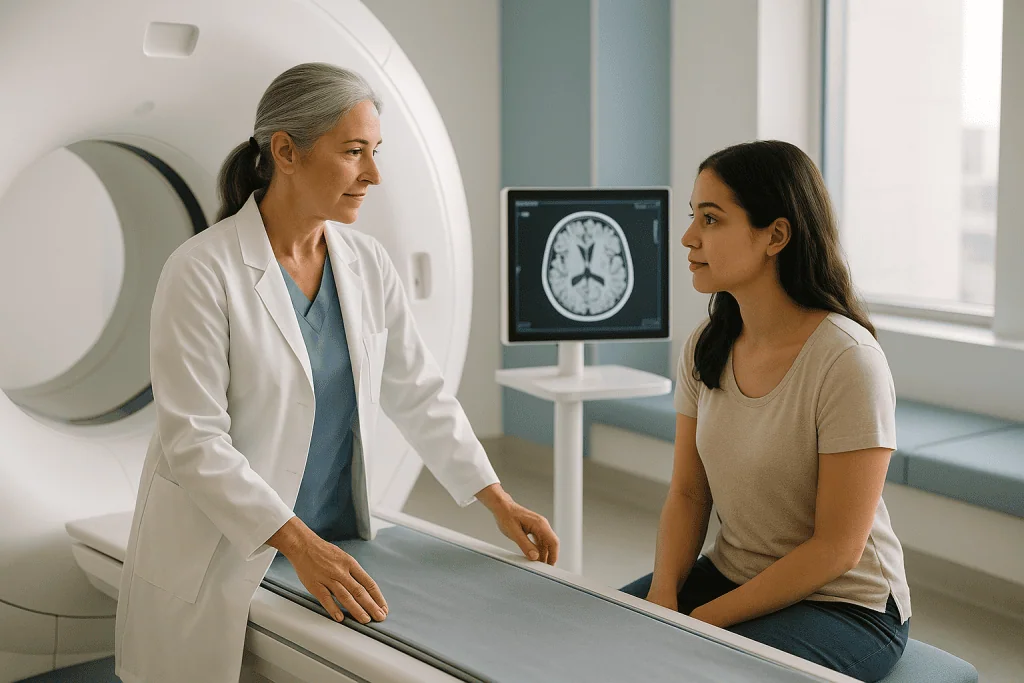
- Brain imagingmagnetic resonance imaging (MRI) is the preferred scan because it can show inflammation and swelling in specific parts of the brain. A computed tomography (CT) scan is sometimes done first, especially in an emergency, to rule out other problems such as bleeding or a tumor.
- Electroencephalogram (EEG)a painless test that records the brain’s electrical activity through small sensors placed on the scalp. It can show patterns suggestive of encephalitis and detect seizures, including subtle seizures that are not visible from the outside.
- Blood and urine teststo look for infections, immune markers, and other conditions that could explain the symptoms.
- Antibody testingblood and spinal fluid can be tested for the specific antibodies associated with autoimmune encephalitis.
- Brain biopsyin rare, difficult cases, a small sample of brain tissue may be taken surgically for examination. This is reserved for situations where the diagnosis remains unclear and the patient is not improving.
Because treatment should not be delayed, doctors often begin therapy, particularly antiviral medication, while test results are still pending. Even with extensive testing, the exact cause of encephalitis is not always found; doctors then treat the most likely causes and support the patient’s recovery.
Treatment options
Encephalitis treatment depends on the cause and on how severely the brain is affected. Most patients with suspected encephalitis are admitted to the hospital, and those who are seriously ill may need care in an intensive care unit, where breathing, heart function, and brain pressure can be closely monitored. Care is typically coordinated by a neurology department, often with input from infectious disease and critical care teams.
Antiviral medication
When a viral cause is suspected, especially herpes simplex virus, doctors usually start an intravenous (given through a vein) antiviral medication such as acyclovir as early as possible, often before the cause is confirmed. Early antiviral treatment for herpes encephalitis is widely regarded as one of the most important factors in improving outcomes. Not all viruses respond to antiviral drugs; for many viral causes, treatment focuses on supporting the body while the immune system clears the infection.
Treatment for autoimmune encephalitis
If tests point to autoimmune encephalitis, treatment aims to calm the immune system. Options your doctor may consider include:
- Corticosteroidsmedications that reduce inflammation and immune activity.
- Intravenous immunoglobulin (IVIG)a preparation of antibodies given through a vein that can help regulate the immune response.
- Plasma exchange (plasmapheresis)a procedure that filters harmful antibodies out of the blood.
- Other immune-suppressing medicationsused in some cases when first-line treatments are not enough.
If a tumor is found to be triggering the immune reaction, removing or treating the tumor is an important part of therapy.
Supportive care
Supportive care is central to encephalitis treatment regardless of the cause. It may include:
- Anti-seizure medications to control or prevent seizures
- Fluids and nutrition, sometimes given through a vein or feeding tube
- Medications to reduce fever and relieve headache
- Breathing support, including a ventilator (breathing machine) in severe cases
- Measures to control brain swelling, such as specific medications; in rare, life-threatening situations, surgery may be performed to relieve pressure inside the skull
Rehabilitation
After the acute illness, many people need a period of rehabilitation. Depending on the effects of the illness, this may involve physical therapy for strength and movement, occupational therapy for daily activities, speech and language therapy, and neuropsychological support for memory, attention, and emotional changes. Rehabilitation is often a gradual process that continues for months after leaving the hospital.
Watchful waiting alone is generally not appropriate for suspected encephalitis, because delays in treatment can worsen outcomes. However, once a patient is stable and recovering, ongoing care often shifts to monitoring, medication adjustment, and rehabilitation rather than intensive treatment.
Living with encephalitis and outlook
The outlook after encephalitis varies widely. Some people recover fully within weeks. Others experience longer-lasting effects, and in severe cases encephalitis can be life-threatening. The outcome depends on several factors, including the cause, how quickly treatment began, the person’s age and general health, and how much of the brain was affected.
Common longer-term effects that some survivors experience include:
- Memory problems and difficulty concentrating
- Fatigue that lasts longer than expected
- Changes in mood, personality, or behavior
- Epilepsy (recurring seizures), which may require ongoing medication
- Problems with speech, balance, movement, or coordination
Recovery from encephalitis is often gradual, and improvement can continue for many months, sometimes longer. It is common for patients and families to feel that recovery is slower than they hoped; setting realistic expectations and working steadily with a rehabilitation team can help. Regular follow-up with a neurologist is usually recommended to monitor recovery, manage seizures or other complications, and adjust medications. In autoimmune encephalitis, follow-up may also include monitoring for relapse and, in some cases, periodic screening for tumors.
Practical steps that may support recovery include getting enough rest, returning to work or school gradually, keeping a routine, and seeking support for emotional changes such as anxiety or depression, which are common after a serious brain illness. Family members and caregivers may also benefit from guidance, as behavior and personality changes can be difficult to navigate at home. No one can guarantee a particular outcome, but many people make meaningful recoveries, especially when the condition is diagnosed and treated early.
Frequently asked questions
What is encephalitis in simple terms?
Encephalitis is inflammation of the brain, most often caused by a viral infection or by the immune system mistakenly attacking brain tissue. The inflammation disturbs how the brain works, which can lead to fever, confusion, seizures, and changes in behavior. It is a medical emergency that usually requires hospital treatment.
Can encephalitis be cured?
Many cases of encephalitis can be treated successfully, particularly when treatment starts early. Some causes, such as herpes simplex virus, respond to specific antiviral medication, and many autoimmune forms respond to immune-calming therapies. Whether a person recovers fully depends on the cause, the severity of the inflammation, and how quickly treatment began, so outcomes vary from person to person.
How serious is encephalitis?
Encephalitis is always considered serious because it involves the brain. Some people recover completely, while others are left with lasting effects such as memory problems, fatigue, or seizures. In severe cases it can be fatal. Prompt medical care improves the chances of a good outcome, which is why urgent evaluation is so important when symptoms appear.
How long does recovery from encephalitis take?
Recovery time varies widely. Some people feel better within a few weeks, while others need months or longer, especially if the illness was severe. Improvement is often gradual, and rehabilitation therapies can help with movement, speech, memory, and daily activities. Your care team can give you a more individual picture based on your situation.
Is encephalitis contagious?
Encephalitis itself is not usually passed from person to person. However, some of the viruses that can cause it, such as herpes viruses or enteroviruses, are contagious, even though most people who catch these viruses never develop brain inflammation. Viruses spread by mosquitoes or ticks are transmitted through insect bites rather than between people.
What is the difference between encephalitis and meningitis?
Meningitis is inflammation of the membranes covering the brain and spinal cord, while encephalitis is inflammation of the brain tissue itself. Meningitis often causes headache, fever, and a stiff neck, whereas encephalitis more often causes confusion, personality changes, weakness, or seizures. The two conditions can occur together, which doctors call meningoencephalitis, and both need urgent medical attention.
Can encephalitis be prevented?
Not all cases can be prevented, but some risks can be reduced. Vaccines protect against several viruses that can cause encephalitis, including measles, mumps, rubella, and, in certain regions, Japanese encephalitis and tick-borne encephalitis. Using insect repellent, wearing protective clothing in areas where mosquitoes and ticks are common, and seeking immediate care after any animal bite that could involve rabies are also important preventive steps.
When to see a doctor
Encephalitis can worsen quickly, so it is important not to wait if warning signs appear. Seek emergency medical care right away if you or someone near you has any of the following:
- Severe headache with fever, especially if it is unlike any previous headache
- Confusion, disorientation, or sudden changes in personality or behavior
- A seizure, particularly a first-ever seizure or one during a feverish illness
- Drowsiness that is hard to wake from, or any loss of consciousness
- Weakness, numbness, or paralysis in the face, arm, or leg
- Sudden problems with speech, vision, or hearing
- Stiff neck with fever and sensitivity to light
- In infants: a bulging soft spot on the head, body stiffness, poor feeding, or inconsolable crying
You should also seek prompt medical advice after any bite from a wild or unfamiliar animal, because rabies must be treated before symptoms begin. If milder symptoms, such as headache, fever, and unusual tiredness, are getting steadily worse over hours or days, do not wait for them to pass on their own. Early evaluation by a doctor gives the best chance of identifying encephalitis quickly and starting treatment when it can help the most.
Medically reviewed by the Acıbadem International Medical Board September 2, 2026
See our medical review board →
Update history
- PublishedJune 14, 2026
- Medical review approvedSeptember 2, 2026
- Last content updateSeptember 2, 2026