Pca Pump — Explained by Medical Evidence, Not Myths

A pca pump delivers preset pain medicine doses and includes safety limits to reduce overdose risk. Only the patient should press the button unless a medical team has specifically ordered otherwise.
Key Takeaways
- A pca pump delivers preset pain medicine doses and includes safety limits to reduce overdose risk.
- Only the patient should press the button unless a medical team has specifically ordered otherwise.
- PCA is commonly used after surgery, trauma care, and some cancer-related treatments in the hospital.
- Side effects such as nausea, itching, drowsiness, or constipation can occur and should be reported promptly.
- Careful monitoring of breathing, alertness, and pain control is essential throughout PCA use.
A pca pump is a patient-controlled analgesia device that allows a patient to receive small, preset doses of pain medicine by pressing a button. When programmed and monitored correctly, it can improve comfort while reducing delays in pain relief and helping patients take an active role in pain management.
What a pca pump is and how it works
A pca pump is a hospital device used for patient-controlled analgesia, which means the patient can press a button to receive a small dose of pain medicine when needed. The pump is programmed by a clinician with strict safety settings, including how much medicine can be given at one time and how long the pump must wait before another dose can be delivered. In most cases, this medicine is given through an intravenous line, though other routes may be used in selected situations.
The goal is to provide faster, more personalized pain relief than waiting for scheduled injections or requesting medicine from staff each time pain increases. Because pain changes from hour to hour after surgery or illness, a pca pump can help match treatment more closely to the patient’s needs. This often makes pain control more consistent, especially during the first days after an operation.
A common myth is that a pca pump gives unlimited medicine. In reality, it does not. The device is designed with limits such as a lockout interval and maximum dose settings, so pressing the button repeatedly will not keep delivering medication continuously. Another important point is that the button should usually be pressed only by the patient, because the patient’s own level of alertness acts as part of the safety system.
Why doctors use PCA instead of relying only on scheduled pain medicine
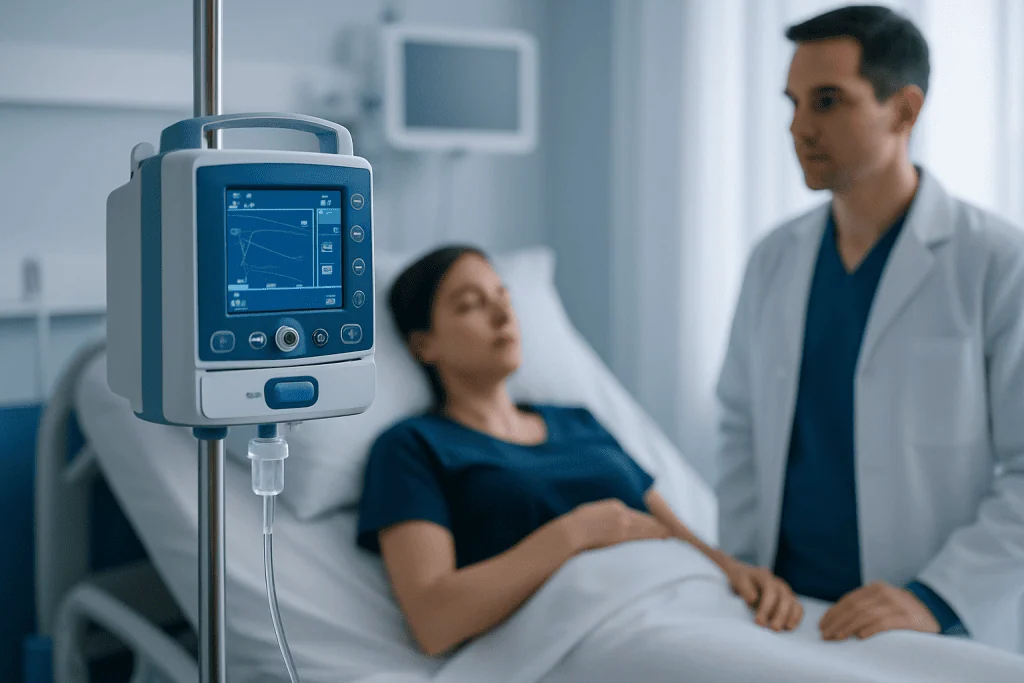
Doctors may recommend PCA when pain is expected to be moderate to severe and likely to fluctuate. This is common after major surgery, certain injuries, some procedures, and during treatment for serious illnesses. PCA can be especially useful when oral medicines are not yet appropriate, such as immediately after surgery or when nausea makes swallowing difficult.
One practical benefit is timing. Pain medicine can work better when discomfort is treated early rather than after it becomes intense. With PCA, the patient does not need to wait for the next scheduled dose or for a nurse to bring a medication order each time pain rises. This can improve comfort during deep breathing, coughing, movement, and early walking, all of which support recovery.
PCA is one part of a larger pain-control plan. It may be combined with non-opioid medicines, local anesthetic techniques, physical measures, and recovery support. In some surgical settings, clinicians may also discuss other pain-control methods such as anesthesia care or procedure-specific approaches that reduce the need for higher opioid doses afterward.
Who may need a pca pump and what medicines are used

A pca pump is often used for adults after abdominal, orthopedic, chest, or pelvic surgery, though it may also be used after trauma or during treatment of painful medical conditions. Some patients with cancer-related pain, severe pancreatitis, or sickle cell pain crises may receive PCA in the hospital under close supervision. The decision depends on the type of pain, the patient’s age, breathing status, kidney and liver function, and ability to understand how to use the device.
The medicines used in PCA are most often opioids, because they can relieve moderate to severe acute pain effectively. The exact medicine and dose are chosen by the medical team based on the patient’s health history and the expected level of pain. In some cases, clinicians may adjust the treatment plan if there is concern about sleep apnea, lung disease, severe obesity, frailty, or past sensitivity to opioids.
PCA may not be the best option for every patient. Extra caution is needed in people with significant confusion, reduced consciousness, severe breathing problems, or conditions that make self-use unreliable. For some patients, specialists may recommend alternatives or additional support, especially if a neurological condition, such as Parkinson's disease, affects movement or communication and makes button use difficult.
Safety features, monitoring, and common myths
Safety is central to PCA use. The pump is programmed by trained professionals with a specific dose, a lockout interval, and sometimes a maximum amount that can be given over several hours. Nurses and doctors regularly check pain scores, breathing rate, oxygen levels when appropriate, alertness, blood pressure, and side effects. This monitoring helps the team balance comfort with safety.
One of the most repeated safety rules is that the button should not be pressed by family members or visitors. This is sometimes called avoiding “PCA by proxy.” If someone else presses the button when the patient is sleepy, the natural safety signal of drowsiness is bypassed. That can increase the risk of oversedation or slowed breathing. Families can still help by alerting staff if the patient seems too uncomfortable, too sleepy, or unwell.
Another myth is that using a pca pump inevitably leads to addiction. Short-term opioid use for carefully supervised acute pain is not the same as substance use disorder. Even so, clinicians remain cautious, ask about past opioid exposure, and review any personal or family history of substance misuse. This allows treatment to be tailored safely and may involve specialists in pain management or algology when needed.
- Preset doses are controlled by the pump, not by repeated requests.
- Lockout periods help prevent too-frequent dosing.
- Regular monitoring is essential, especially during sleep and in the first 24 hours.
- Only the patient should press the button unless specifically directed by the care team.
Possible side effects and risks to know
Like any pain treatment, PCA can cause side effects. Common ones include nausea, vomiting, itching, constipation, dry mouth, dizziness, and sleepiness. These symptoms are often manageable, and patients should tell the medical team early rather than waiting for them to worsen. Doctors can adjust the medication, treat side effects directly, or add non-opioid pain relief to reduce the overall opioid requirement.
The most important risk is respiratory depression, which means breathing becomes too slow or too shallow. This is uncommon with proper monitoring but deserves close attention, especially in older adults and in people with obstructive sleep apnea, lung disease, obesity, or use of other sedating medicines. Staff watch for warning signs such as increasing drowsiness, difficulty waking, snoring that is new or unusually heavy, confusion, or low oxygen levels.
Other potential problems include the pump being set incorrectly, the IV line becoming blocked or dislodged, or pain remaining poorly controlled because the dose is not yet well matched to the patient’s needs. If pain is severe despite using the button correctly, clinicians should reassess for causes such as surgical complications, infection, or a condition needing further evaluation. In patients with complex pain disorders or nerve-related pain, input from neurology or pain specialists may occasionally be useful.
How patients can use a pca pump effectively
Good PCA use starts with clear teaching before or soon after the pump is connected. Patients are shown what the button looks like, when to press it, and what to expect afterward. They are also told that the goal is not necessarily to remove all pain, but to keep pain manageable enough for breathing exercises, movement, sleep, and participation in recovery.
It often helps to use the button before activities that predictably increase pain, such as getting out of bed, walking with assistance, coughing, or physiotherapy. Because the medicine still takes some time to work, waiting until pain is very severe may make control harder. Patients should report if they feel no benefit, feel too sleepy, or experience side effects such as nausea or itching.
Family members can support recovery by encouraging communication with the care team rather than pressing the button themselves. Patients should also tell staff about all other medicines they use, including sleeping tablets, anxiety medicines, or alcohol use, since these can increase sedation. Before the pump is stopped, clinicians usually plan a safe switch to oral medicines and may review the broader recovery process, including treatment after major procedures such as orthopedic rehabilitation when relevant.
When to seek medical care
While a pca pump is typically used in the hospital, patients and families should know when to alert staff immediately. Urgent medical attention is needed if the patient is hard to wake, has very slow or shallow breathing, seems confused, develops blue lips, has chest pain, or feels faint. Severe allergic-type symptoms, such as swelling of the face or trouble breathing, also require immediate care.
It is also important to speak up if pain remains uncontrolled, if the pump seems not to be working, or if side effects are making recovery harder. Ongoing vomiting, severe itching, inability to urinate, marked dizziness, or distressing hallucinations should be reported promptly. Effective pain control should help recovery, not create new problems that go unnoticed.
After discharge, any continued opioid use should follow the doctor’s instructions closely. Patients should seek medical advice if they have increasing pain, fever, wound problems, severe constipation, or unusual sleepiness at home. Near the end of care planning, some international patients may also wish to know that Acibadem International’s multidisciplinary specialists and JCI-accredited hospitals diagnose and treat conditions requiring hospital pain management and recovery support.
Frequently asked questions
What does pca pump stand for?
PCA stands for patient-controlled analgesia. It describes a system in which the patient presses a button to receive a preset dose of pain medicine from a programmable pump.
Can a pca pump overdose a patient?
PCA pumps are designed with safety features such as lockout intervals and maximum dose limits. Even so, careful monitoring is still necessary because opioids can slow breathing, especially in sensitive patients or when combined with other sedating medicines.
Should a family member press the PCA button for the patient?
In most situations, no. The button should be pressed only by the patient, because excessive sleepiness is an important warning sign that helps prevent additional dosing when the body has already had enough medication.
Is a pca pump only used after surgery?
No. Although it is commonly used after surgery, PCA may also be used for trauma, severe acute pain episodes, some cancer-related pain, and other hospital situations where close supervision is available.
What side effects are most common with a pca pump?
Common side effects include nausea, vomiting, itching, constipation, dizziness, dry mouth, and drowsiness. These should be reported early so the medical team can adjust treatment and improve comfort safely.
Does using a pca pump cause addiction?
Short-term opioid use for acute pain in a monitored medical setting is not the same as addiction. Doctors still assess each patient's risk carefully and aim to use the lowest effective amount for the shortest appropriate time.
References
- Centers for Disease Control and Prevention
- American Society of Anesthesiologists
- National Institute for Health and Care Excellence
- MedlinePlus
- World Health Organization
This article is for general information only and is not a substitute for professional medical advice. Please consult a qualified doctor about your individual situation.
Explore treatments in Turkey — costs, top hospitals & a free quote
JCI-accredited · board-certified surgeons · reply within 24h
Check your numbers in seconds
BMI, calories, due date, blood pressure and 30+ more clinical calculators — free, instant, doctor-reviewed ranges.