Pediatric Movement Disorders: Tics, Tremor, and When to Seek Neuropediatric Care

Tics and tremor are common reasons children are referred to a pediatric neurologist, and many cases improve with time or targeted treatment. A careful history, physical examination, and sometimes video recordings are often the most useful tools for diagnosis.
Key Takeaways
- Tics and tremor are common reasons children are referred to a pediatric neurologist, and many cases improve with time or targeted treatment.
- A careful history, physical examination, and sometimes video recordings are often the most useful tools for diagnosis.
- Urgent assessment is needed when abnormal movements begin suddenly with weakness, confusion, loss of consciousness, severe headache, fever, or after injury.
- Treatment may include reassurance, school support, behavioral therapy, medications, rehabilitation, or care for an underlying condition.
- Families should avoid blaming the child; many movements are involuntary or only partly controllable.
Pediatric movement disorders include involuntary or unusual movements such as tics, tremor, dystonia, chorea, and changes in coordination. Many are manageable, and a neuropediatric evaluation can help families understand what is happening and choose appropriate care.
Overview
Pediatric movement disorders are conditions in which a child has movements that are too much, too little, poorly coordinated, or not fully under voluntary control. They may appear as brief jerks, repetitive sounds or motions, shaking, twisting postures, restlessness, stiffness, or changes in walking and balance. Some movement symptoms are temporary and mild, while others need a structured evaluation by a pediatric neurologist, also called a neuropediatric specialist.
Parents often notice these movements during everyday activities, such as writing, eating, playing, walking, or falling asleep. Teachers may report blinking, shoulder shrugging, hand tremor, fidgeting, or difficulty sitting still. Importantly, unusual movement does not automatically mean a serious disease. Many childhood movement disorders are benign, improve with development, or can be controlled with practical strategies and treatment.
A neuropediatric assessment focuses on understanding the exact type of movement, when it occurs, what triggers it, and whether it is associated with other symptoms. This helps distinguish tics from tremor, seizures from nonepileptic movements, and developmental coordination issues from neuromuscular or metabolic conditions. Early clarification can reduce worry and help the child receive the right support at home and school.
Common Types: Tics, Tremor, and Other Movements
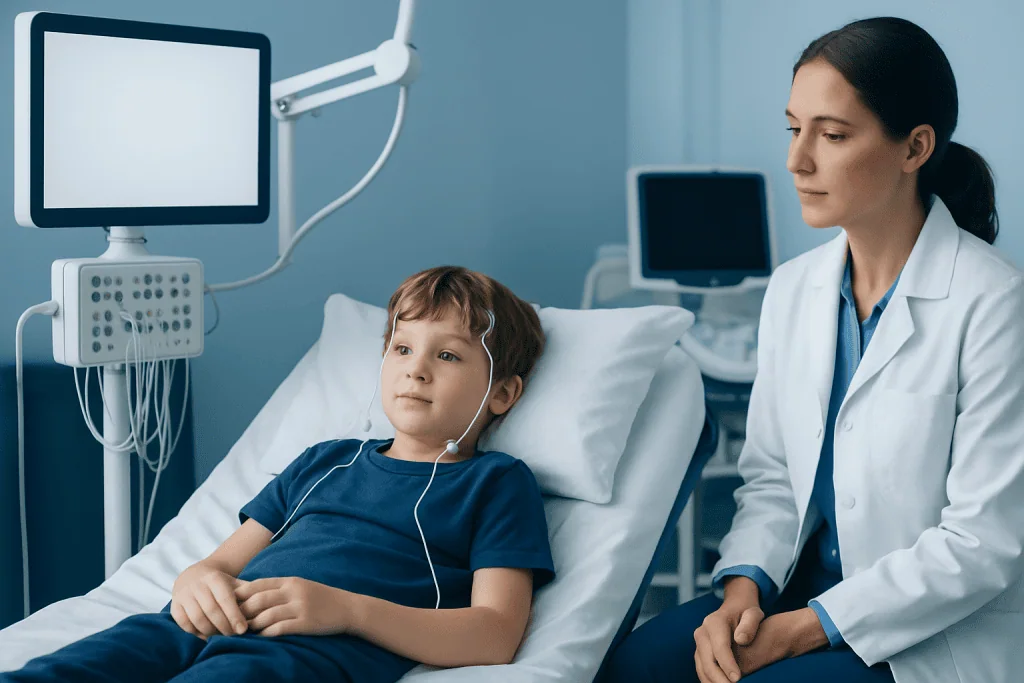
Tics are sudden, brief, repeated movements or sounds. Motor tics can include blinking, facial grimacing, head jerking, shoulder shrugging, or touching objects. Vocal tics can include throat clearing, sniffing, humming, or repeating sounds. Tics often come and go, may change in type over time, and can increase with stress, excitement, fatigue, or focused attention. Some children describe an urge or uncomfortable feeling before the tic and a sense of relief afterward.
Tremor is a rhythmic shaking movement. In children, it may be noticed when holding a spoon, writing, reaching for an object, or maintaining a posture. Tremor can be related to essential tremor, anxiety, medication effects, thyroid overactivity, low blood sugar, or other neurological conditions. A pediatric neurologist looks at whether the tremor happens at rest, during action, or while holding a position, because these patterns guide diagnosis.
Other pediatric movement disorders include dystonia, chorea, myoclonus, stereotypies, ataxia, and parkinsonism-like symptoms, which are uncommon in children but important to recognize. Dystonia causes twisting postures or muscle contractions. Chorea appears as flowing, unpredictable movements. Myoclonus is a sudden, shock-like jerk. Stereotypies are repetitive, patterned movements, often seen in early childhood or in children with developmental differences. Each type has different causes and treatment approaches.
Symptoms Parents and Teachers May Notice
Movement symptoms may be obvious, such as repeated head jerks, shaking hands, or a change in walking. They may also be subtle, such as declining handwriting, frequent dropping of objects, repeated eye blinking, or difficulty using utensils. Some children feel embarrassed or tired because of the movements, while others are not bothered by them. The child’s level of distress and functional impact are important when deciding whether treatment is needed.
Signs that are helpful to observe include the child’s age when symptoms began, whether movements happen during sleep, whether the child can briefly suppress them, and whether they appear more during stress or relaxation. Families can also note whether there are associated concerns, such as headaches, weakness, learning changes, attention difficulties, anxiety, compulsive behaviors, pain, or changes in speech and swallowing.
Common observations to share with a doctor include:
- What the movement looks like and which body parts are involved
- How often it occurs and how long episodes last
- Whether the child remains aware and responsive during the episode
- Whether there are triggers such as fatigue, caffeine, screens, illness, medication, or stress
- Whether symptoms are affecting schoolwork, social life, sports, eating, or sleep
A short video recorded safely at home can be very useful, especially when symptoms are intermittent and may not appear during the appointment. The video should show the movement clearly without putting pressure on the child to perform or repeat it.
Causes and Risk Factors
The causes of pediatric movement disorders vary widely. Some are developmental and improve as the nervous system matures. Some run in families, such as essential tremor or tic disorders. Others are linked with infections, inflammation, medication side effects, metabolic or endocrine problems, genetic conditions, brain injury, or structural changes in the nervous system. In many children with tics, no dangerous underlying disease is found.
Tic disorders often begin in early school age and may fluctuate for months or years. Tourette syndrome is diagnosed when a child has had both motor and vocal tics for more than one year, with onset in childhood, and when other causes have been excluded. Many children with Tourette syndrome also have attention-deficit/hyperactivity disorder, obsessive-compulsive symptoms, anxiety, or learning differences. Addressing these related concerns can be as important as treating the tics themselves.
Tremor in children may be inherited, medication-related, physiological, or associated with another medical condition. For example, stimulants, some asthma medicines, certain antidepressants, and other drugs can worsen tremor in susceptible children. Excess caffeine, lack of sleep, anxiety, fever, and low blood sugar may also make shaking more noticeable. Because the list of possible causes is broad, families should avoid stopping prescribed medicines without medical advice and instead discuss symptoms with the child’s doctor.
Diagnosis: What Happens in Neuropediatric Care
Diagnosis begins with a detailed history and a neurological examination. The doctor observes the movement, checks strength, reflexes, coordination, sensation, eye movements, posture, walking, and development. The pattern of symptoms often points toward the diagnosis. For many children with typical tics or benign tremor, extensive testing may not be necessary.
When tests are needed, they are chosen based on the child’s symptoms and examination. Blood tests may check thyroid function, electrolytes, glucose, liver and kidney function, inflammation markers, or metabolic causes. Electroencephalography, known as EEG, may be recommended if episodes could be seizures. Brain MRI may be considered when movements are progressive, one-sided, associated with abnormal neurological findings, or begin suddenly without a clear explanation.
The diagnostic process also includes reviewing medications, family history, development, school performance, sleep, stress, and recent infections. Sometimes a child is referred to other specialists, such as a child psychiatrist, psychologist, geneticist, rehabilitation physician, or endocrinologist. This does not mean the condition is severe; it simply reflects that movement symptoms can be influenced by many parts of a child’s health and development.
Treatment Options and Support
Treatment depends on the diagnosis, severity, and impact on daily life. If movements are mild and not distressing, the best approach may be education, reassurance, and monitoring. Families and teachers can help by not drawing repeated attention to the movement and by creating a supportive environment. Children should not be punished for movements they cannot fully control.
For tic disorders, behavioral treatment such as Comprehensive Behavioral Intervention for Tics may help children recognize urges, use competing responses, and manage triggers. Medication may be considered if tics cause pain, social distress, sleep problems, or significant interference with school or activities. When attention, anxiety, or obsessive-compulsive symptoms are present, treating those concerns may improve overall functioning even if tics continue to fluctuate.
For tremor, treatment may involve addressing triggers, reviewing medications, improving sleep, managing anxiety, or treating an underlying medical problem. Occupational therapy can support handwriting, self-care, and school adaptations. Some children benefit from weighted utensils, pencil grips, extra time for written work, or keyboard use. Dystonia, ataxia, and other movement disorders may require physiotherapy, medications, botulinum toxin injections in selected cases, or specialized rehabilitation plans.
Care is most effective when it is individualized and reviewed over time. A child’s needs may change with growth, school demands, stress, and development. At centers such as Acibadem International, multidisciplinary specialists in JCI-accredited hospitals can evaluate and treat pediatric movement disorders for international patients, coordinating neurological, rehabilitation, psychological, and diagnostic care when appropriate.
Prevention and Self-Care at Home and School
Not all pediatric movement disorders can be prevented, especially when genetic or developmental factors are involved. However, families can often reduce symptom triggers and improve the child’s comfort. Regular sleep, balanced meals, hydration, age-appropriate physical activity, and reduced caffeine intake may help some children, particularly those with tremor or tics that worsen with fatigue or stress.
Emotional support is important. Children may feel singled out if adults constantly comment on their movements. A calm explanation to teachers can help prevent misunderstandings and bullying. School accommodations may include short breaks, permission to take tests in a less distracting setting, use of a computer, extra time for writing, or seating that reduces social pressure. These supports should be based on the child’s actual needs rather than the diagnosis alone.
Families can keep a symptom diary, but it should not become a source of pressure. Notes about sleep, stress, illness, new medications, and school events can help identify patterns. Relaxation techniques, predictable routines, and supportive conversations may help children feel more in control. If anxiety, low mood, or social withdrawal develops, psychological support can be a valuable part of care.
When to See a Doctor
Families should arrange a medical evaluation when a child develops repeated involuntary movements, shaking that affects daily tasks, sudden changes in coordination, or movements that cause pain, embarrassment, school difficulty, or sleep disruption. A pediatrician can provide an initial assessment and refer to a pediatric neurologist when the diagnosis is unclear or specialized treatment is needed.
More urgent medical attention is recommended if abnormal movements start suddenly and are accompanied by weakness, facial drooping, severe headache, confusion, fainting, loss of consciousness, fever with stiff neck, trouble breathing, repeated vomiting, or a recent head injury. Urgent assessment is also important for movements associated with a possible seizure, such as staring with unresponsiveness, rhythmic jerking with loss of awareness, or prolonged episodes after which the child is very sleepy or confused.
Parents should also seek care if movements are worsening quickly, appear only on one side of the body, occur during sleep in unusual patterns, or are linked with developmental regression, new behavior changes, or difficulty speaking or swallowing. Most children can be evaluated calmly and safely, and a clear diagnosis often brings relief. Timely neuropediatric care helps families understand the symptom, avoid unnecessary worry, and choose practical next steps.
Frequently asked questions
Are tics in children always a sign of Tourette syndrome?
No. Many children have temporary motor or vocal tics that do not meet criteria for Tourette syndrome. Tourette syndrome is considered when both motor and vocal tics have been present for more than one year, began in childhood, and are not better explained by another condition.
Can a child stop tics by trying harder?
Tics are involuntary or only partly controllable. Some children can suppress them for a short time, but this often takes effort and may make the urge feel stronger. Supportive strategies work better than scolding or repeated reminders.
What is the difference between tremor and a tic?
Tremor is usually a rhythmic shaking movement, often seen during posture or action, such as writing or holding a cup. A tic is typically sudden, brief, repetitive, and may be preceded by an urge. A pediatric neurologist can usually distinguish them through history, examination, and sometimes video review.
Should parents record a video of the movement?
Yes, a short video can be very helpful if it is recorded safely and respectfully. It may show symptoms that do not appear during the clinic visit. The video should not pressure the child or turn the movement into a performance.
Do all pediatric movement disorders need medication?
No. Many children need only education, reassurance, monitoring, school support, or behavioral strategies. Medication is usually considered when symptoms cause pain, distress, functional difficulty, or are related to a treatable underlying condition.
When should abnormal movements be treated as urgent?
Urgent care is needed if movements occur with loss of consciousness, confusion, weakness, severe headache, fever with neck stiffness, breathing problems, or after head injury. Sudden one-sided movements, prolonged seizure-like episodes, or rapid worsening also need prompt medical assessment.
References
- American Academy of Neurology
- Child Neurology Society
- Centers for Disease Control and Prevention
- National Institute of Neurological Disorders and Stroke
- European Paediatric Neurology Society
This article is for general information only and is not a substitute for professional medical advice. Please consult a qualified doctor about your individual situation.
Movement Disorders in Turkey — costs, top hospitals & a free quote
JCI-accredited · board-certified surgeons · reply within 24h

More from the Health Library



Related Specialists
Dr. Eda Albayrak
Pediatrics
Assoc. Prof. Dr. A. Erdem Kilavuz
Ear Nose & Throat
Assoc. Prof. Dr. Mehmet Fatih Karakaş
Cardiology
Assoc. Prof. Dr. Ürün Özer Ağırbaş
Psychiatry