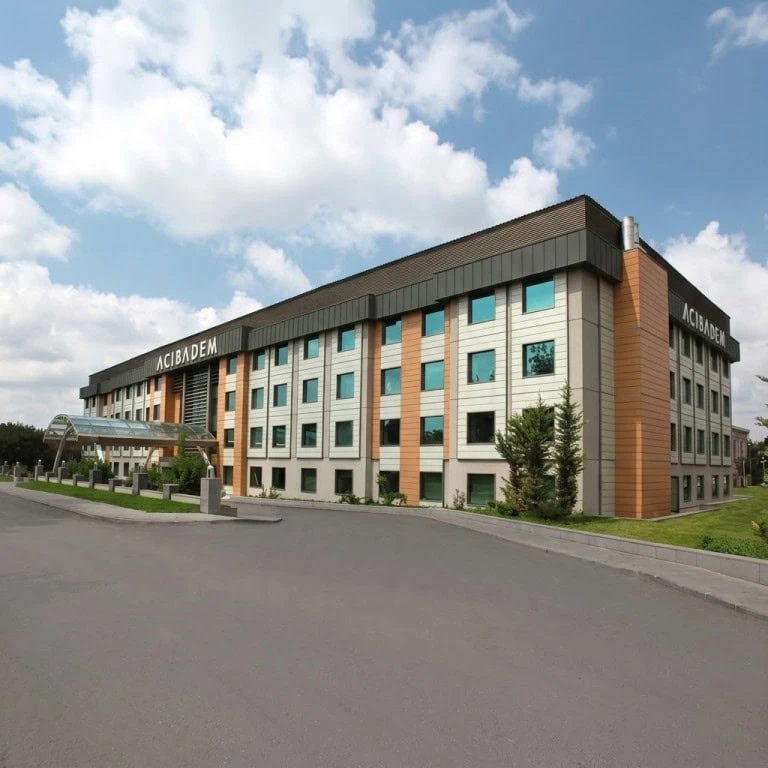
 Cardiology · Acibadem Kayseri Hospital
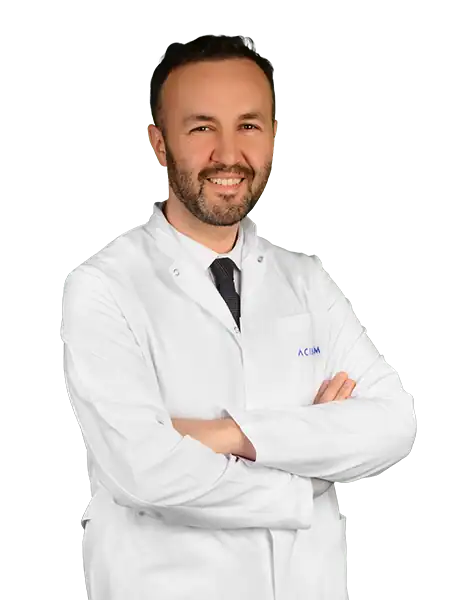
 Assoc. Prof. Mehmet Fatih Karakaş, MD
✓ Medically verified profileAssoc. Prof. Mehmet Fatih Karakaş, MD
Assoc. Prof. Mehmet Fatih Karakaş, MD is a cardiologist in the Cardiology Department at Acibadem Kayseri Hospital in Kayseri, Turkey. His areas of expertise include coronary artery disease, angina, myocardial infarction, heart failure, arrhythmias, heart valve disease, rheumatic heart disease, myocarditis, angiography, percutaneous coronary intervention and pacemaker therapy. He consults in Turkish and English.
 Accepting international patients
About Assoc. Prof. Mehmet Fatih Karakaş, MD
Assoc. Prof. Mehmet Fatih Karakaş, MD is a cardiologist in the Cardiology Department at Acibadem Kayseri Hospital in Kayseri, Turkey. He graduated from Hacettepe University Faculty of Medicine in 2004 and completed his cardiology training at Ankara Atatürk Training and Research Hospital in 2010. He has more than 22 years in medicine and joined Acıbadem Healthcare Services in 2024.
Before his current position, Dr. Karakaş worked at Ankara Yüksek İhtisas Training and Research Hospital (2010–2011) and Boğazlıyan Devlet Hospital (2011). From 2012 to 2016 he was part of the Mustafa Kemal University Department of Cardiology in Hatay, and during this period (2013–2014) he spent time at the John Hopkins University Heart and Vascular Institute. He later practiced at Kırıkhan Can Hospital in Hatay (2017–2019) and at Medical Park Ordu Hospital (2019–2024). He is a co-author of peer-reviewed publications in journals such as JACC Basic and Translational Science, Biomaterials, American Journal of Cardiology and Echocardiography, covering topics including cardiosphere-derived cells and hydrogel-based cell therapy, left ventricular dyssynchrony in sickle cell anemia and in hypertension, and serum markers such as pentraxin-3 and monocyte chemoattractant protein-1 in patients with coronary artery disease and ST-segment elevation myocardial infarction.
Clinical focus
Dr. Karakaş evaluates and manages a range of cardiovascular conditions. His areas of expertise include coronary artery disease, atherosclerosis, angina and myocardial infarction, as well as heart failure, myocarditis, heart valve disease and rheumatic heart disease. He also sees patients with arrhythmias and hypertension.
On the procedural side, his work includes angiography, percutaneous coronary intervention and pacemaker therapy. The choice of diagnostic tests and treatment depends on each patient’s history, symptoms and existing findings, and is discussed with the patient after a clinical assessment. Where a condition falls outside his area of practice, patients may be referred to other specialists within the hospital.
How Dr. Karakaş works with international patients
Dr. Karakaş consults in Turkish and English, and interpreters can be arranged for patients who speak other languages. The Acibadem international patient team coordinates the collection of prior reports and imaging, such as echocardiography, angiography or CT reports, laboratory results, ECG recordings, operative notes and discharge summaries, and arranges appointments and the hospital visit. A first consultation typically covers the patient’s history and symptoms, a review of existing imaging and previous treatments, a clinical examination and a discussion of the options. Video consultation is available for international patients who wish to discuss their case before or instead of traveling, where this is clinically appropriate.
What Dr. Karakaş treats and performs
Each item opens the condition or treatment page with the care pathway for international patients.
Conditions treated
Education, career and memberships
Education & training
Education
- 2010Ankara Atatürk Training and Research Hospital Cardiology
- 2004Hacettepe University Faculty of Medicine
Career
Professional Experience
- 2024Acıbadem Healthcare Services
- 2019–2024Medical Park Ordu Hospital
- 2017–2019Kırıkhan Can Hospital Hatay
- 2013–2014John Hopkins University Heart and Vascular Institute
- 2012–2016Mustafa Kemal University Department of Cardiology Hatay
- 2011Boğazlıyan Devlet Hospital
- 2010–2011Ankara Yüksek İhtisas Training and Research Hospital
Selected publications
Selected Publications
- Cardiosphere-Derived Cells Demonstrate Metabolic Flexibility That Is Influenced by Adhesion Status JACC Basic Transl Sci.2017 Oct;2(5):543-560. doi: 10.1016/j.jacbts.2017.03.016. Epub 2017 Oct 30 Afzal J, Chan A, Karakas MF, Woldemichael K, Vakrou S, Guan Y, Rathmell J, Wahl R, Pomper M, Foster DB, Aon MA, Tsui B, O”Rourke B, Abraham MR.
- Hyaluronic acid-serum hydrogels rapidly restore metabolism of encapsulated stem cells and promote engraftment Biomaterials. 2015 Dec;73:1-11. doi: 10.1016/j.biomaterials.2015.09.001. Epub 2015 Sep 4. Chan AT, Karakas MF, Vakrou S, Afzal J, Rittenbach A, Lin X, Wahl RL, Pomper MG, Steenbergen CJ, Tsui BM, Elisseeff JH, Abraham MR.
- Effect of Hydrogel in Cell-Based Therapy in a Porcine Model of Chronic Myocardial Ischemia. Int J Stem Cell Res 2015; 1 (1): doi http://dx.doi. org/10.16966/ijscr.102 Zhou Y, Wang S, Yu Z, Hoyt RF Jr, Karakas MF, Hunt T, Chan A, Kindzelski BA, Abraham MR and Horvath KA.
- Left ventricular dyssynchrony is an early manifestation of heart involvement in sickle cell anemia Echocardiography. 2013 May;30(5):521-6. Karakas MF, Buyukkaya E, Kurt M, Celik M, Karakas E, Buyukkaya S, Akcay AB,Sen N.
- Serum pentraxin-3 levels are associated with the severity of metabolic syndrome. Med Princ Pract. 2013;22(3):274-9. Karakas MF, Buyukkaya E, Kurt M, Motor S, Akcay AB, Karakas E, Buyukkaya Ş, Sen N.
- Usefulness of monocyte chemoattractant protein-1 to predict no-reflow and three-year mortality in patients with ST-segment elevation myocardial infarction undergoing primary percutaneous coronary intervention. Am J Cardiol. 2013 Jul 15;112(2):187-93. Buyukkaya E, Poyraz F, Karakas MF, Kurt M, Akcay AB, Akpinar I, Motor S, Turak O, Ozturk OH, Sen N, Akpek M, Kaya MG, Gibson CM.
- Serum pentraxin 3 levels are associated with the complexity and severity of coronary artery disease in patients with stable angina pectoris. J Investig Med. 2013 Feb;61(2):278-85. Karakas MF, Buyukkaya E, Kurt M, Motor S, Akcay AB, Buyukkaya S, Karakas E, Bilen P, Sen N.
- Assessment of left ventricular dyssynchrony in dipper and non-dipper hypertension. Blood Press. 2013 Jun;22(3):144-50. Karakas MF, Buyukkaya E, Kurt M, Karakas E, Buyukkaya S, Akcay AB, Sen N.
- Effect of serum gamma-glutamyl transferase levels on myocardial perfusion and long-term prognosis after primary angioplasty in patients with acute ST- elevation myocardial infarction. J Investig Med. 2012 Dec;60(8):1186-93. Ozcan F, Karakas MF, Ozlu MF, Akcay AB, Buyukkaya E, Kurt M, Erden G, Yuzgecer H, Yildirimkaya M, Hajro E, Balbay Y, Koc M, Yazici HU, Sen N.
- Dietary boron intake does not change the ischemic tolerance and preconditioning response in isopreterenol-induced myocardial injury in healthy rats. Turk J Med Sci 2012; 42(Sup.2): 1370-1378. Karakas MF, Kurt M, Arslantas U, Ipek G, Karakas E, Bilen E, Erdamar H.