KD/ Permanent Pacemaker Procedures
Permanent pacemaker procedures implant a small device that helps regulate slow or irregular heart rhythms. The device sends electrical impulses to support a safer, steadier heartbeat.

Quick answer
A permanent pacemaker procedure implants a small device, usually under the skin below the collarbone, that monitors the heart's rhythm and delivers tiny electrical impulses when the heartbeat becomes too slow or unreliable. It is typically performed under local anaesthetic with sedation, takes roughly one to a few hours, and treats conditions such as sinus node dysfunction and heart block.
KD/ Permanent Pacemaker Procedures: What They Are and How They Work
A permanent pacemaker procedure, sometimes listed on hospital treatment schedules under the heading KD/ permanent pacemaker procedures, is the implantation of a small electronic device that supports a heart rhythm that has become too slow, blocked or unreliable. The device, often abbreviated to PPM (permanent pacemaker), monitors every heartbeat and delivers small, precisely timed electrical impulses only when the heart’s own rhythm fails to keep pace. It is a long-term therapy for people whose electrical conduction system no longer provides a dependable heartbeat for the body’s needs.
The KD/ prefix is an administrative label that appears on some treatment lists. It changes nothing about the medicine. Whether your referral letter says pacemaker insertion, PPM implantation or KD/ permanent pacemaker procedures, the clinical pathway is the same: careful assessment of your rhythm, selection of the right device, implantation under imaging guidance and structured follow-up for the life of the device.
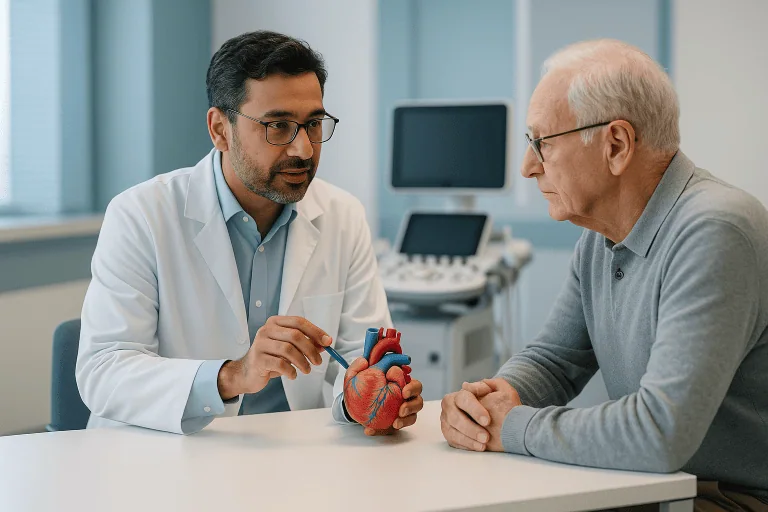
The pacemaker system usually has two main parts. The first is a pulse generator, a sealed unit containing the battery and electronic circuitry, typically placed under the skin in the upper chest, most often just below the collarbone. The second is one or more leads, thin, insulated wires guided through a vein into specific chambers of the heart. The leads carry two-way traffic: they deliver pacing impulses to the heart muscle and send information about the heart’s own electrical activity back to the device. Which chambers are paced, and with how many leads, depends on the rhythm problem being treated.
What does a permanent pacemaker actually do?
A permanent pacemaker watches the heart’s own rhythm continuously and steps in only when that rhythm becomes too slow, pauses or fails to conduct properly between chambers. It does not “take over” the heart in the way many people imagine. In most patients it works as a support system: as long as the natural rhythm is adequate, the device stays in the background. When the heartbeat drops below a programmed rate, a pause occurs or an electrical signal is blocked on its way from the upper to the lower chambers, the pacemaker delivers a carefully controlled impulse that prompts the heart to beat. The settings are programmed to match your medical condition and can be adjusted at follow-up visits as your needs change. Most people cannot feel the device pacing.
When a Slow or Irregular Heartbeat Becomes a Decision About Treatment
Being told that you may need a permanent pacemaker can feel unsettling, especially if the recommendation follows fainting, unexplained fatigue, breathlessness, dizziness or an abnormal heart tracing. Many patients worry about what it means to live with an implanted heart device: whether they will feel it working, how daily life will change, and whether it is safe to travel for care. These concerns are natural. It helps to understand that a pacemaker is usually recommended not because the heart has stopped working, but because its electrical system is no longer providing a reliable rhythm for the rest of the body.
The heart depends on precisely timed electrical signals. When those signals become too slow, blocked or irregular, the brain, muscles and other organs may not receive enough blood flow at the right moments. Some people experience dramatic symptoms such as fainting without warning. Others notice a gradual decline in stamina, mental clarity or exercise tolerance that they attribute to age or stress. In some patients, a dangerously slow rhythm is discovered during monitoring before any serious symptom has occurred, for example, on a pre-operative ECG or during treatment for another heart condition.
Permanent pacemaker implantation is a well-established procedure designed to support a safer, steadier heartbeat. For appropriately selected patients, pacing reduces symptoms caused by slow rhythms and helps protect against rhythm pauses that could lead to falls, injury or medical emergencies. The decision to implant is a medical one, made after the cause of the rhythm problem is understood, not simply because a slow heart rate was recorded once.
Types of Pacemakers
The main types of pacemakers are single-chamber, dual-chamber, biventricular (resynchronisation) and leadless systems, and the right choice depends on which part of the heart’s electrical pathway has failed. The differences matter, because a device configured for one rhythm disorder may not be the right answer for another.
Single-chamber pacemaker
A single-chamber pacemaker uses one lead to sense and stimulate one chamber of the heart, usually the right ventricle or, in selected cases, the right atrium. It is often chosen when pacing support is needed in only one chamber, for example, in certain patients with atrial fibrillation and a slow ventricular response, where atrial pacing would serve no purpose.
Dual-chamber pacemaker
A dual-chamber pacemaker uses two leads, commonly one in the right atrium and one in the right ventricle, so that the device can coordinate the timing between the heart’s upper and lower chambers. This mimics the natural sequence of the heartbeat more closely and is a frequent choice for patients with atrioventricular block or sinus node dysfunction whose atria still beat in an organised rhythm.
Biventricular pacing (cardiac resynchronisation therapy)
Some patients with heart failure have an electrical conduction delay that causes the two ventricles to contract out of step with each other. In selected cases, a more complex pacing system, cardiac resynchronisation therapy, or CRT, is used to restore coordination between the ventricles. This differs from a standard pacemaker in purpose and configuration, but it belongs to the same broader family of implanted rhythm devices. Whether CRT is appropriate depends on heart function, ECG findings, symptoms and guideline-based criteria, and the assessment is more extensive than for conventional pacing.
Leadless pacemaker
A leadless pacemaker is a small, self-contained device placed directly inside the heart through a catheter-based approach, usually via a vein in the leg. There is no chest pocket and no transvenous lead system, which removes some of the long-term considerations attached to leads and surgical pockets. Leadless pacing is suitable only for selected patients. Suitability depends on the specific rhythm disorder, the patient’s anatomy, age, activity level, other medical conditions and expected long-term pacing needs: it is not a universal replacement for conventional systems.
Device selection is therefore a clinical decision, not a preference exercise. The number of leads, the pacing mode and the initial programming should all match the diagnosis, the expected amount of pacing and the patient’s lifestyle and prognosis.
Who May Need a Permanent Pacemaker?
Permanent pacemakers are most commonly recommended for people whose heart rhythm is persistently too slow, or whose electrical conduction system has become unreliable in a way that matches their symptoms. Sometimes the need is obvious: an episode of fainting with documented rhythm pauses on a monitor. Sometimes it only becomes clear after a period of extended monitoring for vague but persistent complaints.
Typical symptoms that lead to evaluation include dizziness, near-fainting, fainting, unusual fatigue, breathlessness on exertion, reduced exercise capacity, chest discomfort, confusion, palpitations or an unexplained drop in energy. In older adults, slow rhythms may present differently, as falls, weakness or episodes of disorientation rather than classic cardiac symptoms. Some patients have no symptoms at all but show significant rhythm abnormalities during testing, particularly before planned surgery or during treatment for another heart condition.
Diagnosis begins with a careful medical history, a physical examination and a review of every medication you take. Several drugs used for blood pressure, rhythm control and other conditions can slow the heart, so physicians first assess whether the rhythm problem might be reversible or medication-related, decisions about those medicines always sit with the treating doctor. Blood tests may check thyroid function, electrolyte levels and other contributors. A standard electrocardiogram captures the heart’s rhythm at a single moment; ambulatory monitoring records rhythm patterns over hours, days or longer. For intermittent symptoms, extended rhythm monitoring is often the key that links a symptom to a documented pause.
Additional testing may include echocardiography to evaluate heart structure and pumping function, exercise testing to see whether the heart rate rises appropriately with activity, and specialised electrophysiology assessment in selected cases. The goal is not simply to identify a slow heart rate. It is to determine whether the rhythm abnormality is clinically important, whether it explains the patient’s symptoms, and whether a pacemaker is genuinely the right treatment.
Patients who travel for care often arrive with prior ECGs, Holter reports, discharge summaries or a device recommendation from a cardiologist at home. Where appropriate, cardiology teams can review such records in advance, which helps clarify whether additional testing is likely to be needed and whether pacemaker implantation is a reasonable option to consider before any journey is planned.
Conditions Treated With Permanent Pacemakers
A permanent pacemaker may be recommended for several disorders of the heart’s natural electrical system, each with its own logic for pacing.
One common indication is sinus node dysfunction, sometimes called sick sinus syndrome. Here, the heart’s natural pacemaker, the sinus node, no longer generates impulses consistently or fast enough. Patients may have persistent bradycardia, long pauses, alternating slow and fast rhythms, fatigue or fainting. Pacing provides a dependable minimum rate when the sinus node fails to do so.
Another major indication is atrioventricular block, also known as AV block or heart block. In AV block, electrical signals from the upper chambers do not reliably reach the lower chambers. Some forms are mild and need only monitoring. More advanced forms can cause dangerously slow heart rates, dizziness, syncope or sudden rhythm pauses. A permanent pacemaker maintains the ventricular rhythm when natural conduction is interrupted, which is why advanced AV block is one of the clearest reasons to implant.
Pacemakers are also used in some patients with atrial fibrillation and a slow ventricular response, particularly when the slow rate causes symptoms, or when medications that are otherwise necessary slow the heart excessively. In these patients, pacing support can make it possible to continue treatment that would otherwise be limited by bradycardia.
Some patients need pacing after procedures that affect the conduction systemcertain valve interventions, cardiac surgeries or catheter-based rhythm treatments such as ablation procedures. In these situations the medical team assesses whether the conduction problem is temporary and likely to recover, or persistent and better treated with a permanent device. That judgement often determines the timing of implantation.
In selected heart failure patients with impaired pumping function and electrical dyssynchrony, a resynchronisation pacing system may be recommended, as described above. The criteria are specific, and the decision rests on heart function, ECG findings and symptoms rather than heart rate alone.
It is worth stating plainly: not every slow heart rate requires a pacemaker. Some athletes and healthy individuals naturally have low resting heart rates without any danger. Temporary slowing caused by medication, infection, sleep apnoea, metabolic problems or a reversible illness may resolve when the underlying cause is treated. A careful diagnosis is essential before permanent implantation, and a good cardiology team will say so when a pacemaker is not the answer.
How Pacemaker Insertion Is Performed
Pacemaker insertion is usually a planned, minimally invasive procedure carried out in a cardiac catheterisation laboratory or electrophysiology room under sterile conditions. Understanding each stage, preparation, the procedure itself and the first hours afterwards, removes much of the uncertainty. The steps below apply to conventional transvenous systems; leadless implantation follows a different, catheter-based route.
Preparation before pacemaker insertion
Preparation starts with confirming the indication for pacing and selecting the most appropriate device type. Your cardiology team reviews your symptoms, rhythm recordings, imaging results, medical history, current medications and any prior procedures. If you take blood thinners, diabetes medications or medicines that affect heart rhythm, your treating doctor will give you specific, individualised instructions about how these are handled around the procedure: the bleeding risk of continuing must be balanced against the clotting or rhythm risk of interrupting, and that balance differs from patient to patient.
Before implantation, patients usually have blood tests, an ECG and imaging as needed. The skin over the planned implantation site is assessed and infection risk is considered. You will be asked about allergies, previous reactions to anaesthesia, any existing implanted devices, and occupational or lifestyle factors that may influence device choice, for example, which side you shoot, swim or carry loads on. Because sedation is typically used, you will receive instructions about eating and drinking beforehand; the general principles are explained in our guide to fasting before tests and procedures, though your own team’s instructions always take precedence.
Is a permanent pacemaker a major surgery?
No, permanent pacemaker implantation is generally considered a minor, minimally invasive procedure rather than major surgery. It does not involve opening the chest or stopping the heart, and most implants are performed under local anaesthetic with sedation rather than general anaesthesia. That said, “minor” does not mean trivial. It is still a surgical procedure with real, if uncommon, risks, bleeding, infection, lead displacement, injury to nearby structures, and it requires disciplined wound care and staged activity afterwards. General anaesthesia is reserved for selected cases where the patient’s condition or procedural complexity requires it.
How long is a permanent pacemaker procedure?
A permanent pacemaker procedure often takes about one to several hours. Where a case falls in that range depends on whether the system is single-chamber, dual-chamber or more complex, whether the patient has challenging venous anatomy, and whether there are previous cardiac devices to work around. Resynchronisation implants generally take longer than simple single-lead systems because an additional lead must be positioned precisely. Your team can usually give you a realistic estimate for your specific device once the plan is fixed.
What happens during the procedure, step by step
Although details vary between patients, a conventional transvenous implant follows a recognisable sequence:
- 1. Anaesthesia and positioning. Local anaesthetic numbs the upper chest, and sedation keeps you comfortable and relaxed. Monitoring of heart rhythm, blood pressure and oxygen levels runs throughout.
- 2. Incision and pocket creation. The physician makes a small incision in the upper chest, usually below the collarbone, and creates a pocket under the skin to house the pulse generator.
- 3. Lead placement under imaging. Using real-time X-ray guidance, one or more leads are advanced through a vein toward the selected heart chambers. Lead position is chosen carefully, not simply by convenience.
- 4. Electrical testing. Before anything is fixed in place, the team measures pacing thresholds, sensing quality and lead stability to confirm that the heart responds appropriately and that the device reads the heart’s own signals accurately.
- 5. Connection and closure. Once testing is satisfactory, the leads are connected to the generator, the device is settled into the pocket and the incision is closed.
- 6. Confirmation and programming. A chest X-ray or other imaging may confirm lead position and check for early complications. The pacemaker is interrogated and programmed with initial settings tailored to your rhythm and clinical needs before discharge planning begins.
The technology in the room supports precision at each of these stages: imaging systems guide lead placement in real time, electrical measurement equipment quantifies how well each lead performs, and device programmers set the pacing parameters. In some cases echocardiography, venous imaging or additional monitoring is used to support decision-making during the implant.
Immediately after the procedure
After implantation, you are monitored while the sedation wears off. The team checks your heart rhythm, blood pressure, oxygen levels, the wound and the device’s function. Mild soreness, tightness or bruising around the incision is common in the first days and is usually manageable with simple medications recommended by your physician; the general approach to comfort after procedures is described in how we control pain after surgery and invasive procedures.
You will typically be advised to limit vigorous movement of the arm on the implant side for a period, especially raising the arm high above the shoulder or carrying heavy objects. These restrictions exist for one specific reason: they reduce the risk of a lead shifting before the tissues have healed around it. Walking is usually encouraged early, and activity is increased gradually according to medical advice. Many patients stay in hospital for observation and a device check; the exact length of stay depends on the medical condition, rhythm stability, the type of procedure and, for visiting patients, travel considerations.
Recovery After Permanent Pacemaker Implantation
Recovery varies from person to person, but most patients follow a gradual, predictable path from wound healing to a return to normal routines. The table below summarises what patients can typically expect; your own team’s instructions may differ and should be followed.
| Time Period | What Patients Can Expect |
|---|---|
| Day 1 | Monitoring of heart rhythm, wound site and device function. Mild soreness or bruising is common. The pacemaker is checked before discharge planning. |
| First Week | Patients usually walk and perform light activities. The incision should be kept clean and dry according to instructions. Arm movement on the implant side is limited. |
| First Month | Most daily activities gradually resume. Heavy lifting, strenuous upper-body exercise and abrupt shoulder movements may remain restricted until the physician confirms healing. |
| Longer Term | Regular device checks assess battery, leads and rhythm data. Patients receive guidance about travel, airport screening, medical procedures and safe use of electronic devices. |
Before leaving hospital, you receive wound care instructions, activity guidance and a clear explanation of which changes at the incision or in your symptoms should be reported to a doctor. Keeping the dressing and wound as instructed, and respecting the arm-movement limits, are the two things that matter most in the first weeks.
How to wear a bra with a pacemaker?
In the first weeks after implantation, choose a soft bra whose strap does not press on the incision, many women find a front-fastening, wireless or strapless style most comfortable, or place a small pad of soft gauze between the strap and the healing wound. The generator usually sits below the collarbone, close to where a standard strap runs, so pressure and friction on that spot are the problems to avoid while the site heals. Once the wound has fully healed and your physician confirms the pocket is settled, most women return to their usual underwear without difficulty. If a strap continues to rub over the device long-term, a wider or padded strap on that side usually resolves it. Ask your care team before your discharge if you are unsure what suits your incision position.
Why am I so tired with a pacemaker?
Feeling tired after a pacemaker is implanted can have several explanations, and it is worth investigating rather than accepting. In the early weeks, fatigue is often part of normal recovery from the procedure itself. Beyond that period, there are three broad possibilities. First, the pacemaker’s settings may not yet be ideal for your body, for example, the rate-response programming that increases your heart rate with activity may need adjustment, which is exactly what routine device checks are for. Second, the original fatigue may never have been caused by the slow rhythm alone: anaemia, thyroid problems, heart failure, lung disease, sleep apnoea, medication effects and deconditioning all cause tiredness that pacing cannot fix. Third, in a small group of patients, the pacing pattern itself can contribute to symptoms, which a cardiologist can assess and address through reprogramming or a change in strategy. Persistent fatigue after implantation is a legitimate reason for a device check and a broader medical review with your cardiologist.
Follow-up and device checks
Follow-up is not an optional extra; it is half of pacemaker therapy. The device must be checked periodically to assess battery status, lead function, recorded rhythm events and pacing settings. Some modern pacemakers can be followed through remote monitoring systems, depending on the device type and what is available in your country, though even with remote follow-up, in-person checks are needed at intervals. Programming adjustments over the years can improve comfort, exercise response and battery longevity. Patients who received their device abroad should leave with clear documentation for their cardiologist at home, including the device model, current settings and follow-up recommendations. Practical questions about flying, airport security and travelling with an implanted device are covered in our guide to medical travel with a pacemaker or ICD.
Why Acting Early Matters
Slow or unreliable heart rhythms should not be ignored, particularly when they cause fainting, near-fainting, falls, severe fatigue or breathlessness. A rhythm pause can lead to loss of consciousness without warning. For older adults, that can mean fractures, head injury or a lasting loss of independence. In patients with underlying heart disease, rhythm instability can also worsen heart failure symptoms or limit the use of medications that would otherwise help.
Delaying evaluation allows symptoms to become more frequent or more dangerous. Some patients adapt to a slow rhythm without realising it, reducing activity, avoiding stairs, attributing fatigue to age or stress. Over time, this masks a treatable problem. In other cases, intermittent rhythm abnormalities are simply missed because appropriate monitoring was never arranged.
Early assessment does not always mean immediate implantation. It means identifying the cause, understanding the level of risk and choosing the right timing. If a pacemaker is needed, timely treatment can reduce the likelihood of recurrent fainting episodes and allow a return to safer daily activity. If a pacemaker is not needed, a proper evaluation identifies other causes of the symptoms and prevents an unnecessary procedure, which is just as valuable an outcome.
Potential Benefits of Permanent Pacemaker Treatment
The benefits of pacemaker implantation depend on the rhythm disorder being treated, the patient’s overall heart health and the reason pacing was recommended. For the right indication, the gains are meaningful; for the wrong one, a pacemaker adds risk without benefit, which is why the diagnostic work described earlier matters so much.
| Benefit | What It Means for You |
|---|---|
| More reliable heart rhythm support | The device monitors your heartbeat and delivers impulses when the rate becomes too slow or conduction fails. |
| Reduction in symptoms related to bradycardia | Many patients experience improvement in dizziness, fainting, fatigue or exercise intolerance when these symptoms are caused by slow rhythm. |
| Protection from significant rhythm pauses | Pacing can reduce the risk of sudden pauses that may cause syncope, falls or injury in appropriately selected patients. |
| Better ability to use necessary medications | Some patients can continue important heart medications that might otherwise slow the pulse too much, when pacing support is in place. |
| Personalised rhythm programming | Settings can be adjusted over time according to your heart rhythm, activity level, symptoms and follow-up findings. |
What Influences Outcomes and a Good Result?
A good result begins with the right diagnosis. Pacemakers are well established for the rhythm problems they are designed to treat, clinically significant bradycardia and conduction block above all. But symptoms such as fatigue and breathlessness have many possible causes. If the underlying problem is lung disease, anaemia, valve disease, heart failure or a medication effect, pacing alone will not resolve it. Careful pre-procedure assessment aligns the treatment with the true cause of the symptoms, which is the single biggest determinant of whether a patient feels better afterwards.
Device selection matters next. The number of leads, the pacing mode and the programming should match the specific rhythm disorder and the expected amount of pacing. A patient with sinus node dysfunction needs a different approach from a patient with complete AV block, and patients with reduced pumping function may need additional evaluation to determine whether a resynchronisation strategy is more appropriate than conventional pacing.
The quality of the implantation itself influences both early and long-term results. Precise lead positioning, secure fixation, careful pocket creation, rigorous infection prevention and accurate electrical testing all contribute to how the device performs over years. The patient’s anatomy, prior procedures, vascular access, body build and bleeding risk all feed into procedural planning.
Underlying health conditions play a role too. Diabetes, kidney disease, immune suppression, active infection, anticoagulant use and frailty may increase certain risks or call for additional precautions. Patients with structural heart disease, valve disease, coronary disease, including those who have had stent proceduresor heart failure often need coordinated cardiac care that extends well beyond the pacemaker itself.
And follow-up, as described above, is essential. A pacemaker is not a one-time event but a long-term therapy. Regular checks identify changes in pacing needs, arrhythmia episodes, lead performance and battery status, and allow the programming to evolve with you.
Living with a permanent pacemaker day to day
Living with a permanent pacemaker requires sensible precautions rather than a restricted life. Most household electronics, phones, microwaves, computers, televisions, can be used safely when standard precautions are followed, such as not resting a mobile phone directly over the device for prolonged periods. You should always inform healthcare providers about your pacemaker before MRI scans, surgery, radiation therapy and certain dental or dermatological procedures. Many modern pacemaker systems are designed to allow specific imaging, including MRI, under controlled conditions, but compatibility must be confirmed by the medical team for your exact device and leads, never assumed. At airports, security staff should be told about the device; carrying your device identification card makes screening straightforward, and standard screening is managed routinely by travellers with pacemakers worldwide. Over the long term, the practical adjustments most patients make are small: protecting the implant site while it heals, keeping device appointments, and carrying documentation when travelling or undergoing any medical procedure.
How Acibadem Organises Permanent Pacemaker Care
For a patient travelling for treatment, the implantation itself may be relatively routine in experienced hands, but the planning around it demands accuracy, coordination and clear communication. At Acibadem hospitals, KD/ permanent pacemaker procedures are delivered within cardiology and electrophysiology services supported by anaesthesia, imaging, nursing and intensive care resources when needed, so that the full pathway, not just the implant, is covered under one roof.
Patients are evaluated according to evidence-based treatment protocols. Rhythm findings are interpreted in the context of symptoms, medications and any underlying heart disease. When cases are complex, they may be discussed by specialist teams or multidisciplinary boards, particularly when pacing decisions intersect with heart failure, valve disease, coronary disease or prior cardiac surgery. This team-based approach keeps the pacemaker plan anchored in the broader cardiac picture rather than in a single rhythm strip.
The diagnostic pathway includes ECG testing, extended rhythm monitoring, echocardiography, laboratory assessment and advanced cardiac imaging when appropriate. During implantation, physicians use imaging guidance, electrical measurement systems and device programming tools to support accurate lead placement and individualised settings. The emphasis is on choosing the appropriate therapy for the individual patient, not on applying the same device configuration to every rhythm problem, and on saying so plainly when a pacemaker is not indicated at all.
For patients arriving from abroad, planning also covers the practical layer: reviewing existing medical records where appropriate before travel, scheduling the necessary tests efficiently, timing the procedure and observation period sensibly against travel dates, and preparing the documentation a home cardiologist will need afterwards, device identification, settings, wound care guidance, medication instructions and follow-up recommendations. Where remote monitoring is suitable for the implanted device, the team advises on how it can be integrated with local cardiology care after the return home. Patients whose situations differ, urgent evaluation after fainting, a second opinion on whether a recommended pacemaker is truly necessary, or revision and replacement of an existing device, follow the same principle: the available data is reviewed first, the likely steps are explained, and any additional testing needed before a final recommendation is stated openly.
Moving Forward With Clear Information
A permanent pacemaker is a long-term therapy for specific heart rhythm problems, and the decision to proceed should rest on careful diagnosis, thoughtful device selection and a realistic understanding of benefits and risks. For the right patient, pacing provides reliable rhythm support, reduces symptoms caused by a slow heartbeat and helps prevent dangerous pauses, and allows a return to daily routines with sensible precautions and regular follow-up.
The questions worth having answered before any implant are the same everywhere: what problem is being treated, why a pacemaker is or is not the recommended answer, what type of device suits the diagnosis, how the procedure is performed, how long recovery is likely to take, and how follow-up will be managed for the years the device will serve. A pathway that answers those questions clearly, before, during and after KD/ permanent pacemaker procedures, is the foundation of a good result.
Preparation
- Before the procedure, cardiology evaluation, ECG, blood tests and imaging may be performed to confirm the need for a pacemaker. Patients should inform their doctor about medications, allergies and implanted devices. Blood thinners or certain medications may need adjustment before admission.
Aftercare
- After implantation, the pacemaker site is monitored for bleeding, swelling or infection. Patients usually avoid lifting the affected arm above shoulder level and heavy activity for several weeks. Regular device checks are scheduled to confirm battery status and pacing function.
Frequently Asked Questions
What affects the cost of a permanent pacemaker procedure?
The main factors are the pacemaker type, lead requirements, diagnostic testing, hospital resources, cardiologist and electrophysiology involvement, length of stay and follow-up needs. Travel, accommodation and interpreter support may also affect the total budget for international patients.
How can I receive a personalised quote?
A personalised quote usually requires recent ECG results, rhythm monitoring reports, echocardiography findings, blood tests, medical history and current medications. Acibadem International can review available documents and arrange a free consultation to outline the appropriate pathway and estimated package inclusions.
Does the quoted package usually include the pacemaker device?
Many international packages may include the device, implantation procedure, hospital stay and early checks, but inclusions vary by case and device model. Patients should confirm whether diagnostics, follow-up visits, medications, translation, transfers and possible additional interventions are included.
Why can costs differ between pacemaker options?
Costs differ because device technology, lead configuration, implantation complexity, imaging needs and monitoring requirements are not the same for every patient. A specialist determines the most suitable option based on the rhythm disorder and overall cardiac condition.
Is it safe to travel for pacemaker implantation?
Many patients travel internationally for cardiac procedures, but safety depends on the urgency of the rhythm disorder, general health, travel distance and post-procedure follow-up plan. A cardiology review is needed before travel decisions are made.
Will I need follow-up after returning home?
Yes. Pacemakers require device checks and ongoing cardiology follow-up. Before treatment, patients should ask how early post-procedure checks are handled and how future device monitoring can be coordinated with a cardiologist in their home country.
Medically reviewed by the Acıbadem International Medical Board September 13, 2026
See our medical review board →
Update history
- PublishedJune 8, 2026
- Medical review approvedSeptember 13, 2026
- Last content updateSeptember 12, 2026
References3
- Pacemakers medlineplus.gov
- Pacemaker nhs.uk
- Permanent Pacemaker my.clevelandclinic.org
Trusted care for international patients
From the Acibadem Blog

Life With a Permanent Pacemaker: What Regular Device Checks Confirm About Battery and Pacing
Regular pacemaker device checks confirm four things: how much battery remains and roughly how many years it should last, whether the leads are intact,…

Which Heart Conditions Need a Pacemaker: The Rhythm Problems It Treats and Why
Pacemakers are mainly used for heart rhythms that are too slow or poorly coordinated. The most common reasons are sick sinus syndrome, where the…

Life with a Pacemaker: Being Alone After Surgery, Flying, MRI, Lifting Your Arm
Many people can be alone after pacemaker surgery once they are home, but most hospitals ask that someone stay with you for the first…

How Long a Pacemaker Lasts: Battery Life and Longevity
A pacemaker's battery typically lasts somewhere between about 5 and 15 years, with many lasting around 6 to 10, depending on how often the…