Quick answer
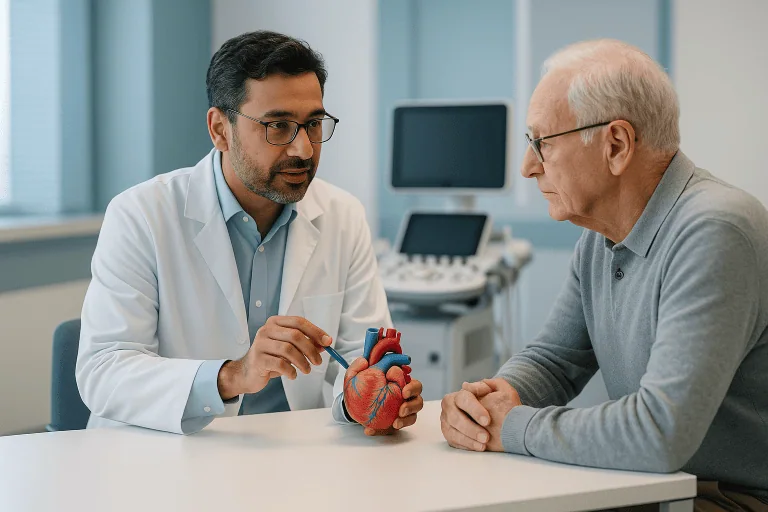
Sick sinus syndrome is a heart rhythm disorder in which the heart’s natural pacemaker does not work properly, causing beats that are too slow, pauses, or alternating slow and fast rhythms. Treatment at Acibadem in Turkey focuses on confirming the rhythm problem with cardiac evaluation and managing symptoms with monitoring, medicines when appropriate, and pacemaker implantation if needed.
What is sick sinus syndrome?
Sick sinus syndrome (ICD-10 code I49.5) is the name for a group of heart rhythm problems caused by a malfunctioning sinus node. The sinus node, sometimes called the sinoatrial node, is a small cluster of specialized cells in the upper right chamber of the heart (the right atrium). It acts as the heart’s natural pacemaker, sending out the electrical signals that tell the heart when to beat. When the sinus node no longer works properly, the heart may beat too slowly, pause between beats, or switch back and forth between slow and fast rhythms.
Understanding what is sick sinus syndrome begins with knowing that it is not a single disease but a pattern of abnormal heart rhythms. Doctors sometimes use the term sinus node dysfunction instead, and the two names describe the same condition. The rhythm disturbances that fall under this umbrella include:
- Sinus bradycardiaa heart rate that is persistently slower than normal.
- Sinus pauses or sinus arrestmoments when the sinus node temporarily stops sending signals, causing a pause between heartbeats.
- Sinoatrial exit blockthe sinus node fires, but the signal is blocked before it can spread to the rest of the heart.
- Tachycardia-bradycardia syndrome (often shortened to tachy-brady syndrome), episodes of a fast heart rhythm, frequently atrial fibrillation (an irregular, rapid rhythm in the upper chambers), alternating with abnormally slow rhythms.
Sick sinus syndrome most often affects older adults, because the sinus node tissue tends to wear down and develop scarring gradually over many decades. The average age at diagnosis is typically in the sixties or seventies, although the condition can occur at any age, including, rarely, in children, usually after heart surgery or in association with certain inherited conditions. Men and women appear to be affected in roughly similar numbers.
Symptoms
Sick sinus syndrome symptoms develop because a heart that beats too slowly, pauses, or races unpredictably may not pump enough blood to meet the body’s needs, especially the brain’s. Many people have no symptoms at all in the early stages, and the condition is sometimes discovered by chance during a routine electrocardiogram (a recording of the heart’s electrical activity, often abbreviated ECG or EKG). When symptoms do appear, they are often vague at first and may come and go, which is one reason the condition can take time to diagnose.
Common sick sinus syndrome symptoms include:
- Fatiguefeeling unusually tired or worn out, even with normal activity.
- Dizziness or lightheadednessoften occurring in brief spells.
- Fainting or near-faintingthe medical term for fainting is syncope; it happens when the brain briefly does not receive enough blood.
- Palpitationsan awareness of the heartbeat, which may feel like fluttering, pounding, racing, or skipped beats.
- Shortness of breathparticularly with exertion.
- Reduced exercise tolerancebecoming winded or exhausted more quickly than expected; doctors call the heart’s failure to speed up appropriately with activity “chronotropic incompetence.”
- Chest discomfortpressure or pain in the chest in some cases.
- Confusion or memory problemsespecially in older adults, when the brain repeatedly receives less blood flow than it needs.
Symptoms can differ depending on the type of rhythm disturbance. People whose main problem is a slow heart rate or long pauses tend to notice fatigue, dizziness, and fainting spells. People with tachycardia-bradycardia syndrome may feel palpitations and a racing heart during the fast episodes, followed by lightheadedness or near-fainting when the heart slows suddenly afterward. In the early stage, symptoms may occur only occasionally, for example, a single unexplained dizzy spell every few weeks, while in more advanced disease they can become frequent and disabling. Because these symptoms overlap with many other conditions, from anemia to medication side effects, they should always be evaluated by a doctor rather than assumed to be caused by aging.
Causes and risk factors
The most common of the sick sinus syndrome causes is age-related wear and tear. Over many years, the sinus node and the surrounding heart muscle can develop fibrosis, which means the gradual replacement of healthy tissue with scar-like tissue that does not conduct electricity well. This degeneration happens slowly, which explains why the condition is most often diagnosed in older adults.
Other recognized causes and contributing factors include:
- Heart diseasecoronary artery disease (narrowing of the arteries that supply the heart), a previous heart attack, high blood pressure, heart failure, and diseases of the heart muscle (cardiomyopathies) can all damage the sinus node or its blood supply.
- Previous heart surgeryoperations on or near the upper chambers of the heart can injure the sinus node; this is a leading cause in children who develop the condition.
- Medicationssome drugs used to treat high blood pressure, angina, or other rhythm problems can slow the sinus node. Examples include beta-blockers, certain calcium channel blockers, digoxin, and some antiarrhythmic medicines. In these cases the sinus node itself may be healthy, and the problem may improve if the medication can safely be adjusted.
- Inflammatory and infiltrative conditionsdiseases such as sarcoidosis, amyloidosis, or hemochromatosis, in which abnormal substances or inflammation build up in heart tissue, can affect the sinus node. Inflammation of the heart (myocarditis) and some infections can also play a role.
- Thyroid problemsan underactive thyroid gland (hypothyroidism) can slow the heart.
- Electrolyte imbalancesabnormal levels of potassium, calcium, or other minerals in the blood can disturb the heart’s electrical system.
- Sleep apnearepeated pauses in breathing during sleep are associated with slow heart rhythms and pauses.
- Genetic factorsrarely, inherited changes in genes that control the heart’s electrical channels cause sinus node dysfunction in younger people or in families.
Risk factors that make sick sinus syndrome more likely include older age, existing cardiovascular disease, high blood pressure, diabetes, obesity, and a history of atrial fibrillation. Sick sinus syndrome and atrial fibrillation frequently occur together, and each condition appears to make the other more likely over time.
Diagnosis
Sick sinus syndrome diagnosis rests on two things: recording an abnormal heart rhythm, and showing that the rhythm abnormality matches the person’s symptoms. Because the rhythm disturbances often come and go, catching one on a recording can take time and more than one type of test.
The evaluation usually includes:
- Medical history and physical examinationthe doctor asks about fainting spells, dizziness, palpitations, exercise tolerance, current medications, and other health conditions, and checks the pulse and blood pressure.
- Electrocardiogram (ECG)a quick, painless recording of the heart’s electrical activity using electrodes placed on the skin. A standard ECG lasts only seconds, so it may look normal if the rhythm problem is not happening at that moment.
- Ambulatory rhythm monitoringbecause symptoms are intermittent, doctors often use wearable monitors. A Holter monitor records every heartbeat continuously, typically for 24 to 72 hours. An event monitor or patch monitor can be worn for days to weeks and captures rhythms when symptoms occur. For symptoms that happen only rarely, an implantable loop recorder, a very small device placed under the skin of the chest in a minor procedure, can monitor the rhythm continuously for months to years.
- Exercise (stress) testingwalking on a treadmill or pedaling a stationary bicycle while the ECG is recorded can show whether the heart rate rises appropriately with activity. Failure of the rate to increase normally supports the diagnosis.
- Blood teststo check thyroid function, electrolytes, and other factors that could explain a slow heart rhythm.
- Echocardiograman ultrasound scan of the heart that shows its structure and pumping function. It does not diagnose sick sinus syndrome directly, but it helps identify underlying heart disease.
- Electrophysiology studyin selected cases, a specialist threads thin, flexible tubes (catheters) through a blood vessel into the heart to test the sinus node’s function directly. This is not needed for most people, because rhythm monitoring usually provides the answer.
An important part of the diagnosis is a careful review of medications, since drug-induced slowing of the heart can mimic sick sinus syndrome. Doctors also aim to correlate symptoms with the recorded rhythm, for example, showing that a dizzy spell occurred at the same moment as a long pause on the monitor. This correlation strongly influences treatment decisions.
Treatment options
Sick sinus syndrome treatment depends on how severe the symptoms are, what type of rhythm disturbance is present, and whether a reversible cause can be found. Care for this condition is usually coordinated by a cardiologist (a heart specialist), often within a specialized unit such as a Cardiology Department, and in many cases involves an electrophysiologist, a cardiologist with additional training in heart rhythm disorders.
Watchful waiting and correcting reversible causes
If the condition causes no symptoms, treatment may not be needed right away. Your doctor may recommend regular follow-up visits and periodic rhythm monitoring to watch for changes. When a reversible cause is identified, such as a medication that slows the heart, an underactive thyroid, an electrolyte imbalance, or untreated sleep apneaaddressing that cause is often the first step, and in some cases the rhythm improves without further intervention.
Medication adjustments
There is no medication that reliably fixes a failing sinus node over the long term. Instead, drug treatment usually means adjusting or stopping medicines that slow the heart, when it is safe to do so. In tachycardia-bradycardia syndrome, treatment can be complicated: the medicines needed to control the fast rhythms often make the slow rhythms worse. For this reason, people with tachy-brady syndrome frequently need a pacemaker so that rate-controlling medicines can be used safely. If atrial fibrillation is part of the picture, doctors may also prescribe blood-thinning medication (anticoagulants) to lower the risk of stroke, based on an individual assessment of risks and benefits.
Permanent pacemaker
For people with symptoms clearly linked to a slow heart rate or pauses, the standard, definitive treatment is a permanent pacemaker. A pacemaker is a small battery-powered device, implanted under the skin near the collarbone in a procedure usually done under local anesthesia. Thin insulated wires (leads) connect it to the heart. The device monitors the heart continuously and delivers tiny electrical pulses only when the heart’s own rate drops too low, preventing dangerous pauses and relieving symptoms such as fainting and fatigue. Modern pacemakers can also speed up appropriately during exercise. In selected cases, a leadless pacemaker, a miniaturized device placed directly inside the heart through a vein, may be an option. Pacemaker implantation is generally considered a low-risk procedure, though, as with any procedure, complications such as infection, bleeding, or lead problems can occur, and your doctor will discuss these with you. It is important to understand that a pacemaker treats the slow rhythms; it does not cure fast rhythms such as atrial fibrillation, which may still need medication or other treatment.
Procedures for associated fast rhythms
When atrial fibrillation or other fast rhythms accompany sick sinus syndrome, doctors may consider catheter ablation. In this procedure, a specialist uses catheters inside the heart to create small, targeted scars that block the abnormal electrical pathways causing the fast rhythm. Ablation does not repair the sinus node itself, but it can reduce or eliminate the fast episodes in suitable patients. Open surgery is rarely needed for sick sinus syndrome alone; surgical approaches are generally reserved for people who are undergoing heart surgery for other reasons.
Living with sick sinus syndrome / outlook
For most people, sick sinus syndrome is a manageable condition rather than an immediately life-threatening one, especially once symptoms are recognized and treated. With a pacemaker, symptoms such as fainting, dizziness, and severe fatigue often improve substantially, and many people return to their usual activities, including work, travel, and moderate exercise. The overall outlook depends more on any underlying heart disease, such as coronary artery disease or heart failure, than on the sinus node problem itself.
Living well with the condition usually involves:
- Regular follow-uppacemakers need periodic checks, either in clinic or through remote monitoring, and batteries typically require replacement after a number of years.
- Medication adherencetaking prescribed medicines, including any blood thinners for atrial fibrillation, exactly as directed.
- Heart-healthy habitsmanaging blood pressure, cholesterol, blood sugar, and weight; not smoking; limiting alcohol; and staying physically active within limits agreed with your doctor.
- Treating related conditionssuch as sleep apnea or thyroid problems, which can affect heart rhythm.
- Device awarenessfollowing your care team’s guidance about strong magnetic or electrical fields and informing other healthcare providers, including before MRI scans, that you have a pacemaker. Many modern devices are MRI-compatible under specific conditions.
Sick sinus syndrome is generally a progressive condition, meaning the sinus node tends to work less well over time, and some people who initially need only monitoring later require a pacemaker. Atrial fibrillation may also develop or worsen over the years, which is one reason ongoing follow-up matters. No treatment can guarantee freedom from symptoms, but with appropriate care, most people achieve good symptom control and quality of life.
Frequently asked questions
What is sick sinus syndrome in simple terms?
It is a problem with the heart’s natural pacemaker, the sinus node, which sits in the upper right chamber of the heart and sets the heartbeat. When this node malfunctions, the heart may beat too slowly, pause between beats, or alternate between slow and fast rhythms. The result can be fatigue, dizziness, palpitations, or fainting, although some people have no symptoms at all, particularly early on.
Can sick sinus syndrome heal on its own?
In most cases, no. When the cause is age-related scarring of the sinus node, the condition tends to progress gradually rather than improve. However, when the slow rhythm is caused by something reversible, such as a medication, a thyroid problem, or an electrolyte imbalance, correcting that cause can restore a normal rhythm. Only a doctor can determine whether a reversible cause is present, which is why proper evaluation is important.
How serious is sick sinus syndrome?
Seriousness varies widely. Some people have mild, infrequent symptoms for years, while others experience fainting spells that can lead to falls and injuries, or develop atrial fibrillation, which carries a risk of stroke. Untreated symptomatic disease can significantly affect safety and quality of life. With appropriate treatment, most often a pacemaker when symptoms are linked to slow rhythms, the condition is usually well controlled, and long-term outlook depends largely on any other heart disease that is present.
Does everyone with sick sinus syndrome need a pacemaker?
No. People without symptoms may only need monitoring, and those whose slow rhythm is caused by a medication or another treatable condition may improve once that cause is addressed. A pacemaker is generally recommended when symptoms such as fainting, dizziness, or severe fatigue are clearly linked to slow heart rates or pauses, or when necessary medicines for fast rhythms would make the slow rhythms dangerous. Your doctor will weigh these factors with you.
What does recovery after pacemaker implantation involve?
Pacemaker implantation is usually a relatively short procedure, and many people go home the same day or after an overnight stay. For a period of weeks afterward, doctors typically advise limiting vigorous movement of the arm on the side of the implant while the leads settle and the incision heals. Most people resume normal daily activities fairly quickly, followed by routine device checks. Your care team will give you specific instructions, and timelines vary from person to person.
Can I exercise with sick sinus syndrome?
In many cases, yes, regular, moderate physical activity is generally encouraged for heart health, but the right level depends on your symptoms, your treatment, and any other heart conditions. People whose heart rate does not rise properly with exertion may feel limited until the condition is treated; a pacemaker with rate-responsive settings often improves exercise tolerance. Always discuss an exercise plan with your doctor before starting or intensifying activity.
Is sick sinus syndrome the same as atrial fibrillation?
No, but the two are closely related. Sick sinus syndrome is a failure of the heart’s natural pacemaker, while atrial fibrillation is a chaotic, fast rhythm arising in the upper chambers. They often occur together, particularly in tachycardia-bradycardia syndrome, and each may make the other more likely over time. They are treated differently: pacemakers address slow rhythms, whereas atrial fibrillation may require medication, blood thinners, or ablation procedures.
When to see a doctor
Anyone experiencing recurrent dizziness, unexplained fatigue, palpitations, fainting, or a persistently slow or irregular pulse should be evaluated by a doctor. These symptoms have many possible causes, and only proper testing can determine whether sick sinus syndrome or another condition is responsible. Specialized evaluation and long-term management are typically provided by cardiology services, such as those at Acibadem hospitals and comparable centers.
Seek emergency medical care right away if you or someone near you experiences any of the following red-flag warning signs:
- Fainting or collapse, especially if it occurs without warning, during exertion, or results in injury.
- Chest pain or pressure lasting more than a few minutes or accompanied by sweating, nausea, or pain spreading to the arm, neck, or jaw.
- Severe shortness of breath at rest or that comes on suddenly.
- A very slow, very fast, or highly irregular heartbeat together with dizziness, confusion, or feeling faint.
- Signs of strokesudden weakness or numbness on one side of the body, facial drooping, trouble speaking, or sudden vision loss, particularly important because atrial fibrillation, which often accompanies sick sinus syndrome, raises stroke risk.
- New confusion or unresponsiveness, especially in an older adult with a known heart rhythm problem.
If you already have a pacemaker and notice a return of your previous symptoms, persistent hiccup-like muscle twitching in the chest, or redness, swelling, warmth, or drainage at the device site, contact your care team promptly, as these can signal a device or lead problem or an infection that needs timely attention.
Medically reviewed by the Acıbadem International Medical Board September 2, 2026
See our medical review board →
Update history
- PublishedJune 14, 2026
- Medical review approvedSeptember 2, 2026
- Last content updateSeptember 2, 2026