Heart Block
Heart Block is a heart rhythm conduction problem. Learn symptoms, causes, diagnosis, treatment options and when to seek medical care.
Quick answer
Heart block is a problem with the heart’s electrical conduction system that slows or interrupts the signals controlling the heartbeat, which can cause dizziness, fatigue, fainting, or a slow pulse. Treatment depends on the type and severity and may include monitoring, medication review, management of underlying heart disease, or pacemaker implantation, with diagnosis based on tests such as electrocardiography and…
What is heart block?
Heart block is a problem with the heart’s electrical system. To understand what is heart block, it helps to know how a healthy heartbeat works. Every heartbeat begins with an electrical signal in the upper right chamber of the heart, in an area called the sinus node (the heart’s natural pacemaker). That signal travels down through a relay station called the atrioventricular node, or AV node, and then into the lower chambers (the ventricles), telling them to squeeze and pump blood to the body. In heart block, this signal is slowed, partially interrupted, or completely blocked on its way from the upper chambers to the lower chambers. The condition is also called atrioventricular block, or AV block.
Doctors describe heart block in degrees, based on how severely the signal is disturbed:
- First-degree heart block: the electrical signal is slowed but still gets through with every beat. Many people with first-degree block have no symptoms at all.
- Second-degree heart block: some signals fail to reach the ventricles, so some heartbeats are skipped. There are two main patterns, often called Mobitz type I (also known as Wenckebach) and Mobitz type II. Type II is generally considered more serious.
- Third-degree (complete) heart block: no signals get through from the upper to the lower chambers. The ventricles beat on their own, usually much more slowly than normal, which can be dangerous.
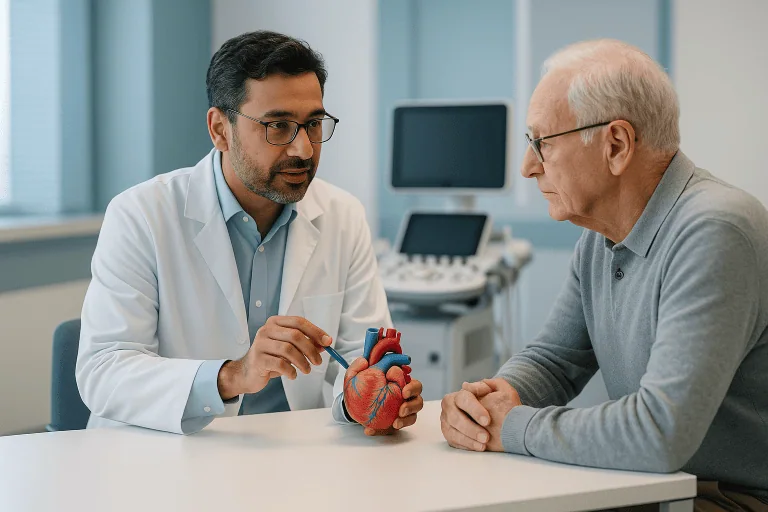
Heart block can affect people of any age. It becomes more common with advancing age, because the heart’s electrical pathways can develop wear-and-tear changes (a process doctors call fibrosis, which is a form of scarring). Some babies are born with heart block, a condition known as congenital heart block. It can also appear temporarily after a heart attack, after certain heart procedures, or as a side effect of some medicines. In hospital settings, heart block is usually evaluated and managed by heart specialists; at Acibadem, for example, this falls under the Cardiology Department.
Symptoms of heart block
Heart block symptoms vary widely depending on the degree of block and how slow the heartbeat becomes. Some people have no symptoms at all and only learn about the condition when an electrocardiogram (a recording of the heart’s electrical activity, often called an ECG or EKG) is done for another reason. Others develop symptoms that clearly affect daily life.
Common heart block symptoms include:
- Dizziness or lightheadedness, especially when standing up or exerting yourself
- Fainting or near-fainting (doctors call fainting “syncope”)
- Fatigue or feeling unusually tired with everyday activities
- Shortness of breath, particularly during exercise
- A slow heartbeat (bradycardia), which you or a fitness device may notice
- Palpitationsan awareness of skipped, irregular, or “fluttering” heartbeats
- Chest discomfort in some cases
- Confusion or difficulty concentrating, if the brain is not getting enough blood flow
Symptoms often track with the degree of block. First-degree heart block usually causes no symptoms and is frequently discovered by chance. Second-degree block, particularly the Mobitz type I pattern, may cause occasional skipped beats, mild dizziness, or no symptoms at all. Mobitz type II and third-degree (complete) heart block are more likely to cause pronounced symptoms such as fainting, severe fatigue, breathlessness, and a very slow pulse. Complete heart block can, in some cases, lead to sudden loss of consciousness or, rarely, cardiac arrest, which is why it is treated as a medical emergency when it causes symptoms.
It is worth knowing that symptoms can come and go. Some forms of heart block are intermittent, meaning the block appears only at certain times, for example, during sleep, during exertion, or unpredictably. This is one reason doctors sometimes need longer-term heart monitoring to confirm heart block diagnosis, as described below.
Causes and risk factors
There are many possible heart block causes, and in some people no single cause is ever identified. Broadly, heart block happens either because a person is born with an abnormality in the heart’s conduction system, or because the conduction system is damaged or affected later in life.
Common heart block causes and contributing factors include:
- Age-related scarring (fibrosis) of the conduction system. This is one of the most common causes in older adults. Over time, the tissue that carries electrical signals can gradually degenerate.
- Coronary artery disease and heart attack. A heart attack (blockage of blood flow to part of the heart muscle) can damage the AV node or the pathways below it. Heart block after a heart attack may be temporary or permanent depending on the location and extent of the damage.
- Medications. Certain drugs that slow the heart’s electrical conduction, including some beta-blockers, calcium channel blockers, digoxin, and some antiarrhythmic medicines, can cause or worsen heart block. This form is often reversible when the medicine is adjusted or stopped under medical supervision.
- Congenital heart block. Some babies are born with heart block. In certain cases this is linked to autoimmune conditions in the mother, such as lupus, or to structural heart defects present from birth.
- Cardiomyopathy and other heart muscle diseases. Conditions that weaken or thicken the heart muscle can also disturb its electrical pathways.
- Infections and inflammation. Myocarditis (inflammation of the heart muscle), endocarditis (infection of the heart’s inner lining or valves), Lyme disease, and rheumatic fever can all cause heart block, which may resolve when the underlying condition is treated.
- Infiltrative and autoimmune diseases. Conditions such as sarcoidosis and amyloidosis, in which abnormal material builds up in body tissues, can involve the heart’s conduction system.
- Heart surgery and cardiac procedures. Operations on or near the heart valves, catheter ablation procedures, and other cardiac interventions can occasionally injure the conduction pathways.
- Electrolyte imbalances. Abnormal blood levels of potassium or other minerals can temporarily disturb the heart’s electrical activity.
- Underactive thyroid (hypothyroidism) and certain other hormonal or metabolic conditions.
Risk factors that make heart block more likely include older age, a history of heart attack or other heart disease, use of medicines that slow conduction, and a family history of conduction problems. Notably, mild first-degree block or Mobitz type I block during sleep can also occur in healthy people with high vagal tone, for example, some well-trained athletes, and in that setting it is not necessarily a disease.
Diagnosis
Heart block diagnosis is based mainly on recordings of the heart’s electrical activity, combined with a careful review of your symptoms, medical history, and medications. Because some forms of heart block come and go, confirming the diagnosis sometimes takes more than one test.
Tests your doctor may use include:
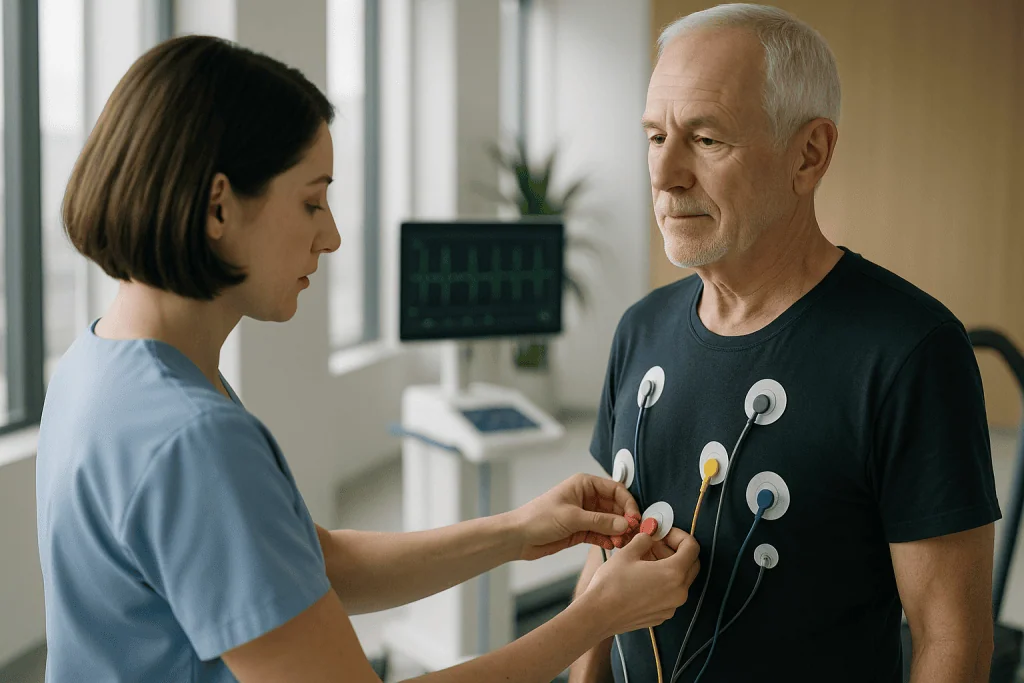
- Electrocardiogram (ECG or EKG). This is the key test. Small stickers (electrodes) on the chest, arms, and legs record the heart’s electrical signals for a few seconds to minutes. The ECG shows how long signals take to travel from the upper to the lower chambers and whether any beats are being dropped. The pattern on the ECG allows doctors to classify the block as first-degree, second-degree (Mobitz type I or II), or third-degree.
- Ambulatory heart monitoring. If the block is intermittent, a standard ECG may look normal. Your doctor may ask you to wear a Holter monitor (a portable ECG recorder worn for 24–48 hours or longer) or an event monitor or patch monitor worn for days to weeks. In selected cases, a tiny device called an implantable loop recorder can be placed under the skin to monitor the heart rhythm for months or years.
- Exercise (stress) testing. Walking on a treadmill or cycling while connected to an ECG can show how the conduction system behaves during exertion, which sometimes reveals block that is not visible at rest.
- Echocardiogram. This ultrasound scan of the heart does not diagnose heart block itself, but it helps doctors look for underlying structural problems, such as heart muscle disease or valve disease, that may be causing or accompanying the block.
- Blood tests. These can check for reversible contributors such as electrolyte imbalances, thyroid problems, certain infections (for example, Lyme disease where relevant), and drug levels of medicines like digoxin.
- Electrophysiology (EP) study. In selected cases, a specialist may recommend a catheter-based test in which thin wires are passed through a blood vessel into the heart to map its electrical activity in detail. This can help pinpoint exactly where the block is occurring, which sometimes affects treatment decisions.
Your doctor will also review every medicine and supplement you take, because adjusting or stopping a conduction-slowing drug is sometimes all that is needed to resolve the block.
Treatment options for heart block
Heart block treatment depends on the degree of block, whether it causes symptoms, whether the cause is reversible, and your overall health. There is no single approach that fits everyone; the goal is to keep the heart beating at a rate that safely supports the body.
Watchful waiting and monitoring
First-degree heart block and Mobitz type I second-degree block often need no treatment at all, especially when there are no symptoms. In many cases, doctors simply monitor the condition with periodic ECGs and check-ups. If a medicine appears to be the cause, your doctor may adjust the dose or switch to an alternative, never stop a prescribed heart medicine on your own.
Treating the underlying cause
When heart block is caused by a reversible condition, such as Lyme disease, myocarditis, an electrolyte imbalance, an underactive thyroid, or a drug effect, treating that condition can allow normal conduction to return. Heart block that appears immediately after a heart attack or heart surgery sometimes improves on its own over days to weeks, so doctors may monitor before deciding on permanent treatment.
Temporary pacing and emergency medicines
If a severe block causes a dangerously slow heartbeat, doctors in the hospital can use medicines such as atropine or a temporary pacemaker, either external pads on the chest or a temporary wire placed through a vein, to support the heart rate until the situation stabilizes or a longer-term solution is in place.
Permanent pacemaker
The standard long-term heart block treatment for symptomatic or high-risk block, including most cases of Mobitz type II and third-degree (complete) heart block, is a permanent pacemaker. A pacemaker is a small battery-powered device implanted under the skin, usually below the collarbone, with one or more thin wires (leads) guided through a vein into the heart. It monitors every heartbeat and sends a tiny electrical impulse whenever the heart’s own signal fails to get through, keeping the heart rate steady. In some patients, doctors use leadless pacemakers (a small capsule placed directly inside the heart) or specialized pacing techniques; the choice depends on individual circumstances.
Pacemaker implantation is generally performed under local anesthesia with sedation and is considered a common, well-established procedure, though like any procedure it carries some risks, which your doctor will discuss with you. After implantation, the device is checked regularly, often remotely, and the battery typically lasts many years before the generator needs to be replaced in a minor procedure. Decisions about whether and when a pacemaker is needed are usually made by a cardiologist or an electrophysiologist (a heart rhythm specialist), such as those working within a hospital cardiology department.
Surgery
Open surgery is not a routine treatment for heart block itself. However, if the block is linked to a structural problem, for example, certain congenital heart defects or valve diseasesurgical repair of that problem may be part of the overall care plan, sometimes together with pacemaker placement.
Living with heart block and outlook
The outlook for people with heart block varies with the type of block and its cause. Many people with first-degree block or mild second-degree block live entirely normal lives and need only occasional check-ups. For people with higher-degree block who receive a pacemaker, symptoms such as fainting, dizziness, and fatigue often improve substantially, and most can return to work, travel, and everyday activities.
Practical points for daily life include:
- Keep follow-up appointments. Even mild heart block can progress over time in some people, so periodic monitoring matters.
- Know your medicines. Carry an up-to-date list and make sure every doctor you see knows about your heart block, since some drugs can worsen conduction.
- If you have a pacemaker, follow device precautions. Modern pacemakers are robust, but you will receive guidance about strong magnetic fields, certain medical procedures (such as MRI scans, which are possible with many newer devices but need planning), and carrying your device identification card.
- Support your overall heart health. Managing blood pressure, cholesterol, diabetes, and not smoking helps protect the heart and its electrical system.
- Stay reasonably active. Most people with treated heart block can exercise; ask your doctor what level of activity is appropriate for you, especially soon after a pacemaker implant.
No one can promise a specific outcome, and heart block that is caused by serious underlying heart disease shares the outlook of that disease. Still, with appropriate monitoring and, when needed, pacing, heart block is a manageable condition for many people.
Frequently asked questions
What is heart block in simple terms?
Heart block means the electrical signal that tells the heart to beat is delayed or interrupted on its way from the upper chambers to the lower chambers. Depending on how severe the interruption is, the heart may beat normally, skip beats, or beat too slowly to meet the body’s needs. It is a problem of the heart’s wiring rather than a physical blockage of blood vessels.
Is heart block the same as a blocked artery?
No. A blocked artery refers to narrowed or obstructed blood vessels supplying the heart muscle, which is the basis of coronary artery disease and heart attacks. Heart block is an electrical problem. The two are different conditions, although a heart attack caused by a blocked artery can sometimes damage the electrical system and lead to heart block.
How serious is heart block?
It depends on the type. First-degree block and Mobitz type I second-degree block are often harmless and may need no treatment. Mobitz type II and third-degree (complete) heart block are more serious because they can cause fainting, a dangerously slow heartbeat, and in rare cases cardiac arrest, so they usually require prompt evaluation and often a pacemaker. Your doctor can tell you which type you have and what it means for you.
Can heart block go away on its own?
Sometimes. Heart block caused by a reversible factor, such as a medication effect, an electrolyte imbalance, Lyme disease, or inflammation of the heart, may resolve when that cause is treated. Block that appears after a heart attack or heart surgery can also improve over time in some cases. However, heart block due to age-related scarring of the conduction system usually does not heal on its own and may gradually progress.
What are the warning signs of heart block getting worse?
Warning signs may include new or more frequent dizziness, fainting or near-fainting spells, worsening fatigue, breathlessness with less activity than before, or noticing that your pulse has become very slow. If you experience any of these, contact your doctor promptly, and seek emergency care for fainting or severe symptoms.
Do all people with heart block need a pacemaker?
No. Many people with milder forms of heart block never need a pacemaker and are simply monitored. A pacemaker is generally recommended when the block causes significant symptoms, when the heartbeat is too slow to be safe, or when the type of block (such as Mobitz type II or complete heart block) carries a high risk of dangerous slowing, even without symptoms. The decision is individualized and made together with a heart rhythm specialist.
Can I exercise and live normally with heart block?
In many cases, yes. People with mild block and no symptoms can usually remain fully active. Those who receive a pacemaker for more advanced block often return to normal activities, including exercise, after a short recovery period. Your cardiologist can advise on any specific limits based on your type of block, your overall heart health, and, if relevant, your device.
When to see a doctor
See a doctor if you notice a persistently slow pulse, unexplained fatigue, episodes of dizziness, palpitations, or reduced ability to exercise. These symptoms have many possible causes, and only a proper evaluation, usually starting with an ECG, can determine whether heart block or another condition is responsible.
Seek emergency medical care immediately if you or someone near you has any of these red-flag signs:
- Fainting or sudden loss of consciousness
- Severe dizziness with a very slow pulse
- Chest pain or pressure, especially with breathlessness, sweating, or nausea
- Sudden, severe shortness of breath
- Sudden confusion or difficulty staying awake
- Collapse or a heartbeat that seems to stop or become extremely slow
If you have already been diagnosed with heart block, tell any new healthcare provider about your condition and your medications, and report any change in your symptoms to your care team without delay. Early evaluation gives doctors the best chance to identify the type of heart block and choose the safest course of action for you.
Medically reviewed by the Acıbadem International Medical Board September 3, 2026
See our medical review board →
Update history
- PublishedJune 8, 2026
- Medical review approvedSeptember 3, 2026
- Last content updateSeptember 3, 2026