Pores: An Evidence-Based Guide for Patients

Pores are a normal and necessary part of healthy skin. Pore size is influenced by genetics, oil production, age, sun damage, and skin conditions such as acne.
Key Takeaways
- Pores are a normal and necessary part of healthy skin.
- Pore size is influenced by genetics, oil production, age, sun damage, and skin conditions such as acne.
- Pores cannot be permanently shrunk, but their appearance can often be improved with consistent skin care.
- Gentle cleansing, non-comedogenic products, sun protection, and targeted treatments can help prevent clogged pores.
- A dermatologist should assess pores that are persistently clogged, inflamed, or associated with acne, rash, or sudden skin changes.
Pores are tiny openings in the skin that play an important role in releasing oil and sweat. They cannot be permanently opened, closed, or removed, but good skin care and treatment of underlying skin conditions can make pores look less noticeable and help prevent clogging.
Overview: What pores are and why they matter
Pores are small openings on the surface of the skin. Most are connected to hair follicles and sebaceous glands, which produce sebum, the skin’s natural oil. These openings help oil reach the skin surface, where it supports the skin barrier and helps keep the skin from becoming overly dry.
People often talk about pores as a cosmetic concern, especially when they appear large or become clogged. In reality, pores are a normal part of skin structure. They do not need to be removed, and they cannot be made to disappear. What usually changes is how visible they look, which depends on skin type, oil production, age, sun exposure, and whether debris is trapped inside them.
It is also helpful to separate myths from facts. Pores do not literally open and close like doors. Heat, steam, and cold can affect the way skin feels, but they do not permanently change the anatomy of a pore. Skin care works mainly by reducing excess oil, clearing buildup, improving skin texture, and treating related conditions such as acne.
Why pores can look enlarged or become clogged
Pore visibility varies widely from person to person. Genetics plays a large role, which is why some people naturally have more noticeable pores, especially on the nose, cheeks, and forehead. Oily skin can make pores appear larger because more sebum stretches the opening and increases shine on the skin surface.
Dead skin cells, makeup, sunscreen, and environmental particles can mix with oil and collect inside pores. When this material remains trapped, a pore may look darker, more raised, or more obvious. Blackheads are a common example. Their dark color does not mean dirt is present; it usually reflects oxidation of material inside the pore after exposure to air.
Age and sun damage can also affect pore appearance. As the skin loses collagen and elasticity over time, support around the pore opening decreases. This can make pores seem wider or less firm. For some people, repeated squeezing, harsh scrubbing, or use of irritating products worsens inflammation and texture, which can make pores stand out more rather than less.
Common signs, skin patterns, and related concerns
Pores themselves usually do not cause symptoms. What people notice is their appearance or the changes that happen when pores become blocked or irritated. Common concerns include shiny skin, rough texture, blackheads, whiteheads, small bumps, and areas that seem uneven under makeup or in bright light.
In some cases, enlarged or clogged pores are linked with broader skin issues. These may include acne-prone skin, combination or oily skin, sun-damaged skin, and signs of aging. If the surrounding skin becomes red, painful, or repeatedly inflamed, the issue may be more than cosmetic and may need medical attention.
Sometimes people confuse normal pores with other skin findings. Sebaceous filaments, for example, are tiny collections of oil lining the pore and are especially common on the nose. They are normal and often return even after cleansing. By contrast, persistent inflamed bumps, cysts, or scarring suggest a condition that should be assessed by a dermatologist rather than treated with repeated extraction at home.
- More visible pores on the nose, cheeks, or forehead
- Blackheads or whiteheads
- Oily shine and uneven texture
- Breakouts linked to blocked follicles
- Post-inflammatory marks after picking or squeezing
What increases the risk of pore problems
Several factors can increase the chance that pores will look larger or become blocked. The most important are genetics and oil production. People with naturally oily skin, thicker skin, or a family history of noticeable pores are more likely to develop these concerns. Hormonal changes, including those during puberty, menstrual cycles, and times of stress, can increase sebum production and make pores more noticeable.
Skin care habits also matter. Sleeping in makeup, using heavy or pore-clogging products, and over-washing the skin can all contribute. Over-cleansing may strip the skin barrier and trigger irritation, which can lead people to apply more products or scrub harder, creating a cycle that aggravates the skin. Choosing gentle, non-comedogenic cleansers, moisturizers, and sunscreens is usually more helpful than using many strong products at once.
Sun exposure is another major factor because it damages collagen and elastin, which support the skin around pores. Smoking may also contribute to changes in skin quality over time. In some people, recurrent breakouts, improper extraction, or delayed treatment of acne can leave textural changes and scars that make pores appear more pronounced.
How pore concerns are evaluated
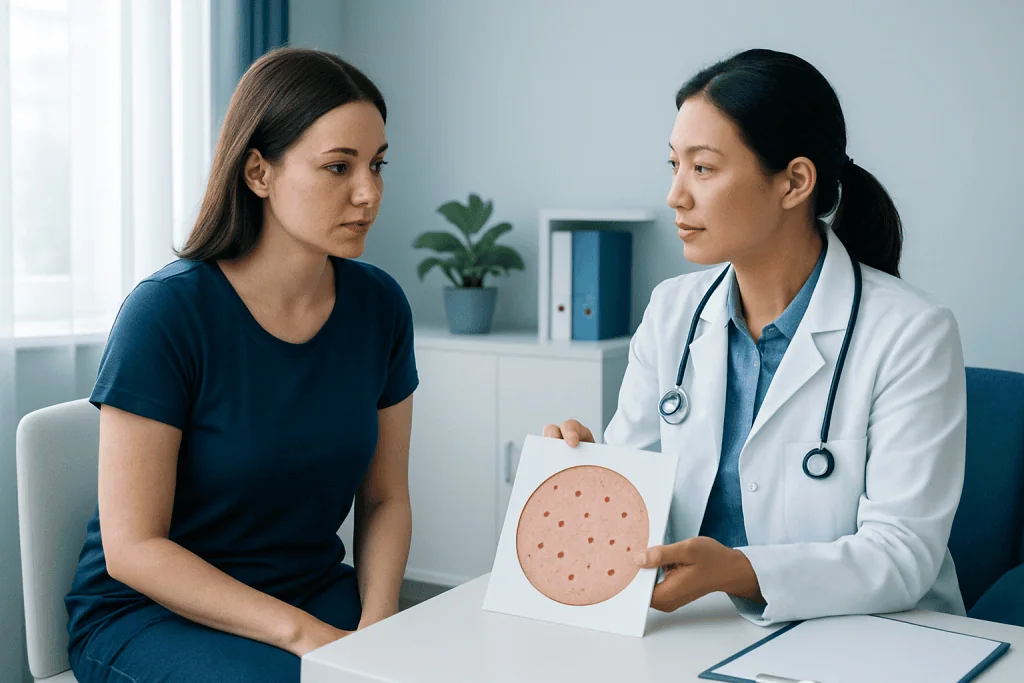
Most concerns about pores can be assessed during a routine skin examination. A doctor or dermatologist looks at where the pores are most visible, whether clogging or inflammation is present, and whether another condition may be contributing. This is important because enlarged-looking pores can overlap with acne, rosacea, sun damage, or textural scarring, and each requires a different approach.
The medical history is often straightforward but useful. A clinician may ask about oiliness, current skin products, sun exposure, recent breakouts, past treatments, hormonal patterns, and whether the skin stings, burns, or flakes easily. These details help identify irritation, overuse of exfoliants, or hidden triggers in a daily routine.
Testing is not usually needed for simple pore visibility. However, if there are signs of infection, severe acne, unusual rashes, pigmentation changes, or rapid changes in the skin, a doctor may investigate further. The goal is to treat the underlying cause rather than focusing only on the visible pore itself.
Treatment options and everyday skin care
The most effective approach is usually a combination of consistent home care and, when needed, professional treatment. Gentle cleansing twice daily helps remove oil, sunscreen, and debris without over-drying the skin. Non-comedogenic moisturizers and daily broad-spectrum sunscreen support the skin barrier and help limit sun-related collagen loss, which can make pores look larger over time.
For clogged pores and rough texture, ingredients such as salicylic acid, retinoids, and occasionally alpha hydroxy acids may be helpful when chosen appropriately for a person’s skin type. Salicylic acid works inside the pore to loosen buildup, while retinoids help normalize skin cell turnover and can improve both acne and texture over time. Results are gradual, and irritation is more likely when products are layered too aggressively.
When home care is not enough, a dermatologist may recommend professional options. These can include chemical peels, extraction of selected comedones, laser or energy-based treatments for texture, and personalized acne management. In some cases, treatment for laser skin resurfacing may be discussed to improve overall texture, while chemical peel treatment may help reduce buildup and refine the skin surface. If enlarged-looking pores are linked to active breakouts, acne treatment may be the most important first step.
It is usually best to avoid squeezing, pore strips used too often, abrasive scrubs, and frequent experimentation with trending products. These methods may temporarily change the skin’s appearance but can worsen irritation, pigmentation, or scarring. A simpler routine followed consistently is often more effective than a complicated one.
Prevention, self-care, and common myths
Good pore care focuses on prevention rather than trying to erase pores. Daily sunscreen is one of the most important steps because ultraviolet exposure contributes to collagen breakdown and uneven texture. Gentle cleansing after sweating, removing makeup before sleep, and using products labeled non-comedogenic can also reduce pore blockage.
People with oily or acne-prone skin often benefit from lightweight moisturizers rather than skipping moisturizer altogether. When the skin barrier becomes irritated or dry, it may feel tighter and look rougher, which can make pores more visible. A balanced routine with a cleanser, moisturizer, sunscreen, and one targeted active ingredient is often enough for many people.
Several common beliefs are misleading. Pores do not contain dirt by default, and blackheads are not caused simply by poor hygiene. Steam can soften surface debris, but it does not permanently open pores. Likewise, ice or cold water cannot permanently close them. The aim of treatment is to keep pores clear, reduce oil and congestion, and improve skin support and texture.
When to seek medical care
Medical care is appropriate when pore concerns are accompanied by persistent breakouts, redness, pain, swelling, cysts, scarring, or dark marks that do not fade. A dermatologist should also assess sudden changes in skin texture, irritation that worsens with over-the-counter products, or bumps that do not behave like ordinary blackheads or whiteheads.
People with sensitive skin, eczema, rosacea, or very reactive skin may need guidance before using exfoliating acids or retinoids. This helps reduce the risk of barrier damage and unnecessary inflammation. A professional assessment can also prevent time spent on products that are not suited to the skin’s actual condition.
Near the end of the care pathway, some people also want help for long-term texture changes after repeated clogging or acne. Acibadem International’s multidisciplinary specialists and JCI-accredited hospitals diagnose and treat skin concerns for international patients, including cases where pores are linked with acne, scarring, or sun-related texture changes.
Frequently asked questions
Can pores be permanently shrunk?
No. Pore size is largely determined by genetics, skin type, and age-related skin changes. Treatments and skin care can make pores look less noticeable, but they do not permanently remove or close them.
Why do pores look larger on the nose and cheeks?
These areas often have more active oil glands, so pores are naturally more visible there. Oily skin, sun damage, and loss of skin elasticity over time can make them appear even larger.
Are blackheads the same as dirty pores?
Not exactly. Blackheads form when oil and dead skin cells collect in a pore and the surface oxidizes on contact with air. They are not simply a sign of poor hygiene.
Do steam, cold water, or ice open and close pores?
No. Pores do not open and close like muscles or valves. Steam may soften surface material and make cleansing easier, while cold can temporarily reduce swelling, but neither changes pore structure permanently.
What ingredients help with clogged pores?
Salicylic acid and retinoids are commonly used because they help clear buildup and improve skin cell turnover. Some people also benefit from gentle alpha hydroxy acids, but the right choice depends on skin sensitivity and other conditions.
When should someone see a dermatologist about pores?
A dermatologist should be seen if pore concerns are linked with painful breakouts, repeated inflammation, scarring, or marks that persist. Professional advice is also useful when over-the-counter products cause irritation or do not help after consistent use.
References
- American Academy of Dermatology
- National Institute of Arthritis and Musculoskeletal and Skin Diseases
- British Association of Dermatologists
- Mayo Clinic
- NHS
This article is for general information only and is not a substitute for professional medical advice. Please consult a qualified doctor about your individual situation.
Hair transplant in Turkey — costs, graft counts & a free assessment
JCI-accredited · board-certified surgeons · reply within 24h