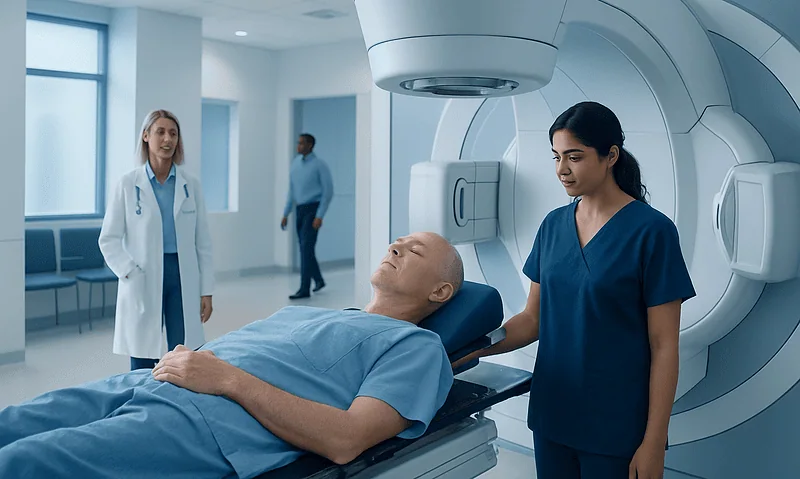
Salvage Radiation: How It Works, Results and What to Expect

Salvage radiation most often treats a rising PSA after prostate cancer surgery, even when scans do not show a visible tumor. Treatment is carefully planned using imaging and computer-guided radiation techniques to target the prostate bed and, in some cases, pelvic lymph nodes.
Key Takeaways
- Salvage radiation most often treats a rising PSA after prostate cancer surgery, even when scans do not show a visible tumor.
- Treatment is carefully planned using imaging and computer-guided radiation techniques to target the prostate bed and, in some cases, pelvic lymph nodes.
- Earlier salvage radiotherapy at a low but rising PSA is generally associated with better outcomes than waiting for a higher PSA level.
- A course commonly involves weekday treatments over several weeks, although the schedule varies by individual treatment plan.
- Urinary, bowel and fatigue symptoms can occur, but the care team can help manage them and monitor for longer-term effects.
Salvage radiation is radiation treatment given after an earlier cancer treatment when tests suggest that cancer may still be present or has returned locally. It is used most commonly for a rising prostate-specific antigen (PSA) level after prostate surgery, with the aim of controlling cancer before it spreads.
Overview: What Is Salvage Radiation?
Salvage radiation is radiation therapy given after a previous cancer treatment when there is evidence that cancer may remain or has returned in or near the original treatment area. The salvage radiation meaning is therefore “treatment intended to regain cancer control” after the first treatment has not fully achieved lasting control. In prostate cancer, it most often refers to external-beam radiotherapy given after removal of the prostate when the PSA blood test becomes detectable or rises.
Salvage radiation therapy does not necessarily mean that a tumor can be seen on a scan. After prostatectomy, PSA should fall to a very low or undetectable level. A confirmed rising PSA can indicate microscopic prostate cancer cells in the prostate bed or nearby lymph nodes, even if conventional imaging appears normal. Treating at this stage may offer the best opportunity for long-term control.
Salvage radiation is different from adjuvant radiation. Adjuvant radiation is planned soon after surgery because pathology findings suggest a higher risk of recurrence, before PSA has risen. Salvage radiotherapy is generally started in response to a rising PSA or other evidence of recurrence. The most suitable approach depends on surgical pathology, PSA pattern, imaging and overall health.
How Salvage Radiation Works and Who May Be a Candidate
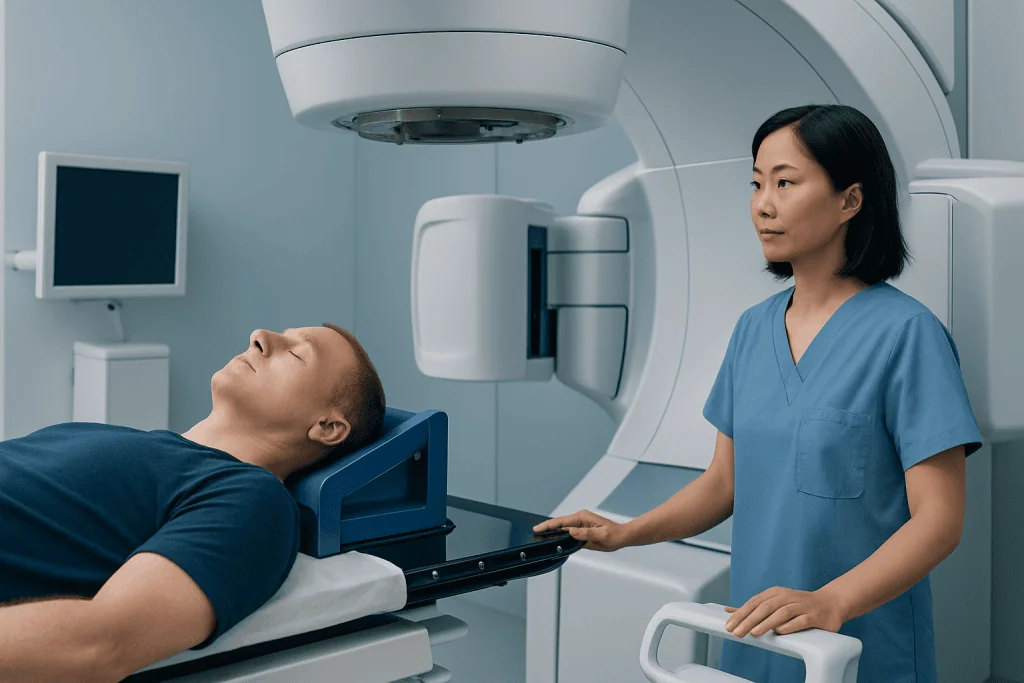
External-beam radiation uses high-energy beams to damage the DNA of cancer cells. Cancer cells are less able than healthy cells to repair this damage, so they gradually stop dividing and die. Modern planning techniques shape and direct radiation precisely, while daily image guidance helps position treatment accurately and reduce exposure to nearby organs such as the bladder and rectum.
After prostate surgery, radiation is usually directed to the prostate bed, the area where the prostate was previously located. Depending on the estimated risk of cancer in the lymph nodes, the plan may also include pelvic lymph nodes. Some people are advised to have temporary androgen-deprivation therapy, also called hormone therapy, alongside radiation; this decision is individualized.
A person may be considered for salvage radiation when PSA becomes detectable and shows a confirmed rise after prostatectomy, when pathology shows features linked with recurrence, or when specialized imaging suggests recurrence limited to the pelvis. The radiation oncologist considers PSA level and doubling time, Gleason grade group, surgical margins, lymph-node findings, prior treatments, urinary and bowel function, and whether disease is visible beyond the pelvis.
Salvage radiation after radiation is a different and more complex situation. If the prostate or pelvis has already received radiation, repeat radiation may sometimes be possible in selected cases, but it requires careful review in an experienced multidisciplinary setting because healthy tissues have already received a prior dose.
Step by Step: What Happens During Salvage Radiation Therapy
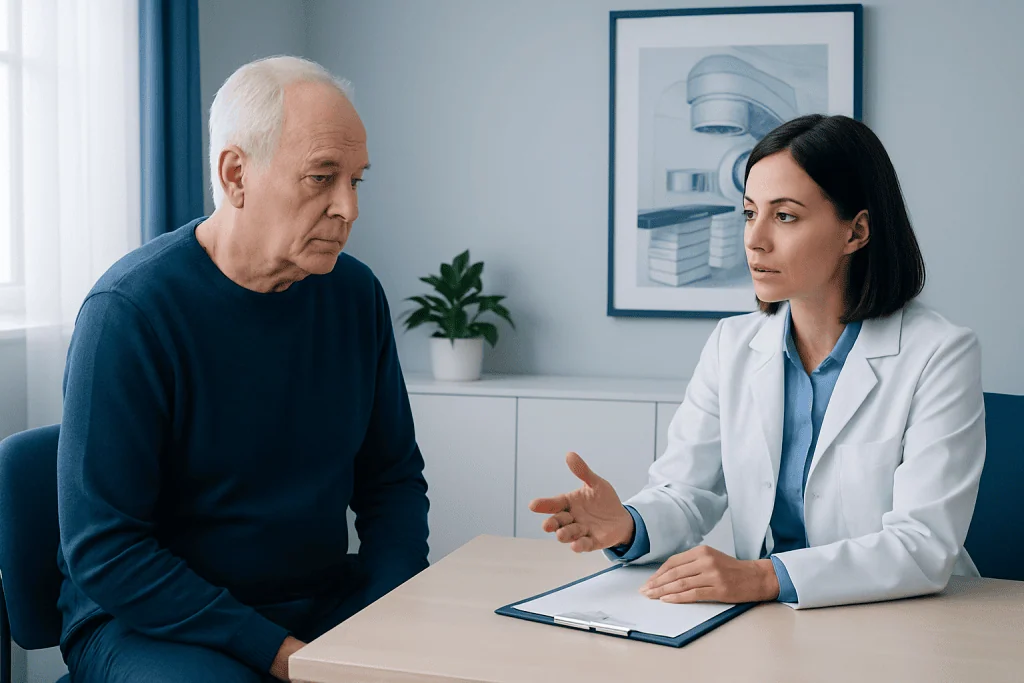
The process begins with a consultation involving a radiation oncologist and often a urologist and medical oncologist. The team reviews pathology reports, PSA results, prior treatment records and imaging. Imaging may include MRI, CT, bone scanning or prostate-specific membrane antigen (PSMA) PET scanning, depending on availability and the clinical question. A negative scan does not rule out microscopic local recurrence.
Next, the patient has a planning CT simulation. They lie in the treatment position while the team creates images used to map the target and nearby organs. Small skin marks or tattoos may be used for consistent positioning. Instructions about bladder filling and bowel preparation may be provided because a comfortably full bladder and empty rectum can help make daily positioning more reproducible.
Radiation specialists then develop an individualized plan. During each treatment appointment, the patient lies on a treatment table while the machine moves around them. Radiation itself is painless, and the patient is not radioactive after external-beam treatment. Most appointments are brief, although setup and image verification can take longer than the actual beam delivery.
Regular reviews during treatment allow the team to check side effects, medications and practical concerns. If hormone therapy is recommended, it may begin before radiation and continue during or after it for a defined period based on the person’s recurrence risk and treatment plan.
How Successful Is Salvage Radiotherapy?
The success of salvage radiotherapy depends on what “success” means for an individual. Common goals include bringing PSA down to an undetectable or very low level, preventing a local recurrence from progressing, delaying or avoiding metastatic disease, and reducing the future need for systemic treatment. For some people with disease confined to the prostate bed or pelvis, salvage radiation can provide durable cancer control.
Outcomes tend to be more favorable when treatment starts early, while PSA is still low but clearly rising, and when the cancer appears likely to be confined to the pelvis. Other helpful factors can include a slower PSA doubling time, favorable surgical findings and no evidence of distant spread. A higher Gleason grade, rapidly rising PSA, lymph-node involvement or disease outside the pelvis can raise the likelihood that additional treatment will be needed.
No PSA level, scan result or pathology feature can predict an individual outcome with certainty. The care team uses these factors to discuss realistic goals and whether radiation should be combined with hormone therapy. Follow-up is essential because PSA response and longer-term disease control are assessed over time rather than from a single test.
For patients seeking coordinated care, Acibadem International’s multidisciplinary specialists and JCI-accredited hospitals evaluate and treat prostate cancer recurrence for international patients, with treatment decisions tailored to clinical findings and personal circumstances.
How Long Does Salvage Radiation Therapy Last?
A salvage radiation course is usually delivered on weekdays, Monday through Friday. The total length depends on the radiation dose, the area being treated, whether pelvic lymph nodes are included, prior treatments and the technology used. Many conventional schedules last several weeks, while selected patients may be suitable for a shorter course using a larger dose per session.
The daily visit is often relatively short, but patients should allow time for check-in, positioning and image guidance. Radiation is typically given as an outpatient treatment, so most people return home after each appointment. The treatment team provides practical instructions for travel, work, activity and symptom management during the course.
Hormone therapy, when recommended, follows a separate timeline and may continue for months depending on recurrence risk. It is not required for everyone receiving salvage radiation. The potential benefits and side effects should be discussed carefully, particularly for people with cardiovascular disease, diabetes, osteoporosis or concerns about sexual health.
Recovery Timeline, Benefits and Possible Risks
Most people continue ordinary daily activities during salvage radiation, although it is reasonable to adjust their pace as needed. Tiredness may build gradually over the course of treatment and can persist for several weeks afterward. Rest, regular gentle movement, adequate fluids and a balanced diet can support recovery, unless a clinician gives different advice.
Short-term urinary effects can include more frequent urination, urgency, burning with urination, weaker stream or waking at night to urinate. Bowel effects may include looser stools, more frequent bowel movements, rectal urgency, cramping or mild rectal irritation. These symptoms are often temporary, but they should be reported promptly so the team can recommend supportive care and check for other causes such as infection.
Potential longer-term effects include persistent changes in urinary or bowel habits, rectal bleeding, urinary leakage, narrowing of the urethra, erectile dysfunction, infertility and, rarely, more serious injury to pelvic tissues. Risks vary with prior surgery, baseline bladder and bowel function, radiation field, other treatments and individual health. Radiation planning aims to keep these risks as low as possible.
The major potential benefit is improved local cancer control and a reduced risk that cancer will progress beyond the pelvis. Before treatment, patients should ask about expected benefits in their specific situation, alternatives such as observation or systemic therapy, and how side effects will be monitored and managed.
How Long Does It Take for PSA to Go Down After Salvage Radiation?
PSA usually does not fall immediately after salvage radiation. Radiation effects develop gradually, and PSA is commonly checked several weeks to a few months after treatment, then at regular intervals. The exact testing schedule varies by clinician and whether hormone therapy is also being used.
For people treated with radiation alone, PSA may decline over months rather than days or weeks. If hormone therapy is given at the same time, PSA can fall more quickly because hormone therapy suppresses testosterone-driven prostate cancer activity. This makes early PSA results harder to interpret as a measure of radiation effect alone.
A single PSA result rarely tells the full story. Doctors look for the overall PSA trend, laboratory consistency and timing relative to treatment. A temporary variation does not automatically mean treatment failure, while a sustained rise after an initial response may prompt repeat testing, imaging or a discussion of further management.
Follow-up also includes checking urinary, bowel, sexual and general wellbeing. Patients should keep scheduled appointments even when they feel well, as PSA monitoring can identify changes before symptoms develop.
What Is the Life Expectancy After Salvage Radiation Therapy for Prostate Cancer?
Life expectancy after salvage radiation therapy for prostate cancer varies widely and cannot be accurately determined from the treatment alone. It depends on whether cancer is localized or has spread, PSA level and doubling time, tumor grade, response to treatment, age, other health conditions and future treatment options. Many people treated for an early biochemical recurrence remain well for years, particularly when recurrence appears confined to the pelvis.
Salvage radiation is intended to improve the chance of long-term control in suitable patients, but it cannot guarantee cure for every person. If cancer has already spread outside the pelvis, radiation may still play an important role in local control or symptom prevention, but systemic treatments may be needed as well.
An oncology team can provide a more individualized outlook after reviewing the pathology, PSA pattern and imaging. Honest discussions about treatment goals, quality of life and follow-up plans can help patients make decisions that reflect their preferences as well as the medical evidence.
When to Seek Medical Care
Anyone who has had prostate cancer surgery should contact their urologist or oncology team if PSA becomes detectable or rises on repeat testing. A rising PSA does not cause symptoms, which is why regular follow-up blood tests are important. Early discussion allows the team to assess whether salvage radiation or another approach may be appropriate.
During or after radiation, patients should contact their treatment team for troublesome urinary burning, inability to pass urine, fever, severe diarrhea, dehydration, heavy rectal bleeding, worsening pelvic pain or symptoms that interfere with eating, drinking or daily life. Urgent medical assessment is appropriate for severe symptoms, chest pain, sudden shortness of breath, confusion or signs of a serious allergic reaction.
Patients should not stop prescribed medicines or start supplements intended to treat cancer without speaking to their clinician. A radiation oncologist, urologist and medical oncologist can work together to ensure that changing PSA results and treatment side effects are assessed safely.
Frequently asked questions
What is the salvage radiation definition?
Salvage radiation is radiotherapy given after an earlier cancer treatment when tests suggest cancer may remain or has returned. In prostate cancer, it is most often used after prostatectomy when PSA becomes detectable or rises, suggesting microscopic cancer cells may be present in the pelvis.
Is salvage radiation painful?
External-beam salvage radiation is not painful while it is being delivered. Some people develop urinary, bowel or fatigue symptoms gradually during treatment, but the care team can suggest measures to relieve them and should be told about any new or worsening symptoms.
Can salvage radiation cure recurrent prostate cancer?
Salvage radiation can provide long-term cancer control and may be curative for some people whose recurrence is confined to the prostate bed or nearby pelvic area. The likelihood of benefit depends on PSA level and trend, pathology findings, imaging results and whether cancer has spread beyond the pelvis.
Why might hormone therapy be used with salvage radiation?
Hormone therapy lowers or blocks the effect of testosterone, which can slow prostate cancer growth. It may be combined with salvage radiation for people with higher-risk features, but it is not necessary for every patient and has its own possible side effects.
Can PSA rise again after salvage radiation?
Yes. A PSA rise after salvage radiation can occur if cancer cells remain or are present outside the treated area. Doctors usually confirm a trend with repeat blood tests and may recommend imaging or additional treatment based on the full clinical picture.
What should a patient do to prepare for salvage radiation appointments?
The radiation team will provide individualized instructions, often including guidance about bladder filling, bowel habits, medicines and skin care. Patients should bring questions to appointments and tell the team about urinary or bowel symptoms, other health conditions and any medications or supplements they use.
References
- National Cancer Institute
- American Cancer Society
- American Urological Association
- European Association of Urology
- National Comprehensive Cancer Network
This article is for general information only and is not a substitute for professional medical advice. Please consult a qualified doctor about your individual situation.
Oncology care in Turkey — second opinion and treatment plan
JCI-accredited · board-certified surgeons · reply within 24h
Add us as a Preferred Source to see more of our trusted health content across Google Search, AI Overviews and Discover.