Signs of Concussion Toddler: Common Causes, Related Conditions, and When to See a Doctor

Toddlers may not be able to describe headache, dizziness, or confusion, so adults need to watch for behavior and movement changes. Vomiting, excessive sleepiness, poor balance, irritability, and reduced interest in play can be signs of concussion in a toddler.
Key Takeaways
- Toddlers may not be able to describe headache, dizziness, or confusion, so adults need to watch for behavior and movement changes.
- Vomiting, excessive sleepiness, poor balance, irritability, and reduced interest in play can be signs of concussion in a toddler.
- A concussion can happen even without loss of consciousness.
- Emergency evaluation is important for severe symptoms such as repeated vomiting, seizure, trouble waking, worsening confusion, or weakness.
- Most mild concussions improve with medical guidance, rest, and a gradual return to normal activity.
Signs of concussion in a toddler often show up as behavior changes rather than clear verbal complaints. Common clues include vomiting, unusual sleepiness, irritability, balance problems, or acting unlike usual after a bump, fall, or blow to the head.
Overview: what signs of concussion in a toddler can look like
Signs of concussion toddler concerns often look different from concussion symptoms in older children or adults. Because toddlers cannot always explain a headache, dizziness, or feeling “not right,” the first clues are often changes in behavior, sleep, movement, feeding, or play after a head injury.
A concussion is a mild traumatic brain injury caused by a bump, blow, or jolt to the head or body that affects how the brain works for a short time. A toddler does not need to lose consciousness to have a concussion. In fact, many young children with concussion stay awake but seem quieter, more irritable, less steady, or less interested in usual activities.
Not every bump on the head causes a concussion, and many minor head injuries heal without complications. Still, any toddler who develops new symptoms after a fall, collision, or other head injury should be monitored closely and assessed by a qualified clinician when symptoms are concerning or persistent.
Common signs and symptoms parents may notice
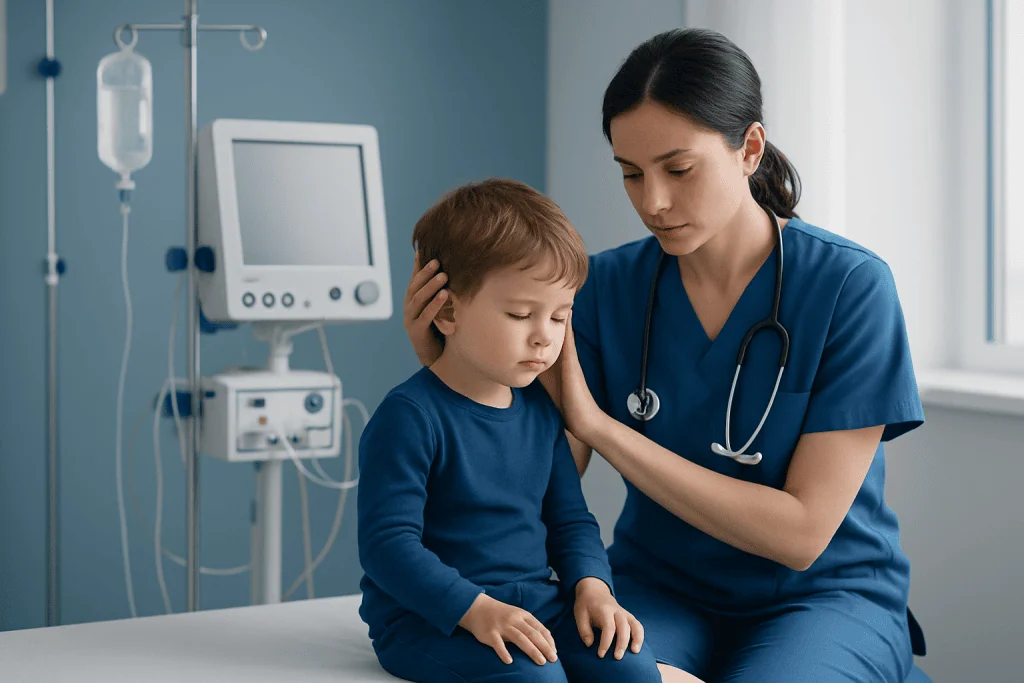
In toddlers, concussion symptoms are often easiest to spot by comparing the child with their usual behavior. A child who is normally active may become clingy, fussy, sleepy, or uninterested in toys. Another child may cry more than usual, resist being handled, or seem less coordinated while walking or climbing.
Common signs of concussion in a toddler can include:
- Vomiting, especially more than once
- Unusual sleepiness or difficulty staying alert
- Irritability, crying more than expected, or trouble being consoled
- Loss of balance, stumbling, or seeming unsteady
- Acting confused, dazed, or less responsive
- Reduced interest in eating, nursing, drinking, or playing
- Complaints of head pain, if the toddler can express it
- Sensitivity to light or noise
- Changes in sleep patterns, including sleeping more or less than usual
Some toddlers may also develop symptoms a few hours later rather than immediately after the injury. That delayed pattern is one reason it is important for caregivers to continue observing the child during the first day or two, even if the initial bump seemed minor.
Common causes and related conditions
Most toddler concussions happen during everyday play and exploration. Falls from beds, sofas, stairs, playground equipment, or a caregiver’s arms are common causes. Collisions with furniture, walls, or another child can also lead to a head injury. Motor vehicle crashes are another important cause, which is why age-appropriate car seats are essential.
Concussion is one type of head injury, but it is not the only possible result of a blow to the head. A toddler may instead have a scalp bruise, a cut, a facial injury, or no meaningful injury at all. In some cases, doctors need to rule out more serious problems such as a skull fracture or bleeding around the brain, especially if symptoms are severe or worsening.
Related conditions can overlap with concussion symptoms. For example, vomiting or sleepiness can happen with fever, infection, or dehydration, while poor balance may also occur with an ear problem or another neurological issue. Depending on the injury pattern and symptoms, a doctor may consider whether the child could have a more significant brain bleed or another neurological condition that needs prompt evaluation.
How doctors diagnose concussion in toddlers
There is no single blood test or scan that confirms every concussion. Diagnosis is mainly based on what happened, when symptoms started, and how the toddler is acting during the examination. Doctors usually ask about the mechanism of injury, whether the child cried right away, whether there was vomiting or loss of consciousness, and how behavior has changed since the event.
The physical examination typically includes checking alertness, eye movements, balance, coordination, pupil response, and signs of injury on the scalp or face. In young children, the exam also focuses on whether they can interact normally for their age, walk steadily if developmentally able, and tolerate feeding or drinking.
Imaging is not needed for every toddler with a possible concussion. However, a clinician may recommend urgent imaging if there are warning signs such as repeated vomiting, worsening drowsiness, abnormal neurological findings, a high-risk mechanism of injury, or concern for skull fracture. When brain imaging is needed, doctors may use MRI in selected situations, although in emergencies a CT scan is more commonly chosen because it is fast and helps detect acute bleeding.
Treatment and recovery after a toddler concussion
Most concussions in toddlers are managed with careful observation, rest, and follow-up rather than surgery or invasive treatment. During the first day or two, the goal is to reduce overstimulation and watch for worsening symptoms. Quiet play, a calm environment, and avoiding rough activity are usually recommended. Caregivers should follow the examining clinician’s instructions about sleep, fluids, meals, and symptom monitoring.
Complete isolation in a dark room is usually not necessary for a mild concussion, but it helps to limit activities that seem to worsen symptoms. Screen time may need to be reduced if it increases fussiness or discomfort. As symptoms improve, most toddlers can gradually return to normal routines, supervised play, and daycare with guidance from their doctor.
If recovery is not following the expected course, specialists may be involved. A child with persistent balance problems, ongoing symptoms, or concern for a broader nervous system issue may be referred for neurology evaluation or further assessment. In more complex injuries, a team approach can help address sleep, behavior, movement, and developmental needs.
When to seek medical care
Any toddler with a head injury should be seen urgently if there are red-flag symptoms. These include repeated vomiting, a seizure, trouble waking up, severe or worsening sleepiness, weakness, abnormal walking, a large swelling on the head in a very young child, fluid or blood from the nose or ears, or behavior that is becoming more confused or less responsive.
Medical assessment is also important if the child briefly lost consciousness, had a high-impact injury, or is not acting like themselves several hours after the event. Caregivers should trust their instincts. If a toddler seems significantly different from normal and the cause is unclear, prompt evaluation is appropriate.
For children with severe symptoms or concern for a more serious brain injury, doctors may involve emergency medicine, pediatrics, and neurosurgery teams. Near the end of recovery planning, some families may also seek care at centers such as Acibadem International, where multidisciplinary specialists in JCI-accredited hospitals evaluate and treat neurological and pediatric conditions for international patients.
Prevention and practical self-care at home
Not every toddler head injury can be prevented, but simple safety steps reduce risk. Using stair gates, window guards, stable high chairs, and age-appropriate car seats helps protect young children during daily routines and travel. Play areas should be supervised, and climbing surfaces should be suitable for the child’s age and development.
After a mild head injury, home care should focus on comfort and observation. Caregivers can encourage fluids, offer quiet activities, and check whether symptoms are improving, staying the same, or getting worse. It is helpful to avoid roughhousing, jumping, bike riding, or playground activity until a doctor says the child is ready.
Parents and caregivers often feel anxious after a toddler falls, especially if symptoms are subtle. Writing down the time of injury, when vomiting happened, sleep changes, and any unusual behavior can make it easier to explain the child’s course to a doctor. That record can be especially useful if symptoms continue beyond the first few days or if the child needs specialist follow-up.
Frequently asked questions
Can a toddler have a concussion without passing out?
Yes. Loss of consciousness is not required for a concussion diagnosis. Many toddlers with concussion stay awake but show changes such as irritability, vomiting, sleepiness, poor balance, or acting differently than usual.
How long do concussion symptoms last in a toddler?
Many toddlers improve over days to a couple of weeks, but recovery time varies. Symptoms that persist, worsen, or interfere with sleep, play, feeding, or balance should be discussed with a doctor.
Should a toddler sleep after a head injury?
Sleep is not automatically dangerous after a mild head injury, but the child should first be assessed for concerning symptoms. A doctor may recommend normal sleep with observation, especially if the toddler is otherwise alert and improving.
Is vomiting always a sign of concussion in a toddler?
No. Vomiting can happen for several reasons after a fall, including crying, stress, or an unrelated illness. However, vomiting after a head injury should be taken seriously, especially if it happens repeatedly or is accompanied by sleepiness, confusion, or balance problems.
When should a toddler go to the emergency room after hitting their head?
Emergency care is appropriate for repeated vomiting, seizure, trouble waking up, worsening drowsiness, unusual weakness, severe confusion, or any obvious neurological change. Care is also urgent after a high-force injury or if the child looks seriously unwell.
Can a toddler return to daycare or play right away after a concussion?
Usually not immediately if symptoms are still present. A gradual return to normal routines is safest, with rest first and then a stepwise increase in activity guided by a healthcare professional.
References
- Centers for Disease Control and Prevention
- American Academy of Pediatrics
- National Institute of Neurological Disorders and Stroke
- Mayo Clinic
- World Health Organization
This article is for general information only and is not a substitute for professional medical advice. Please consult a qualified doctor about your individual situation.
Explore treatments in Turkey — costs, top hospitals & a free quote
JCI-accredited · board-certified surgeons · reply within 24h