Skin Plaque — Explained by Medical Evidence, Not Myths

A skin plaque is a descriptive term for a raised, flat or broad skin lesion, not a single disease. Color, scale, itch, thickness, and body location help doctors identify the underlying cause.
Key Takeaways
- A skin plaque is a descriptive term for a raised, flat or broad skin lesion, not a single disease.
- Color, scale, itch, thickness, and body location help doctors identify the underlying cause.
- Common causes include psoriasis, eczema, fungal infection, chronic irritation, and immune-related inflammation.
- Treatment depends on the diagnosis and may include moisturizers, medicated creams, light therapy, or systemic medicines.
- New, spreading, painful, bleeding, or persistent plaques should be assessed by a qualified doctor.
Skin plaque is a broad medical term for a raised, usually flat-topped area of skin that feels different from the surrounding surface. It is not a diagnosis by itself, but a visible sign that can appear in conditions such as psoriasis, eczema, fungal infections, or other inflammatory skin disorders.
What is a skin plaque?
A skin plaque is a raised, broad area on the skin that is usually more than 1 centimeter across and feels different from the nearby skin. Doctors use the word plaque to describe how a lesion looks and feels rather than to name a single illness. In practical terms, it often appears as a flat-topped or slightly thickened patch that may be red, pink, brown, silvery, rough, scaly, or smooth depending on the cause.
This matters because many different conditions can produce plaques. For example, some are inflammatory, such as psoriasis, while others may be linked to chronic rubbing, allergy, infection, or sun damage. A plaque can be itchy, sore, flaky, or completely symptom-free, so the appearance alone does not always tell the whole story.
People often use words like rash, patch, spot, or bump interchangeably, but in dermatology these words have different meanings. A patch is flat, while a plaque is raised. That distinction helps clinicians narrow down possible causes and choose the most useful examination or test.
How skin plaques can look and feel
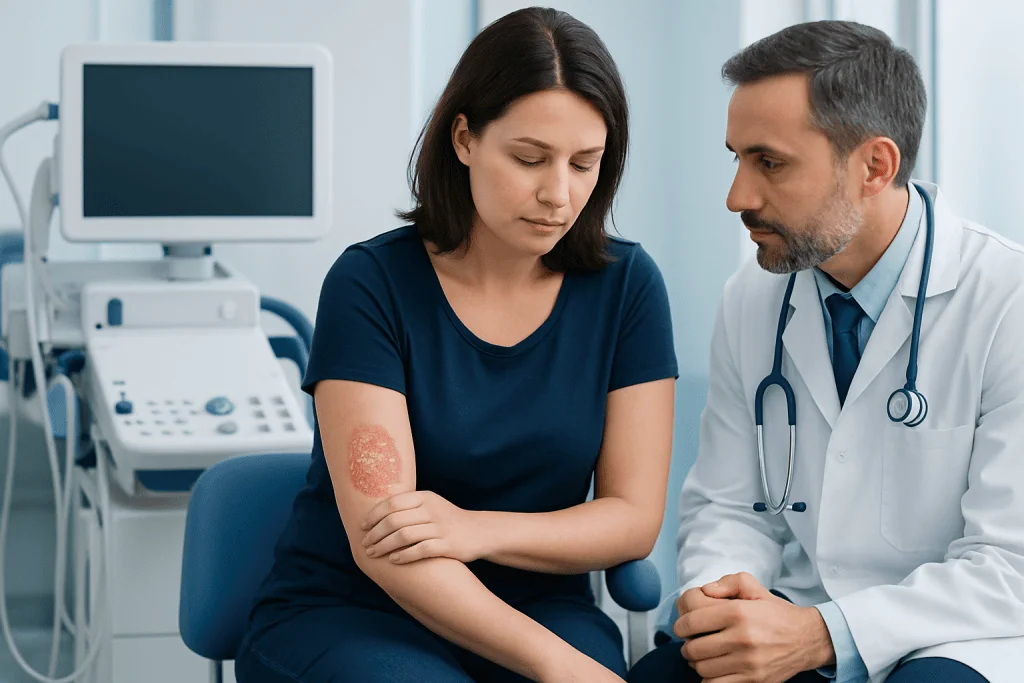
Skin plaques vary widely. Some are well-defined, meaning the border is easy to see, while others blend gradually into the surrounding skin. The surface may be dry and flaky, thick and leathery, or waxy and smooth. In some cases, silvery scale suggests psoriasis; in others, a ring-shaped border can suggest a fungal infection.
Symptoms can also differ. A plaque may itch, sting, burn, crack, or bleed after scratching. Some people mainly notice tightness or rough texture. Others are bothered more by color change and visibility on exposed areas such as the scalp, elbows, knees, hands, or face.
Doctors also pay attention to where plaques appear and whether they are symmetrical. Plaques on the elbows, knees, and scalp can point toward psoriasis. Thickened itchy plaques in skin folds or areas that are frequently scratched may suggest eczema or lichenification. A careful visual pattern often provides important clues before any test is done.
- Common plaque features include scaling, redness, thickening, and dryness.
- Itch is common but not universal.
- Location and distribution are often as important as the plaque’s color or size.
Common causes and risk factors

Inflammatory skin diseases are among the most common reasons for skin plaques. Psoriasis is a classic example, producing well-defined plaques with scale because skin cells build up more quickly than usual. Eczema can also lead to plaques, especially when long-term scratching causes the skin to thicken. In some people, contact dermatitis from irritants or allergens creates persistent rough, raised areas.
Infections are another possibility. Certain fungal infections can create plaque-like lesions, especially when they expand outward and develop a more active border. Less commonly, bacterial or viral conditions may produce localized plaques. Because treatment differs greatly between inflammatory and infectious causes, it is important not to assume all scaly plaques are the same.
Other contributors include chronic friction, autoimmune activity, genetic tendency, dry skin, stress, smoking, obesity, and some medications. Age, immune status, climate, and personal or family history of skin disease may also increase risk. Some plaques are linked to sun damage or precancerous change, which is one reason persistent lesions deserve professional evaluation.
When skin plaques are part of a known inflammatory condition, care may overlap with broader dermatology care and, for confirmed psoriasis, more specific psoriasis treatment plans.
How doctors diagnose the cause
Diagnosis starts with a focused medical history and skin examination. A doctor may ask when the plaque started, whether it itches or hurts, whether it changes with stress or seasons, and whether there are triggers such as new soaps, cosmetics, metals, workplace exposures, or medications. Family history can also be helpful, especially for psoriasis, eczema, and autoimmune disease.
The physical examination looks at more than one lesion. Doctors assess shape, border, color, scale, thickness, location, and whether nails, scalp, or mucous membranes are involved. A full-body check may be needed because the distribution pattern can be more revealing than a close-up of a single plaque.
Sometimes the diagnosis is clear from the clinical appearance alone. In other situations, further tests help confirm it. These may include a skin scraping for fungus, patch testing for allergy, dermoscopy, or a small skin biopsy if the lesion is unusual, long-lasting, or suspicious for a precancerous or cancerous process. Imaging is not usually needed for a simple skin plaque.
Treatment options for skin plaque
Treatment depends entirely on the underlying diagnosis. A general skin plaque does not have one single treatment because it is a sign, not a disease. The first step is identifying whether the cause is inflammatory, infectious, irritant-related, or something more specific. Once the cause is clear, treatment can be targeted and is usually more effective.
For inflammatory plaques, doctors often recommend regular moisturizers and prescription topical medicines such as corticosteroids, vitamin D analogs, calcineurin inhibitors, or other anti-inflammatory creams depending on the body area and diagnosis. Thick scale may improve with keratolytic ingredients that help loosen buildup. If plaques are widespread or resistant, light-based therapy or systemic medicines may be considered under specialist supervision, including phototherapy when appropriate.
If the plaque is caused by a fungal infection, antifungal treatment is used instead of anti-inflammatory medicine alone. This distinction is important because the wrong cream can sometimes mask an infection and delay proper care. Avoiding triggers, reducing scratching, and supporting the skin barrier with gentle cleansing and consistent hydration are important in many conditions.
When plaques are chronic, follow-up matters. Skin diseases often improve and flare over time, and treatment may need to be adjusted based on response, side effects, body site, and the impact on daily life. A dermatologist can help tailor care for sensitive areas such as the face, scalp, genitals, hands, or skin folds.
Self-care and prevention habits
Not every skin plaque can be prevented, especially when genetics or immune-related inflammation are involved. Even so, daily skin care can reduce discomfort and may help lower the chance of flares. Fragrance-free moisturizers, gentle cleansers, lukewarm showers, and avoiding harsh scrubbing are often useful first steps.
People who notice patterns should try to identify personal triggers. These may include dry weather, sweating, rough fabrics, scratching, stress, fragranced products, or certain workplace irritants. Keeping nails short and using cold compresses instead of scratching can help protect the skin barrier. If the scalp is affected, using a doctor-recommended shampoo or scalp treatment may be part of self-care.
Sun protection is also important, especially for plaques that are persistent, changing, or located on sun-exposed skin. While controlled light treatment can help some inflammatory conditions, unprotected sun exposure is not a substitute for medical care. Healthy lifestyle habits such as smoking cessation, weight management, stress reduction, and sleep support may also improve overall skin health in some people.
- Use fragrance-free moisturizers regularly.
- Avoid picking, scratching, and aggressive exfoliation.
- Seek advice before using over-the-counter steroid creams for a long time.
- Watch for signs of infection such as increased pain, pus, or warmth.
When to seek medical care
Medical evaluation is a good idea if a skin plaque is new, spreading, painful, repeatedly returning, or not improving with basic skin care. Care is especially important when the plaque bleeds, crusts, changes color or shape, forms an open sore, or appears on the face, genitals, palms, or soles. These features do not always mean something serious, but they do mean the lesion should be assessed properly.
People should also seek care if plaques interfere with sleep, work, movement, or confidence, or if they occur with joint pain, fever, widespread rash, or signs of infection. In children, older adults, and people with weakened immune systems, earlier assessment is often wise because the range of causes can be broader and treatment needs may differ.
Specialist review can help when plaques are difficult to diagnose or manage. Acibadem International’s multidisciplinary specialists and JCI-accredited hospitals diagnose and treat skin conditions for international patients, including complex or persistent plaque-forming disorders. For some individuals, assessment may involve broader skin specialist care to confirm the cause and guide long-term treatment safely.
Frequently asked questions
Is skin plaque the same as psoriasis?
No. Skin plaque is a descriptive term for a raised, broad skin lesion, while psoriasis is one specific condition that commonly causes plaques. Many other problems, including eczema, fungal infection, and chronic irritation, can also produce plaques.
Can a skin plaque go away on its own?
Sometimes it can, depending on the cause. A plaque related to mild irritation may improve once the trigger is removed, but persistent or recurrent plaques often need medical assessment and targeted treatment.
Are all scaly plaques fungal infections?
No. Scale can happen with psoriasis, eczema, seborrheic dermatitis, fungal infection, and other skin conditions. Because treatments differ, it is best not to self-diagnose based on scale alone.
What does a doctor look for when examining a skin plaque?
A doctor looks at the size, shape, border, thickness, color, scale, and exact location of the plaque. They also ask about itch, pain, triggers, family history, and whether similar lesions are present elsewhere on the body.
Should over-the-counter steroid creams be used on any skin plaque?
Not always. Steroid creams can help some inflammatory plaques, but they may worsen or hide certain infections and are not suitable for every body area or every duration of use. If the diagnosis is unclear, medical advice is safer.
When is a skin biopsy needed?
A biopsy may be recommended if the plaque is unusual, persistent, not responding as expected, or suspicious for a precancerous or cancerous change. The procedure is usually brief and helps confirm the diagnosis so treatment can be chosen more accurately.
References
- American Academy of Dermatology
- National Institute of Arthritis and Musculoskeletal and Skin Diseases
- National Health Service
- Mayo Clinic
- Merck Manual Consumer Version
This article is for general information only and is not a substitute for professional medical advice. Please consult a qualified doctor about your individual situation.
Explore treatments in Turkey — costs, top hospitals & a free quote
JCI-accredited · board-certified surgeons · reply within 24h