Strength Training for Healthy Aging: Benefits and Safety Tips

Strength training helps maintain muscle mass, bone strength, balance, and daily function during aging. Older adults can benefit from simple resistance exercises using body weight, bands, machines, or free weights.
Key Takeaways
- Strength training helps maintain muscle mass, bone strength, balance, and daily function during aging.
- Older adults can benefit from simple resistance exercises using body weight, bands, machines, or free weights.
- A safe program starts slowly, focuses on technique, and allows recovery between sessions.
- People with heart disease, osteoporosis, joint problems, diabetes, or recent surgery should seek medical guidance before starting.
- Consistency matters more than intensity; small, regular efforts can support long-term health and independence.
Strength training is one of the most effective ways to support mobility, balance, independence, and metabolic health as people age. With the right approach, most older adults can train safely and gradually, even if they are new to exercise or managing a chronic condition.
Overview
Strength training, also called resistance training, is exercise that makes muscles work against a form of resistance. This resistance may come from body weight, elastic bands, weight machines, dumbbells, household objects, or water-based exercise. For healthy aging, the goal is not bodybuilding; it is maintaining strength, confidence, posture, balance, and the ability to perform everyday tasks.
As people grow older, muscle mass and strength naturally tend to decline. This process can affect walking speed, stair climbing, carrying groceries, getting up from a chair, and recovering after illness or inactivity. Regular strength training helps slow this decline and supports the muscles, bones, joints, and nervous system working together efficiently.
Many older adults worry that strength training may be too difficult or unsafe. In reality, when exercises are chosen carefully and progressed gradually, resistance training is considered appropriate for many ages and fitness levels. A qualified doctor, physiotherapist, or certified exercise professional can help tailor a program for people with medical conditions, pain, or limited mobility.
How Strength Training Supports Healthy Aging
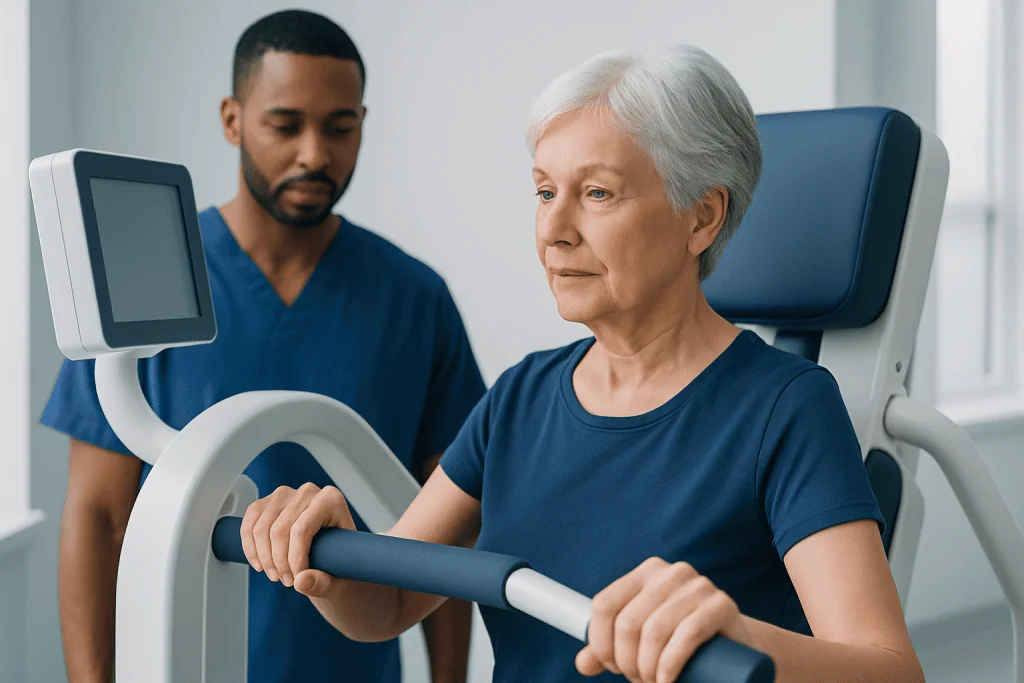
The main benefit of strength training is better muscle function. Stronger muscles help the body move more easily and use less effort during daily activities. This can support independence, reduce fatigue during routine tasks, and improve confidence with movement.
Resistance exercise also supports bone health. Muscles pulling on bones during controlled exercise stimulate the skeleton and may help maintain bone density, especially when combined with adequate nutrition and medical care for osteoporosis when needed. Strong muscles around the hips, knees, spine, and shoulders can also improve joint support and posture.
Strength training can contribute to balance and fall prevention because it improves lower-body strength, coordination, and reaction capacity. It may also support metabolic health by helping the body use glucose more effectively and preserving lean body mass, which is important for overall energy balance. Many people also report improved mood, sleep, and quality of life when exercise becomes a regular routine.
- Improved ability to rise from a chair, climb stairs, and carry objects
- Better support for joints and posture
- Maintenance of muscle and bone strength
- Support for balance, mobility, and daily independence
- Potential benefits for blood sugar control, mood, and sleep
Who Can Benefit

Strength training can benefit adults across a wide age range, including people who have never exercised regularly. It is especially useful for older adults who notice reduced grip strength, slower walking, difficulty getting up from low seats, or less confidence with stairs. Starting with very light resistance can still be effective when performed consistently.
People living with chronic conditions may also benefit, provided the program is adapted to their needs. This may include individuals with type 2 diabetes, high blood pressure, arthritis, osteoporosis, obesity, or stable heart conditions. In such cases, strength training should be coordinated with medical advice, especially when symptoms, medications, or physical limitations affect exercise safety.
Resistance training is not limited to gym settings. Exercises can be performed at home, in a rehabilitation center, in a community class, or under supervision in a clinical setting. Chair-based movements, wall push-ups, resistance bands, and sit-to-stand exercises are practical options for people who are just beginning or who have reduced mobility.
Safe Training Principles
A safe strength program begins with a realistic starting point. The first sessions should feel manageable rather than exhausting. For many older adults, this means using light resistance, practicing slow controlled movements, and learning correct posture before adding more weight or repetitions.
Good technique matters more than heavy resistance. Movements should be smooth, with attention to breathing and alignment. Holding the breath during lifting can raise pressure in the chest and may not be appropriate for some people, particularly those with cardiovascular concerns. Breathing out during the effort phase and breathing in during the easier phase is a common strategy.
Recovery is also part of safe training. Muscles need time to adapt, so strength sessions are usually spaced with rest days or lighter activity in between. Mild muscle soreness can occur when beginning, but sharp pain, joint swelling, dizziness, chest discomfort, or unusual shortness of breath are not normal training goals and should prompt stopping the activity and seeking medical advice.
- Start with low resistance and progress gradually
- Warm up with gentle movement before training
- Use controlled technique rather than momentum
- Avoid holding the breath during effort
- Allow recovery time between sessions
- Stop if pain, dizziness, chest discomfort, or unusual symptoms occur
Types of Strength Exercises
A balanced program usually includes exercises for the major muscle groups: legs, hips, back, chest, shoulders, arms, and core. Functional movements are especially helpful because they resemble daily activities. Examples include sit-to-stand exercises, step-ups, wall push-ups, supported rows, heel raises, and gentle hip strengthening.
Body-weight exercises are often a good starting point. A person may practice standing from a chair without using the hands, rising onto the toes while holding a countertop, or pressing against a wall. Resistance bands are another practical option because they are light, portable, and available in different resistance levels.
Weight machines and free weights can also be useful when proper instruction is available. Machines may provide stability and guided movement, while free weights can challenge balance and coordination more. The choice depends on the person’s goals, comfort, medical history, and access to supervision. For some people, water-based resistance exercise or physiotherapy-guided training may be the safest first step.
Getting Started: A Practical Plan
Before beginning, older adults should consider their current health status, activity level, and any symptoms. A medical check is sensible for people with known heart disease, uncontrolled blood pressure, severe osteoporosis, recent surgery, unexplained pain, dizziness, or major changes in health. A professional assessment can identify safe movements and exercises to avoid or modify.
A typical beginner routine may include a short warm-up, 5 to 8 simple exercises, and a cool-down. The resistance should allow the person to complete the movement with good form and without straining. Progress may come from adding repetitions, improving range of motion, increasing resistance slightly, or performing the exercise with better control.
Consistency is more important than intensity. Many people do well with strength training on two or more non-consecutive days each week, combined with walking, balance practice, flexibility, and activities they enjoy. Building exercise into a routine, such as after breakfast or before an afternoon walk, can make the habit easier to maintain.
- Choose exercises that match daily goals, such as easier stair climbing or safer chair transfers
- Track progress simply, such as noting repetitions or resistance level
- Increase difficulty gradually only when movements feel controlled
- Combine strength work with balance, aerobic activity, and mobility exercises
- Seek supervision if confidence, pain, or medical concerns are barriers
Special Considerations and Medical Conditions
People with arthritis often benefit from strengthening the muscles around affected joints, but exercises may need adjustment during flare-ups. Low-impact movements, smaller ranges of motion, or aquatic exercise can reduce joint stress. Pain that persists or worsens after training should be discussed with a healthcare professional.
For osteoporosis, strength training may support bone and posture, but some movements may not be suitable, particularly loaded spinal flexion or twisting in people at higher fracture risk. A physiotherapist or physician can recommend safer alternatives that strengthen the hips, back, and legs while protecting the spine.
Individuals with diabetes should be aware of blood glucose patterns around exercise, especially if they use insulin or medications that can lower blood sugar. People with cardiovascular disease, high blood pressure, or breathing conditions should train within medically recommended limits and report symptoms such as chest pain, faintness, or unusual breathlessness. Personalized guidance helps make exercise both effective and safe.
When to Seek Professional Guidance
Professional guidance is recommended when a person has significant pain, balance problems, recent falls, frailty, neurological conditions, recent hospitalization, or uncertainty about safe movement. A doctor may review medical risks, while a physiotherapist can assess strength, balance, posture, and mobility. A qualified exercise professional can then help create a progressive routine.
Medical advice should be sought promptly if exercise is associated with chest pressure, fainting, severe shortness of breath, new irregular heartbeat, sudden weakness, severe joint swelling, or a fall-related injury. These symptoms do not necessarily mean strength training is unsafe in the future, but they do require proper assessment before continuing.
For international patients who need evaluation or tailored rehabilitation planning, Acibadem International’s multidisciplinary specialists and JCI-accredited hospitals can diagnose movement-related concerns and support safe treatment plans. The most appropriate program is always individualized, based on medical history, goals, and physical capacity.
Frequently asked questions
Is strength training safe for older adults?
For many older adults, strength training is safe when it is started gradually and performed with correct technique. People with medical conditions, pain, balance problems, or recent surgery should ask a qualified healthcare professional for guidance before beginning.
How often should older adults do strength training?
Many health organizations recommend muscle-strengthening activities on two or more days per week, depending on the person’s health and ability. Sessions should usually be separated by recovery time, especially when training the same muscle groups.
Can someone start strength training after age 70 or 80?
Yes. Many people can begin strength training later in life and still gain meaningful benefits in strength, balance, and daily function. The program may need to start with chair-based, supported, or very light resistance exercises.
Are weights necessary for healthy aging exercise?
Weights are not always necessary. Body-weight movements, resistance bands, water exercise, and household items can all provide useful resistance. The best choice is the one that is safe, accessible, and sustainable.
What is the difference between normal soreness and pain?
Mild muscle soreness after a new exercise can be normal and usually improves within a few days. Sharp pain, joint swelling, pain that changes walking or movement, or symptoms such as dizziness and chest discomfort should not be ignored and should be discussed with a clinician.
Can strength training help prevent falls?
Strength training can support fall prevention by improving leg strength, posture, and confidence with movement. It is most effective when combined with balance exercises, vision care, safe footwear, medication review, and a home environment that reduces tripping hazards.
References
- World Health Organization
- American College of Sports Medicine
- Centers for Disease Control and Prevention
- National Institute on Aging
- National Health Service
This article is for general information only and is not a substitute for professional medical advice. Please consult a qualified doctor about your individual situation.
Joint and spine care in Turkey — expert assessment & treatment
JCI-accredited · board-certified surgeons · reply within 24h
Check your numbers in seconds
BMI, calories, due date, blood pressure and 30+ more clinical calculators — free, instant, doctor-reviewed ranges.

More from the Health Library



Related Specialists

Assoc. Prof. Dr. Tonguç Utku Yilmaz
General Surgery
Assoc. Prof. Dr. Elif Ganime Aygün
Gynecology & Obstetrics
Dr. Fahrî Güven
General Surgery
Dr. Esra Karabıyık Yüksel
Pediatrics