Thalassemia Treatment: How It Works, Results and What to Expect

Treatment depends on whether thalassemia is a carrier state, non-transfusion-dependent disease or transfusion-dependent disease. Regular transfusions can correct significant anemia but may cause iron accumulation that requires monitoring and treatment.
Key Takeaways
- Treatment depends on whether thalassemia is a carrier state, non-transfusion-dependent disease or transfusion-dependent disease.
- Regular transfusions can correct significant anemia but may cause iron accumulation that requires monitoring and treatment.
- Iron chelation therapy helps remove excess iron and can protect the heart, liver and hormone-producing organs.
- A stem cell transplant may offer a cure for selected patients, but it requires careful donor matching and specialist assessment.
- Lifelong follow-up with a hematology team helps prevent complications and supports healthy daily living.
Thalassemia treatment is individualized according to the type and severity of the condition. It may include regular monitoring, blood transfusions, iron chelation therapy and, for selected people, stem cell transplantation or newer disease-modifying medicines.
Overview: How thalassemia treatment works
Thalassemia treatment aims to prevent or control anemia, reduce the effects of excess iron, monitor for complications and support normal growth, activity and quality of life. The right plan depends on the specific type of thalassemia, how much hemoglobin the body produces, symptoms, age, overall health and whether transfusions are needed.
Thalassemia is an inherited blood condition in which the body makes less healthy hemoglobin than usual. Hemoglobin carries oxygen in red blood cells. Some people have a trait and need no treatment, while others have moderate or severe disease that needs regular specialist care. A hematologist can explain the diagnosis and develop an individualized thalassemia care plan.
For people with clinically significant disease, treatment commonly combines blood transfusion support with measures to prevent iron overload. Some people may be candidates for medicines that reduce ineffective red blood cell production or help improve hemoglobin, while allogeneic hematopoietic stem cell transplantation can be curative in carefully selected cases.
Who may need treatment and what happens before it begins
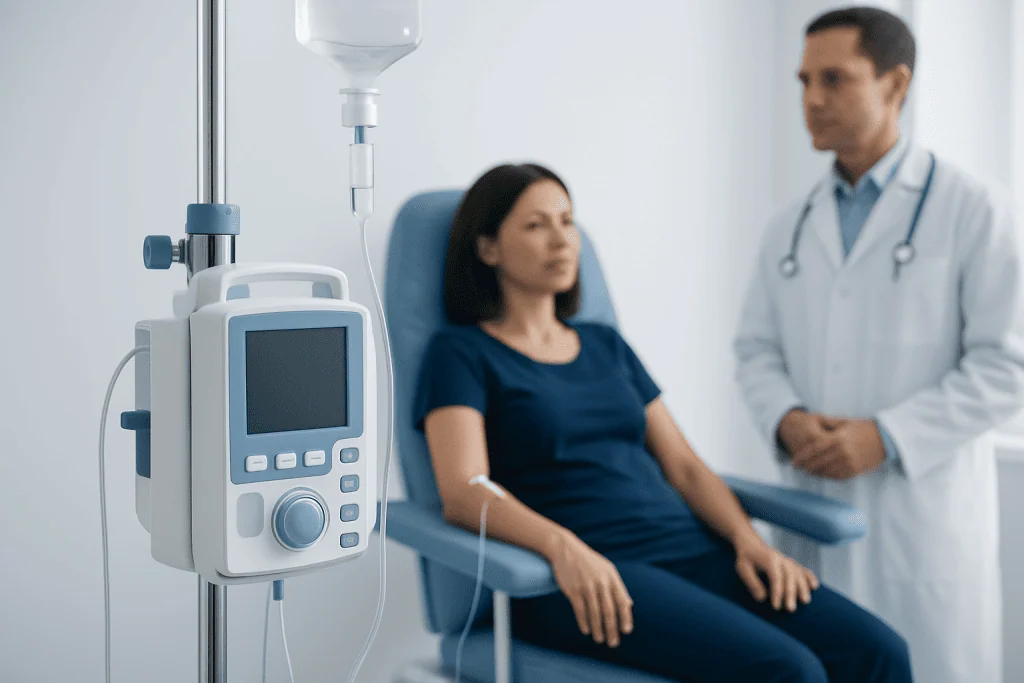
People with alpha or beta thalassemia trait usually have mild changes on blood tests and do not require thalassemia treatment. They may benefit from genetic counseling, particularly before pregnancy, because two carriers can have a child with a more severe form of the condition.
People with non-transfusion-dependent thalassemia may need treatment only at certain times, such as during infection, pregnancy, surgery or worsening anemia. Others develop persistent anemia, bone changes, enlarged spleen, delayed growth, fatigue or complications related to increased iron absorption and need ongoing monitoring or treatment.
Transfusion-dependent thalassemia causes more substantial anemia and commonly requires scheduled red blood cell transfusions. Before treatment decisions are made, the team reviews symptoms, complete blood count results, hemoglobin testing, iron measurements, liver and heart assessments, vaccination history and possible donor options if transplantation is being considered.
- Severity of anemia and its effect on daily life
- Transfusion history and iron levels
- Heart, liver, bone and endocrine health
- Family planning needs and genetic counseling
- Eligibility for advanced therapies or transplantation
Treatment step by step: transfusions, chelation and medicines
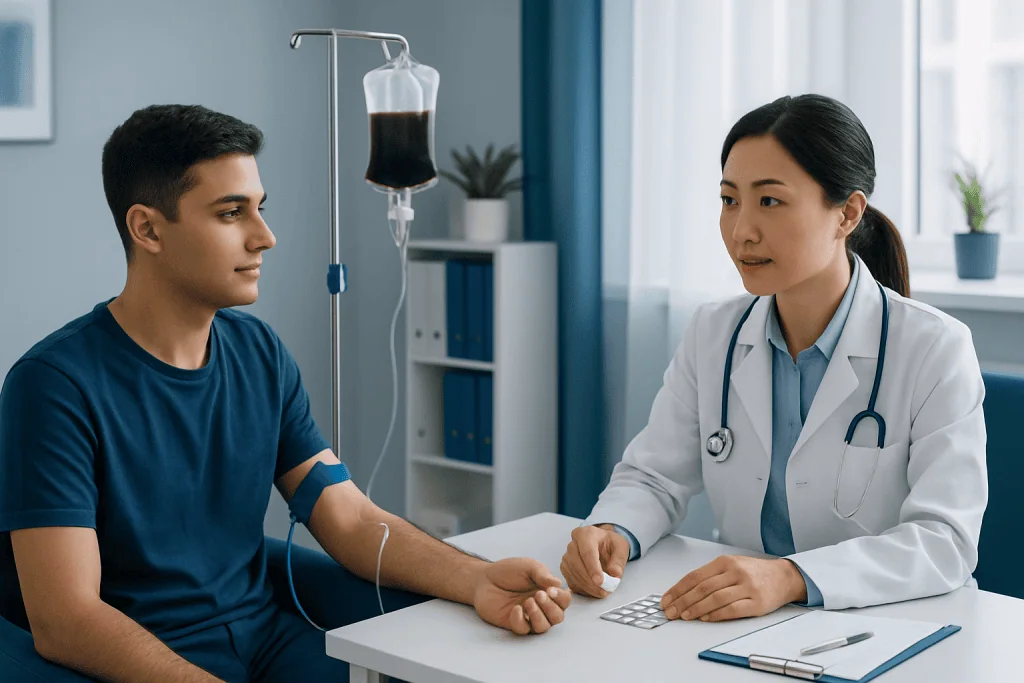
Regular red blood cell transfusions are the main supportive treatment for many people with severe beta thalassemia. Donor red blood cells raise hemoglobin, improve oxygen delivery and help reduce the body’s drive to produce red blood cells outside the normal bone marrow space. Transfusions are provided in a hospital or infusion setting, with compatibility testing performed before each transfusion.
Because transfused blood contains iron, repeated transfusions can cause iron to build up over time. Iron can affect the heart, liver and hormone-producing glands if it is not managed. Iron chelation therapy uses medicines that bind excess iron so it can leave the body. The choice of chelator and monitoring schedule are based on age, iron burden, organ function and treatment tolerance. Hematopoietic stem cell transplantation may be discussed when it is appropriate for the individual.
Some patients may be considered for disease-modifying medicines that can reduce transfusion needs or improve anemia in particular forms of beta thalassemia. These treatments are not suitable for everyone, and availability, expected benefit, side effects and long-term monitoring should be reviewed with a hematology specialist. Folic acid may be recommended in selected people, but iron supplements should not be taken unless testing confirms iron deficiency.
Care is usually coordinated among hematology, transfusion medicine, cardiology, endocrinology, liver specialists, pediatric specialists when relevant and reproductive genetics teams. This coordinated approach helps identify complications early and tailor care as needs change.
Stem cell transplant: candidacy, process, benefits and risks
An allogeneic hematopoietic stem cell transplant replaces a patient’s blood-forming stem cells with healthy donor stem cells. If the transplant successfully engrafts, the donor cells can produce healthy red blood cells and may cure thalassemia. A matched sibling donor is often preferred, although other donor options may be assessed in specialist centers.
The process begins with detailed testing of the patient and potential donor. Before donor cells are infused, the patient receives conditioning treatment to make room in the bone marrow and reduce rejection of donor cells. The stem cells are then given through a vein, much like a blood transfusion. They travel to the bone marrow, where they begin producing new blood cells over the following weeks.
Recovery requires close monitoring in hospital and after discharge. During the early phase, people may be vulnerable to infection, bleeding and treatment side effects because blood counts are low. Doctors also monitor for graft-versus-host disease, in which donor immune cells attack the patient’s tissues, as well as graft failure and organ complications. The potential benefit of cure must be balanced carefully against these meaningful risks.
Not every person with thalassemia is a transplant candidate. Age, disease severity, organ health, previous treatment, donor availability and the person’s preferences all matter. Gene-based therapies are evolving for selected forms of beta thalassemia in some settings, but eligibility and access vary, and specialist consultation is essential.
Results, monitoring and recovery expectations
Results from thalassemia treatment are measured over time rather than after a single visit. With a well-managed transfusion program, many people experience improved energy, growth, exercise tolerance and participation in everyday activities. However, transfusion needs generally continue unless a successful curative therapy is performed.
Iron chelation works gradually. Blood tests and, when indicated, specialized imaging help clinicians measure iron in the liver and heart and adjust treatment. Follow-up also checks for side effects, including changes in kidney or liver function, hearing or vision with certain medicines, and hormone-related complications.
After stem cell transplantation, blood count recovery often begins within weeks, but immune recovery and return to usual routines can take many months. Follow-up is intensive in the first year and remains important thereafter. The team may advise infection-prevention measures, nutrition support, vaccinations and a phased return to school, work or exercise.
A reliable schedule of appointments is central to treatment success. Patients should tell their care team about new symptoms, missed medicines, reactions during transfusion, fever or difficulties with adherence so problems can be addressed promptly and safely.
Living with thalassemia: practical self-care and prevention
Thalassemia cannot usually be prevented after it is inherited, but complications can often be reduced through consistent care. Attending transfusion, chelation and monitoring appointments is one of the most important ways to protect long-term health. Patients should not change treatment or stop chelation medicines without medical guidance.
A balanced diet, regular activity suited to energy levels, sleep and emotional support can all be helpful. People should avoid iron-containing vitamins or supplements unless a clinician has confirmed that they are needed. Because food alone does not usually cause clinically important iron overload in transfusion-dependent thalassemia, overly restrictive diets are generally not a substitute for prescribed chelation therapy.
Vaccinations and infection prevention are especially important. A clinician can advise on routine vaccines and additional vaccines that may be relevant after splenectomy or transplantation. Genetic counseling can help individuals and couples understand inheritance, carrier testing and reproductive options.
Acibadem International’s multidisciplinary specialists and JCI-accredited hospitals provide assessment and treatment for thalassemia for international patients, including coordinated hematology and transplant evaluation when indicated.
When to seek medical care
People with known thalassemia should contact their healthcare team promptly for fever, chills, breathing difficulty, chest pain, marked weakness, fainting, palpitations, yellowing of the skin or eyes, dark urine, unusually severe abdominal pain or a reaction during or after a transfusion. These symptoms can have different causes, but prompt assessment is important.
Urgent medical evaluation is also appropriate for signs of severe anemia, such as new shortness of breath at rest, extreme fatigue, dizziness or a fast heartbeat. Children with poor growth, reduced activity, pallor or feeding difficulties should be assessed by a pediatric clinician.
Anyone with a family history of thalassemia, unexplained small red blood cells on a blood test or a partner known to carry thalassemia should discuss testing with a doctor. Early diagnosis supports accurate treatment and informed family planning.
Frequently asked questions
How many years can a thalassemia patient live?
Life expectancy varies widely by thalassemia type, severity, access to specialist care and the presence of complications. People with thalassemia trait usually have a normal lifespan, while many people with more severe thalassemia can live well into adulthood with regular transfusions, iron chelation and careful monitoring. Individual outlook is best discussed with a hematology team that knows the person’s disease and health history.
How long does it take to get thalassemia results?
Initial blood count results may be available the same day or within a few days, depending on the laboratory. Hemoglobin analysis, such as hemoglobin electrophoresis or high-performance liquid chromatography, may take several days to a few weeks. Genetic testing can take longer, often several weeks, especially when detailed mutation analysis is needed.
Is thalassemia a serious disease?
Thalassemia ranges from a harmless carrier state to a serious chronic blood disorder. Severe forms can cause significant anemia and complications without treatment, but modern transfusion programs, iron management and specialist follow-up can substantially improve health outcomes. A diagnosis should be evaluated individually because the type of thalassemia matters greatly.
Can thalassemia get worse with age?
The inherited genetic change does not progress, but symptoms and complications can become more noticeable over time if anemia or iron overload is not adequately managed. Some non-transfusion-dependent forms may require more support during growth, pregnancy, illness or later adulthood. Regular monitoring helps clinicians recognize changing needs early.
Can thalassemia be cured without a transplant?
Supportive treatments can manage anemia and prevent many complications, but they do not remove the underlying inherited gene change. For selected patients, allogeneic stem cell transplantation can be curative. Gene-based treatments are also developing for certain forms of beta thalassemia, but suitability depends on clinical factors and local availability.
Why is iron chelation needed in thalassemia?
Repeated transfusions add iron to the body, and the body has no natural way to remove large excess amounts. Iron chelation medicines bind iron so it can be eliminated, helping reduce the risk of damage to organs such as the heart and liver. The care team uses blood tests and sometimes imaging to guide treatment.
References
- World Health Organization
- Centers for Disease Control and Prevention
- National Heart, Lung, and Blood Institute
- Thalassaemia International Federation
- American Society of Hematology
This article is for general information only and is not a substitute for professional medical advice. Please consult a qualified doctor about your individual situation.
Thalassemia in Turkey — costs, top hospitals & a free quote
JCI-accredited · board-certified surgeons · reply within 24h
Add us as a Preferred Source to see more of our trusted health content across Google Search, AI Overviews and Discover.

Organ Transplantation
Kidney, liver and bone-marrow transplantation programs with dedicated coordination.
4 specialists in this unit