Quick answer
Thalassemia is an inherited blood disorder in which the body produces too little or abnormal hemoglobin, leading to anemia and related complications. Treatment depends on the type and severity and may include regular monitoring, blood transfusions, iron chelation therapy, and in selected cases stem cell transplantation, with care coordinated through specialist hematology services at Acibadem in Turkey.
What is thalassemia?
Thalassemia is an inherited blood disorder that affects the way the body makes hemoglobin, the protein inside red blood cells that carries oxygen from the lungs to the rest of the body. When a person has thalassemia, the body produces less hemoglobin than normal, or hemoglobin that does not work properly. As a result, red blood cells become fragile and break down more quickly than healthy cells. This often leads to anemia, which means the blood does not carry enough oxygen to the body’s tissues.
Because thalassemia is a genetic condition, it is passed from parents to children through changes in the genes. It is present from birth, although symptoms may not appear immediately. The condition is most common in people whose families come from the Mediterranean region, the Middle East, South Asia, Southeast Asia, and parts of Africa, although it can occur in people of any background.
There are two main types, based on which part of the hemoglobin molecule is affected. Alpha thalassemia involves the alpha chains of hemoglobin, and beta thalassemia involves the beta chains. Within each type, the condition ranges from very mild to severe. Doctors often describe thalassemia by how much treatment it requires: thalassemia minor (also called thalassemia trait) usually causes few or no symptoms, thalassemia intermedia causes moderate anemia, and thalassemia major causes severe anemia that requires lifelong medical care. Understanding what is thalassemia in your specific case depends on the exact genetic changes involved, which is why individualized evaluation by a hematologist (a doctor who specializes in blood disorders) is important.
Symptoms of thalassemia
Thalassemia symptoms vary widely depending on the type and severity of the condition. Some people carry the trait and never notice any problems, while others develop serious symptoms in the first two years of life. Most symptoms are related to anemia, the shortage of healthy red blood cells, and to the body’s efforts to compensate for it.
Common thalassemia symptoms include:
- Fatigue and weaknessfeeling unusually tired even after rest
- Pale or yellowish skinpaleness from anemia, or a yellow tint (jaundice) caused by the breakdown of red blood cells
- Shortness of breathespecially during physical activity
- Dizziness or lightheadedness
- Slow growth in childrendelayed growth and delayed puberty in more severe forms
- Bone changesin severe cases, the bone marrow expands as it works harder to make red cells, which can change the shape of facial and skull bones
- Abdominal swellingoften due to an enlarged spleen or liver
- Dark urinea sign that red blood cells are breaking down
How symptoms appear often depends on the type. People with thalassemia minor typically have mild anemia or none at all, and many discover the condition only through a routine blood test. Thalassemia intermedia causes moderate anemia that may need treatment from time to time, particularly during illness, pregnancy, or periods of rapid growth. Thalassemia major, sometimes called Cooley anemia when it involves the beta chains, usually becomes apparent in infancy or early childhood with severe anemia, poor feeding, irritability, and failure to grow as expected. Children with this form generally need regular medical treatment throughout life.
In severe alpha thalassemia, symptoms can appear before birth. The most severe form, hydrops fetalis, affects unborn babies and is a medical emergency requiring specialized care.
Causes and risk factors
Thalassemia causes are entirely genetic. The condition results from changes, or mutations, in the genes that tell the body how to build hemoglobin. Hemoglobin is made of two kinds of protein chains, called alpha and beta chains. A person needs a balanced supply of both chains to produce healthy hemoglobin.
Alpha thalassemia occurs when one or more of the four genes responsible for alpha chains are missing or altered. The more genes affected, the more severe the condition. Beta thalassemia occurs when one or both of the two genes for beta chains carry mutations. Inheriting one altered beta gene usually results in the mild trait form, while inheriting two altered genes typically leads to thalassemia intermedia or major.
Because the genes come from both parents, family history is the main risk factor. Key points about inheritance include:
- A person can carry the thalassemia trait without knowing it, because the trait often causes no symptoms.
- When both parents carry a trait for the same type of thalassemia, each pregnancy has a chance of producing a child with a more severe form.
- Ancestry from the Mediterranean, the Middle East, Africa, South Asia, or Southeast Asia increases the likelihood of carrying a thalassemia gene, although the condition occurs worldwide.
It is important to understand that thalassemia is not contagious and is not caused by diet, lifestyle, infections, or anything a parent did during pregnancy. Couples with a family history of thalassemia, or those from regions where the condition is common, may benefit from genetic counseling before or during pregnancy so they understand their chances of passing the condition on.
Diagnosis
Thalassemia diagnosis begins with blood tests, because the condition affects the number, size, and content of red blood cells. In many cases, the first clue appears on a routine test done for another reason. When doctors suspect thalassemia, they typically use several tests together to confirm the diagnosis and determine the type.
- Complete blood count (CBC)this measures the number and size of red blood cells and the amount of hemoglobin. In thalassemia, red cells are often smaller and paler than normal, and hemoglobin levels are low.
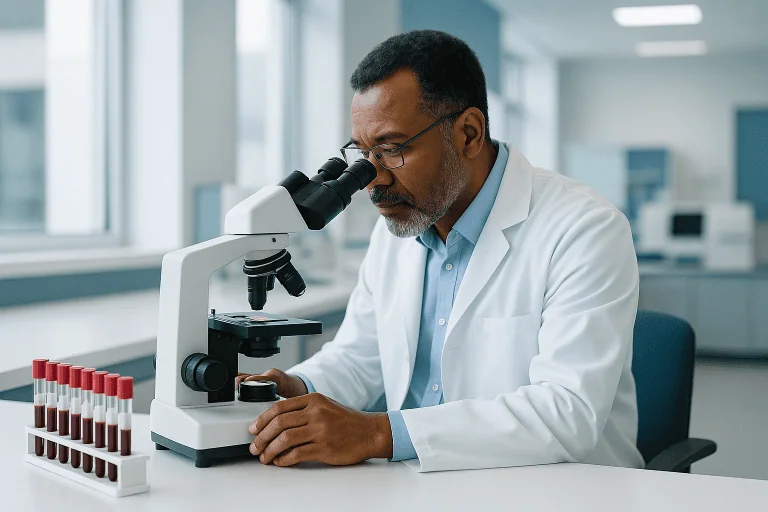
- Peripheral blood smeara laboratory technician examines a drop of blood under a microscope to look at the shape and appearance of red blood cells, which often look abnormal in thalassemia.
- Hemoglobin electrophoresisthis test separates the different types of hemoglobin in the blood and can identify abnormal patterns typical of beta thalassemia and some other hemoglobin disorders.
- Iron studiesbecause iron deficiency can also cause small, pale red cells, doctors measure iron levels to distinguish between the two conditions. This step matters because treating thalassemia with iron supplements when they are not needed can be harmful.
- Genetic testingDNA analysis identifies the specific gene changes responsible. This is especially useful for confirming alpha thalassemia, clarifying the severity of the condition, and providing information for family planning.
In children with severe forms, diagnosis often happens in the first months or years of life when anemia, poor growth, or an enlarged spleen prompts testing. Prenatal testing is also possible: doctors can test a developing baby for thalassemia using samples of the placenta or the fluid around the baby, usually when both parents are known carriers. Many countries also include hemoglobin disorders in newborn screening programs, which can identify some forms of thalassemia shortly after birth.
Once thalassemia is confirmed, doctors may order additional tests over time, such as imaging of the heart and liver, to monitor for complications like iron overload, which is a buildup of excess iron in the organs. Specialized magnetic resonance imaging (MRI) can estimate how much iron has accumulated in these organs without the need for a biopsy.
Treatment options
Thalassemia treatment depends on the type and severity of the condition. There is no single approach that fits everyone, and treatment plans are usually developed and adjusted over time by a hematology team. Detailed information about how the condition is managed is available on the thalassemia treatment page, and at Acibadem this condition is managed by the Hematology Department.
Watchful waiting for mild forms
People with thalassemia minor or trait often need no treatment at all. Doctors may simply monitor their blood counts periodically and provide guidance during situations that can worsen anemia, such as pregnancy or serious illness. Importantly, mild thalassemia is sometimes mistaken for iron-deficiency anemia; taking iron supplements without confirmed iron deficiency is not recommended, because unneeded iron can accumulate in the body.
Blood transfusions
For moderate and severe thalassemia, regular blood transfusions are the cornerstone of treatment. A transfusion provides healthy red blood cells from a donor, raising hemoglobin levels and relieving anemia. People with thalassemia major typically need transfusions every few weeks throughout life, while those with intermedia forms may need them only occasionally. Transfusions allow children with severe thalassemia to grow, develop, and stay active.
Iron chelation therapy
Repeated transfusions cause iron to build up in the body, because each unit of blood contains iron and the body has no natural way to remove the excess. Over time, iron overload can damage the heart, liver, and hormone-producing glands. Iron chelation therapy uses medications, taken by mouth or given by infusion under the skin, that bind to excess iron so the body can eliminate it. Chelation is a lifelong part of care for most people who receive regular transfusions, and adherence to it strongly influences long-term health.
Medications
Doctors often prescribe folic acid, a B vitamin that helps the body produce red blood cells. In selected cases of beta thalassemia, medications that improve red blood cell maturation may reduce the need for transfusions; your doctor can explain whether such options apply to your situation. Vaccinations and prompt treatment of infections are also important, especially for people whose spleen has been removed.
Surgery
In some people, the spleen becomes very enlarged and destroys red blood cells too quickly, worsening anemia and increasing the need for transfusions. In these cases, doctors may recommend splenectomy, the surgical removal of the spleen. Because the spleen helps fight infection, people who undergo this procedure need vaccinations and sometimes preventive antibiotics afterward. Gallbladder removal may also be needed if gallstones develop, which is more common in thalassemia due to the ongoing breakdown of red blood cells.
Stem cell transplantation
A stem cell transplant, also called a bone marrow transplant, is currently the only established treatment that can potentially cure thalassemia. It replaces the patient’s blood-forming cells with healthy cells from a donor, most often a closely matched sibling. Transplantation carries significant risks, including serious complications from the procedure itself, and outcomes are generally better in younger patients without organ damage. It is considered mainly for people with severe thalassemia who have a suitable donor. Newer gene-based therapies are being studied and, in some countries, approved for selected patients, but access and suitability vary, so this is a discussion to have with a specialist.
Living with thalassemia and outlook
The outlook for people with thalassemia has improved considerably over recent decades. People with mild forms generally live normal, healthy lives and may need little more than occasional monitoring. For those with severe forms, regular transfusions combined with consistent iron chelation therapy allow many people to reach adulthood, pursue education and careers, and have families, although lifelong medical follow-up remains essential.
Living well with thalassemia often involves several ongoing habits:
- Keeping treatment appointmentstransfusion schedules and chelation therapy work best when followed consistently.
- Regular monitoringperiodic checks of heart, liver, and hormone function help detect iron-related complications early, when they are most treatable.
- A balanced dietdoctors generally advise against extra iron unless a deficiency is confirmed; a healthy, varied diet supports overall well-being.
- Infection precautionsstaying current with vaccinations and seeking care promptly for fevers, particularly after spleen removal.
- Emotional supportliving with a chronic condition can be stressful, and counseling or patient support groups help many families cope.
Prognosis depends heavily on the type of thalassemia and how well iron overload is controlled. No doctor can guarantee a specific outcome, but in many cases, modern care allows people with even severe thalassemia to live long and active lives. Complications such as heart disease, liver problems, bone thinning, and hormonal issues remain possible, which is why coordinated, long-term specialist care matters.
Frequently asked questions
What is thalassemia in simple terms?
Thalassemia is an inherited condition in which the body makes less hemoglobin than it should. Hemoglobin is the protein in red blood cells that carries oxygen. With less working hemoglobin, red blood cells break down early and the body may not get enough oxygen, which leads to anemia and symptoms like tiredness and pale skin. The severity ranges from unnoticeable to serious, depending on the specific genes involved.
Can thalassemia be cured?
Mild thalassemia does not need a cure, because it usually causes little or no illness. For severe forms, a stem cell transplant from a matched donor is currently the only established potentially curative treatment, though it carries meaningful risks and is not suitable for everyone. Gene-based therapies are emerging in some countries for selected patients. Most people with severe thalassemia manage the condition successfully with lifelong transfusions and iron chelation rather than a cure.
How serious is thalassemia?
It depends on the type. Thalassemia minor or trait is generally harmless and often goes unnoticed. Thalassemia intermedia causes moderate anemia that may require occasional treatment. Thalassemia major is a serious condition that requires regular transfusions and careful management of iron overload; without treatment, it can be life-threatening in childhood. With modern care, however, many people with severe thalassemia live well into adulthood.
What are the first thalassemia symptoms in babies?
In severe beta thalassemia, symptoms usually appear within the first two years of life. Parents may notice pale skin, poor feeding, irritability, slow growth, frequent infections, a swollen belly from an enlarged spleen, or a yellowish tint to the skin and eyes. Any baby with these signs should be evaluated by a doctor, who can order simple blood tests to look for anemia and its cause.
Is thalassemia the same as iron-deficiency anemia?
No. Both conditions can make red blood cells small and pale, so they can look similar on a basic blood test, but the causes are different. Iron-deficiency anemia results from too little iron and improves with iron supplements. Thalassemia is genetic, and iron levels are usually normal or even high. Taking iron supplements for thalassemia without a confirmed deficiency can be harmful, which is why accurate thalassemia diagnosis matters before starting any treatment.
Can people with thalassemia have children?
In many cases, yes. People with thalassemia trait typically have no fertility problems, and many people with more severe forms can also have children, sometimes with additional medical support. Because thalassemia is inherited, genetic counseling is often recommended so couples understand the chance of passing the condition to a child, especially if both partners carry a thalassemia gene. Pregnancy in women with significant thalassemia should be planned and monitored with specialist input.
Does thalassemia get worse with age?
The genetic condition itself does not change over time, but its effects can accumulate. In people who receive regular transfusions, iron overload builds up gradually and can affect the heart, liver, and glands if chelation therapy is not followed consistently. People with intermediate forms may find their anemia worsens during illness, pregnancy, or as they get older. Regular follow-up helps catch and manage these changes early.
When to see a doctor
Anyone with unexplained, persistent tiredness, paleness, or shortness of breath should discuss these symptoms with a doctor, especially if there is a family history of thalassemia or anemia. Parents should seek evaluation if a baby or child seems unusually pale, tired, or is not growing as expected.
Seek urgent medical care if you or your child has thalassemia and any of the following red-flag warning signs appear:
- High feverparticularly after spleen removal, when infections can become dangerous quickly
- Severe shortness of breath or chest painpossible signs of severe anemia or heart strain
- Rapid or irregular heartbeatwhich may indicate iron-related heart problems
- Sudden worsening of paleness, weakness, or fainting
- Deep yellowing of the skin or eyes, or very dark urinesigns of rapid red blood cell breakdown or liver problems
- Severe abdominal pain or a rapidly swelling bellywhich may signal spleen or gallbladder complications
- In infants: poor feeding, extreme sleepiness, or failure to gain weight
If you have already been diagnosed with thalassemia, keep your scheduled follow-up visits even when you feel well, because some complications, such as iron overload, develop silently before causing symptoms. Early detection and consistent treatment give the best chance of avoiding long-term problems.
Medically reviewed by the Acıbadem International Medical Board September 2, 2026
See our medical review board →
Update history
- PublishedJune 14, 2026
- Medical review approvedSeptember 2, 2026
- Last content updateSeptember 2, 2026