Thyroid Cartilage: A Complete Medical Overview

Thyroid cartilage forms the front wall of the larynx and creates the visible "Adam's apple" in many people. It helps protect delicate vocal cord structures and supports normal breathing, voice production, and swallowing.
Key Takeaways
- Thyroid cartilage forms the front wall of the larynx and creates the visible "Adam's apple" in many people.
- It helps protect delicate vocal cord structures and supports normal breathing, voice production, and swallowing.
- Pain, swelling, hoarseness, or trouble swallowing in this area can result from infection, inflammation, trauma, reflux, or less commonly tumors.
- Doctors evaluate thyroid cartilage-related symptoms with a physical exam and, when needed, laryngoscopy or imaging tests.
- Treatment depends on the cause and may include voice rest, medicines, treatment of reflux, or specialist ENT care.
Thyroid cartilage is the largest cartilage in the larynx, or voice box. It protects the vocal cords, helps keep the airway open, and plays an important role in speaking, swallowing, and breathing.
Overview: what the thyroid cartilage is
The thyroid cartilage is a firm, shield-shaped structure in the front of the neck. It is the largest cartilage of the larynx, also called the voice box. In simple terms, it helps protect the vocal cords and supports the upper airway so a person can breathe, speak, and swallow normally.
Many people know this structure as the part that forms the “Adam’s apple.” It is usually more prominent in some individuals because of differences in anatomy, age, and the effects of hormones during puberty. Even when it is not visibly noticeable, the thyroid cartilage still serves the same protective and supportive role.
Although its name includes the word “thyroid,” thyroid cartilage is different from the thyroid gland. The thyroid gland is an endocrine organ that makes hormones and sits lower in the front of the neck. The thyroid cartilage is part of the larynx and is involved in voice and airway function rather than hormone production.
Anatomy and function of the thyroid cartilage
The thyroid cartilage is made of hyaline cartilage, a strong but slightly flexible tissue. It consists of two broad plates, called laminae, that meet in the middle at the front of the neck. This meeting point creates the laryngeal prominence, which is the outward bump often called the Adam’s apple.
Above and below, the thyroid cartilage connects with other key parts of the larynx. It is attached to the hyoid bone at the top by membranes and ligaments, and it articulates with the cricoid cartilage below. These connections allow the larynx to move during swallowing and to adjust tension during speech.
Its main functions are mechanical and protective. The thyroid cartilage forms a sturdy outer frame around the vocal cords, helps maintain the shape of the airway, and supports precise movement for voice production. Muscles and ligaments attached to it help change vocal cord tension, which influences pitch and sound quality.
- Protects the vocal cords and nearby soft tissues
- Supports the structure of the larynx
- Helps keep the airway open
- Contributes to speech and changes in voice pitch
- Moves during swallowing to help protect the airway
Why the thyroid cartilage may feel painful, swollen, or noticeable

People often become aware of the thyroid cartilage when they notice discomfort, tenderness, a visible lump-like prominence, or a change in the voice. In many cases, the structure itself is normal and the symptom is due to irritation of nearby tissues. Mild neck strain, recent shouting, coughing, or throat clearing can make the area feel sore.
Inflammation in the larynx can also lead to symptoms around the thyroid cartilage. This may happen with viral infections, voice overuse, allergies, environmental irritation, or acid reflux. In these situations, a person may also have hoarseness, a scratchy throat, frequent throat clearing, or a sensation of something being stuck in the throat.
Trauma is another possible cause. A direct blow to the front of the neck, sports injury, choking episode, intubation, or previous surgery can affect the laryngeal framework. Less commonly, thyroid cartilage symptoms may be linked to structural abnormalities, benign growths, or cancers of the larynx. Related throat conditions may require ENT assessment, especially if symptoms persist or worsen, including evaluation for laryngeal cancer.
Common symptoms linked to this area
Symptoms involving the thyroid cartilage area can vary depending on the cause. Some people feel only mild tenderness in the front of the neck, while others notice voice changes or swallowing discomfort. Symptoms may begin suddenly after an infection or injury, or develop gradually over time.
Because the thyroid cartilage is part of the larynx, symptoms often involve voice and throat function rather than the cartilage alone. A careful description of what is being felt, when it started, and what makes it better or worse can help guide medical evaluation.
- Hoarseness or a weaker voice
- Pain or tenderness in the front of the neck
- Discomfort when swallowing
- A sensation of throat tightness or a lump in the throat
- Pain when speaking, singing, or coughing
- Noisy breathing or shortness of breath in more serious cases
- Visible swelling or asymmetry after injury
Symptoms such as persistent hoarseness, breathing difficulty, coughing blood, or a rapidly enlarging neck mass should not be ignored. While these symptoms do not always mean a serious problem, they deserve prompt medical attention.
How doctors diagnose thyroid cartilage-related problems
Evaluation starts with a medical history and physical examination. A doctor may ask about recent infections, voice use, reflux symptoms, smoking exposure, trauma, surgery, or swallowing problems. The front of the neck may be examined for tenderness, swelling, movement with swallowing, and any visible changes.
If symptoms suggest a laryngeal problem, an ENT specialist may perform laryngoscopy. This test uses a small flexible or rigid camera to look at the larynx and vocal cords. It can help identify inflammation, injury, vocal cord movement problems, growths, or changes related to reflux. In some cases, more specialized testing is helpful, such as laryngoscopy.
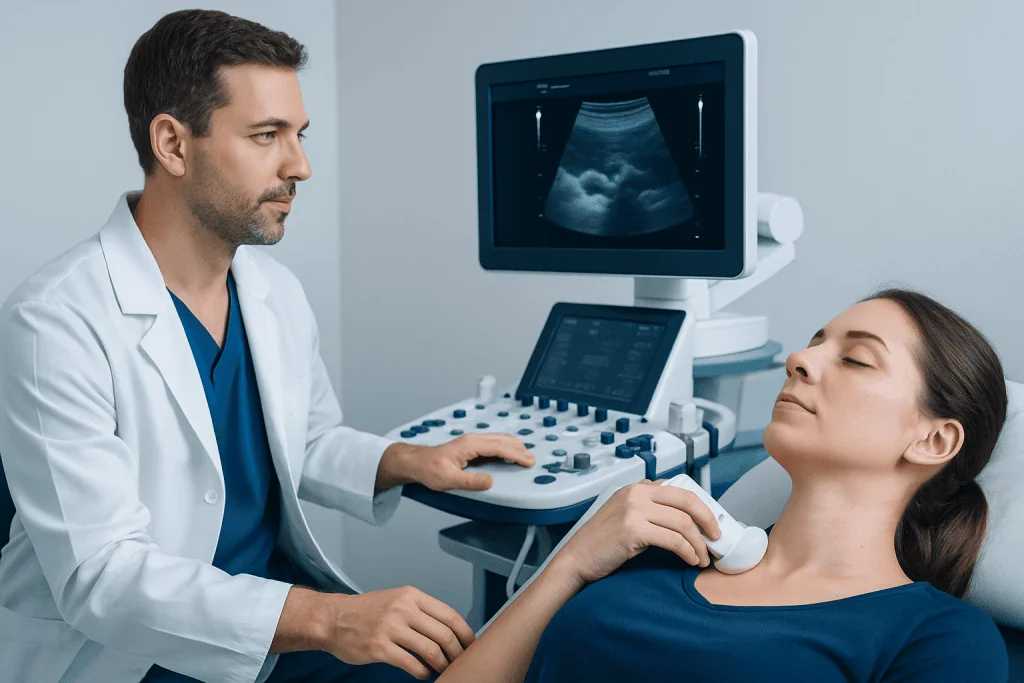
Imaging may be recommended if trauma, a mass, or a structural abnormality is suspected. Depending on the situation, this can include ultrasound, CT, or MRI. When symptoms are thought to come from nearby glands rather than the cartilage itself, doctors may also evaluate the thyroid gland, including conditions such as thyroid cancer when clinically appropriate.
Treatment options depend on the cause
There is no single treatment for thyroid cartilage symptoms because the cartilage is usually not the primary disease. Treatment focuses on the underlying cause. For mild inflammation from voice strain or a viral illness, conservative care may be enough. This can include hydration, temporary voice rest, avoiding irritants such as smoke, and managing cough or throat clearing.
When reflux contributes to laryngeal irritation, doctors may recommend dietary changes, lifestyle measures, and medication. If infection is present, treatment depends on whether the cause is viral or bacterial. Allergies, chronic sinus drainage, and muscle tension around the larynx may also need targeted treatment. Some patients benefit from voice therapy when voice misuse or muscle tension is involved.
Injury to the larynx can require urgent assessment, especially if breathing is affected. Structural lesions, persistent vocal cord problems, or suspicious masses may need biopsy or surgery. When a disorder of the larynx is confirmed, treatment may involve dedicated ENT surgery or multidisciplinary care. Near the end of the care pathway, patients who need further evaluation may be seen by specialists at Acibadem International, where multidisciplinary teams in JCI-accredited hospitals diagnose and treat ENT and laryngeal conditions for international patients.
Prevention and self-care for throat and larynx health
Many common causes of discomfort around the thyroid cartilage are related to irritation of the throat and voice box. Good voice and throat habits can help lower the chance of strain and reduce flare-ups. Prevention is especially helpful for people who use their voice heavily for work, such as teachers, singers, speakers, and call-center staff.
Simple daily steps can support laryngeal health. These include staying well hydrated, avoiding yelling, taking voice breaks, and limiting exposure to smoke or other airborne irritants. Reflux management can also make a difference for people who often wake with hoarseness, throat clearing, or burning symptoms.
- Drink enough fluids unless a doctor has advised fluid restriction
- Avoid frequent shouting or forceful throat clearing
- Rest the voice during infections or after heavy voice use
- Address acid reflux symptoms with medical guidance
- Use protective equipment during contact sports when appropriate
- Seek help for persistent hoarseness or swallowing changes
When to seek medical care
Medical advice is appropriate when pain or tenderness over the thyroid cartilage does not improve, keeps returning, or is associated with voice changes. Ongoing hoarseness, discomfort with swallowing, or the feeling of a lump in the throat should be assessed, particularly if symptoms last more than a few weeks.
Urgent care is needed for trouble breathing, noisy breathing, significant neck swelling, or symptoms after a direct injury to the front of the neck. A person should also seek prompt evaluation for coughing blood, unexplained weight loss, or rapidly progressive swallowing difficulty.
In children, breathing noises, drooling, or marked difficulty swallowing always need prompt medical attention. In adults and children alike, early evaluation can help identify whether the issue is a minor irritation, an infection, a vocal cord problem, or a less common structural condition that needs specialist treatment.
Frequently asked questions
Is the thyroid cartilage the same as the thyroid gland?
No. The thyroid cartilage is part of the larynx, or voice box, and helps protect the vocal cords. The thyroid gland is a separate organ lower in the neck that produces hormones.
Why is the thyroid cartilage called the Adam's apple?
The term Adam's apple refers to the visible prominence formed by the front of the thyroid cartilage. It tends to be more noticeable in some people because of natural differences in anatomy and changes during puberty.
Can thyroid cartilage cause swallowing pain?
The cartilage itself is not usually the direct cause, but nearby inflammation or laryngeal irritation can make swallowing uncomfortable. Reflux, infections, muscle tension, or injury in the throat area can all contribute.
What does it mean if the area over the thyroid cartilage is tender?
Tenderness may happen with throat infections, voice strain, coughing, reflux, or trauma to the neck. If tenderness is persistent, severe, or comes with hoarseness or breathing problems, a medical evaluation is important.
Can the thyroid cartilage be injured?
Yes. A direct blow to the front of the neck, sports trauma, choking, or medical procedures involving the airway can injure the laryngeal framework. Because this area is important for breathing, significant injury needs prompt medical care.
When should hoarseness related to this area be checked by a doctor?
Hoarseness that lasts more than a few weeks, keeps coming back, or occurs with pain, swallowing difficulty, or a neck mass should be assessed. Earlier evaluation is also recommended for smokers, professional voice users, or anyone with breathing symptoms.
References
- American Academy of Otolaryngology–Head and Neck Surgery
- National Institute on Deafness and Other Communication Disorders
- MedlinePlus
- Merck Manual
- Mayo Clinic
This article is for general information only and is not a substitute for professional medical advice. Please consult a qualified doctor about your individual situation.
Explore treatments in Turkey — costs, top hospitals & a free quote
JCI-accredited · board-certified surgeons · reply within 24h