Quick answer
Thyroid cancer is a malignant tumor that develops in the thyroid gland, often growing slowly and treated according to its type, stage, and whether it has spread. At Acibadem in Turkey, evaluation typically includes imaging, blood tests, and biopsy, and treatment may involve surgery, radioactive iodine, hormone therapy, targeted medicines, and close follow-up by a multidisciplinary team.
What is thyroid cancer?
Thyroid cancer is a disease in which abnormal cells grow out of control in the thyroid gland. The thyroid is a small, butterfly-shaped gland located at the front of the neck, just below the voice box (larynx). It produces hormones that help regulate the body’s metabolism, the way the body uses energy, as well as heart rate, body temperature, and other functions. When answering the question “what is thyroid cancer,” it helps to know that the term covers several different types of cancer, and these types can behave very differently from one another.
The most common types are papillary and follicular thyroid cancer, often grouped together as differentiated thyroid cancers because their cells still look and behave somewhat like normal thyroid cells. These types tend to grow slowly and, in many cases, respond well to treatment. Less common types include medullary thyroid cancer, which starts in cells that produce a hormone called calcitonin, and anaplastic thyroid cancer, a rare and aggressive form that grows quickly. In the international classification of diseases, thyroid cancer is coded as ICD-10 C73.
Thyroid cancer can occur at any age, but it is often diagnosed in adults between their 30s and 60s. It affects women more often than men, roughly three times as often, according to widely accepted clinical knowledge. Many thyroid cancers are found early, sometimes by chance during imaging tests done for other reasons, and early detection generally makes treatment more straightforward.
Symptoms of thyroid cancer
In its early stages, thyroid cancer often causes no symptoms at all. Many people first learn about a possible problem when a doctor feels a lump during a routine neck examination, or when a nodule (a small growth in the thyroid) shows up on an ultrasound or other scan performed for an unrelated reason. It is important to know that most thyroid nodules are benign, meaning they are not cancer, but any new lump in the neck should be checked by a doctor.
When thyroid cancer symptoms do appear, they may include:
- A lump or swelling in the front of the neck, which may grow slowly over time and can sometimes be felt or seen when swallowing.
- Hoarseness or other voice changes that do not go away, which can occur if a tumor presses on or affects the nerve that controls the vocal cords.
- Difficulty swallowing (dysphagia), or a feeling that food or pills get stuck in the throat.
- Difficulty breathing or a sense of tightness in the neck, particularly when lying down, if a tumor presses on the windpipe (trachea).
- Pain in the neck or throat, sometimes extending up toward the ears.
- Swollen lymph nodes in the necksmall, bean-shaped glands that are part of the immune system, which may feel like firm lumps at the sides of the neck.
- A persistent cough that is not related to a cold or other infection.
Symptoms can differ depending on the type and stage of the disease. Slow-growing papillary and follicular cancers may cause only a painless lump for a long time, or no noticeable changes at all. Anaplastic thyroid cancer, by contrast, often causes a rapidly enlarging neck mass with breathing or swallowing problems that develop over weeks rather than years. Medullary thyroid cancer can sometimes cause diarrhea or flushing in advanced stages, because the abnormal cells produce excess hormone. In advanced disease of any type, cancer that has spread beyond the thyroid may cause symptoms in other parts of the body, such as bone pain or breathing difficulties.
Because many of these symptoms are far more commonly caused by conditions other than cancer, such as infections, benign nodules, or an enlarged thyroid (goiter), having one or more of them does not mean you have thyroid cancer. Only a medical evaluation can determine the cause.
Causes and risk factors
Doctors do not always know the exact thyroid cancer causes in an individual person. The disease develops when cells in the thyroid acquire changes (mutations) in their DNA that allow them to grow and divide abnormally. Why these changes occur is not fully understood in most cases, but research has identified several factors that can raise the risk:
- Radiation exposure. Exposure to high levels of radiation, especially to the head and neck during childhood, for example, from past medical radiation treatments or from nuclear accidents, is one of the best-established risk factors.
- Family history and inherited conditions. Having a close relative with thyroid cancer can increase risk. Some medullary thyroid cancers are linked to an inherited genetic condition called multiple endocrine neoplasia (MEN), in which certain gene changes are passed down in families.
- Sex. Women are diagnosed with thyroid cancer more often than men, although the reasons for this difference are not fully understood.
- Age. Thyroid cancer can occur at any age, but risk patterns differ by type; differentiated cancers are often found in younger and middle-aged adults, while anaplastic cancer occurs more often in older adults.
- Iodine levels. Both very low and, in some settings, very high iodine intake have been linked to certain thyroid conditions. Iodine is a mineral the thyroid needs to make hormones.
- Certain benign thyroid conditions. A history of goiter or thyroid nodules may be associated with a modestly increased risk in some people.
Having a risk factor does not mean a person will develop thyroid cancer, and many people diagnosed with the disease have no known risk factors at all. If you have a strong family history of thyroid or endocrine cancers, your doctor may discuss genetic counseling, which is a process of assessing inherited risk with a trained specialist.
Diagnosis of thyroid cancer
Thyroid cancer diagnosis usually involves several steps, because a lump in the neck can have many possible causes. Doctors typically begin with a physical examination, feeling the neck for nodules, swelling, or enlarged lymph nodes, and asking about symptoms, medical history, and family history.
Common tests used to investigate a suspected thyroid problem include:
- Neck ultrasound. This painless scan uses sound waves to create images of the thyroid. It shows the size, shape, and features of any nodules and helps doctors judge how suspicious a nodule looks. Ultrasound is usually the first imaging test performed.
- Fine-needle aspiration biopsy (FNA). This is the key test for confirming or ruling out cancer. A doctor inserts a very thin needle into the nodule, often with ultrasound guidance, and removes a small sample of cells. A pathologist (a doctor who studies cells and tissues) then examines the cells under a microscope. In some cases the result is uncertain, and the biopsy may need to be repeated or the sample sent for molecular testing, which looks for genetic changes in the cells.
- Blood tests. Doctors often check levels of thyroid-stimulating hormone (TSH) and thyroid hormones to see how the gland is working. For suspected medullary thyroid cancer, a blood test for calcitonin may be used. Blood tests alone cannot confirm cancer, but they help build the overall picture.
- Additional imaging. If cancer is confirmed or strongly suspected, doctors may order computed tomography (CT), magnetic resonance imaging (MRI), or other scans to check whether the disease has spread to lymph nodes or other parts of the body. A radioactive iodine scan may be used in certain situations, because many thyroid cells absorb iodine.
- Laryngoscopy. If there are voice changes, a doctor may look at the vocal cords with a thin, flexible scope to check whether a tumor is affecting the nerve that controls them.
Once thyroid cancer is confirmed, doctors determine its stage: a description of how large the tumor is and whether it has spread. Staging, together with the cancer type and the patient’s age and general health, guides treatment decisions. Your care team will explain what your specific results mean for you.
Treatment options for thyroid cancer
Thyroid cancer treatment depends on the type and stage of the cancer, the size and location of the tumor, and the patient’s age, overall health, and preferences. Care is typically planned by a multidisciplinary team, meaning specialists from several fields, such as endocrinology, surgery, nuclear medicine, and oncology, work together. In many hospital systems, including Acibadem, ongoing cancer care is coordinated through units such as the Medical Oncology Department, alongside surgical and endocrine specialists.
Active surveillance (watchful waiting)
For some very small, low-risk papillary thyroid cancers, doctors may recommend active surveillance instead of immediate treatment. This means monitoring the cancer closely with regular ultrasounds and examinations, and treating it only if it grows or changes. This approach is not suitable for everyone, and the decision is made carefully with the care team.
Surgery
Surgery is the most common treatment for thyroid cancer. Depending on the situation, the surgeon may remove part of the thyroid (a lobectomy) or the entire gland (a total thyroidectomy). If cancer has spread to nearby lymph nodes, some of these may be removed as well, a procedure called lymph node dissection. Possible risks of thyroid surgery include temporary or, less often, lasting changes to the voice, and low calcium levels if the small parathyroid glands near the thyroid are affected. Your surgeon will discuss these risks with you before any operation. General information about how this condition is managed is also available on the thyroid cancer treatment page.
Radioactive iodine therapy
Because many thyroid cells absorb iodine, doctors can use radioactive iodine, given as a capsule or liquid, to destroy remaining thyroid tissue or cancer cells after surgery in selected patients with differentiated thyroid cancer. The radiation is concentrated in thyroid cells and generally has limited effects on the rest of the body. Not every patient needs this treatment; it is usually reserved for cancers with higher-risk features.
Thyroid hormone therapy
After the thyroid is removed, patients take thyroid hormone medication (levothyroxine) every day to replace the hormones the gland would normally make. In some cases, the dose is adjusted to slightly suppress TSH, the hormone that stimulates thyroid tissue, because this may reduce the chance of certain cancers returning. Hormone levels are monitored with blood tests, and doses are adjusted over time.
External beam radiation therapy
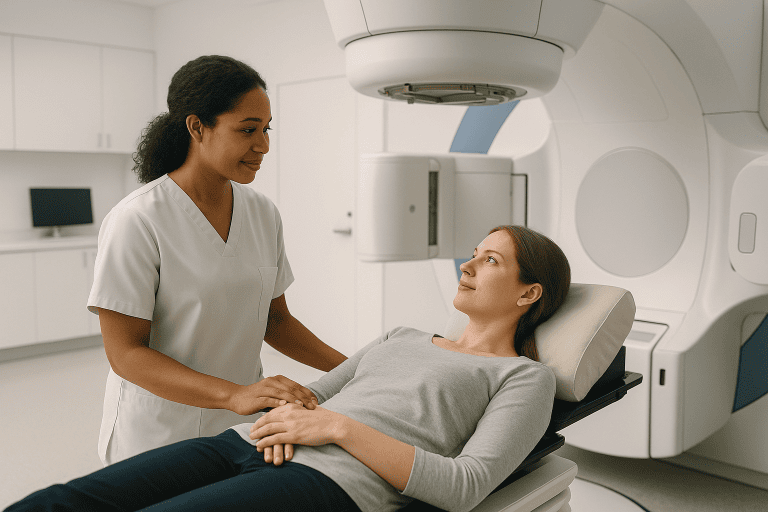
This treatment uses carefully targeted radiation delivered from outside the body. It is not commonly needed for differentiated thyroid cancer, but it may be used for cancers that cannot be fully removed with surgery, that do not absorb iodine, or for aggressive types such as anaplastic thyroid cancer.
Targeted therapy and chemotherapy
Targeted therapies are medications that act on specific molecular changes in cancer cells. They may be used for advanced thyroid cancers that no longer respond to radioactive iodine, or for certain medullary and anaplastic cancers. Traditional chemotherapymedication that kills rapidly dividing cells, has a limited role in most thyroid cancers but may be considered in specific situations, particularly for anaplastic disease. Your medical oncologist can explain whether these options apply to your case.
Living with thyroid cancer and outlook
For many people, the outlook after a thyroid cancer diagnosis is encouraging. Differentiated thyroid cancers, papillary and follicular, are often treated successfully, particularly when found early, and many patients go on to live full lives after treatment. Medullary thyroid cancer can also be managed effectively in many cases, especially when caught before it spreads. Anaplastic thyroid cancer is more difficult to treat, and outcomes are generally more serious; care in these cases often focuses on controlling the disease and maintaining quality of life. No doctor can guarantee a specific outcome for an individual patient, because prognosis depends on the cancer type, stage, response to treatment, and overall health.
Life after treatment usually involves long-term follow-up. This may include regular blood tests, such as measuring thyroglobulin, a protein made by thyroid cells that can act as a marker for remaining or returning cancer, as well as periodic neck ultrasounds. Patients who have had their thyroid removed will take daily hormone replacement for life and will need occasional dose adjustments. Most people adapt to this routine, though it can take time to find the right dose and feel like yourself again.
Emotional wellbeing matters, too. A cancer diagnosis can be stressful even when the outlook is good, and feelings of anxiety before follow-up scans are common. Support from family, patient groups, or counseling services can help. Maintaining a balanced diet, staying physically active as your doctor advises, and attending all follow-up appointments are practical steps that support recovery.
Frequently asked questions
What is thyroid cancer in simple terms?
Thyroid cancer is an abnormal growth of cells in the thyroid, the small hormone-producing gland at the front of the neck. There are several types, and most of the common ones grow slowly. It is usually first noticed as a lump or nodule in the neck, and doctors confirm it with an ultrasound and a needle biopsy.
Can thyroid cancer be cured?
In many cases, especially with the common papillary and follicular types found at an early stage, treatment can remove the cancer and patients remain disease-free long term. However, outcomes vary by type and stage, and some cancers can return years later, which is why long-term follow-up is recommended. Your doctor can explain what your specific diagnosis means for your outlook.
How serious is thyroid cancer?
Seriousness depends heavily on the type. Differentiated thyroid cancers are often among the more treatable cancers, while rare forms such as anaplastic thyroid cancer are aggressive and much harder to treat. Factors such as tumor size, spread to lymph nodes or other organs, and the patient’s age also influence how serious the disease is in an individual case.
What are the first symptoms of thyroid cancer?
Often there are no early symptoms, and the cancer is found by chance on a scan or during a physical exam. When thyroid cancer symptoms do occur, the most common first sign is a painless lump in the front of the neck. Persistent hoarseness, trouble swallowing, or swollen lymph nodes in the neck can also be early clues and should be evaluated by a doctor.
Is a thyroid nodule the same as thyroid cancer?
No. Thyroid nodules are very common, and the large majority are benign, meaning they are not cancer. Only a small proportion of nodules turn out to be malignant. Doctors use ultrasound features and, when needed, a fine-needle biopsy to determine whether a nodule is cancerous.
What is recovery like after thyroid cancer surgery?
Many patients recover from thyroid surgery within a few weeks, though experiences vary. Temporary hoarseness, neck stiffness, or fatigue are possible in the early period. If the whole thyroid is removed, daily thyroid hormone medication becomes a lifelong routine, and your doctor will adjust the dose using blood tests. Most people return to normal daily activities as advised by their care team.
Does thyroid cancer come back after treatment?
Thyroid cancer can recur, sometimes many years after initial treatment, which is why regular follow-up with blood tests and neck ultrasounds is standard. Recurrences are often detected early through this monitoring and can frequently be treated. The risk of recurrence depends on the original cancer’s type, size, and spread.
When to see a doctor
You should make an appointment with a doctor if you notice a new lump or swelling in your neck, even if it is painless, or if you have hoarseness, swallowing difficulty, or a persistent cough that lasts more than a few weeks without an obvious cause. If you have a family history of thyroid or endocrine cancers, mention this to your doctor, as it may affect how you are evaluated.
Seek urgent medical attention if you experience any of the following red-flag warning signs:
- A neck lump that is growing rapidly over days or weeks.
- Difficulty breathing, noisy breathing, or a feeling that your airway is being squeezed.
- Severe or worsening difficulty swallowing, especially if you cannot swallow liquids.
- Sudden voice loss or severe hoarseness combined with a neck mass.
- Coughing up blood or unexplained, significant weight loss alongside neck symptoms.
- Severe neck pain with swelling, fever, or redness, which could also signal an infection needing prompt care.
These symptoms do not necessarily mean cancer, but they should always be evaluated quickly. Early assessment gives doctors the best chance to identify the cause and, if thyroid cancer is found, to begin treatment at a stage when it is generally most manageable.
Medically reviewed by the Acıbadem International Medical Board September 13, 2026
See our medical review board →
Update history
- PublishedJune 14, 2026
- Medical review approvedSeptember 13, 2026
- Last content updateSeptember 13, 2026