When Can You Drive after Rotator Cuff Surgery: Procedure, Recovery and Results

Driving is usually delayed for several weeks after rotator cuff repair because the arm is protected in a sling and quick steering movements may be unsafe. A person should not drive while taking opioid pain medicines, while wearing a sling or while pain, weakness or limited movement affects safe vehicle control.
Key Takeaways
- Driving is usually delayed for several weeks after rotator cuff repair because the arm is protected in a sling and quick steering movements may be unsafe.
- A person should not drive while taking opioid pain medicines, while wearing a sling or while pain, weakness or limited movement affects safe vehicle control.
- Protecting the repaired tendon during the first weeks is essential; premature lifting, reaching or active shoulder movement can affect healing.
- Physical therapy supports a gradual return of shoulder motion, strength and daily activities over several months.
- Increasing redness, drainage, fever, uncontrolled pain, new numbness or breathing symptoms require prompt medical advice.
Most people can consider driving about 4–6 weeks after rotator cuff surgery, but only when their surgeon has cleared them, they are no longer using sedating pain medicine, and they can control the vehicle safely without a sling. Recovery varies with the size of the tear, type of repair, affected shoulder, overall health and rehabilitation progress.
Overview: when can you drive after rotator cuff surgery?
When can you drive after rotator cuff surgery? Many people are advised to wait around 4–6 weeks, although the correct time is individual and depends on the surgeon’s clearance. Driving should wait until the sling is no longer needed, sedating pain medicines have been stopped, and the person can steer, brake, reverse and respond quickly without significant pain or weakness.
Rotator cuff surgery repairs one or more tendons that help lift and rotate the shoulder. The repair needs time to attach and heal to bone, so early recovery focuses on protection rather than rapid use of the arm. A safe return to driving is only one part of recovery; normal strength and higher-demand activities generally take substantially longer.
People whose right shoulder was operated on may require more time before driving because this arm is commonly needed for steering and gear changes. Vehicle type, local driving rules, insurance requirements and the ability to make an emergency manoeuvre also matter. The operating surgeon and rehabilitation team should give the final recommendation for each individual.
How rotator cuff surgery works and who may need it
The rotator cuff is a group of muscles and tendons around the shoulder joint. It stabilizes the upper arm bone and allows controlled reaching, lifting and rotation. Tendons can be torn after an injury or gradually damaged over time. Pain at night, weakness, loss of movement and difficulty with overhead activities can occur, although symptoms and treatment needs vary.
Surgery may be considered when a tear causes persistent symptoms despite non-surgical care, follows a significant injury, or is large enough to threaten shoulder function. Decisions are based on symptoms, examination findings, imaging, work or activity demands, tendon quality and the person’s general health. Many people with rotator cuff problems improve without surgery, so an individualized assessment is important.
Most repairs are performed arthroscopically through small incisions using a camera and fine instruments. The surgeon may clean inflamed tissue, address bone spurs when appropriate, and secure the torn tendon back to the bone with anchors and sutures. Some complex tears require an open or mini-open approach. This is part of rotator cuff repair surgery, which aims to reduce symptoms and improve shoulder function while protecting the healing tendon.
What happens during the procedure?

Before surgery, the care team reviews medical history, medicines, allergies and anesthesia needs. Imaging such as ultrasound or magnetic resonance imaging may help define the tear. Patients are typically asked to arrange transport home because anesthesia and prescribed pain medicines can impair alertness and reaction time.
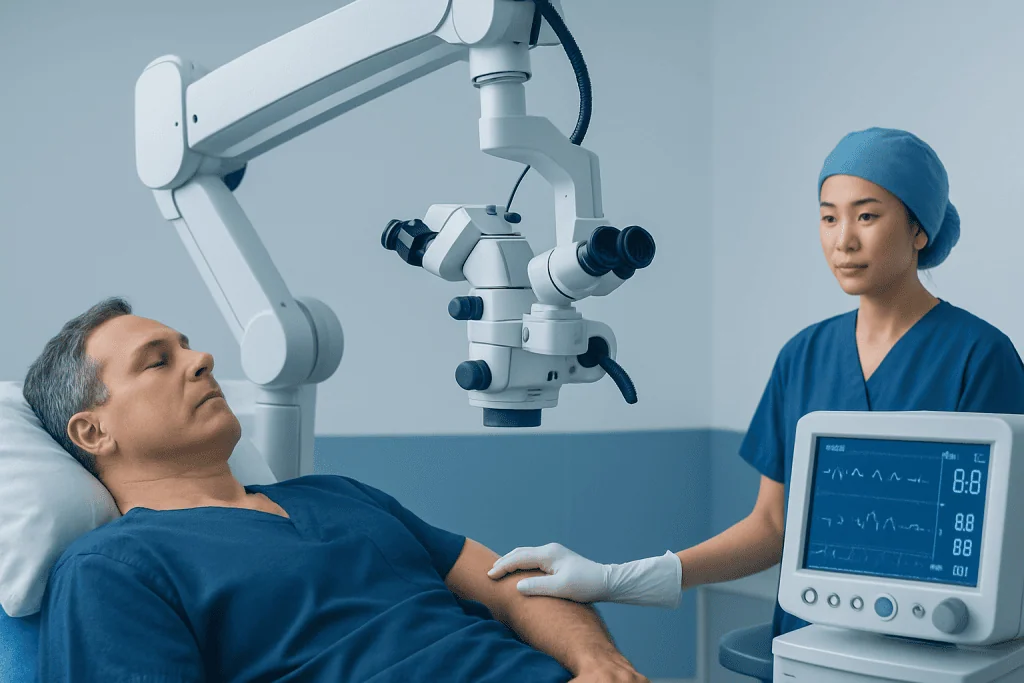
During the operation, anesthesia is used to keep the patient comfortable. An anesthetic nerve block may also be offered to help manage pain shortly after surgery. Using an arthroscope, the surgeon examines the joint and surrounding structures, prepares the tendon and bone surface, then places sutures to restore the tendon to its attachment point. The method depends on the pattern and size of the tear.
After the operation, the arm is usually placed in a sling, sometimes with an abduction pillow that positions the arm away from the body. Patients receive instructions about wound care, sleep, medicines, arm positioning and exercises. Early instructions can differ among surgical techniques and surgeons, so the discharge plan should always take priority over general information.
Recovery timeline and return to driving
In the first days after surgery, discomfort, swelling, fatigue and disrupted sleep are common. The sling is typically worn continuously except for hygiene and authorized exercises. During this period, a passenger or other support person is needed for transport. Driving is not appropriate while recovering from anesthesia, using opioid pain medicines, or unable to use the arm normally.
During the first 4–6 weeks, rehabilitation often emphasizes passive movement, meaning the shoulder is moved with assistance rather than by actively contracting the repaired muscles. The exact duration depends on the repair. Some people may begin driving after sling use ends and they have adequate control, but others need longer, particularly after larger or more complex repairs.
Before returning to driving, a person should be able to sit comfortably in the driver’s position, grip and turn the wheel confidently, check blind spots, use controls, fasten a seat belt and perform an emergency stop without hesitation. It may be sensible to first practice these movements in a parked vehicle. A short drive in low-traffic conditions may be appropriate only after medical clearance.
From roughly 6–12 weeks, guided active movement and progressive strengthening may begin as healing allows. Functional recovery commonly continues for several months, and full improvement can take up to a year. Physical therapy is tailored to the repair and the person’s recovery; moving ahead too quickly can be as unhelpful as avoiding prescribed rehabilitation.
How many days after rotator cuff surgery can you drive?
There is no single number of days that is safe for everyone. A commonly used range is approximately 28–42 days after surgery, but some people need more time. The decision should be based on function and surgeon approval, not the calendar alone.
Driving should be avoided if the arm is in a sling, if pain limits fast or forceful movement, or if medication causes drowsiness, dizziness, slowed thinking or reduced coordination. Even if a person feels comfortable at rest, an unexpected event on the road may require rapid steering or braking that the recovering shoulder cannot safely manage.
A surgeon may advise a longer restriction after a large tear, revision surgery, a repair involving several tendons, complications, or slower-than-expected progress. People should also check local legal and insurance requirements. If there is uncertainty, it is safer to wait and arrange alternative transport.
What is the hardest part of rotator cuff surgery recovery?
For many people, the hardest part is balancing protection of the repair with the gradual return of movement. The arm may need to remain in a sling for weeks, which can make sleeping, dressing, bathing, cooking, work and other routine tasks more difficult. Dependence on family, friends or caregivers during this phase can be frustrating but temporary.
Sleep disturbance is another frequent challenge. Lying flat may be uncomfortable, and many people sleep in a recliner or with carefully positioned pillows for a period of time. The care team can advise on safe positions that avoid stress on the repaired shoulder.
Rehabilitation also requires patience. Early exercises may feel modest because their purpose is to prevent stiffness while protecting the tendon. Strength gains generally come later. Attending therapy appointments, following home-exercise guidance and sharing concerns with the rehabilitation team can help recovery stay on track.
What are the worst things to do after rotator cuff surgery?
The most harmful activities are those that place unapproved force through the healing repair. These can include lifting objects with the operated arm, pushing up from a chair, pulling heavy doors, reaching suddenly, using the arm overhead, carrying bags, or trying to catch a falling object. A repaired tendon may be vulnerable before it has healed securely.
Stopping the sling too early, driving before it is safe, skipping prescribed exercises or advancing exercises beyond the therapist’s instructions can also interfere with recovery. Conversely, complete avoidance of the instructed rehabilitation plan may contribute to stiffness. The safest approach is to follow the specific restrictions and progression set by the surgeon and physiotherapist.
Smoking and nicotine exposure can impair tissue healing. Patients should discuss support for stopping nicotine use before or after surgery. It is also important to tell the care team about increasing pain or other changes rather than self-adjusting medicines or returning to strenuous activity without advice.
- Do not drive while wearing a sling or taking sedating pain medicine.
- Do not lift, push, pull or bear weight through the operated arm unless cleared.
- Do not resume sports, heavy work or overhead activity before rehabilitation milestones are met.
- Do not ignore wound problems, fever or sudden loss of shoulder function.
How painful is rotator cuff surgery recovery?
Pain levels differ widely. Discomfort is often most noticeable in the first several days and may be aggravated by movement or sleep positions. A nerve block, non-opioid pain-relief measures and, when necessary, prescription medicines may be used as part of a plan designed by the surgical team. Pain should gradually become more manageable rather than steadily worsening.
Some soreness can occur as therapy progresses, especially when movement is introduced or increased. However, severe pain, a sharp new pain after a specific movement, or pain accompanied by weakness, swelling, redness or wound drainage should be discussed with a clinician. Patients should use medicines only as prescribed and ask their team before combining products.
Cold therapy, supported positioning, pacing daily activities and adherence to rehabilitation recommendations can help with comfort. It is reasonable to tell the care team if pain is preventing sleep, safe exercise or normal recovery, as the plan may need adjustment.
Benefits, risks and when to seek medical care
Potential benefits of rotator cuff repair include less pain, improved shoulder stability, better movement and greater ability to return to valued daily activities. Results depend on factors such as tear size, tendon and muscle quality, age, smoking status, rehabilitation participation and whether there are other shoulder conditions. Surgery cannot guarantee a complete return to every activity.
Possible risks include infection, bleeding, blood clots, stiffness, nerve or blood vessel injury, anesthesia-related complications, ongoing pain and re-tearing or failure of tendon healing. The surgical team explains relevant risks before the procedure and monitors recovery through follow-up visits. Prompt assessment can help address concerns early.
When to seek medical care: Contact the surgical team promptly for fever, increasing redness or warmth around the incision, pus-like drainage, persistent or worsening swelling, pain that is not controlled by the prescribed plan, or new numbness or weakness. Seek urgent medical attention for chest pain, shortness of breath, fainting, or sudden swelling and pain in the calf. Acibadem International’s multidisciplinary specialists and JCI-accredited hospitals support diagnosis, surgery and rehabilitation planning for international patients.
Frequently asked questions
Can I drive with a sling after rotator cuff surgery?
No. A sling limits shoulder movement and can prevent safe steering, reacting and managing vehicle controls. Driving should wait until the surgeon says the sling is no longer required and the person can control the vehicle safely.
Can I drive if I am only taking non-opioid pain medicine?
This may be possible for some people once they meet all other safety requirements, but medication is only one factor. The operated shoulder must have enough comfortable movement and control for emergency manoeuvres, and the surgeon should provide clearance.
Does right shoulder rotator cuff surgery delay driving longer?
It can. The right shoulder may be used more directly for steering and certain vehicle controls, so recovery of safe driving function may take longer. The type of vehicle and the individual’s movement and strength also influence the decision.
When can I return to work after rotator cuff surgery?
Return timing depends on the job and the repair. Desk-based work may be possible earlier with suitable modifications, while physical jobs involving lifting, pushing, pulling or overhead work often require a longer period of recovery and medical clearance.
How long do I need physical therapy after rotator cuff surgery?
Rehabilitation commonly lasts for several months, with the schedule tailored to the operation and progress. Early therapy protects the repair and maintains movement, while strengthening is introduced later when healing permits.
What should I do if I accidentally move my arm suddenly after surgery?
A brief unexpected movement does not always mean the repair has been damaged, but new severe pain, a popping sensation, marked weakness or loss of movement should be reported to the surgical team. Until advice is received, avoid testing the shoulder or forcing additional movement.
References
- American Academy of Orthopaedic Surgeons
- OrthoInfo – American Academy of Orthopaedic Surgeons
- American Shoulder and Elbow Surgeons
- National Institute of Arthritis and Musculoskeletal and Skin Diseases
- Mayo Clinic
This article is for general information only and is not a substitute for professional medical advice. Please consult a qualified doctor about your individual situation.
Rotator Cuff in Turkey — costs, top hospitals & a free quote
JCI-accredited · board-certified surgeons · reply within 24h
Add us as a Preferred Source to see more of our trusted health content across Google Search, AI Overviews and Discover.