Why Have a Mastectomy for DCIS: An Evidence-Based Patient Guide

DCIS is a non-invasive breast condition: abnormal cells are contained within the milk ducts and have not invaded surrounding breast tissue. Many people with DCIS can have breast-conserving surgery, usually followed by radiotherapy; mastectomy is mainly considered for extensive or multicentric disease.
Key Takeaways
- DCIS is a non-invasive breast condition: abnormal cells are contained within the milk ducts and have not invaded surrounding breast tissue.
- Many people with DCIS can have breast-conserving surgery, usually followed by radiotherapy; mastectomy is mainly considered for extensive or multicentric disease.
- After mastectomy for pure DCIS, the chance of DCIS or invasive breast cancer returning in the treated chest area is very low, and radiotherapy is usually not required.
- Sentinel lymph node biopsy may be advised at the time of mastectomy because it is difficult to perform accurately after the breast has been removed.
- Reconstruction, going flat, or using an external breast prosthesis are all valid choices after mastectomy.
- A multidisciplinary breast team can help a person compare cancer control, recovery, body image, sensation, and practical considerations before deciding.
Mastectomy for ductal carcinoma in situ (DCIS) is not needed for everyone, but it can be the most effective local treatment when abnormal cells are widespread, occur in more than one area of the breast, or cannot be removed with clear margins while preserving an acceptable breast shape. The decision is individual and should reflect pathology findings, imaging, recurrence risk, overall health, and personal priorities.
Overview: Why Have a Mastectomy for DCIS?
A mastectomy for DCIS is considered when removing all abnormal duct cells with a smaller operation is unlikely to be possible or would leave too little breast tissue for a good result. Common reasons include DCIS affecting a large area, being present in several separate parts of the breast, persistent positive margins after attempts at breast-conserving surgery, or a situation in which radiotherapy is not suitable or is not preferred.
DCIS stands for ductal carcinoma in situ. It means abnormal cells are present inside the breast milk ducts but have not grown through the duct wall into nearby breast tissue. It is therefore non-invasive, but treatment is recommended because some untreated DCIS may later develop into invasive breast cancer. A diagnosis can understandably feel overwhelming; however, there are effective treatment approaches, and decisions can usually be made with time for careful discussion.
Mastectomy removes nearly all breast tissue on one side, or on both sides if bilateral surgery is chosen. For pure DCIS, it offers excellent local control. It does not usually improve overall survival compared with appropriately selected breast-conserving treatment, so the reason for choosing it is often the extent and pattern of DCIS rather than an assumption that it is always the “best” operation.
Do I Really Need a Mastectomy for DCIS?
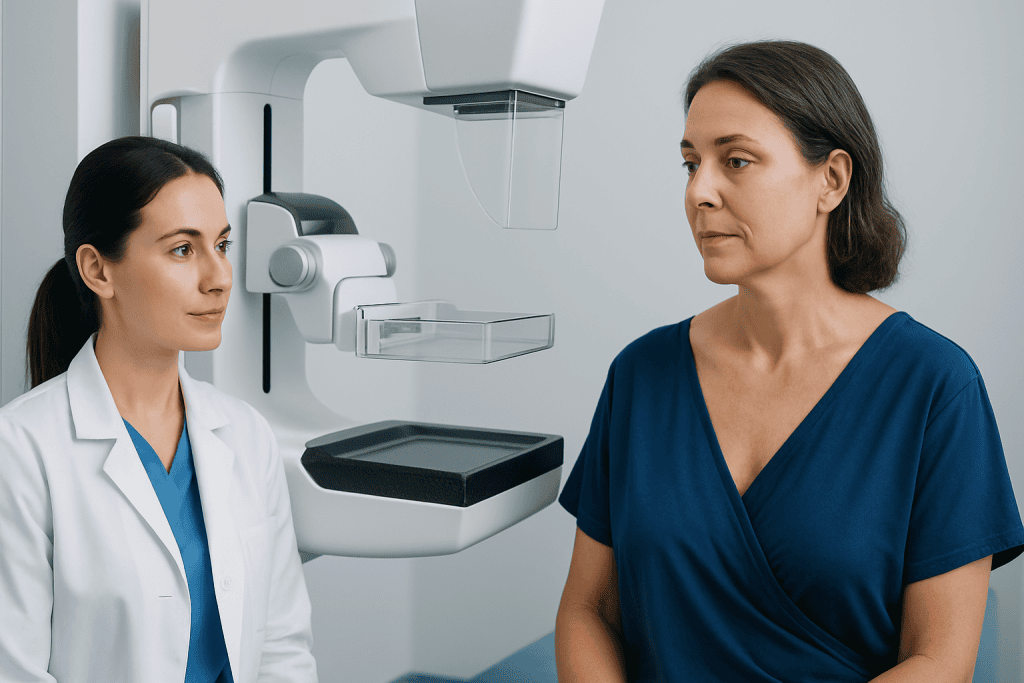
Not necessarily. Many people with DCIS are treated successfully with breast-conserving surgery, also called lumpectomy or wide local excision, in which the area of DCIS and a rim of normal tissue are removed. Radiotherapy is commonly recommended afterward to lower the risk of DCIS or invasive cancer returning in the same breast.
A mastectomy may be the more appropriate option when DCIS is too large relative to breast size, extends across multiple quadrants, is seen over a broad area of calcifications on mammography, or remains at the edge of removed tissue despite further surgery. It may also be discussed when a person has previously received radiation to that breast, has a medical reason to avoid radiotherapy, or strongly prefers mastectomy after balanced counselling.
The breast team will review mammography and, when needed, MRI findings, biopsy results, the grade and extent of DCIS, and whether clear surgical margins appear achievable. A second pathology review or further imaging can sometimes clarify the extent of disease. Seeking a second opinion is also reasonable when the choice between breast conservation and mastectomy is not clear.
What Is the Current Best Treatment for Ductal Carcinoma In Situ (DCIS)?

There is no single best treatment for every person with DCIS. The best approach is the one that removes or controls the DCIS effectively while fitting the person’s clinical situation and preferences. Standard options include breast-conserving surgery with or without radiotherapy, mastectomy for more extensive disease, and selected hormone-blocking medicines for hormone receptor-positive DCIS after breast-conserving treatment.
Breast-conserving surgery is often suitable for localized DCIS. Radiotherapy after surgery can reduce the chance of a future event in the treated breast, although it does not benefit every individual to the same degree. Endocrine therapy may be considered for some people whose DCIS is estrogen receptor-positive, particularly to reduce the risk of new hormone-sensitive breast events; it is not a replacement for surgery.
Mastectomy is generally the preferred surgical approach when the DCIS cannot be adequately removed with conservation. The operation can be performed with immediate reconstruction, delayed reconstruction, or no reconstruction. For information about surgical planning, patients may review breast cancer surgery with their treating team.
Active monitoring without immediate surgery is being studied for carefully selected low-risk DCIS in clinical trials, but it is not currently routine care for most patients. A breast surgeon, radiation oncologist, medical oncologist, radiologist, and pathologist can help tailor recommendations to the individual.
How Mastectomy for DCIS Works: Candidacy and Step-by-Step Care
A simple or total mastectomy removes the breast tissue, nipple and areola in most cases, and a portion of the overlying skin. In selected patients, skin-sparing or nipple-sparing techniques may be possible, particularly when reconstruction is planned. The appropriate technique depends on the location and extent of DCIS, breast anatomy, imaging results, smoking status, and the surgical team’s assessment.
Before surgery, the patient typically meets a breast surgeon and may meet a plastic and reconstructive surgeon. Preoperative assessment includes a review of medicines, medical conditions, imaging, and anaesthesia suitability. If reconstruction is being considered, the team discusses implant-based and tissue-based options, likely scars, recovery, and whether reconstruction can occur immediately or later.
The procedure is done under general anaesthesia. The surgeon removes breast tissue through a planned incision and sends tissue for detailed pathology testing. A sentinel lymph node biopsy is often performed alongside mastectomy for DCIS, especially when the DCIS is extensive or high grade, because a small invasive cancer may occasionally be found in the final specimen. It is also difficult to map sentinel nodes reliably after mastectomy.
Drains may be placed temporarily to remove fluid from the surgical area. Most patients go home the same day or after a short hospital stay, depending on the type of surgery, reconstruction, pain control, and general health. Final pathology results guide any further recommendations.
Benefits, Risks, and Recovery Timeline
The main benefit of mastectomy for DCIS is a very low risk of recurrence in the treated breast or chest wall. For pure DCIS treated by mastectomy, postoperative radiotherapy is usually unnecessary. Some people also value avoiding repeated excisions, reducing the need for radiation, or having a more definitive solution when DCIS is extensive.
All surgery has risks. These include bleeding, infection, wound-healing problems, fluid collection under the skin (seroma), scarring, numbness or altered sensation across the chest, and shoulder stiffness. Sentinel lymph node biopsy can cause temporary discomfort and, less commonly, arm swelling or lymphedema. Reconstruction brings additional potential complications, such as implant problems or healing issues with tissue-flap procedures.
Recovery varies by the extent of surgery and whether reconstruction is performed. In the first one to two weeks, patients often need support with lifting, reaching, driving, and household tasks. Drain removal, if drains are used, is usually arranged once output has reduced. Gentle arm and shoulder exercises are commonly recommended by the clinical team to restore movement safely.
Many people resume lighter daily activities within several weeks, while full recovery can take longer after reconstruction. The surgeon will provide individual advice about wound care, exercise, work, travel, and when it is safe to return to more strenuous activity. Persistent pain, tightness, emotional adjustment, and changes in body image deserve attention and support rather than being dismissed.
What I Wish I Knew Before a Mastectomy
Before a mastectomy, it can help to know that the decision involves more than removing DCIS. It may affect appearance, chest-wall sensation, arm movement in the short term, clothing choices, sexuality, and emotional wellbeing. There is no single “right” response to these changes, and people may feel relief, grief, confidence, uncertainty, or several emotions at once.
It is useful to ask whether breast-conserving surgery remains a realistic option, whether radiation would be recommended with that option, and whether more surgery might be needed if margins are not clear. Patients can also ask how much tissue will be removed, whether nipple-sparing surgery is appropriate, whether sentinel node biopsy is planned, and what the final pathology could change.
Reconstruction is a personal choice, not a requirement. Some people choose immediate reconstruction; others prefer delayed reconstruction, an external prosthesis, or to remain flat. Meeting a reconstructive surgeon before surgery can help a person understand the options without committing to reconstruction.
Practical preparation can make recovery easier. Arranging help at home, preparing loose front-opening clothing, discussing time away from work, and asking about physiotherapy or specialist breast-care nursing support can be helpful. A person should also tell the team about anxiety, low mood, sleep problems, or concerns about body image so appropriate support can be offered.
How Often Does DCIS Lead to Mastectomy?
DCIS does not automatically lead to mastectomy. Surgical treatment is determined primarily by the size, distribution, and location of the DCIS, as well as whether clear margins can be achieved with breast-conserving surgery. Many patients are candidates for conservation, while mastectomy is more commonly used when disease is widespread or present in multiple areas of the breast.
Rates of mastectomy vary between healthcare systems and individual patients because treatment decisions are influenced by imaging practices, availability of radiotherapy, reconstruction options, genetic risk assessment, and personal preferences. A family history or inherited cancer-risk gene may lead some people to consider risk-reducing surgery for the other breast, but this is distinct from treatment needed for DCIS in the affected breast.
Importantly, having mastectomy for DCIS does not mean the DCIS was invasive cancer. Final pathology sometimes identifies a small invasive focus that was not seen on biopsy, which is one reason the tissue is examined carefully after surgery. Most treatment planning remains focused on achieving effective local control with the least burdensome suitable approach.
When to Seek Medical Care
Anyone who has been diagnosed with DCIS should see a breast specialist to discuss treatment options and the timing of care. They should seek prompt medical review for a new breast lump, nipple discharge that is bloody or occurs without squeezing, skin dimpling, new nipple inversion, persistent one-sided breast pain, or a change in breast shape. These symptoms often have non-cancerous causes, but they should be assessed.
After mastectomy, the surgical team should be contacted promptly for fever, increasing redness or warmth around the incision, worsening swelling, pus-like drainage, a wound opening, uncontrolled pain, sudden shortness of breath, or new arm swelling. Emergency medical care is appropriate for severe breathing difficulty, chest pain, fainting, or signs of a serious allergic reaction.
Follow-up care remains important after treatment. The team will advise on clinical examinations and breast imaging for any remaining breast tissue. Acibadem International’s multidisciplinary specialists and JCI-accredited hospitals support international patients with evaluation and treatment planning for breast conditions, including ductal carcinoma in situ (DCIS).
Frequently asked questions
Why have a mastectomy for DCIS instead of a lumpectomy?
Mastectomy may be recommended when DCIS covers a large area, occurs in multiple separate areas, or cannot be fully removed with clear margins through lumpectomy. It may also be considered when radiotherapy is unsuitable or when a fully informed patient prefers this option. For localized DCIS, lumpectomy with radiotherapy is often an effective alternative.
Is mastectomy necessary for high-grade DCIS?
High-grade DCIS alone does not always require mastectomy. Grade is one factor used to estimate risk, but the size, distribution, imaging findings, margin status, and feasibility of breast-conserving surgery are also important. A breast multidisciplinary team can explain how these factors apply to an individual diagnosis.
Will I need radiation after mastectomy for DCIS?
Radiotherapy is usually not needed after mastectomy for pure DCIS because nearly all breast tissue has been removed and the local recurrence risk is low. In unusual circumstances, such as concerns about the surgical margin or unexpected invasive cancer in final pathology, the team may discuss additional treatment. Recommendations are based on the final pathology report.
Why is sentinel lymph node biopsy done with a mastectomy for DCIS?
DCIS itself is non-invasive and does not usually spread to lymph nodes. However, a small invasive cancer can occasionally be found only after the breast tissue is examined following surgery. Because sentinel lymph node mapping is difficult after a mastectomy, biopsy may be done at the same operation when the likelihood of an upgrade is considered meaningful.
Can someone have breast reconstruction after a mastectomy for DCIS?
Yes. Reconstruction can be done at the time of mastectomy or later, depending on the person’s health, preferences, cancer treatment plan, and surgical options. Some people choose no reconstruction and may use an external prosthesis or remain flat; all of these are valid choices.
Does mastectomy cure DCIS completely?
Mastectomy provides very effective local treatment for DCIS and makes recurrence in the treated area unlikely, but no treatment can promise zero risk. Follow-up remains important, particularly for the other breast if it remains. The care team can explain the individual outlook based on final pathology and personal risk factors.
References
- National Cancer Institute
- American Cancer Society
- National Comprehensive Cancer Network
- European Society for Medical Oncology
- Breast Cancer Now
This article is for general information only and is not a substitute for professional medical advice. Please consult a qualified doctor about your individual situation.
Oncology care in Turkey — second opinion and treatment plan
JCI-accredited · board-certified surgeons · reply within 24h
Add us as a Preferred Source to see more of our trusted health content across Google Search, AI Overviews and Discover.