

Acıbadem Hospitals in Turkey: How to Choose the Right Location

Choose between Acibadem hospitals in Turkey by matching the location to your treatment plan first, and to your travel logistics second. Istanbul suits most international itineraries, but the right hospital is the one where your specialist team, diagnostics and recovery support sit in one place. A record review before booking flights usually settles the question faster than comparing cities on a map.
You have your reports in hand, a treatment in mind, and a map of Turkey with several possible hospitals on it. Which one do you book flights for?
In practice, the answer comes down to fit: what your treatment needs, how far you are willing to travel, and what kind of support will make the trip manageable. This guide walks through how to compare Acibadem hospitals in Turkey in an organised way, so the decision rests on your case rather than on guesswork.
At a glance
- Best for: International patients comparing Acibadem locations before booking travel
- What decides it: Treatment type, the physician team, diagnostics on site, travel logistics, length of stay, companion needs
- Cities in play: Istanbul (several campuses) plus other major Turkish cities within the network
- Support available: International patient services, interpreters, appointment coordination, travel guidance
- The order to work in: Record review first, hospital match second, flights and hotels last
How the network of Acibadem hospitals in Turkey is organised
Acibadem is a Turkish healthcare group that runs a network of hospitals across the country, with several campuses in Istanbul and further hospitals in other major cities. The exact count changes as the network develops, so a fixed number is less useful to you than the structure behind it: the hospitals operate under one group, with shared standards, shared systems, and international patient services that coordinate across sites. If you want the fuller background before comparing locations, start with what Acibadem is as a group.
The practical consequence of that structure is worth stating plainly. You are not choosing between separate, unrelated hospitals where one choice locks you out of the others. You are choosing an entry point into a network. If your case turns out to need a different site, a specific surgical team, a particular piece of equipment, a longer admission, the coordination happens within the group rather than starting from zero somewhere else.
That is also why the most common mistake international patients make is deciding the city first and the hospital second. It feels natural, because flights are booked by city. But among Acibadem hospitals in Turkey, the differences that matter to you are usually about your treatment pathway, not the skyline outside the window.
Start with the treatment, not the map
Not every location is chosen for the same reason. Some patients need a hospital that is convenient for a short outpatient visit: a consultation, imaging, a second opinion. Others need a site suited to a complex treatment journey: multidisciplinary review, surgery, intensive care capacity, rehabilitation, or a stay of a week or more.
If you already have a diagnosis or a proposed treatment plan, the useful question is which Acibadem hospital is most appropriate for that specific care. A hospital may be the right fit because of its specialist team, its imaging and diagnostic services, its operating capacity, or how easily several departments there can coordinate around one patient. None of that is visible from a map.
If your plan is not final yet, you do not need to force the decision. Location choices within the network usually begin with a review of reports, scans and treatment summaries, after which a suitable hospital and team can be suggested. That sequence, records reviewed first, location confirmed second, saves patients from booking flights and hotels before knowing where their appointments should actually take place. There is a separate guide on how patients are matched with the right specialist, which is often the step that settles the location question by itself.
Istanbul or another city: compare in practical terms
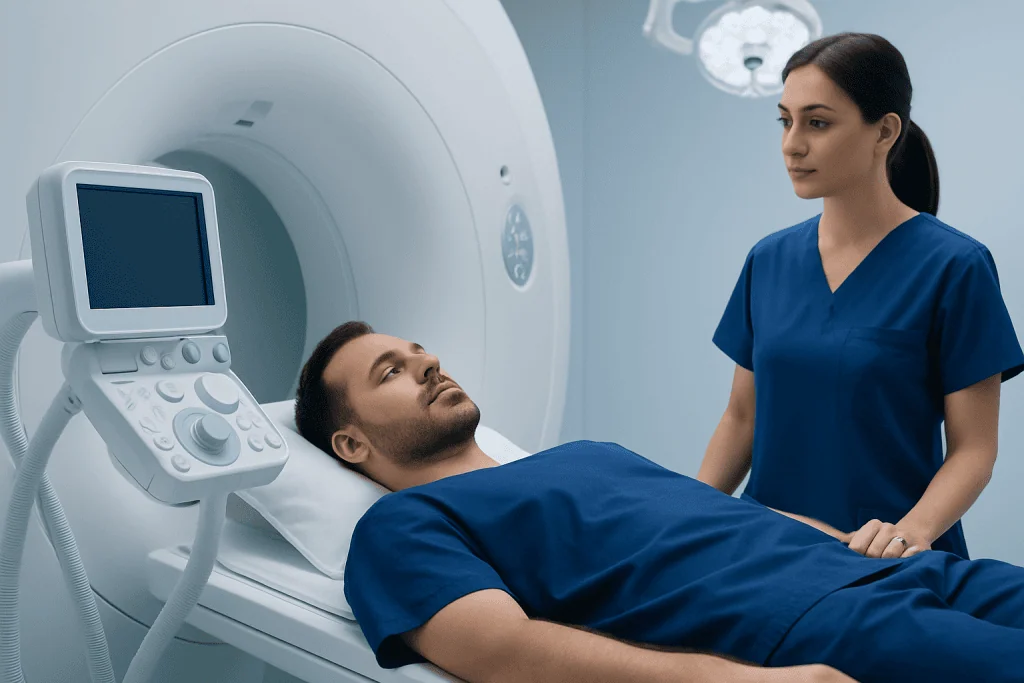
Most international patients look at Istanbul first, and for sound reasons. Istanbul is usually the easiest entry point: more flight routes, more accommodation at every level, and more flexibility if a companion is travelling with you or if your schedule shifts. If your priority is straightforward arrival and the ability to combine consultations, tests and treatment planning within a short visit, Istanbul is often the simpler base. Because the city has several Acibadem campuses on both the European and Asian sides, there is a dedicated guide to choosing the right Istanbul campus, including how traffic and airport position affect the choice.
That said, the right location is not automatically the largest city. Some patients prefer a quieter environment, a shorter transfer, or a hospital closer to relatives in Turkey who can support them during recovery. Depending on the treatment, another city in the network may offer the same quality framework with a calmer overall experience.
Compare day-to-day logistics, not just the hospital building. How long is the journey from the airport? Will you need several return visits across multiple days? Can your companion manage transport, meals and accommodation in that neighbourhood without help? These details feel minor from home. They matter a great deal on day four of a trip, when you are tired and the schedule has moved.
“Which hospital in Turkey is the best?” is the wrong question
It is one of the most searched questions, and it does not have an honest single answer. Turkey has many hospitals treating international patients, and no fixed ranking would hold for every condition, every specialty and every patient. A hospital that is an excellent fit for one person’s cardiac surgery may be an ordinary choice for someone else’s fertility treatment.
The more useful version of the question is: which hospital is best for my case, my travel pattern and my timeline? That question has a real answer, and it comes from three things: where the relevant specialist team works, where the diagnostics and treatment can be completed with the fewest transfers, and where the stay is practical for you and whoever travels with you. If you are weighing Acibadem against other options, the guide on how Acibadem compares with other hospitals in Turkey sets out what genuinely differs between providers and what is mostly marketing.
Be sceptical of any site, including a hospital’s own: that answers “which is best” with a flat superlative. The honest answer is always conditional on your case.
Look at the full journey, not just the appointment day

A hospital choice works when it supports the whole journey, not one appointment. Picture the complete timeline: pre-travel document review, consultation, tests, treatment, rest, discharge, and the plan for follow-up after you fly home. A location that looks convenient for a single consultation can become impractical if your case needs three departments and several days of observation.
If you are travelling for surgery or another involved treatment, ask whether most of your care can happen in one building. Fewer transfers mean fewer check-ins, less waiting, and less strain at exactly the point when you are tired, sore or adjusting to an unfamiliar place. It also simplifies life for your companion, who is often the one managing the logistics while you rest.
Also ask how follow-up works once you are home. Many international patients can have results reviewed and questions handled remotely after they return, which changes how long you actually need to stay in Turkey. Getting a realistic answer to “how many days should I plan for?” before booking flights is one of the highest-value questions in the whole process.
Travel, accommodation and companions: plan these early
Your hospital choice shapes nearly every travel detail. For a short visit, you may want the site with the most direct route from arrival to consultation. For a longer stay, nearby accommodation, food options, and easy movement between hotel and hospital matter more. The guide on choosing where to stay near the hospital covers this in detail.
Companions play a bigger role than most patients expect. They help with mobility, paperwork, daily communication and simple morale. A location that is easy for your companion to navigate makes your own stay smoother, so consider their needs as part of the decision, not an afterthought. Public health bodies that advise on medical travel, including the US CDC, make the same point: planning the non-medical side of a treatment trip, accommodation, escorts, documentation, follow-up, is part of planning the treatment itself.
Before deciding, write a short list of non-medical priorities:
- How close is the hospital to your arrival airport or transfer point?
- Will you need repeat visits across several days?
- Do you prefer a central city base or a quieter area?
- Will a companion stay with you throughout, and where will they sleep?
- Do you need interpreter support at multiple appointments?
- Do you need documentation in a specific language for your insurer or home doctor?
None of these are small details. Together they decide how supported the trip feels.
What being hospitalised in Turkey costs depends on
Cost is usually the second question after “which hospital?”, so it is worth explaining how it actually works, without quoting figures, because no honest figure exists before your case is reviewed.
The cost of hospitalisation in Turkey is built from several components: the procedure or treatment itself, the seniority and specialty of the team involved, the tests and imaging your case requires, the number of nights admitted, the room type, anaesthesia and theatre time where relevant, and any rehabilitation or extended observation afterwards. Two patients having what sounds like “the same operation” can have genuinely different totals because their diagnostics, admission length and follow-up needs differ.
For that reason, meaningful quotes are prepared after medical records have been reviewed, not before. A quote issued without seeing your reports is a guess, and guesses tend to grow. What you can reasonably expect from a serious provider is an itemised written estimate for your specific plan, a clear statement of what it includes and excludes, accommodation and flights are typically separate, and an explanation of what could change the total, such as additional tests or an extended stay. Treat any figure quoted before record review, by any provider anywhere, with caution.
A note on names: what international-sounding hospital names mean
Some hospitals in Turkey carry international-sounding names. A name like this is a proper name chosen for historical reasons, not a category or a quality mark, and it tells you nothing about who operates the hospital or to what standard.
The underlying question patients usually mean is different: will I find internationally oriented care in Turkey? Several Turkish groups, Acibadem among them, run hospitals built around international patients: English-speaking coordination, interpreters for other languages, documentation prepared for foreign insurers and home doctors, and JCI-accredited hospitals within the network. If accreditation is part of how you compare providers, the guide on why international patients choose JCI-accredited hospitals explains what that accreditation does and does not tell you.
Use quality and coordination as deciding factors, correctly
Patients often assume that choosing between locations means choosing between quality levels. Within a single group, that is not usually the most accurate frame. Acibadem hospitals in Turkey operate under one system that emphasises coordination, patient safety and internationally oriented support; the group standards travel with you whichever site you choose.
What differs more meaningfully between locations is how your particular care can be organised. One site may compress consultations, imaging and treatment planning into a shorter window. Another may be better suited to a longer admission, or to a planned recovery period with family support nearby. A third may simply be where the specific surgical team for your condition is based, which, for surgery, usually outranks every other factor.
So the working question is not “which location is best?” but “which location is best for my case, my travel pattern and my comfort?” That question produces an answer you can actually book flights against.
Questions to settle before you confirm a location
Once you have narrowed the options, ask direct questions. You do not need technical language; you need clear answers about where things will physically happen.
Ask whether the specialist team for your treatment works mainly from one hospital. Ask whether the additional tests your case may need can be completed at that same site, and how likely it is that you would move between campuses. Ask how many days you should realistically plan to be in Turkey, and whether follow-up can be handled remotely once you are home. Ask what interpreter support looks like in practice, one appointment or all of them, and what documentation you will leave with for your own doctor.
The goal is not a perfect trip. It is a trip with no avoidable surprises.
Step by step
- Begin with a record review. Location decisions work best when reports, scans, test results and any current treatment summary are reviewed before anything is booked. That review is what allows a specific hospital and team to be matched to your case rather than to a city name.
- Let the treatment pathway pick the shortlist. Ask which hospital suits your planned care, the specialist team, the diagnostics, the admission type, and only then compare those sites on travel terms.
- Compare travel routes and likely stay length. Look at airport access, transfer time, and whether you will need several appointments across multiple days. An easy-to-reach location absorbs schedule changes with less fatigue.
- Plan for your companion’s experience. Hotel convenience, local transport, and how much practical help they will be providing all affect your own recovery more than most patients expect.
- Confirm whether care stays in one site. Fewer transfers between consultations, tests, procedures and immediate follow-up mean less stress, particularly after treatment.
- Check support services before booking flights. Confirm interpreter availability, how appointments are coordinated, and what travel guidance exists around your medical schedule, before money goes on tickets.
- Build a realistic timeline. Leave room for possible extra tests, rest days and adjusted appointment times. A padded itinerary beats a tight one on every medical trip, especially a first one.
Your checklist
- Copies of recent medical reports and imaging
- A list of your current medications and allergies
- Your preferred travel dates and how flexible they are
- Questions about which Acibadem location matches your treatment
- A realistic estimate of your stay in Turkey, including recovery time
- Companion travel and accommodation needs
- Interpreter or language support requirements
- A plan for follow-up after returning home, including who reviews results
Key takeaways
- The right choice within the Acibadem network depends on your treatment plan, not only on the city.
- Istanbul is often the most convenient base for international travel, but another location may fit your care journey better.
- Record review comes first; hospital match second; flights and hotels last.
- Think through the full pathway, consultation, tests, treatment, recovery, follow-up, not the appointment day alone.
- Travel time, accommodation, interpreter access and companion support strongly shape how the trip actually feels.
- Cost depends on the specifics of your case, which is why meaningful quotes follow record review rather than precede it.
Frequently asked questions
How many hospitals does Acibadem have?
Acibadem operates a network of hospitals across Turkey, including several campuses in Istanbul and hospitals in other major cities, alongside outpatient facilities. The precise count changes as the network develops, so for planning purposes the structure matters more than the number: the sites share one group’s standards and coordinate patient care between them.
Which hospital in Turkey is considered the best?
There is no single honest answer, because “best” depends on the condition, the specialty and the patient. The useful question is which hospital is best for your specific case, meaning where the relevant specialist team works, where your diagnostics and treatment can happen with the fewest transfers, and where the stay is practical for you.
How much does it cost to be hospitalised in Turkey?
It depends on the treatment, the tests and imaging your case requires, the number of nights admitted, the room type, theatre and anaesthesia time where relevant, and any rehabilitation afterwards. Meaningful quotes are prepared after medical records have been reviewed; a figure quoted before that, by any provider, is a guess rather than an estimate.
Do international-sounding hospital names mean international standards?
No: a name is not a standard. If your underlying question is whether internationally oriented care exists in Turkey, several groups, Acibadem included, run hospitals built around international patients, with interpreters, English-speaking coordination and JCI-accredited sites within the network.
How do I choose between Acibadem hospitals in Turkey?
Start with your medical need and find out which location suits that type of care. Then compare the shortlisted sites on practical grounds: airport access, likely stay length, companion needs, and whether most of your care can happen in one place. Records reviewed first, location confirmed second, travel booked last.
Should I choose a hospital based on the city or the doctor team?
For anything beyond a simple consultation, the care team and treatment logistics usually matter more than the city. A convenient city helps, but it is the team, the diagnostics on site and the coordination of your pathway that determine how the treatment itself goes.
Is it better to stay close to the hospital?
Usually, yes, particularly if you have early appointments, limited mobility, or a companion managing daily logistics. Staying nearby reduces fatigue and makes unexpected schedule changes far easier to absorb.
Do I need to finalise my hospital location before my records are reviewed?
No, and it is generally better not to. Reviewing records first is the most reliable way to avoid choosing a location that does not fit the treatment. Once the review is done, the location decision tends to make itself.
Add us as a Preferred Source to see more of our trusted health content across Google Search, AI Overviews and Discover.

Update history
- PublishedJune 22, 2026
- Medical review approvedSeptember 13, 2026
- Last content updateSeptember 12, 2026
References1
- CDC Yellow Book: Medical Tourism wwwnc.cdc.gov
More Patient Guides

At Acibadem, How We Explain Expected Clinical Outcomes and Treatment Success Information
Expected clinical outcomes at Acibadem are explained in clear, realistic terms so you understand likely benefits, limits, risks, and next steps in…

At Acibadem, How Families and Companions Are Supported During Treatment Travel
At Acibadem, family support during treatment travel in Turkey includes interpreters, planning help, visitor guidance, and practical support for companions.

At Acibadem, How Our JCI-Accredited Hospitals Support Safe International Care
JCI-accredited hospitals at Acibadem support safe international care in Turkey with standardized quality, interpreters, coordination and follow-up.

At Acibadem, What Our International Patient Package May Include Before You Travel
International patient package at Acibadem may include medical planning, travel help, interpreters, and stay support in Turkey before you travel.