

Staying Near the Hospital in Turkey: How to Choose the Right Hotel for Recovery

Choose a hotel with a short, predictable route to your hospital, usually within 10 to 20 minutes by car. Prioritise lift access, a quiet room, an easy-to-use bathroom, simple meals nearby and flexible booking terms. Confirm stairs, bathroom layout and travel time directly with the hotel before you pay, because recovery days reward convenience far more than scenery.
You have your treatment date, your flights and your hospital. What you may not have decided yet is where you will sleep the night after your procedure, and in the days that follow. That decision matters more than most people expect. Staying near the hospital in Turkey, in the right hotel, shortens tiring journeys, makes follow-up visits simple, and gives you and your companion a calm base. The wrong choice adds stairs, traffic and noise at exactly the moment you have the least energy for them.
At a glance
- Best location: a short, predictable route to your hospital, usually 10–20 minutes by car or less
- Top priority: a quiet, clean, accessible room with lift access and an easy bathroom
- Good for recovery: simple meals, a kettle and fridge, flexible housekeeping, a 24-hour front desk
- Ask before booking: steps at the entrance, walk-in shower, real traffic time, cancellation and extension terms
- Companion tip: pick a hotel near a pharmacy, small supermarket and café
- Helpful support: international patient teams routinely advise on accommodation areas and transfers around a treatment plan
Why staying near the hospital in Turkey matters during recovery
Most people planning medical travel put their energy into choosing the hospital, understanding the treatment plan and booking flights. The hotel gets decided last, often on price and photographs. Yet staying near the hospital in Turkey is one of the few logistics decisions that shapes every single recovery day: how far you travel for a dressing change, how easily your companion finds food, how well you sleep between appointments.
Follow-up care rarely happens in one visit. Depending on your treatment, you may return for a wound check, blood tests, imaging, suture or drain removal, or a final review before you are advised you can fly. Each of those trips is easy when the hotel is close and genuinely tiring when it is not. A journey that would feel trivial on holiday feels different when you are sore, moving slowly or adjusting to new medication.
Your hotel also determines your companion’s day. If a family member or friend is helping you, they will be the one fetching water, collecting a prescription from the pharmacy, finding plain food and handling the front desk. A location that works for both of you lowers stress for everyone.
Hospitals that regularly treat international patients usually have coordination teams who work through these practical details alongside the medical schedule: the likely follow-up pattern, realistic travel times, which nearby areas suit reduced mobility. That local knowledge is worth asking for, because a booking site cannot tell you whether the walk from the taxi drop-off to the hotel lift involves eight steps and a cobbled slope.
How close should you stay to the hospital?
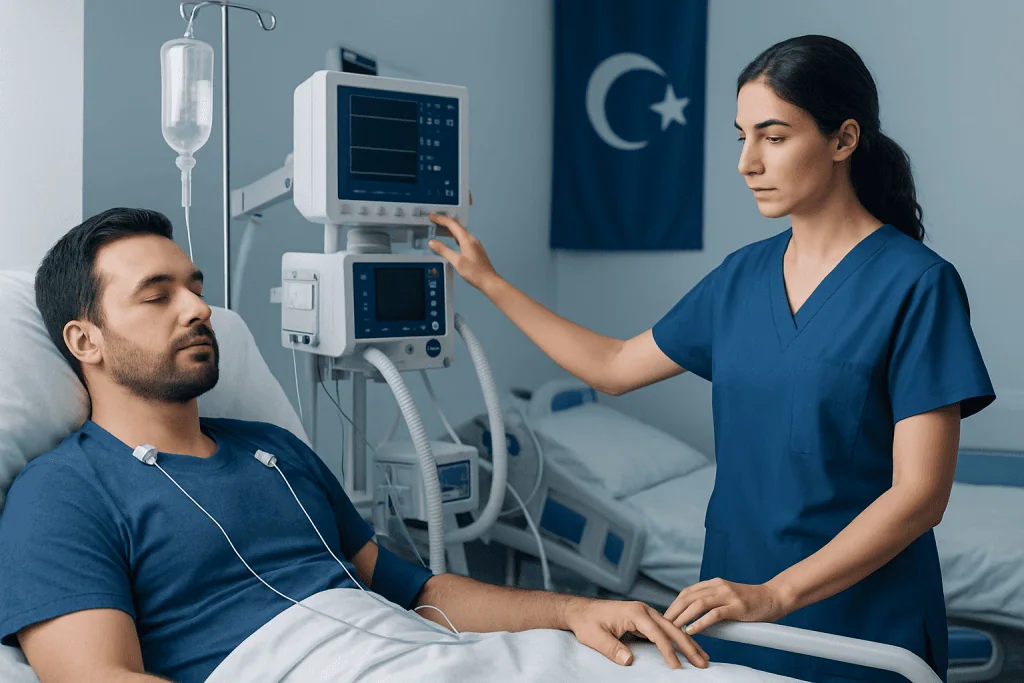
For most patients, the practical answer is: as close as you reasonably can, especially for the first days after treatment. Being nearby helps when rest matters most, when unexpected discomfort makes long journeys harder, and when your care team asks to see you sooner than planned. Schedules shift in medical travel. A close hotel absorbs those changes without drama.
Close does not mean the building next door. What you actually want is a reliable, simple route. A hotel 10 to 20 minutes away by car on a flat, predictable road can be a better recovery base than one that looks adjacent on the map but involves a steep hill, a busy junction to cross on foot, or an entrance up a flight of steps. Judge the journey, not the distance in kilometres.
If your care is in Istanbul, take traffic seriously. Travel times swing widely by hour and district, so ask for an estimate based on your actual appointment times, not the midnight figure a map app shows. The city’s hospital campuses sit in quite different neighbourhoods, and the right area depends on which campus you are attending: the guide on how to choose the right area near your hospital walks through that comparison in more detail.
A useful test before you confirm any booking: could you make this trip comfortably if you were tired, in mild pain and moving slowly? If the honest answer is no, keep looking. During recovery, convenience beats sightseeing value every time.
Can foreigners use hospitals in Turkey, and who pays?
Yes. Foreign nationals can be treated in Turkish hospitals, and private hospital groups in the large cities receive international patients routinely, with international patient departments, interpreters and coordination staff built around exactly this situation. Planned treatment is arranged in advance: your records are reviewed, a treatment plan is proposed, and the schedule is set before you travel.
Healthcare in Turkey is not free for tourists. The public system covers people enrolled in Turkey’s social insurance scheme, residents and workers, not visitors. As a visiting patient you pay for your care, either directly or through insurance, which is why travel insurance that covers medical incidents abroad is consistently recommended by government travel-advice services. Note that standard travel insurance generally covers emergencies and illness while travelling, not planned elective treatment; those are separate arrangements.
As for what a hospital visit or a full treatment costs: there is no single answer, because the figure depends on the procedure itself, the hospital and room type, how many nights of inpatient stay are planned, which tests and imaging are included, and how long you need to remain in Turkey for follow-up. For planned treatment, hospitals prepare a written quote in advance based on your records, and it is reasonable to ask exactly what that quote includes, and what would sit outside it, before you commit. Your accommodation budget then follows from the length of stay in that plan, which is another reason to settle the medical schedule before booking the hotel.
What to look for in a recovery-friendly hotel room
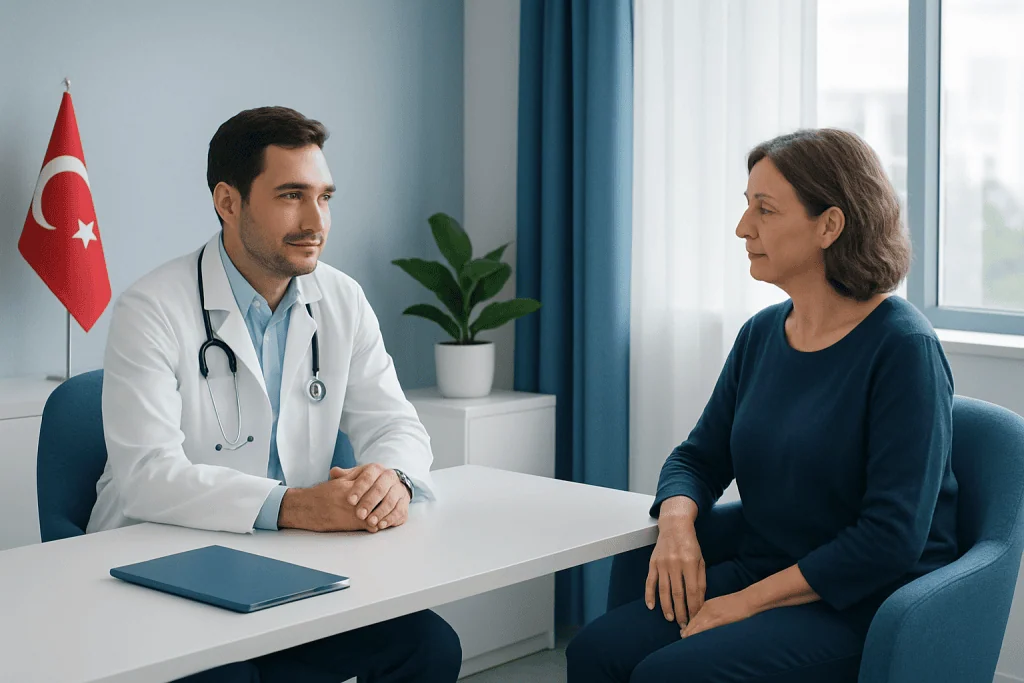
A recovery-friendly room is easy to move around in, quiet enough for daytime sleep, and manageable without effort. Comfort matters; practicality matters more. You will spend far more hours in this room than you would on a normal trip, so small details compound.
The physical basics come first: a lift from entrance to room, minimal steps anywhere on the route, a private bathroom you can use safely, a supportive bed at a reasonable height, and working temperature control. If someone is staying with you, the room needs genuine space for two people over several days, one resting, one moving around, not just a second bed squeezed against the wall.
Then the quiet-life extras: a kettle, bottled water, a mini-fridge for snacks or anything that needs to stay cool, and room service or easy meal access. These matter more than they sound if you need light meals, regular fluids or medication taken with food. Blackout curtains and reliable air conditioning improve sleep, and sleep is the one thing every recovery has in common.
Noise deserves its own check. A hotel beside a main road, a nightlife street or a late-opening venue is a poor match for recovery, however good the reviews. Ask for a quiet room away from lifts, bars and the street-facing side. On accessibility, ask blunt questions rather than trusting the word “accessible” in a listing: Are there steps at the entrance? Is the shower walk-in or over a bathtub? Is the bathroom large enough to move in safely? Once you have chosen, the hotel room setup checklist for recovery after surgery covers how to arrange the room itself for the first days back from hospital.
Daily logistics that make recovery easier
The best recovery hotel is rarely the most luxurious one. It is the one that makes ordinary days simple. Think through a typical recovery day before you book: drinking water, a light breakfast, medication at set times, perhaps a pharmacy errand, a rest in the afternoon, a short trip to the hospital, an early night. Every one of those steps is either easy or annoying depending on where you are staying.
Proximity to a pharmacy, a small supermarket and a café or restaurant with plain food options covers most daily needs. Turkish neighbourhoods generally have pharmacies at street level and a rota system for out-of-hours cover, so a hotel in a lived-in district often serves you better than one in a purely touristic zone. If your appetite is reduced or your diet needs to stay gentle for a while, ask whether the hotel can serve breakfast in the room or accommodate simple food at flexible times.
On longer stays, laundry becomes surprisingly important, comfortable, fresh clothing is part of feeling human again. Check whether the hotel offers a laundry service, extra pillows and towels, and housekeeping at hours that fit a rest schedule rather than interrupting it. A 24-hour front desk earns its keep the first time you arrive late, need a taxi called, or have a practical problem at an odd hour.
Transport is the other daily constant. Many international patients prefer organised transfers over hailing a taxi each time, and coordinated airport–hotel–hospital transfers are a standard part of international patient logistics. Even if you book your own accommodation, settle the transport plan before you fly, and pack with the hospital-hotel rhythm in mind: the guide on how to pack for medical treatment in Turkey covers what belongs in the case for each stage.
Matching the hotel to your treatment and mobility
The right accommodation depends on what your treatment involves and how independent you are likely to be afterwards. If your care team expects you to walk normally and attend only brief follow-ups, a standard business hotel near the hospital may be entirely suitable. If you may move slowly, need help dressing, or tire quickly, then every design choice should reduce physical effort: ground-level entry, a larger bathroom, space to get in and out of bed easily, no long corridors.
If your procedure affects comfort while sitting, standing, bending or climbing, say so when you book and ask for the room that avoids those movements. Avoid hotels that require uphill walking from the drop-off point: a common feature in older Istanbul districts, where attractive streets and steep gradients tend to arrive together.
Travelling alone changes the calculation. Without a companion, the front desk becomes your support system, so choose a hotel with responsive staff, reliable communication in English, and food available without leaving the building. Travelling with a companion changes it differently: the room must genuinely work for two people across several days, and a cramped one wears both of you down.
Stay length matters too. For a week or less, hotel services, housekeeping, room service, front desk, usually outweigh extra space. For longer recoveries, a serviced apartment with a kitchen and washing machine can suit better. The trade-offs are set out in recovery hotel vs serviced apartment in Turkey. Your care team can usually tell you the expected length of stay and follow-up pattern before you travel; book against that information, not against a hoped-for timetable.
Questions to ask before you book
Contact the hotel directly rather than relying on listing photographs, and say plainly that you are recovering after medical treatment. Hotels answer practical questions well when the reason for them is clear, and five minutes of direct questions prevents most avoidable problems after arrival.
The questions worth asking:
- Are there steps at the entrance, and does the lift reach every floor?
- Does the room have a walk-in shower, or a shower over a bathtub?
- How long is the drive to the hospital at the times of day my appointments fall?
- Are quiet rooms available away from the lift, bar and street?
- What are the room service hours, and can plain or early meals be arranged?
- Is early check-in or late check-out possible?
- What are the cancellation terms, and can the stay be extended at short notice?
That last pair matters most. Medical travel does not always follow a perfect timetable, discharge can shift by a day, or a final review can be added before you are cleared to fly. A hotel with understanding cancellation and extension terms removes a whole category of stress. A fuller pre-booking rundown is in what to check before you book a recovery hotel in Turkey.
Common mistakes when staying near the hospital in Turkey
The most common mistake is booking for the holiday you are not actually taking: choosing a famous neighbourhood, a rooftop view or a bargain rate over recovery basics. After treatment, a beautiful area is worth little if reaching it involves crowds, hills or long transfers. Book for ease first, location second, sightseeing last: there may be time for the view on a future trip.
The second is underestimating the value of a companion. Even when the medical plan is straightforward, someone who handles meals, errands, transport and communication makes the first days far easier. If you must travel alone, compensate deliberately: stronger front-desk service, food in the building, everything within a short flat walk.
The third is planning for the treatment day only. Recovery usually includes checks before you go home, so booking a distant or “more interesting” hotel immediately after discharge tends to backfire unless your team has confirmed no further visits are needed.
The fourth is trusting the word “accessible” without verifying it. Listings use the term loosely. Confirm the entrance, the bathroom, the lift and the bed setup directly. A few precise questions before you travel are the difference between a stay that supports recovery and one that quietly fights it.
Step by step
- Understand your expected recovery needs. Ask your care team what the first days after treatment realistically look like: rest only, short walks, frequent follow-ups, companion support. Every accommodation decision follows from this.
- Choose the most practical hospital area. Base yourself near the campus where your treatment and reviews happen, not near landmarks. In Istanbul, reliable travel time beats map distance.
- Shortlist recovery-friendly hotels. Keep only those with lift access, quiet rooms, an easy bathroom, meal options and a responsive front desk. Remove anything involving stairs or steep walks if mobility may be limited.
- Call each hotel and ask direct questions. Confirm entrance access, room layout, real traffic time to the hospital, room service hours and cancellation terms. Explain that you are travelling for treatment.
- Coordinate transport before you fly. Fix the airport–hotel–hospital plan in advance, whether through organised transfers or your own arrangements, so you are not solving transport problems while tired.
- Set the room up on arrival. Place water, chargers, medication, documents and comfortable clothing within easy reach, and agree housekeeping timing that protects your rest.
- Keep the booking flexible. An easy extension option removes pressure if your doctor recommends an extra night or an additional review before you travel home.
Your checklist
- Hotel is close to your treatment hospital and follow-up appointments
- Route is short, flat and predictable, not dependent on long walks or steep streets
- Lift access runs from entrance to room without steps in between
- Room is quiet and suitable for resting during the day, not just at night
- Private bathroom is easy to use, ideally with a walk-in shower
- Pharmacy, simple food and bottled water are within easy reach
- Cancellation and extension terms are confirmed in writing
- Airport–hotel–hospital transfers are arranged before arrival
- Companion space is genuinely adequate for several days, if applicable
Key takeaways
- Staying near the hospital in Turkey makes early recovery days shorter, calmer and less tiring.
- Judge the journey, not the distance: a predictable 15-minute drive beats a hilly walk from a hotel that looks close on the map.
- Choose on accessibility, quiet, meals and transport, not tourist appeal or photographs.
- Verify stairs, bathrooms, lifts and real traffic times directly with the hotel before paying.
- Healthcare in Turkey is not free for visitors; planned treatment is quoted in advance, and the length of stay in that plan should drive your booking dates.
- Flexible cancellation and extension terms matter, because medical timetables shift.
Frequently asked questions
Can foreigners go to hospital in Turkey?
Yes. Foreign nationals can be treated in Turkish hospitals, and private hospital groups receive international patients routinely, with dedicated international departments, interpreters and coordination staff. Planned treatment is arranged in advance, with records reviewed and a treatment plan set before travel.
Do tourists get free healthcare in Turkey?
No. Turkey’s public healthcare system covers people enrolled in its social insurance scheme, residents and workers, not visitors. As a tourist or visiting patient you pay for care directly or through insurance. Travel insurance typically covers emergencies while travelling, not planned elective treatment, which is arranged and quoted separately.
How much does a hospital visit cost in Turkey?
There is no single figure. The cost of a visit or a full treatment depends on the procedure, the hospital and room type, planned inpatient nights, the tests and imaging included, and the length of follow-up. For planned treatment, hospitals prepare a written quote in advance, and it is sensible to confirm exactly what the quote includes before committing.
How long should I stay near the hospital after treatment?
It depends on your treatment, your doctor’s advice and whether follow-up checks are needed before you fly home. As a general rule, staying near the hospital through the early recovery period keeps appointments easy and leaves room for schedule changes without long, tiring journeys.
Is it better to stay in the Istanbul city centre or near the hospital?
For recovery, near the hospital is usually the better choice. Central tourist districts look convenient on a map, but traffic, crowds, hills and longer real travel times make recovery days harder than expected. The best part of Turkey to stay in, for a patient, is simply the district around the hospital treating you.
What hotel features matter most after a medical procedure?
Quiet, cleanliness, lift access, an easy-to-use bathroom, ideally with a walk-in shower, comfortable bedding, and simple access to meals and water. A 24-hour front desk, room service and a pharmacy nearby round out the list. These matter far more during recovery than standard holiday amenities.
Should I travel with a companion if I plan to recover in a hotel?
Many patients find a companion makes the stay much easier, especially in the first days. A companion helps with transport, meals, errands and communication even when the medical plan is straightforward. If you travel alone, choose a hotel with stronger front-desk support and food available in the building.
Is a serviced apartment better than a hotel for recovery?
It can be, particularly for longer stays where a kitchen, more space and laundry facilities pay off. A hotel is often easier for shorter stays because housekeeping, room service and front-desk help are built in. The right choice depends on your recovery needs, stay length and the support you have with you.
Add us as a Preferred Source to see more of our trusted health content across Google Search, AI Overviews and Discover.

Update history
- PublishedJuly 6, 2026
- Medical review approvedSeptember 13, 2026
- Last content updateSeptember 12, 2026
References2
- Turkey travel advice: GOV.UK gov.uk
- Turkey: CDC Travelers' Health destination page wwwnc.cdc.gov
More Patient Guides

GHIC and EHIC in Turkey: Why They Do Not Cover You
The blue card that quietly covers you across Europe stops working at the Turkish border, and every summer, travelers discover this…

Do You Need Vaccinations for Turkey?
Here is the answer travel clinics give every day: no vaccinations are required to enter Turkey from anywhere in the normal course…

Flying With a Broken Leg or Cast: Airline Rules and Comfort
A broken leg does not cancel a flight, airlines carry passengers in casts every single day. What surprises travelers is that…
Travel Insurance After Cancer: What Patients Should Know
A cancer diagnosis changes how insurers read your name, but it does not end your traveling life. Thousands of people with…