

Recovery in a Hotel After Treatment in Turkey: What to Check Before You Book

Before you book recovery accommodation in Turkey, check five things: realistic travel time to your hospital, step-free access and lift availability, a safe bathroom and comfortable bed, all-day food and medication storage, and a flexible cancellation policy. Ask your treating team first whether a hotel stay suits your situation, then confirm every detail in writing before you pay.
You have a treatment date. Now you are scrolling through hotel listings, trying to work out which one you could actually manage when you are tired, sore, and moving slowly. That is the right question to ask, and most booking sites will not answer it for you. The room that looks appealing on a city break can be genuinely difficult after a procedure.
This guide covers what to check before you book for recovery in a hotel after treatment in Turkey: location, room layout, food, transport, staff support, and the booking terms that matter when your schedule depends on a doctor’s advice rather than a flight sale.
At a glance
- Best for: Patients whose treating team has confirmed a short hotel stay before flying home is appropriate
- Most important check: Realistic, traffic-aware travel time between the hotel and your hospital for follow-up visits
- Ask about: Step-free access, lift availability, bed height, walk-in shower, all-day food, and a fridge for medicines
- Arrange early: Private transfers, companion arrangements, follow-up appointment times, and after-hours contact details
- Avoid: Stairs-only access, long or unpredictable transfer routes, noisy locations, and non-refundable bookings with fixed dates
Why your hotel choice matters when recovering in Turkey
Recovery in a hotel after treatment in Turkey is a normal part of many international patients’ plans. Most people are discharged from hospital before they are cleared to fly, which leaves a gap of days, sometimes longer, that has to be spent somewhere. For that period, your hotel room is not just accommodation. It is where you rest, take medicines on schedule, eat, sleep in whatever position your procedure allows, and get ready for follow-up appointments.
The best hotel for this stage is rarely the most luxurious or the most central. What matters is whether you can move around the room without strain, reach the hospital quickly, get food when you need it, and rest without interruption. A walk-in shower, a lift that works reliably, and a quiet room away from a main road do more for a recovering patient than a rooftop bar ever will.
It also helps to treat the hotel as part of your care plan rather than a separate travel decision. At Acibadem, international patient services teams routinely talk through transport, interpreter arrangements, and follow-up timing with patients before travel, precisely because the days after discharge shape how the whole trip goes. Wherever you are treated, the principle is the same: plan the hotel around the treatment, not the other way round. If you want to go deeper on the booking process itself, the guide on what to check before confirming recovery accommodation covers the paperwork side in detail.
Location: stay close enough for easy follow-up
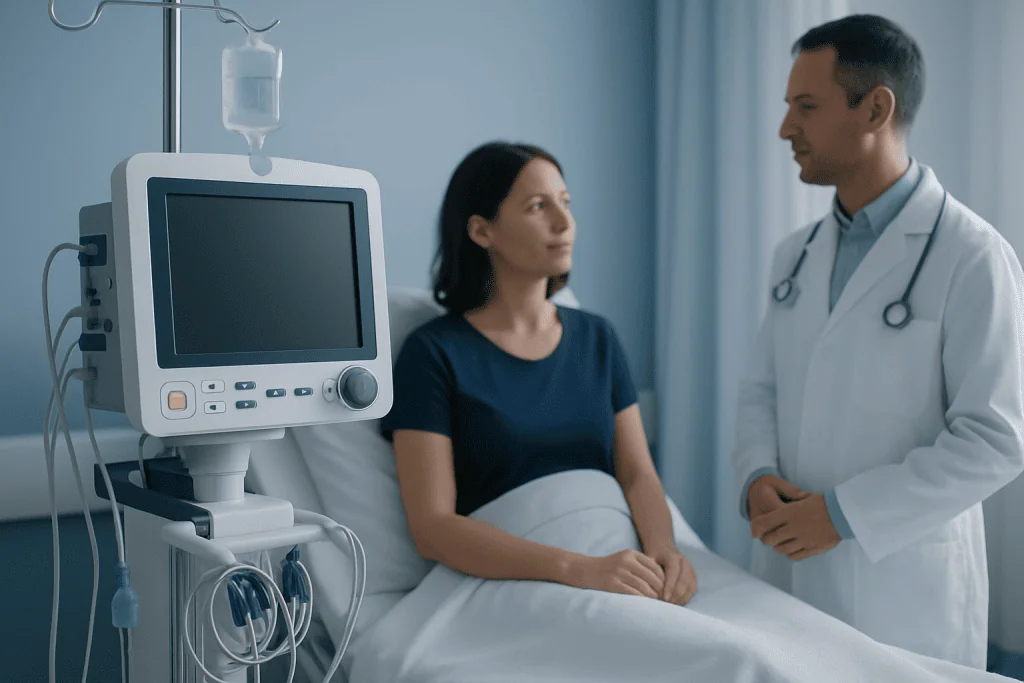
Check the real travel time between the hotel and your hospital, not the distance on a map. In Istanbul in particular, a route that looks short can take three or four times longer at rush hour, and a tiring transfer is the last thing you want on the day of a dressing change or review appointment. Search the route at the times of day you are actually likely to travel, and assume the slower estimate.
Think about how you will make the journey, too. Public transport in Turkish cities is extensive, but stairs, crowds, and standing room are hard work in the first days after treatment. Many patients pre-arrange private transfers for hospital visits. If your hospital has an international patient office, ask before travel whether transfer coordination is offered, and whether drivers know which entrance to use, large hospital campuses can have several, and walking the wrong way round a building is an avoidable frustration.
Finally, look at the hotel’s immediate surroundings. A property on a steep hill, a cobbled pedestrian street, or a lane with kerbs and steps everywhere is inconvenient when you are moving carefully. The ideal is a calm, level route from the door to a car, with a pharmacy and a small supermarket within easy reach.
- Check transfer times at both quiet and rush-hour periods
- Confirm which hospital building your follow-up appointments are in, not just the campus address
- Ask whether the hotel entrance is step-free and whether cars can pull up directly outside
- Look for a pharmacy and grocery shop within a short, flat walk
Room setup: what makes recovery easier

A recovery-friendly room lets you rest, move safely, and manage daily routines with minimal strain. Do not rely on the general gallery photos on a booking site; they show the best room at its best angle. Email the hotel directly and ask about the specific room category you are booking. If you have mobility concerns, ask for photos of the actual bathroom and, if necessary, measurements.
The bed and the bathroom deserve the most scrutiny. A bed that is very low, very soft, or pushed against a wall can be awkward to get in and out of after treatment. In the bathroom, a walk-in shower, a non-slip floor, a handheld shower head, and enough space to turn without grabbing a towel rail are all genuinely useful. Even patients who never think of themselves as needing accessible design find that post-treatment fatigue makes ordinary tasks harder than expected. The room setup checklist walks through these features one by one.
Noise, temperature, and lighting matter more than most people anticipate. You may need to nap during the day, keep the room cooler or warmer than usual, and get up at night for medication or the bathroom. Blackout curtains, reliable air conditioning or heating, and a bedside lamp you can reach without sitting up fully all support better rest. If your procedure restricts how you can lie down, extra pillows become essential rather than a nice touch, so ask for them when you book.
- Ask for a room reached by lift, never by stairs alone
- Request a room near the lift if walking is difficult, but not next to a service area or ice machine
- Check whether the room has a mini-fridge, kettle, and access to room service
- If a companion is staying, ask about twin beds rather than a sofa bed they will resent by day three
Food, water, and medication practicalities
After treatment, your daily needs are usually simple and repetitive: drink enough, eat regular light meals, take medicines on time. The right hotel supports that routine. If your team has advised soft food, low-spice meals, higher protein, or frequent small snacks, ask the hotel in writing what can realistically be provided across the whole day, not just at breakfast.
A breakfast buffet is not a food plan. Your sleep pattern may be disrupted, some medicines need to be taken with food, and appetite after treatment is unpredictable. Ask three specific questions: what are the room service hours, is outside food delivery allowed to the room, and is there an in-room fridge? A fridge matters both for keeping water and yogurt to hand and for storing any prescribed item that needs to stay cool.
On medication itself, the practical rules are straightforward. Keep everything in its original packaging, carry the written instructions your treating team gives you at discharge, and make sure you understand the dosing schedule before you leave the ward, including who to contact with questions and how to reach them outside office hours. Your doctors set the medication plan; the hotel’s job is simply to make following it easy. Tap water quality varies by city and building in Turkey, and most visitors drink bottled water, so ask the hotel to keep your room stocked.
Support: who actually helps you at the hotel
Many patients feel well looked after in hospital and only realise once they reach the hotel that the practical challenge has just begun. Someone has to fetch water, adjust pillows, manage laundry, and deal with the front desk. Be honest with yourself about how much of that you can do alone in the first days.
Understand what hotel staff can and cannot do. They are not caregivers and should not be treated as a substitute for one. What good hotel staff can do is carry luggage, bring extra pillows and towels, handle simple meal requests, call a taxi, and pass on a message. A front desk that speaks confident English, or your own language, is worth more than an extra star on the rating, because it is the front desk you will deal with when something small goes wrong at 11pm.
If you are travelling with a companion, agree in advance what they will handle; the companion checklist for hotel recovery is built for exactly that conversation. If you are travelling alone, the coordination offered by hospitals experienced with international patients matters more: interpreter support that continues after discharge, help scheduling follow-up visits, and a named coordinator whose number is saved in your phone before you leave the ward.
- Save your hospital and coordinator contact numbers before discharge, not after
- Ask whether interpreter support is available for follow-up visits, not only during admission
- Confirm how and when follow-up appointments will be confirmed to you
- Check whether transfer assistance is available for return visits to the hospital
When a hotel may not be the right choice
Read recent reviews with a recovery mindset rather than a holiday one. Ignore comments about the pool and look for patterns in housekeeping standards, lift reliability, noise at night, and how staff respond when guests need help. Daily cleaning, fresh linen on request, and a genuinely clean bathroom are basic requirements when you are recovering, not luxuries.
Be equally realistic about whether a hotel stay suits your situation at all. If you expect very limited mobility, frequent wound care, significant assistance with walking, or a period of closer monitoring, a standard hotel room may not be the right environment, and a longer hospital stay or a different arrangement may be more appropriate. This is not a decision to make from a booking site. It is a question for your treating team, and it should be settled before you pay for anything non-refundable.
Discharge day is the natural moment to confirm the plan: what you can and cannot do at the hotel, when your next review is, and how the team prefers to be contacted with questions. The guide on what to check before leaving the hospital covers that conversation in full. If any part of the hotel arrangement still feels uncertain at that point, ask again before you commit to it.
Timing and flexibility: book for a schedule that may change
How long you stay in Turkey after treatment is a clinical decision, not a travel one. It depends on the procedure, how your early recovery goes, and when your doctor considers you fit to fly. That is why the single most valuable feature of a recovery booking is flexibility. Recovery in a hotel after treatment in Turkey rarely follows the exact number of nights you guessed when you booked.
Three booking terms matter most. First, the cancellation and change policy: can you move your dates without losing the whole amount? Second, extension terms: if your doctor advises staying longer, can the hotel keep you in the same room, and at what point do they need to know? Third, checkout timing: a late checkout on your final day can be the difference between a calm departure and a stressful one, especially if your flight leaves in the evening.
Plan the flight with the same logic. A rigid return ticket puts pressure on a recovery that has not happened yet. The guides on when to book extra recovery days before flying home and how to book flexible return flights explain how to build slack into both ends of the trip.
Questions to put to the hotel in writing
A short email tells you very quickly whether a hotel understands recovery needs. Ask in writing so you have the answers on record, useful if you need a specific room type, early check-in on discharge day, or date changes later. Vague, slow, or dismissive replies are themselves an answer: keep looking.
| Ask | What a good answer looks like |
|---|---|
| Is the room reached by lift, with a step-free entrance? | A clear yes, with the floor number and confirmation the lift is in service |
| Does the bathroom have a walk-in shower? | Yes for the specific room category, ideally with a photo |
| What are the room service hours, and is outside delivery allowed? | Specific hours, and a straightforward policy on deliveries to the room |
| Is there an in-room fridge? | Yes, or a concrete alternative such as fridge access at reception |
| Can you arrange transport to a named hospital? | A named taxi arrangement or transfer service, not “there are taxis outside” |
| Can I extend my stay or change dates if my recovery timeline changes? | A written policy with a clear notice period |
| Can I have a quiet room away from the street, bar, or lift machinery? | A specific commitment, noted on the booking |
Step by step
- Ask your medical team what kind of recovery setup you need. Before comparing hotels, find out whether you are expected to walk independently, whether a companion is advisable, and how often you will return for follow-up. The safest booking starts with understanding your likely mobility and energy, not with a map of the city.
- Shortlist hotels by hospital access, not sightseeing plans. Rank properties by realistic, traffic-aware travel time to the building where your follow-up appointments will happen. A short, simple route beats a fashionable neighbourhood while you are recovering.
- Confirm the exact room features before paying. Verify lift access, bed type, shower setup, air conditioning, noise level, and companion arrangements for the specific room category, in writing, with photos if anything is unclear.
- Plan meals, water, and medicine storage in advance. Confirm room service hours, delivery policy, and fridge availability, and stock the room with bottled water and simple food on day one.
- Arrange transfers and follow-up logistics early. Know exactly how you will travel from hospital to hotel on discharge day and back for reviews, and whether your hospital’s international patient office coordinates transport and interpreters.
- Leave the hospital with a clear contact plan. Save the hospital number, your coordinator’s details, and the team’s after-hours instructions in your phone before discharge, and keep a paper copy in your bag.
- Check the cancellation and extension policy before you pay. Recovery does not follow an exact timetable. Flexible dates, easy extensions, and late checkout options protect you if your doctor advises a longer stay before flying home.
Your checklist
- Hotel is close to the hospital with realistic, traffic-aware transfer times
- Step-free entrance and working lift access confirmed in writing
- Bed is a comfortable height with space to stand up slowly on at least one side
- Bathroom has a walk-in shower or another low-risk setup
- Room service hours, delivery policy, and food options suit your recovery routine
- In-room fridge available for water, snacks, and any items that need cool storage
- Quiet room requested, away from the street, bar, lift machinery, and smoking areas
- Private transport plan arranged for discharge day and follow-up visits
- Hospital contacts, coordinator details, and interpreter arrangements saved before discharge
- Cancellation, extension, and late-checkout terms confirmed before payment
Key takeaways
- The best recovery hotel is usually the closest, quietest, and easiest to move around, not the most impressive.
- Verify lift access, bathroom safety, food availability, and transport in writing before you pay.
- Hospital follow-up should shape your accommodation choice more than any tourism plan.
- Flexible dates, extension terms, and late checkout matter because recovery timelines change.
- Whether a hotel stay is appropriate at all is a question for your treating team, settled before discharge.
Frequently asked questions
Is it safe to recover in a hotel after treatment in Turkey?
For many patients it is a practical option, provided the treating team has confirmed that a hotel stay is appropriate for the specific procedure and the setup is sensible: short travel time to the hospital, a safe room, a plan for meals and medicines, and clear follow-up arrangements. The suitability question belongs to your doctors, not to a booking site.
Is Turkey good for medical treatment?
Turkey has a large private hospital sector, and many hospitals treat international patients routinely, with English-speaking coordination, interpreter services, and structured follow-up. As anywhere, standards vary between providers, so the sensible approach is to research the specific hospital and team, ask how follow-up and aftercare are organised, and get the plan in writing before travelling.
Can foreigners go to hospital in Turkey?
Yes. Foreign visitors can be treated in Turkish hospitals, and private hospitals in the larger cities see international patients every day. You will normally need your passport for registration, and you should expect to pay for care unless your travel or health insurance covers it, which is worth confirming with the insurer before you travel.
Do tourists get free healthcare in Turkey?
No. Turkey’s public health insurance system covers people enrolled in it, such as residents and workers; it does not extend free care to tourists. Visitors are expected to pay for treatment, which is why appropriate travel insurance for medical treatment is worth arranging before you fly.
How much does medical treatment cost in Turkey?
There is no single answer, because the total depends on the procedure, the hospital, the length of stay, and what the quote includes, hospital nights, consultations, transfers, and follow-up visits can each be inside or outside the figure. The reliable approach is a written, itemised quote from the hospital, with clarity on what would trigger additional charges, before you book travel or accommodation.
How close should my hotel be to the hospital?
As close as is practical, especially for the first days after treatment. In Istanbul and other large cities, travel time matters more than map distance, so check the route at rush hour and choose a hotel with a simple, reliable connection to the specific building where your follow-up appointments will take place.
Can hotel staff help if I feel unwell?
Hotel staff can help with practical things, calling a taxi, bringing water, passing on a message, but they are not medical caregivers and cannot replace the plan your treating team gives you at discharge. Leave the hospital knowing exactly who on your care team to contact with questions and how to reach them outside office hours.
Do I need a flexible hotel booking?
Yes, if at all possible. Recovery and follow-up timing can change on a doctor’s advice, and a booking that allows date changes, stay extensions, or late checkout removes a layer of stress. Pair it with a changeable return flight so that neither the room nor the ticket forces a decision your recovery has not yet made.
Add us as a Preferred Source to see more of our trusted health content across Google Search, AI Overviews and Discover.

Update history
- PublishedJuly 8, 2026
- Medical review approvedSeptember 13, 2026
- Last content updateSeptember 12, 2026
References2
- Medical Tourism: CDC Travelers' Health wwwnc.cdc.gov
- Foreign travel advice: Turkey: GOV.UK gov.uk
More Patient Guides

Septoplasty Recovery: Week by Week
Learn what to expect after deviated septum surgery: a week-by-week septoplasty recovery timeline, when it is usually safe to fly home, and…

Gallbladder Surgery Recovery: Week by Week
Learn what to expect after gallbladder surgery: a week-by-week recovery timeline, pain, diet, wound care, when it is safe to fly home…
Robotic Hysterectomy Recovery: Week by Week
Recovery from robotic hysterectomy week by week: pain, lifting, wounds, driving, flying home safely, warning signs and questions to ask before you…

Breast Reconstruction Recovery: Week by Week
DIEP flap recovery week by week: hospital stay, drains, pain, walking, showering, driving, when it is usually safe to fly home, and…