

Discharge Day in Turkey: What to Check Before You Leave the Hospital
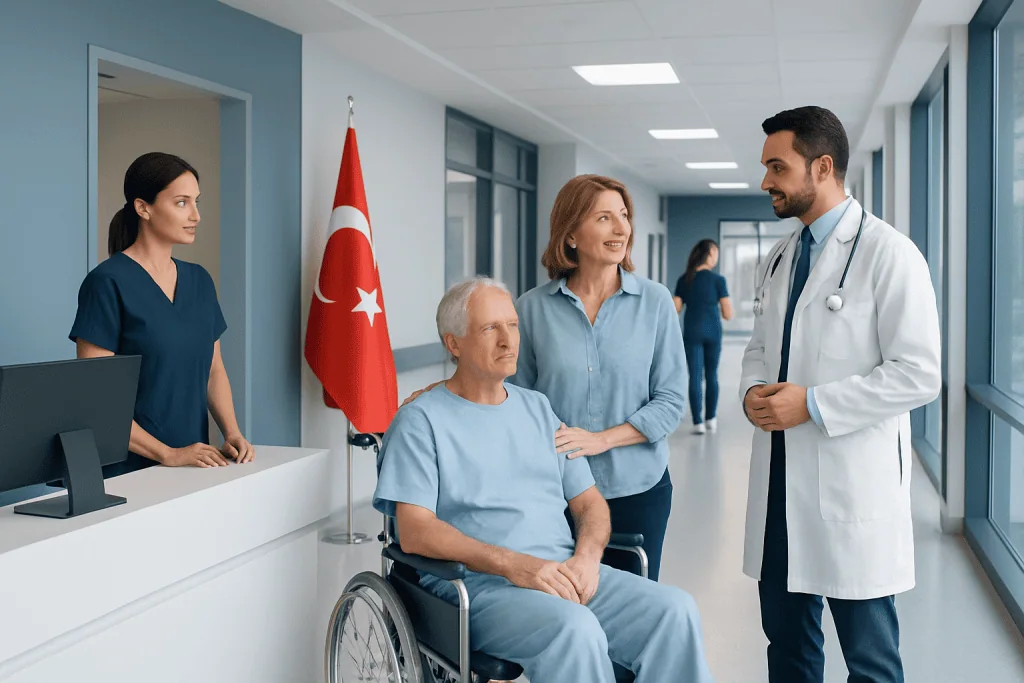
Before leaving hospital on discharge day in Turkey, confirm five things: a discharge summary you can read, prescriptions explained medicine by medicine, practical care instructions demonstrated, a written follow-up plan, and suitable transport. Check that names and dates on every document are correct, keep digital copies on your phone, and remember that Turkish public holidays can affect pharmacies, banks and traffic.
Your doctor says you can go today. Good news, but the ride back to your hotel is not the finish line. Discharge day moves quickly, and a missing prescription, an unexplained instruction or a report left at the nurses’ station can turn into a real problem once you are on the other side of the city, or the other side of a border.
This guide walks you through what to confirm on discharge day in Turkey: the documents you should hold in your hand before you leave the ward, the questions worth asking while your care team is still in front of you, and the practical details, transport, hotel setup, even Turkish public holidays, that shape your first days out of hospital.
At a glance
- Best for: International patients preparing to leave a hospital in Turkey after treatment
- Main goal: Leave with documents you can use, instructions you understand, and transport that suits your condition
- Key checks: Discharge summary, prescriptions, care instructions, follow-up plan, billing clearance, transfer arrangements
- Who can help: Your ward nurse, your treating doctor, the discharge desk, and the international patient coordinator
- Good timing: Start the conversation the day before discharge, not on the morning itself
- Worth knowing: Turkish public holidays can affect pharmacies, banks, offices and traffic on the day you leave
What discharge day in Turkey actually involves
Discharge is not simply the moment you stop being an inpatient. It is a handover, from hospital-based care to self-care, family support, hotel recovery, or continued treatment with a doctor at home. On discharge day in Turkey, the ward team typically prepares a discharge summary, a medication plan, and instructions covering wound care, eating, movement, bathing and follow-up. Your job is to make sure you understand all of it before you walk out.
For international patients there is an extra layer: language and geography. Instructions that would be easy to clarify with a phone call in your home country become harder once you are back at your hotel, or on a flight. At Acibadem, international patient coordinators and interpreters can sit with you and go through the discharge plan before you leave the ward, which removes most of the ambiguity while it is still cheap to remove.
Discharge can feel rushed. Transport may be waiting, you are tired, and everyone around you seems busy. Slow it down anyway. A calm extra fifteen minutes spent checking papers, prescriptions and contact numbers on the ward will save you hours of uncertainty later. If you can, begin the process a day earlypreparing for hospital discharge before you leave your room gives you time to ask questions without a car idling downstairs.
The documents you should leave with

The single most important document is your discharge summary. It records your diagnosis, the treatment or procedure performed, your condition at discharge, and the recommended next steps. Any doctor who sees you afterwards, in Turkey or at home, will build their picture of your case from this document, so check it carefully. Our guide on what your discharge summary should include before you fly home covers it line by line.
Depending on your treatment, you may also need prescriptions, a medication schedule, copies of blood test results, imaging reports on disc or via a digital link, pathology reports where relevant, a note confirming your follow-up appointment, and, if your team recommends it, written travel advice. If your care will continue in your home country, ask specifically for records in a form another doctor can read and use; a summary in English travels better than a stack of untranslated internal forms.
- Discharge summary, signed and dated
- Prescriptions and a written medication schedule
- Test, imaging and pathology reports where they apply to you
- Follow-up instructions and appointment details
- Invoice or payment-clearance documents if your insurer will need them
- Contact numbers for the ward and the international patient team
Before anything goes into a bag, verify the basics: your name spelt as it appears in your passport, your date of birth, the treatment dates, and the doctor’s details. Small errors are easy to fix at the discharge desk and tedious to fix from abroad. Keep printed copies in one folder, photograph or scan everything to your phone, and if you are staying in Turkey a few more days, carry the folder with you rather than leaving it in checked luggage later. A fuller list sits in what discharge papers you need before flying home from Turkey.
Medicines, wound care and daily recovery instructions
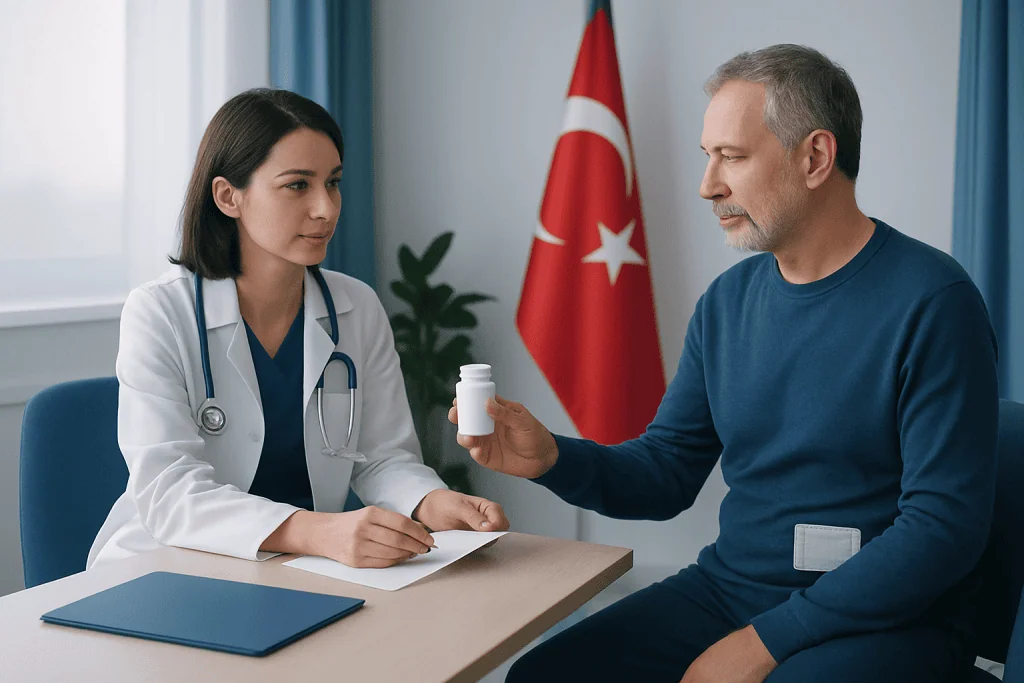
The most common discharge-day gap is medicines. Patients leave with a bag of boxes and only a partial idea of what each one does. Ask your nurse or doctor to go through the list one by one: what each medicine is for, the dose, the timing, whether to take it with food, and how long to continue. If you take regular medicines at home, ask your treating doctor directly whether and when they fit back into your routine: that decision belongs to the doctor who knows your case, not to a guide, a pharmacist abroad, or a search engine.
Also ask where to obtain refills. Turkish pharmacies (eczane) are widespread and many prescriptions can be filled near your hotel, but some medicines are dispensed under different brand names in Turkey than at home. Having the generic (active ingredient) name written on your schedule prevents confusion at any pharmacy counter, in any country.
If you have a dressing, wound, drain, catheter, compression garment or any equipment, ask for a live demonstration before you leave, not a verbal description. You should see how to keep the area clean and dry, how a dressing change is done if you will need one, and what normal healing looks like at your stage. If a companion is helping you, have them watch too; two memories are better than one on a tiring day. If you are leaving with a tube or drain still in place, read drains, catheters and tubes before discharge in Turkey before your final ward round.
Then cover daily life for the next few days: showering, stairs, walking distances, sleeping position, meals, hydration, lifting limits, driving, returning to work, and intimacy where relevant. These small details shape comfort and recovery far more than most patients expect, and it is far easier to ask while the care team is standing in front of you than from a hotel room at midnight.
Questions worth asking before you leave the ward
Some patients hesitate to ask questions at discharge because everyone seems busy. Ask anyway: this is precisely what discharge planning is for, and a short list saved on your phone helps when you are tired or distracted. Useful questions include:
- What is a normal course of recovery for my procedure over the next week, and what would fall outside it?
- Which changes should prompt me to seek review, and who do I contact in the evening or at the weekend?
- When is my next review, and does it need to happen in Turkey or can it happen at home?
- Is car travel fine now? What about a flight, and from when?
- Are there restrictions on food, drink, alcohol or physical activity?
- Who holds a copy of my records if I need them re-sent later?
Ask your team to put the answers on paper, in a language you read comfortably. Every treatment has its own specific pattern of expected recovery and its own specific signs that need review: a general guide cannot tell you which changes matter in your individual case, but your treating team can, and should, before you leave. If English is not your strongest language, ask for the session to run with an interpreter. At Acibadem, this final review with the international patient team typically also covers reports, follow-up planning and transfer details, which smooths the step from ward to hotel or airport.
Transport, hotel recovery and the first 24 hours
The journey after discharge matters more than most people expect. If you are moving carefully, tired, or recovering from anaesthesia in recent days, a taxi flagged at the door is not automatically the right choice. Confirm in advance: who is collecting you, where exactly they will meet you, whether you need a wheelchair or porter to reach the vehicle, and how long the journey will take. Istanbul traffic in particular can double a journey at the wrong hour, so plan the departure time, not just the destination.
If you are recovering in a hotel or serviced apartment, think through the room before you arrive: a lift rather than stairs, easy bathroom access, decent bedding, and a pharmacy and food options within easy reach. If carrying luggage or walking long corridors will be difficult, arrange help now rather than negotiating it at reception. Our guide to recovery in a hotel after treatment in Turkey covers what to check before you book.
The first 24 hours out of hospital are when most questions surface. You may feel tired, groggy, emotional or less hungry than usual, none of which is surprising after treatment and travel. Set up your space so the essentials are within reach: medicines and the written schedule, water, light food if your plan allows it, phone and charger, the discharge folder, and the contact numbers your team gave you. Rest is the main task of the day; knowing exactly who to call with a question is the safety net underneath it.
Public holidays in Turkey: why the calendar matters on discharge day
Searches for “discharge day in Turkey” often mix with searches about Turkish national days, and the overlap is more practical than it looks. If your discharge falls on a public holiday, banks and many offices close, pharmacies switch to a duty rota (a designated nöbetçi eczane stays open in each district), traffic patterns change around parades and gatherings, and flights and transfers book up earlier. Hospitals continue to operate, but the world around them slows down, so it is worth knowing the calendar.
| Date | Holiday | What it marks |
|---|---|---|
| 1 January | New Year’s Day | Start of the calendar year |
| 23 April | National Sovereignty and Children’s Day | Opening of the first Grand National Assembly in 1920 |
| 1 May | Labour and Solidarity Day | Turkey’s official Labour Day public holiday |
| 19 May | Commemoration of Atatürk, Youth and Sports Day | Start of the national struggle in 1919 |
| 15 July | Democracy and National Unity Day | Commemoration of the events of 2016 |
| 30 August | Victory Day | The decisive battle of 1922 |
| 29 October | Republic Day | Proclamation of the Republic in 1923: Turkey’s national day |
| Dates vary | Ramazan Bayramı and Kurban Bayramı | Religious festivals following the lunar calendar; several days each |
Turkey does not observe a holiday called “Independence Day”; the closest equivalents are Republic Day on 29 October, the national day, and Victory Day on 30 August. The biggest celebrations of the year are usually the two religious festivals, Ramazan Bayramı after Ramadan and Kurban Bayramı a few weeks later, when many people travel to family and cities empty out, followed by Republic Day with its flags, concerts and fireworks. Because the religious festivals shift roughly eleven days earlier each year, check the current dates when planning discharge, pharmacy visits or return flights around them.
Follow-up: what happens after you leave
Before leaving, make sure the follow-up plan is explicit, not implied. Depending on your treatment, it may involve a clinic review within days, a dressing check, blood tests, imaging, a remote review by message or video, or a structured handover to your doctor at home. If you are flying back soon, ask which parts of aftercare must happen in Turkey and which can safely happen at home: the answer differs by procedure and by patient, and only your treating team can give it for your case.
Confirm who will send your records if a doctor at home requests them, and through which channel. Confirm which contact number works in the evening and at the weekend, and save it in your phone under a name you will find quickly. If your treatment plan includes routine health monitoring afterwards, a structured check-up programme is one way that ongoing review is organised. The safest discharge is not the quickest one; it is the one where you know, in writing, what happens next.
Step by step
- Open the discharge conversation early. Ideally the day before you leave. This gives time to sort medicines, transport, hotel arrangements and follow-up without pressure.
- Review every document before you pack it. Discharge summary, prescriptions, reports, contact details. Check names, passport spelling and treatment dates, then photograph everything as backup.
- Go through medicines one by one. Purpose, dose, timing, duration, refills. Ask your treating doctor how your regular home medicines fit into the plan: that decision is theirs to make.
- Get care instructions demonstrated, not described. Wounds, dressings, drains, garments, mobility limits. Have your companion watch the demonstration too.
- Confirm transport that suits your condition. Wheelchair or porter support if needed, a planned transfer rather than a last-minute taxi, and a realistic journey time for the hour of day.
- Save the right numbers before you leave the building. Ward, hospital, coordinator, out-of-hours contact, stored in your phone, not only on paper.
- Fix the follow-up in writing. Know the date of your next review, where it happens, and what your team has told you to watch for in your specific case, including how public holidays might affect timing.
Your checklist
- Discharge summary collected, read and checked for errors
- Prescriptions received and the medication schedule understood
- Reports, scans and pathology documents packed in one folder
- Wound care, bathing, eating and activity instructions explained and demonstrated
- Procedure-specific warning signs reviewed in writing with your team
- Follow-up appointment or remote review confirmed with dates
- Transport arranged and suitable for how you are moving today
- Hotel or home recovery space prepared before arrival
- Ward, coordinator and out-of-hours numbers saved in your phone
- Public holiday dates checked if you leave near a Turkish national or religious holiday
Key takeaways
- Discharge day in Turkey is a handover, not an exit, leave with a plan, not just paperwork.
- Do not leave until medicines, wound care, activity limits and your team’s specific advice are clear to you in writing.
- Check every document for errors, keep printed and digital copies, and carry them yourself.
- Plan transport and the first 24 hours deliberately, especially for a hotel recovery.
- Turkish public holidays, Republic Day, Victory Day, Labour Day and the religious bayrams, can affect pharmacies, offices and traffic around your discharge.
Frequently asked questions
How long does hospital discharge usually take in Turkey?
It varies with your treatment, the timing of your doctor’s final review, pharmacy preparation, paperwork and transport. Even when you are medically ready in the morning, completing prescriptions, written instructions and any insurance or payment clearance can take several more hours, so avoid booking tight onward connections on the same day.
What papers should I ask for before leaving the hospital?
At minimum: your discharge summary, prescriptions and written follow-up instructions. Depending on your case, also test results, imaging reports, pathology information, invoices for insurance, and a medical letter your doctor at home can use. Check names and dates on everything before you pack it.
Can I fly home soon after discharge in Turkey?
That depends on your treatment, your progress and your doctor’s assessment: there is no universal answer. Ask your treating team directly whether air travel is advisable for you, whether any precautions apply during the journey, and whether a short period of hotel recovery in Turkey is recommended first.
What if I do not understand the discharge instructions?
Do not leave until they are explained in a way you understand, in a language you read comfortably. Interpreters and international patient coordinators can review medicines, wound care, follow-up and your team’s specific advice with you before you go, and it is far easier there than afterwards.
Should someone stay with me after discharge?
For many patients, particularly after surgery, sedation or with limited mobility, a companion for at least the first night is genuinely useful. They can help with medicines, food, moving around, and reaching the hospital’s contact number if you have questions.
What is the national day celebrated in Turkey?
Republic Day (Cumhuriyet Bayramı) on 29 October, marking the proclamation of the Republic in 1923. Turkey does not have a holiday called Independence Day; the nearest equivalents are Republic Day and Victory Day on 30 August. Both are public holidays, so banks and many offices close.
Does Turkey celebrate Labour Day?
Yes. Labour and Solidarity Day on 1 May is an official public holiday in Turkey. Hospitals continue to operate, but pharmacies work on a duty rota, offices and banks close, and city traffic can be unpredictable, worth knowing if your discharge or a pharmacy visit falls on that date.
What is the biggest celebration in Turkey?
The two religious festivals, Ramazan Bayramı after Ramadan and Kurban Bayramı a few weeks later, are the largest, lasting several days each, with heavy domestic travel. Republic Day on 29 October is the biggest national celebration. Because the religious festivals follow the lunar calendar, their dates shift each year, so check them when planning discharge or return flights.
Add us as a Preferred Source to see more of our trusted health content across Google Search, AI Overviews and Discover.

Update history
- PublishedJuly 25, 2026
- Medical review approvedAugust 31, 2026
- Last content updateAugust 31, 2026
References2
- Being discharged from hospital: NHS nhs.uk
- Hospital discharge planning: MedlinePlus medlineplus.gov
More Patient Guides

Flying After a C-Section: Timing for New Mothers
A C-section is real abdominal surgery that happens to come with a newborn attached, so the flying question has two clocks…

When Can You Drive After Anesthesia or Sedation?
You feel fine an hour after the procedure. You are chatting, you walked to the car unaided, you could obviously drive it.…

Flying After Hip Replacement: When Is It Safe?
Hip replacement recovers famously well, many patients walk further at three weeks than they had in three years. Flying is part…

Flying After Knee Replacement: When Is It Safe?
The knee is new, the physio is going well, and there is a boarding pass with your name on it. Flying after…