

Recovery Hotel vs Serviced Apartment in Turkey: Which Is Better

A recovery hotel suits the first days after discharge, when you want staff nearby, structured meals and easy hospital transfers. A serviced apartment suits longer stays, family travel and a home-like routine, but you manage more yourself. Choose based on your mobility, your companion situation and how often you must return to the hospital, not on room photos.
Where will you sleep the night you leave the hospital, and how hard will it be to get to your first check-up? Choosing where to stay after treatment in Turkey is not only about comfort. It shapes your rest, your follow-up visits, your meals and how much energy you spend on logistics instead of healing.
This guide answers the recovery hotel vs serviced apartment in Turkey question properly: what each option actually provides, where each one falls short, and how to decide based on your procedure, your mobility and who is travelling with you.
At a glance
- Best for extra support: Recovery hotels generally offer daily assistance, housekeeping, room service and easier coordination for hospital transfers.
- Best for privacy and longer stays: Serviced apartments give you a kitchen, laundry and separate living space, closer to home, especially with family.
- The real deciding factors: Your mobility in the first week, your follow-up schedule, and whether a companion is with you matter more than décor or size.
- Location: In Istanbul and other large Turkish cities, travel time to the hospital in real traffic matters more than distance on a map.
- A hybrid works: Many patients split the stay, hotel first, apartment later, once early follow-up visits are done.
Why your recovery accommodation matters
After treatment, your accommodation becomes part of your care environment. You may need to rest at set times, attend follow-up appointments, avoid stairs, keep to a medication schedule set by your doctor, eat carefully or move slowly after a procedure. A beautiful room helps nobody if the entrance has five steps, the shower has a high threshold and the nearest safe taxi stop is a block away.
For international patients, accommodation also carries logistics you would not think about at home. You may not know the neighbourhood, the traffic patterns, where the nearest pharmacy is, or how to explain a practical request in Turkish. That is why the recovery hotel vs serviced apartment in Turkey comparison comes up so often: the two options distribute effort differently. A hotel absorbs daily tasks for you; an apartment hands them back in exchange for space and privacy.
There is no single right answer. The honest version of this comparison starts with your treatment plan, how mobile you will be, how many times you will return to the hospital, and how long your doctor advises you to stay in Turkey before flying home. Everything else follows from that.
Recovery hotel vs serviced apartment in Turkey: the core difference
Start with definitions, because the terms get blurred in listings. A hotel sells a room plus services: reception, housekeeping, usually food, sometimes transfers. A recovery hotel is simply a hotel that positions itself around medical travellers: it is not a clinic, and the label is not regulated, so the actual service level varies widely from one property to the next.
A serviced apartment sells a private flat plus a lighter layer of services. You get a kitchen, usually a washing machine, a separate bedroom and living area, and periodic cleaning rather than daily housekeeping. Some serviced apartments operate inside aparthotel buildings with a reception desk; others are individual flats managed remotely, where your only contact is a phone number. That distinction matters far more during recovery than it does on holiday.
So are serviced apartments a type of hotel? Legally and practically, no: they sit between a hotel and a private rental. The useful way to think about it: a hotel is staffed space, an apartment is private space with some staffing attached. During early recovery, staffed space is usually worth more. Later, private space often wins.
What a recovery hotel usually offers
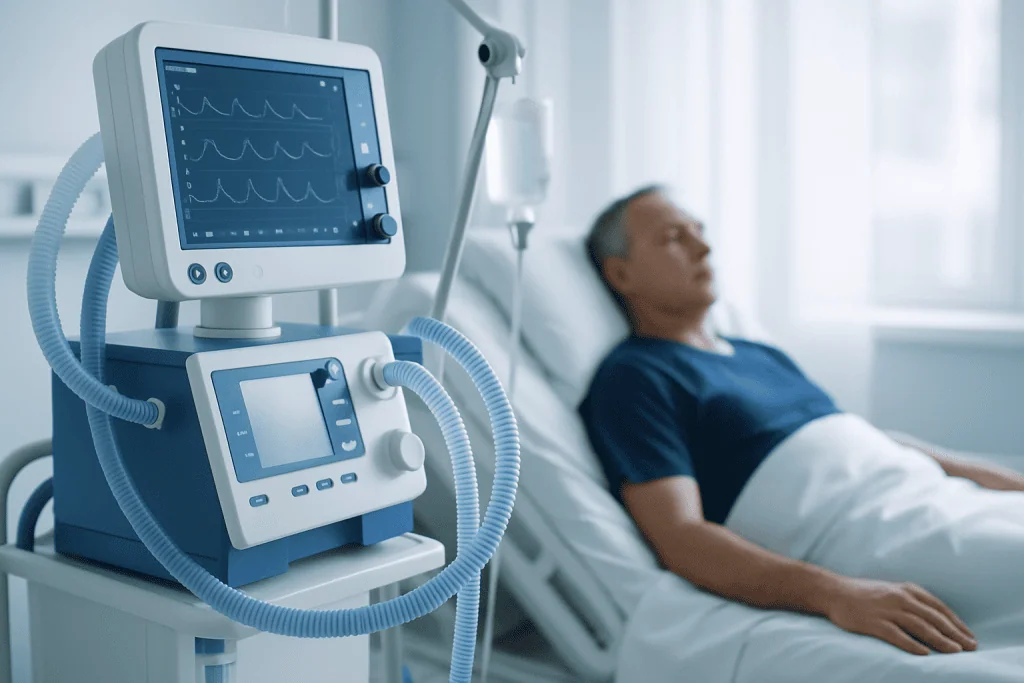
A recovery-oriented hotel is typically arranged around the rhythms of medical travel. Expect accessible or ground-floor rooms, a reception desk that can call vetted taxis, daily housekeeping, room service, and staff who are used to guests who move slowly, carry drains or dressings, or need a quiet corridor. Some properties near major hospitals coordinate transfers for check-ups as a matter of routine.
The main advantage is structure. If you would rather not manage groceries, cleaning, laundry and transport while tired, a hotel takes those tasks off your plate. That makes it a strong fit for the early recovery window: the days when you may be returning to the hospital for dressing checks, imaging, blood tests or a consultation, and when getting dressed and downstairs is effort enough. Our guide on setting up a hotel room for recovery covers how to arrange the room itself once you arrive.
The limits are just as important. Hotel staff are not clinical staff, and a “recovery hotel” badge on a booking site guarantees nothing specific. One property may offer step-free access, flexible meals and staff who speak English; another may offer none of that under the same label. Confirm the details in writing before you paythis checklist of what to verify before booking walks through the questions property by property.
What a serviced apartment usually offers
A serviced apartment combines private living space with some hotel-style services. You typically get a kitchen, a washing machine, a separate bedroom and living area, and space for a companion or family to live alongside you rather than around you. For stays of two weeks or more, this tends to feel calmer than a hotel room: fewer interruptions, your own food, your own pace.
Apartments suit patients with dietary preferences or restrictions, patients travelling with children, people working remotely during a longer recovery, and anyone whose plan involves weeks of light activity rather than days of close follow-up. You can prepare simple meals, keep medications stored the way your pharmacy instructions specify, do laundry without a service charge, and build a routine that resembles home.
The trade-off is self-management. Someone has to shop, cook, clean between service visits, arrange taxis and handle the building. If you are recovering alone, have limited mobility, or need frequent hospital visits in the first week, that independence turns into work at exactly the moment you have the least energy for it. It can be handledgrocery and food delivery in Turkey is fast and app-based, but it must be planned, not improvised from a sofa on day two.
Side-by-side comparison
| Factor | Recovery hotel | Serviced apartment |
|---|---|---|
| Daily support | Reception, housekeeping, room service on site | Limited; periodic cleaning, sometimes no front desk |
| Meals | Room service and breakfast; menu flexibility varies | Full control via your own kitchen; someone must shop and cook |
| Space and privacy | One room; frequent staff contact | Separate rooms; interruptions on your terms |
| Companion and family | Extra bed or second room; costs scale per person | Usually sleeps several people in one unit comfortably |
| Transfers and errands | Front desk arranges taxis and receives deliveries | You arrange transport and receive deliveries yourself |
| Best stay length | Short, support-heavy early recovery | Longer, lower-intensity recovery periods |
| Main risk | Label means little; service level varies by property | Isolation and self-management when energy is lowest |
How to choose based on your treatment and mobility
Your procedure and expected recovery are the first filter. If your care team expects limited movement, wound checks, compression garments or several early follow-up visits, a recovery hotel near the hospital is usually the more practical base. If your treatment leaves you mobile and your follow-up is light, an apartment’s space and privacy start to pay off.
Be honest about the first 72 hours after discharge. Can you get in and out of bed unaided? Walk to a lift? Shower safely? Carry a bag, open a heavy door, lower yourself into a car? These small physical questions predict your experience far better than photographs do, and they are the core of the recovery hotel vs serviced apartment in Turkey decision.
Then factor in your companion. A trusted adult travelling with you changes the calculation: an apartment works well when someone else can cook, run errands and manage transport, and the shared living space keeps both of you saner over a long stay. Our companion checklist sets out what that support role actually involves day to day. If you are travelling alone, a hotel with a 24-hour desk removes a long list of small tasks, and small tasks are what exhaust recovering patients.
Location, transport and follow-up visits
In Istanbul and other major Turkish cities, distance is not measured in kilometres; it is measured in traffic. A property that looks close on a map can be a slow, uncomfortable journey at appointment hours, and after some procedures even a short car ride is tiring. Check the travel time to your hospital at the time of day your appointments are likely to fall, not at midnight when the map app shows a clear road.
Ask your care team, before you book anything, roughly how many follow-up visits to expect and how they are usually spaced. A patient with one pre-departure check has enormous freedom in choosing where to stay. A patient returning every second day for dressing changes does not, and should weigh staying near the hospital above almost everything else. Serviced apartments cluster in residential districts, which are often further from major hospitals than the hotels are, another quiet argument for the hotel in the early phase.
Hospital groups that treat international patients generally run coordination teams handling transfers, interpreters and appointment scheduling; when you plan your stay, it is worth knowing what that coordination covers so your accommodation choice does not duplicate or contradict it. If you are arriving with reduced mobility, the same logic applies to the journey itselfplanning flights, airport assistance and transfers around limited mobility deserves its own attention before you choose where to sleep.
Comfort, meals, privacy and daily routine
Recovery is personal. Some people rest best knowing staff are one phone call away and dinner arrives on a tray. Others sleep better with a private kitchen, a sofa, a washing machine and no knock at the door. Neither instinct is wrong, and it is reasonable to choose the environment your temperament prefers, within the limits your treatment sets.
Meals deserve particular attention. Depending on your procedure, your doctor may recommend light meals, soft foods, more protein, less salt or steady hydration. A hotel offers convenience but variable menu flexibility; ask specifically whether the kitchen accommodates requests, and during what hours. An apartment gives you full control of what you eat, provided someone can shop and cook. Delivery apps cover most of the gap in Turkish cities, but only if you set them up before you need them.
Privacy cuts both ways. Daily housekeeping means daily interruption; some patients find the human contact reassuring, others find it draining when they finally get comfortable. Before booking, picture an ordinary recovery day hour by hour, waking, medication at the times your doctor set, breakfast, rest, a check-up, a shower, a short walk, sleep, and ask which property lets that day happen with the least friction.
How pricing works for each option
This guide will not quote figures, because they change constantly and depend on city, district, season and length of stay. What is worth understanding is the structure. Hotels price per night and per person, so a companion, a second room or an extended stay scales the total quickly; what is included, breakfast, transfers, laundry, varies by property and should be confirmed in writing. Serviced apartments usually price per unit rather than per person, often with weekly or monthly rates that fall as the stay lengthens, plus cleaning fees and sometimes utilities. That is why apartments tend to compare better for long family stays and hotels for short solo ones.
If your treatment quote bundles accommodation, read exactly what is bundled: how many nights, which property, what happens if your doctor recommends staying longer. A bundled figure is only as good as the list of things it actually contains, so ask for that list in writing before you rely on it.
Questions to ask before you book
Do not rely on photos or listing descriptions. Ask practical questions in writing, so the answers are comparable and on record. This matters most if you will have mobility limits, are travelling after surgery, or are bringing a companion who also needs to rest.
Useful questions for either option: Is there a lift? Are there steps at the entrance? Can a car stop at the door? Is the shower walk-in or over a bath? How long is the drive to the hospital in normal traffic? Are meal requests possible, and when? Is there a 24-hour reception or a genuinely reachable emergency contact? Does anyone on site speak English?
Ask about cancellation and date changes explicitly. Medical schedules shift: a doctor may recommend an extra night in hospital, or move a follow-up. Flexible terms cost little to ask for and spare you real stress if your timeline changes. Rigid non-refundable bookings and recovery timelines do not mix well.
Step by step
- Start with your medical plan. Ask your care team what the early recovery period is likely to involve: mobility restrictions, follow-up visits, and how long you should remain in Turkey before flying. You do not need every clinical detail: you need a realistic picture of your first week.
- Decide how much support you will genuinely have. Alone, with a partner, with family? If nobody will be with you daily, weight your choice towards reception support, lifts, easy transport and food that arrives without effort.
- Compare travel time, not distance. Check the route to the hospital at appointment hours. In Istanbul, a smaller room ten minutes away often beats a larger one forty minutes away.
- Verify accessibility before comfort. Entrance steps, lift, bathroom layout, bed height, drop-off access, luggage help. These affect your days more than square metres or décor.
- Plan meals and daily supplies. Hotel: confirm room-service hours and menu flexibility. Apartment: set up grocery delivery, drinking water and simple meals before discharge, not after.
- Build in flexibility. Choose booking terms that permit date changes. Recovery timelines are individual, and flexible accommodation lets you follow medical advice calmly instead of arguing with a booking platform.
- Consider a split stay. A hotel for the support-heavy first days, then an apartment once follow-up visits thin out, is a common and sensible pattern, confirm the timing fits your follow-up schedule before committing to either half.
Your checklist
- Doctor’s advice on how long to stay in Turkey before flying home
- Number and timing of expected follow-up appointments
- Travel time to the hospital in normal traffic, not map distance
- Lift access and step-free entrance, confirmed in writing
- Bathroom safety, shower type and room layout details
- Meal options, kitchen access or a grocery delivery plan
- Transport arrangements for discharge day and check-ups
- Companion sleeping space and privacy needs
- Cancellation, extension and date-change terms
- A reachable emergency contact and language support if needed
Key takeaways
- A recovery hotel is usually easier when you need daily support, frequent transfers or structure in the first days after treatment.
- A serviced apartment is usually better for privacy, family travel, longer stays and a home-like routine, if someone can manage the logistics.
- Your mobility, companion situation and follow-up schedule should decide the question, not room photos or labels.
- In Turkish cities, travel time to the hospital in real traffic is a core part of the decision.
- Flexible booking terms protect you when a doctor adjusts your timeline, which happens often enough to plan for.
Frequently asked questions
What is the difference between a hotel and a serviced apartment?
A hotel sells a room plus daily services: reception, housekeeping, food. A serviced apartment sells a private flat, kitchen, laundry, separate living space, with a lighter service layer, such as weekly cleaning. For recovery, the practical difference is that a hotel absorbs daily tasks while an apartment returns them to you in exchange for space and privacy.
Are serviced apartments a hotel?
No. They sit between a hotel and a private rental. Some operate in aparthotel buildings with a reception desk; others are individual flats managed by phone. During early recovery that difference matters: a staffed building can help with taxis, deliveries and problems, while a remotely managed flat leaves those tasks to you.
What is the best area in Turkey to stay after treatment?
There is no universal best area: the right district is the one near your treating hospital. Major hospitals sit in different parts of Istanbul, Ankara, Izmir and Antalya, and traffic between districts can be heavy. Prioritise short travel time to your hospital, a quiet street and step-free access over famous neighbourhoods or views you will be too tired to enjoy.
What are the five types of accommodation medical travellers usually consider?
Standard hotels, recovery-oriented hotels, serviced apartments or aparthotels, short-term rental flats, and guesthouses or B&Bs. For most recovering patients the realistic shortlist narrows to two, a recovery-oriented hotel or a serviced apartment, because plain short-term rentals and guesthouses rarely offer reliable accessibility or support.
When is a serviced apartment the better choice?
When your stay is longer, your follow-up schedule is light, you are travelling with family, or you want a kitchen and privacy. It works best when you or a companion can comfortably manage meals, transport and daily errands without those tasks becoming a burden during recovery.
Should I stay close to the hospital after discharge?
In many cases, yes, particularly during the first days after discharge or when several follow-up visits are expected. Short journeys reduce travel fatigue and make appointments easier to keep. Ask your care team how often you are likely to return before you commit to a location.
Can I recover alone in a serviced apartment?
Some patients can, depending on the procedure and expected mobility. If you will be alone, plan transport, food delivery, laundry and a reachable emergency contact before discharge, and ask your doctor whether recovering without daily support is realistic for your specific treatment. When in doubt, a staffed hotel removes much of the risk of being stuck with a task you cannot manage.
How long should I book accommodation in Turkey?
Book according to your treatment plan and your doctor’s advice on fitness to fly. Some patients need only a short stay after discharge; others need additional follow-up before departure. Choose flexible dates wherever possible, so an extended timeline becomes an admin change rather than a crisis.
Add us as a Preferred Source to see more of our trusted health content across Google Search, AI Overviews and Discover.

Update history
- PublishedJune 22, 2026
- Medical review approvedAugust 30, 2026
- Last content updateAugust 30, 2026
References2
More Patient Guides
CyberKnife Radiosurgery in Turkey: Candidacy, Treatment Schedule, and Travel Plans
CyberKnife radiosurgery in Turkey involves eligibility review, several planning steps and short outpatient visits; international patients can arrange care in Istanbul.
Traveling to Turkey for Biopsy Review: What Happens Before Treatment Is Confirmed
Biopsy review in Turkey helps confirm your diagnosis before treatment, using pathology slides, reports and specialist assessment in Istanbul.

Flying to Turkey with Recent Scan Results: How to Organize Reports and Images
Organize recent scan results for travel to Turkey by bringing reports, original image files, dates, and a clear medical summary for your…

Complications During Treatment Abroad: How International Patients in Turkey Can Prepare
Complications during treatment abroad can be managed with planning, clear contacts and follow-up support for international patients in Turkey.