

What to Check Before Booking a Recovery Hotel in Turkey

Before booking a recovery hotel in Turkey, check five things: the transfer time to your treating hospital in real traffic, the room and bathroom setup, meal and pharmacy access, how flexible the cancellation and check-out terms are, and whether staff can communicate with you easily. Confirm each point in writing with the hotel directly rather than relying on listing photos or star ratings.
You have your treatment dates, and now you are scrolling through hotel listings wondering which one will still work when you are tired, sore, and carrying a bag of dressings and paperwork. That is the right question to ask. What you check before booking a recovery hotel in Turkey matters more than the star rating, because a recovery stay has different demands from a holiday.
This guide walks through the checks that matter: distance to your hospital, the room and bathroom setup, food and hydration, transport and communication, and the booking terms that protect you if your schedule shifts. None of it requires special knowledge. It requires asking specific questions before you pay, and reading the answers with a patient’s eyes rather than a tourist’s.
At a glance
- Best for: International patients arranging a hotel stay after treatment in Turkey
- Main checks: Hospital distance, room and bathroom setup, food access, transport, communication, cancellation terms
- Ideal distance: Close enough that follow-up visits and dressing checks are a short, predictable trip
- Who can help: Your hospital’s international patient team, the hotel directly, and your companion if you travel with one
- Arrange early: Airport and hospital transfers, flexible check-in and check-out, and any mobility-related room requests
Start with your recovery needs, not the star rating
The single most useful shift you can make is to think like a patient, not a traveller. A beautiful hotel can still be a poor recovery hotel if the bed is low, the bathroom has a high-sided tub, the lift is unreliable, or the journey back to the hospital takes an hour in traffic. Everything you check before booking a recovery hotel in Turkey should be measured against one question: will this make my recovery days easier or harder?
Begin by asking your care team what your first days after treatment are likely to involve. How often will you need to return for review? Will stairs, bending, lifting, or long car rides be difficult? Will you have dressings, drains, or compression garments to manage? The answers give you a real checklist instead of a guessed one. Some procedures leave you largely independent within a day or two; others mean you will value a quiet room, a walk-in shower, and food that arrives without effort. A separate guide covers questions to ask before booking surgery in Turkey, and several of those answers feed directly into hotel choice.
Choose a location that keeps hospital visits easy
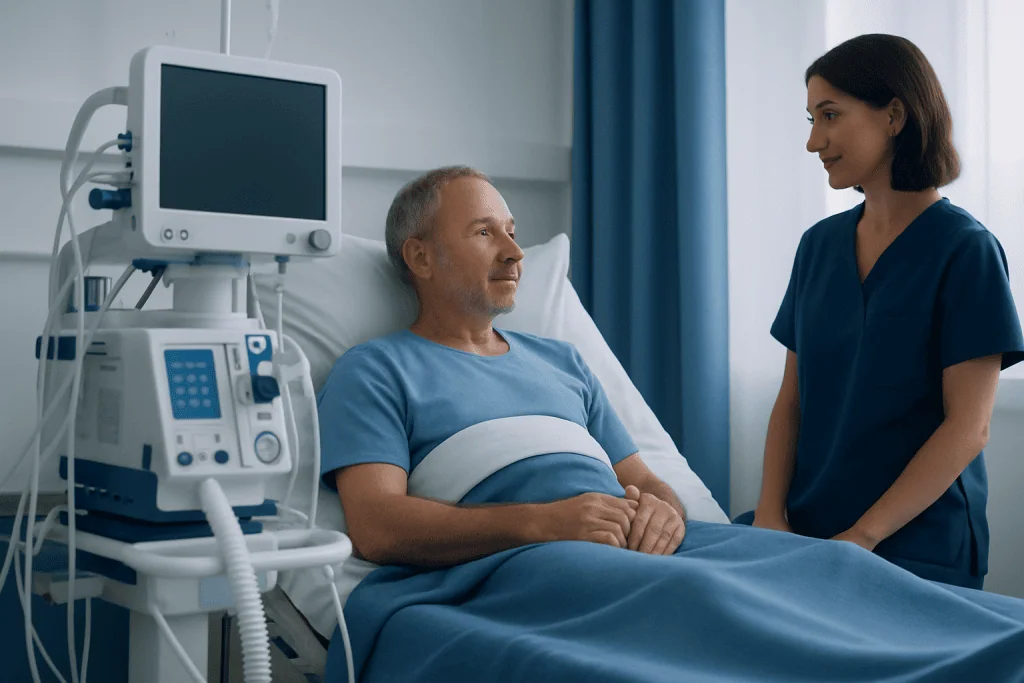
Distance to your treating hospital is the check most patients underweight. Even a straightforward recovery usually involves at least one return visit: a dressing change, a review, imaging, or collecting a prescription. A hotel that looks close on a map can sit on the wrong side of a bridge, a ferry crossing, or a congested arterial road. In Istanbul in particular, the same journey can take three times as long at rush hour as it does mid-morning, and a map’s straight-line distance tells you almost nothing about that.
So the question is not “how far is it?” but “how long is the transfer in normal traffic, and how much does that vary?” Ask the hotel directly. Ask your hospital’s coordination team, who make these journeys daily and know which routes are predictable. A slightly plainer hotel ten minutes from your hospital is often a better recovery base than a striking one forty-five minutes away.
People often ask where the nicest part of Turkey is to stay. For a holiday, that is a matter of taste, coast, old city, resort town. For a recovery stay, “nicest” has a narrower meaning: the area with the shortest, most predictable route to your hospital, a pharmacy and grocery within easy reach, and a street quiet enough to sleep on. That area is defined by where you are treated, not by guidebooks.
Check the practical details of arrival too. Can a car stop directly outside the entrance? Is the entrance step-free? Is there a long walk from the drop-off point to the lift? These details are invisible in listing photos and matter enormously when you are moving slowly.
Check the room setup carefully before you confirm
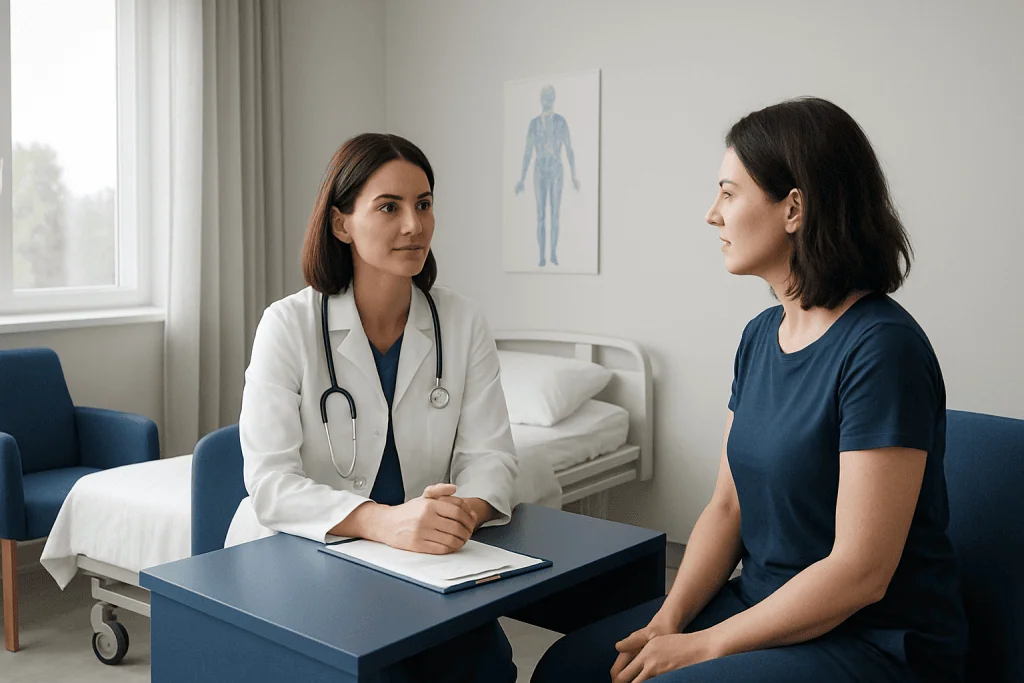
You may spend most of your waking hours in this room, so examine it more closely than you would for a city break. Ask the hotel, by message, so you have it in writing, about bed height and firmness, blackout curtains, sound insulation, individual temperature control, a mini-fridge, a kettle, and enough clear floor space to move slowly or with support. A firm bed at a reasonable height is easier to get in and out of than a low, soft one; that detail alone can shape your first week.
The bathroom deserves its own inspection. A walk-in shower is generally easier and safer than stepping over a bathtub edge. Grab rails, non-slip flooring, and good lighting reduce effort at exactly the moments you have least to spare. If you may be advised to avoid bending or standing for long periods, ask whether a sturdy chair is available for the room and whether a shower stool can be provided. Our room setup checklist for hotel recovery after surgery in Turkey goes through this layer by layer.
If you will be managing dressings, drains, garments, or medication schedules, check that the room has usable surface space, a desk or table, not just a decorative shelf, and reachable power outlets near the bed. Request a room away from lifts, bars, breakfast rooms, and street-facing noise. Most hotels will accommodate placement requests when asked in advance; few will re-room you gracefully at midnight.
- Ask for step-free access if stairs may be difficult
- Request a walk-in shower if one is available
- Confirm the air conditioning or heating works room by room, not centrally on a fixed schedule
- Confirm there is a lift and that it operates at all hours
- Ask whether housekeeping timing can fit around your rest
Think through food, hydration, and daily comfort
Appetite and eating habits often change after treatment. You may want smaller, plainer meals at odd hours, more water, and less of everything rich. A hotel whose only offer is a heavy buffet at fixed times can be surprisingly inconvenient. Before you book, check whether room service exists and what its hours are, whether simple options, soup, yogurt, fruit, toast, plain rice, are actually on the menu, and whether bottled water is easy to get without leaving your floor.
Check what sits within a short walk: a pharmacy, a small grocery, somewhere a companion can pick up essentials. Pharmacies are widespread in Turkish cities and many stock familiar over-the-counter basics, but knowing the nearest one before you arrive removes a small stress later.
If you have allergies, dietary needs, or religious food requirements, ask the hotel to confirm in writing what it can provide. Ask specifically about a refrigerator if any of your medication needs cool storage, and mention this at booking rather than at check-in. Keep whatever guidance your care team has given you about eating and drinking close at hand when you plan meals: the hotel accommodates your instructions; it does not replace them. If you are packing for the trip, the guide on what to pack for hospital, hotel, and recovery in Turkey covers the small items that make a hotel room work harder for you.
Make transport, support, and communication easy
A recovery hotel is a base of operations, not just a room. Of everything you check before booking a recovery hotel in Turkey, three practical systems matter most: getting in and out, being understood, and changing plans without friction.
Transport first. Confirm how you will travel between airport, hotel, and hospital before you pay for anything. If your hospital offers transfer coordination, use it: the value is not the car itself but the fact that someone aligns it with your actual appointment times. If you will rely on taxis, ask the hotel whether reception can call one reliably and how long it typically takes to arrive.
Communication second. Ask whether reception is staffed around the clock and whether staff speak English confidently, not just “yes, English spoken” on a listing, but an actual exchange of messages that shows it. If you are travelling alone, this matters more: you want to be able to ask for extra water, a housekeeping change, or a taxi without a struggle. If a companion is coming, confirm the room genuinely accommodates two people during a recovery, and read the companion room booking guide before you confirm.
Flexibility third. Discharge times are not always predictable, and clinical teams occasionally add a review day. Ask about late check-out, early check-in, and whether extending your stay by a night or two is realistic in the season you are travelling. The guide on when to book extra recovery days in Turkey before flying home explains why building slack into the schedule is usually wiser than booking to the exact day. It also helps to think through discharge day itself in advance, so your hotel arrival is not the first time you consider that handover.
Booking channels, cancellation rules, and reading reviews properly
Patients often ask which website is best for booking hotels in Turkey. The honest answer is that the channel matters less than the conversation. Whichever platform you use, the checks that protect you, shower type, lift, quiet room, flexible dates, come from contacting the hotel directly and getting answers in writing. A direct booking often makes changes easier to negotiate, because you deal with the hotel rather than an intermediary’s policy engine.
One practical quirk worth knowing: booking.com has been restricted from brokering domestic hotel bookings inside Turkey since a court ruling on competition rules, so the site is generally not accessible from within the country. You can still use it to book Turkish hotels before you travel, but if you expect to change or extend your booking after you arrive, plan to do that by contacting the hotel directly, using a different platform, or asking a companion or coordinator to handle it from abroad. Do not build your only route to modifying a reservation on a website you may not be able to open once you land.
Read cancellation and change terms before paying, not after. Medical travel involves more schedule uncertainty than tourism: ask about date changes, early check-out refunds, and whether someone else, a companion or coordinator, can modify the booking on your behalf while you rest. Flexible rates usually cost more than non-refundable ones; for a recovery stay, that flexibility is often the more sensible purchase, and it is a structural choice you can make regardless of budget.
Finally, read recent reviews with a patient’s priorities. Ignore the averages and scan the last few months for specifics: cleanliness, smoking odours, lift breakdowns, night-time noise, and how staff responded when something went wrong. A hotel with a strong overall score can still show a recent pattern of exactly the problems that hurt a recovery stay. For a deeper treatment of the booking mechanics themselves, see what patients should check before confirming recovery accommodation in Turkey.
Be realistic about what a hotel can and cannot do
Hotel staff can arrange taxis, adjust housekeeping, and send up soup. They are not clinicians, and even hotels that market themselves toward medical travellers do not replace your care team. Your discharge instructions, wound care, activity limits, medication schedule, when and how to reach your treating hospital, come from the professionals who treated you, and they remain the reference for anything medical during your hotel stay. Keep those instructions and your hospital’s contact details in one place, physically and on your phone, from the moment you check in.
It is also worth being clear-eyed about what “recovery hotel” means in listings. In Turkey it is a description, not a regulated category. Some properties have genuine experience hosting post-treatment guests; others simply use the phrase. The checks in this guide are how you tell the difference: specific answers about access, food, quiet, and flexibility are worth more than any label.
Step by step
- Ask your care team what your recovery days may involve. Find out how often you may need follow-up visits and whether stairs, bathing, bending, or long car rides may be difficult. This turns hotel shopping into a checklist based on your actual plan.
- Shortlist hotels near your treating hospital. Judge by transfer time in normal traffic, not map distance. In Istanbul especially, a predictable route beats a short-looking one.
- Message each hotel directly with specific questions. Lift, shower type, quiet room placement, room service hours, fridge, step-free entrance, flexible check-out. Keep the replies in writing.
- Confirm transport before you pay. Know exactly how you will move between airport, hotel, and hospital, and use your hospital’s coordination support if it is offered so transfers match your appointments.
- Choose the room built for recovery, not sightseeing. A quiet, accessible room with a practical bathroom beats a view. Book a flexible rate if your discharge date could move.
- Set the room up on arrival. Put medication, water, chargers, documents, and supplies within arm’s reach of the bed before you need them, so nothing requires bending or searching later.
Your checklist
- Transfer time to your hospital confirmed in normal traffic, not map distance
- Lift access confirmed, with minimal stairs between entrance, lift, and room
- Walk-in shower or manageable bathroom, ideally with a chair or stool available
- Quiet room placement requested in writing, away from lifts and street noise
- Room service hours, simple meal options, bottled water, and nearby pharmacy checked
- Reception staffed at all hours and able to communicate in English
- Cancellation, date-change, and late check-out terms read before paying
- A plan for modifying the booking if you cannot access the booking site from inside Turkey
- Discharge instructions and hospital contact details kept in one accessible place
Key takeaways
- Choose the hotel around your recovery plan, not price alone or star rating.
- Transfer time in real traffic is the check most patients skip and most regret skipping.
- Bathroom setup, bed height, noise, and simple food access shape your comfort more than decor.
- Get every important answer from the hotel in writing before you pay.
- Flexible dates and a way to modify the booking from inside Turkey are worth planning for.
- Hotel staff handle logistics; anything medical belongs to your treating hospital’s instructions.
Frequently asked questions
How close should my recovery hotel be to the hospital?
Close enough that a follow-up visit is a short, predictable trip rather than a project. The right distance depends on your mobility, local traffic patterns, and how often your care team expects to see you. Judge by transfer time at the hours you will actually travel, not by distance on a map.
Is medical care free in Turkey for tourists?
Generally, no. International visitors are expected to pay for planned treatment, and hospital stays or hotel-based recovery are not covered by the Turkish public system. Emergency departments will treat urgent cases, but that care is not free for visitors either. Before travelling, confirm in writing what your treatment quote includes and what your travel or health insurance covers.
What is the best website to book hotels in Turkey?
There is no single best platform, and the platform matters less than the conversation. The checks that protect a recovery stay, shower type, lift access, quiet room, flexible dates, come from messaging the hotel directly and keeping the answers in writing. Direct bookings often make changes easier because you deal with the hotel rather than an intermediary.
Why is booking.com blocked in Turkey?
A Turkish court ruling on competition rules restricted booking.com from brokering domestic bookings, so the site is generally not accessible from within Turkey. You can book Turkish hotels on it from abroad before you travel, but plan an alternative way to change or extend your reservation once you are in the country, such as contacting the hotel directly.
Is a luxury hotel always the best option after treatment?
No. A quieter, simpler hotel with step-free access, a walk-in shower, flexible room service, and a short route to your hospital often suits recovery better than a more luxurious property with awkward logistics. Judge every feature by whether it makes rest and follow-up visits easier.
Should I book a hotel before I know my exact discharge date?
You can, but choose a rate that allows date changes and confirm that late check-out or extending by a night is realistic. Medical schedules shift more often than holiday plans, and paying slightly more for flexibility is usually the sensible trade for a recovery stay.
What if I am travelling alone for treatment in Turkey?
Choose a hotel with round-the-clock reception, confident English, and simple transport, and confirm all of that in writing before booking. Keep your discharge instructions and your hospital’s contact details in one place from the moment you check in, so nothing depends on searching for information when you are tired.
Add us as a Preferred Source to see more of our trusted health content across Google Search, AI Overviews and Discover.

Update history
- PublishedJuly 8, 2026
- Medical review approvedSeptember 13, 2026
- Last content updateSeptember 12, 2026
References2
More Patient Guides

When a Hospital Stay in Turkey Becomes Longer Than Planned: What to Arrange
If your hospital stay in Turkey is longer than planned, arrange medical updates, accommodation, travel changes, insurance and support for your companion.

Waiting for Test Results in Turkey: How to Use Time Between Appointments
Waiting for test results in Turkey is easier with a clear plan for appointments, rest, records, questions and support in Istanbul.

Unexpected ICU Stay in Turkey: What Patients and Families Should Expect
Unexpected ICU stay in Turkey: learn what patients and families can expect, from communication and visiting to care updates and travel support.

How to Manage Special Diets During Medical Travel in Turkey
Special diets during medical travel in Turkey are easier to manage when you share your needs early, confirm meals and carry safe…