

Aftercare Abroad: When to Contact Your Turkey Care Team After You Get Home
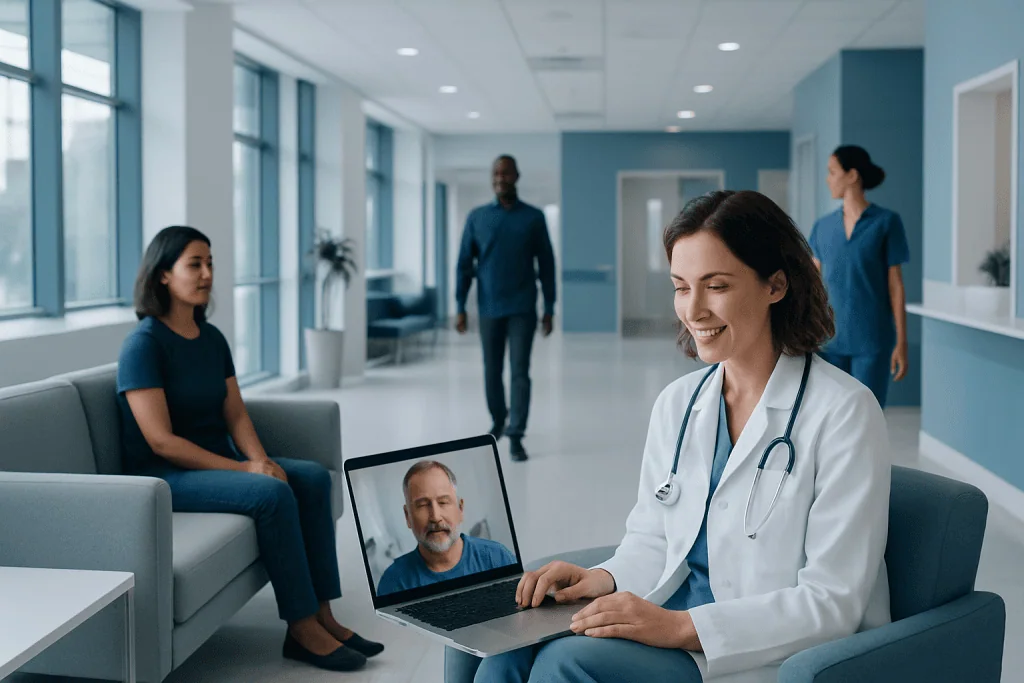
Aftercare abroad works best as a two-track system. Your Turkey care team reviews questions, photos and reports remotely and explains what your discharge plan means in practice. Anything that needs a physical examination, a test or urgent treatment belongs with clinicians near you. The direction of a symptom, improving, stable or worsening, is usually the most useful detail you can report.
You are home, the hospital is a flight away, and you notice something the discharge papers did not mention: a little more swelling than yesterday, a wound edge that looks different, a temperature that was not there this morning. Is that healing, or a change that matters? That question keeps a lot of returning patients awake in the first weeks back, and it has a more practical answer than most people expect.
This guide explains how follow-up from your Turkey care team actually works once you are home: which recovery changes are usually part of the pattern, which ones a remote team can genuinely help with, where remote follow-up stops and local care begins, and how to put together an update that gets you a useful answer instead of a request for more information.
At a glance
- Best for: Patients back home after treatment or surgery in Turkey
- Main goal: Understand what remote follow-up handles well and what needs in-person care near you
- Most useful detail to track: The direction of a symptom, improving, stable or worsening
- Keep ready: Discharge summary, medication list, operation notes, recent test results, dated photos
- Honest limit: No one can examine you through a message thread; urgent problems are always assessed locally
What aftercare abroad actually involves
Aftercare abroad has a structural feature that local care does not: the team that knows your operation best is in a different country from the body that is healing. That sounds like a weakness. Handled properly, it becomes a division of labour. Your Turkey care team holds the detail, what was done, what was found, what the plan assumed, and clinicians near you hold the ability to examine, test and treat in person. Good aftercare abroad uses both, and knows which questions belong to which side.
Once you are home, follow-up becomes less structured than it felt in hospital. There are no nurses walking past your bed, so small changes feel louder. It helps to treat follow-up as an active part of the treatment rather than something that only starts when a problem appears. Most discharge plans set this up in advance: medication instructions, wound care steps, activity limits, named warning signs, and a rough timeline for check-ins. If you are still in Turkey or preparing to leave, preparing for recovery before you fly makes everything in this guide easier.
Remote review works because most early recovery questions are informational, not physical. A care team can look at clear photos, a medication list with doses, temperature readings, blood pressure logs, or reports from a local blood test or scan, and compare them against what was done and what was expected. At Acibadem, international patient coordinators also help move information to the right department, which matters when your treatment involved more than one specialty. What no remote team can do is press on an abdomen, listen to a chest, or take a blood sample. Keeping that limit in view is what makes aftercare abroad safe rather than hopeful.
Normal recovery changes versus warning signs
Many of the symptoms that worry returning patients are common during healing. Mild discomfort, tiredness that lasts longer than expected, some swelling and bruising, reduced appetite, disturbed sleep, and an uneven pattern of good days and slower days are all frequent in the first weeks after treatment and travel. Recovery is rarely a straight line, and the combination of surgery, a flight and a change of routine tends to make the early days at home feel flatter than the days in hospital.
The most useful signal is not any single symptom but its direction. A wound that looks slightly better each time you check it tells a different story from a wound that looks slightly worse each time, even if today’s photographs of the two would look almost identical. Pain that fades across a week reads differently from pain that returns after settling. When clinicians review updates from a distance, direction and speed of change are often the first things they ask about, which is why a short daily note beats memory every time.
Discharge instructions usually name specific warning signs, fever or chills, redness spreading outward from a wound, unusual or increasing discharge, persistent vomiting, calf swelling, breathlessness, bleeding that does not settle, because these are the changes clinicians want assessed rather than watched. Their presence does not automatically mean a serious complication; it means the question has moved beyond self-monitoring. If your instructions are in a mix of Turkish and English, or use terms you are not sure about, our guide on understanding and using your aftercare instructions at home covers how to work through them line by line.
The questions your Turkey care team can answer from a distance
Remote follow-up channels exist for a fairly well-defined set of questions, and knowing the set removes most of the guesswork about whether something is worth raising. In practice, the team that treated you is the best source of answers on anything that depends on knowing exactly what was done: whether a wound’s appearance fits the operation you had, whether a symptom fits the expected pattern for your procedure, what an instruction in your discharge summary actually means in daily life, and when specific activities, work, driving, exercise, lifting, flying again, normally become reasonable for someone at your stage.
The same channel handles the practical gaps that appear when a plan meets real life. You may be unsure how to clean a wound with the supplies available at home, or which type of blood test a recommendation refers to, or which of two overlapping instructions takes priority. Questions about medicines, side effects you were not warned about, confusion between two prescriptions, a dose you missed, also belong in this channel, because decisions about starting, stopping or adjusting any medicine sit with the doctors who prescribed it, not with you working it out alone at home.
Your team is also the fastest route when a clinician near you needs information. Local doctors often want operative notes, implant or device details, pathology results or the discharge summary before they will act, and the hospital that holds those records can supply them directly. If your treatment involved several specialists, it is reasonable to ask who coordinates your follow-up, so that a single question does not bounce between departments. Some plans also include scheduled remote reviews at set intervals; our guide on how many follow-up visits you might need explains how those timelines are typically built.
Where remote follow-up stops
The honest limit of aftercare abroad is physical. A remote team can interpret what you describe and what you photograph, but it cannot examine you, run a test, or treat you with its hands. Any situation that is severe, fast-moving, or frightening belongs with clinicians near you, full stop: the ones who can see you within hours, not the ones who can reply within hours. Remote follow-up is a tool for questions; it is not a substitute for emergency care in your own country, and no reputable hospital presents it as one.
There is also a middle category: things that are not emergencies but still need hands and equipment. Suture or staple removal, dressing changes you cannot manage alone, blood pressure monitoring, blood tests, wound review by someone who can touch the skin, and imaging all fall here. Your Turkey care team can say what is needed and interpret the results, but the work itself happens locally. Arranging that in advance is far easier than improvising it; the guide on when you may need local help after returning from Turkey walks through the options, from your own doctor to practice nurses and walk-in services.
The most reassuring arrangement for most international patients is deliberately two-sided: a local doctor who can examine you and handle anything urgent or practical, and the Turkey specialists who hold the detail of the procedure and answer the treatment-specific questions. When both sides hold the same documents, they can also speak to each other directly, with your records doing most of the translation. That combination is not a compromise, after complex care, it is usually the strongest setup available.
How to send an update your team can act on
The quality of the information you send largely determines the quality of the answer you get back. A short, complete update beats a long, vague one. The core facts a reviewing clinician needs are: what you have noticed, when it started, whether it is improving, stable or worsening, exactly where it is, your temperature if relevant, and what you have already tried. If the question concerns a medicine, give the exact name, dose and start date rather than a description of the box.
Photographs carry a large share of the work in wound, swelling, bruising and skin questions. Take them in good, even light, daylight near a window is better than a bathroom bulb, and shoot each area twice: once close enough to show detail, once far enough to show location and scale. Take them at the same time each day, because a dated series showing change over three days is worth far more than one perfect image. Avoid filters, flash glare and shadows across the area.
Keep everything in one place: a single folder on your phone, backed by paper copies. It should hold your discharge summary, operation notes, pathology or imaging reports if you have them, implant or device cards if relevant, prescriptions, allergy details, and your travel dates. When a question comes up, you attach documents in seconds instead of reconstructing your history from memory, and when a local clinician asks what was done, you can show them rather than tell them.
Time zones, language and the logistics of distance
Distance adds friction that local aftercare never has to think about. Turkey sits ahead of western Europe and well ahead of North America, so a message sent in your evening may be read in the team’s morning. This matters less than it sounds if you plan for it: routine questions travel well as clear written messages with attachments, because they can be reviewed properly whenever the right person is available, while anything time-critical is by definition a local matter anyway.
Before leaving Turkey, the practical points worth confirming are: who your named contact is, which channel to use (coordinator, email, messaging platform or video call), what hours apply, whether routine reviews are scheduled or on request, and which parts of the plan are expected to happen locally. Patients who pin these down before the flight home rarely face the unsettling experience of holding a question and not knowing where to put it. The same conversation is a good moment to confirm your travel clearancewhen it is safe to fly after surgery depends on the procedure, and future flights sometimes come up in follow-up too.
Language is the other friction point. Discharge documents from Acibadem’s international patient services are prepared for patients travelling home, and coordinators can help clarify instructions or pass information between your local doctor and the treating department. Even so, it is worth reading every document before you leave, while the people who wrote it are still down the corridor. A question asked at the nurses’ station takes a minute; the same question asked across three time zones takes a day.
Step by step
- Re-read your discharge instructions within 24 hours of getting home. Go through the medication schedule, activity limits, wound care steps and follow-up dates while the hospital stay is still fresh. Mark anything unclear: those marks are your first follow-up questions, and they are easiest to settle before a misunderstanding has time to matter.
- Track symptoms instead of trusting memory. A one-line daily note on pain, temperature, swelling, appetite, sleep, bowel habits and mobility takes a minute and shows direction: the single detail that most changes how a clinician reads your situation.
- Raise questions early rather than late. A change that is new, worsening, or missing from your discharge notes is exactly what the follow-up channel was built for. Early questions tend to get simple answers; late ones tend to get requests for tests.
- Keep urgent problems local. Anything severe or fast-moving needs in-person assessment near you, not a wait for a remote reply. Afterwards, sharing the local findings with your Turkey team keeps both sides working from the same facts.
- Prepare documents before you need them. One phone folder holding your discharge summary, operation details, prescriptions and recent local results turns every future question into an attachment instead of a reconstruction.
- Confirm who coordinates your follow-up. If your care involved more than one specialty, establish whether your surgeon’s team, your physician or your international coordinator is the first point of contact, so questions land in the right place first time.
- Book any recommended local checks promptly and share the results. Wound review, suture removal, blood tests and imaging happen near you; the interpretation can happen in Turkey. The loop only works if the results actually travel back.
Your checklist
- Discharge summary saved on your phone and printed
- Full medication list with doses and timing
- Hospital contact details and your coordinator’s name
- Allergies and chronic conditions written down in one place
- A daily symptom log for the first days or weeks at home
- Dated, well-lit photos of any wound or area of concern
- A local doctor or clinic identified for in-person review
- Copies of recent test results ready to attach if asked
Key takeaways
- Follow-up across borders works as a division of labour: the Turkey team holds the detail of your treatment, local clinicians hold the ability to examine and test.
- The direction of a symptom, improving, stable or worsening, tells clinicians more than the symptom alone, so track it daily.
- Remote follow-up handles questions, photos, documents and interpretation well; it cannot replace hands-on assessment, and emergencies are always local.
- Clear photos, exact medicine names, dated notes and organised documents turn slow back-and-forth into fast answers.
- Confirming your contact, channel and hours before leaving Turkey removes most of the uncertainty from the first weeks at home.
Frequently asked questions
Is it worth raising a symptom that seems minor?
Usually, yes, particularly if it is new, unexpected, or slowly getting worse. Small questions asked early tend to have short answers; the same question left for a week often needs photos, measurements and sometimes a local test to answer properly. Follow-up channels are built for exactly this kind of uncertainty.
How do I know whether my recovery is normal?
Compare direction rather than single days. Gradual improvement with occasional slower days fits most recovery patterns; a steady trend in the wrong direction does not. Your discharge notes describe what was expected for your specific procedure, and your treating team can compare your description, photos and measurements against what was actually done.
Can my local doctor speak with the hospital in Turkey?
In many cases, yes. Operative notes, discharge summaries and test results can be shared with your local clinician, and international patient teams can help pass information between the two sides. Both sides holding the same documents is what makes the conversation work.
What information makes a follow-up message useful?
What you noticed, when it started, whether it is improving or worsening, exact medicine names and doses, and any measurements such as temperature or blood pressure. For anything visible, attach dated photos in good light at two distances, one close, one showing location. Complete and short beats long and vague.
What about time zone differences?
Routine questions travel well as written messages with attachments, because they can be reviewed properly when the right person is available. Time zones only become a real problem for urgent situations, and those need in-person assessment near you regardless of where your treating team is.
Is remote follow-up enough after surgery abroad?
For many recovery questions, yes: interpreting symptoms, reviewing wound photos, clarifying instructions and coordinating documents all work well remotely. It is not enough on its own for anything that needs examination, a blood test, imaging or urgent treatment: those parts of recovery always happen locally, ideally arranged in advance.
How long does follow-up from Turkey usually last?
It depends on the treatment. Some procedures need only a short window of remote review; others, such as joint replacement or bariatric surgery, involve check-ins over months. Your discharge plan sets the expected timeline, and it is worth confirming it explicitly before you leave the hospital.
Who pays for local tests my Turkey team recommends?
That depends on your local health system and any insurance you hold, not on the hospital in Turkey. Coverage for follow-up tests done at home varies widely between countries, so it is worth clarifying, before you travel, if possible, how blood tests, imaging or wound care near you would be arranged and funded.
Add us as a Preferred Source to see more of our trusted health content across Google Search, AI Overviews and Discover.

Update history
- PublishedJuly 6, 2026
- Medical review approvedSeptember 1, 2026
- Last content updateSeptember 1, 2026
References2
More Patient Guides

Flying After a C-Section: Timing for New Mothers
A C-section is real abdominal surgery that happens to come with a newborn attached, so the flying question has two clocks…
When Can You Drive After Anesthesia or Sedation?
You feel fine an hour after the procedure. You are chatting, you walked to the car unaided, you could obviously drive it.…
Flying After Hip Replacement: When Is It Safe?
Hip replacement recovers famously well, many patients walk further at three weeks than they had in three years. Flying is part…
Flying After Knee Replacement: When Is It Safe?
The knee is new, the physio is going well, and there is a boarding pass with your name on it. Flying after…