

Aftercare Abroad: When You May Need Local Help After Returning from Turkey
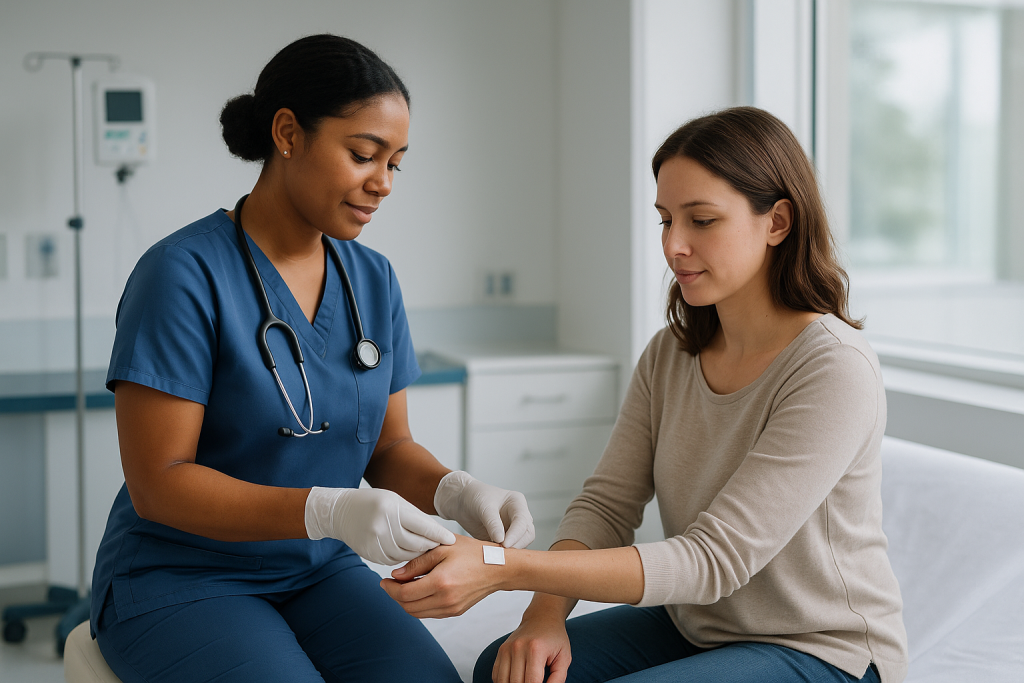
Local help after returning from Turkey is needed whenever a symptom requires examination, testing or hands-on treatment, things no message thread from abroad can provide. Emergency care is always local. Your treating team in Turkey remains useful for context: what was done, what recovery should look like, and what your records mean. Good aftercare abroad connects both sides rather than choosing between them.
You are home. The flight is behind you, the suitcase is half unpacked, and then something feels off: a wound looks redder than yesterday, a fever appears, or you simply cannot tell what is normal at this stage. Recovery often feels easier in familiar surroundings, but it is rarely a straight line, and the hospital that treated you is now in another country.
This guide explains how aftercare abroad works in practice: what normal recovery tends to look like, which situations genuinely need a local clinician, what records make that visit useful, and how to keep your home doctor and your treating team in Turkey working from the same information. It cannot tell you what your own symptoms mean, only an examination can do that, but it can help you plan so that the right kind of help is easy to reach.
At a glance
- Best for: International patients back home after treatment in Turkey
- Main question: When does a concern need local, in-person care rather than remote advice from abroad?
- Core principle: Anything that needs examination, testing or urgent treatment is a local matter; context and continuity come from your treating team
- What to prepare: Discharge summary, medication list, imaging and lab reports, implant or device details, contact information and a simple timeline
- Plan ahead: Identify a local GP or clinic, clarify insurance cover for follow-up, and arrange any hands-on care before you fly
What aftercare abroad actually means once you are home
Aftercare abroad is often described as if it were a single service. In reality it is a handover between two settings: the hospital in Turkey that knows exactly what was done, and the clinicians near your home who can physically see you. Good aftercare abroad is less about choosing one side and more about making sure neither side is working blind.
Your body does not know that treatment happened in another country. Healing continues at its own pace, medicines may still be settling, and questions come up at inconvenient hours. What changes with distance is logistics: your treating team can advise, review photographs where appropriate and explain your plan, but it cannot examine a wound, run a blood test or treat a problem that needs hands. Those tasks belong to local care, and the most useful thing you can do is decide in advance where you would go for them.
Timing matters too. A concern that is straightforward when checked early tends to become more stressful when it waits. That is not a prediction of complications, most recoveries are uneventful, it is a reason to have a plan written down before you need it, rather than assembled in a worried evening.
What normal recovery looks like, and what falls outside it
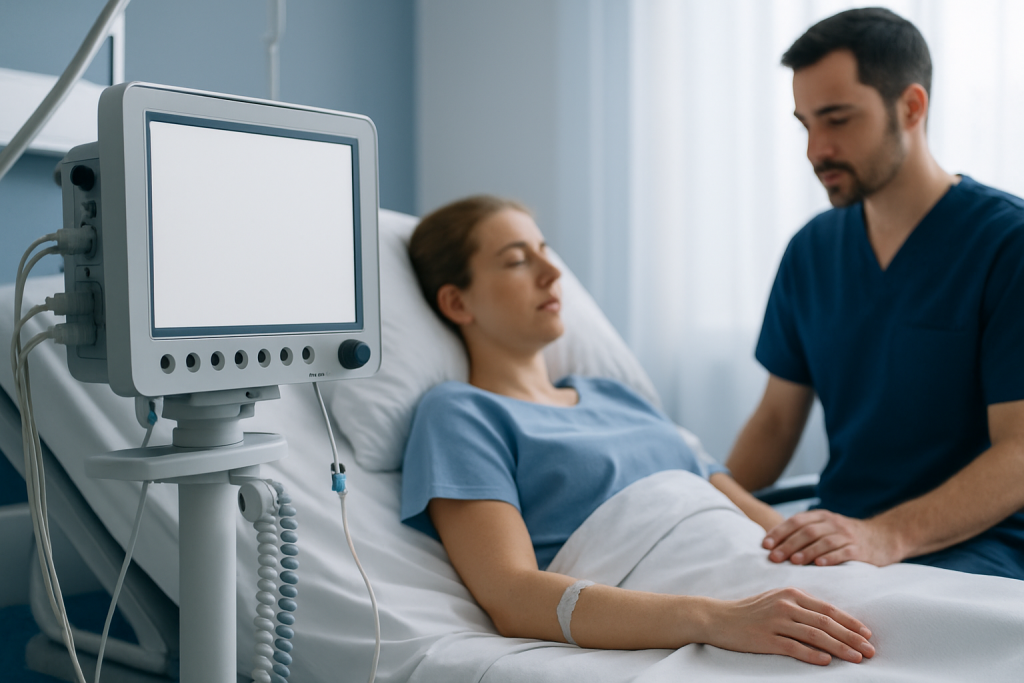
Many symptoms during recovery are expected. Mild pain, fatigue, bruising, temporary swelling, reduced appetite, disturbed sleep and emotional ups and downs are common after a wide range of procedures. Clinicians pay less attention to any single symptom than to its trajectory: is it gradually settling within the timeframe your discharge instructions described, or is it new, worsening or clearly out of step with what you were told to expect?
Some kinds of change generally prompt in-person review rather than remote reassurance. Increasing redness, warmth or discharge around a wound; fever; new or worsening breathlessness; heavy or persistent bleeding; repeated vomiting or an inability to keep fluids down; new confusion or unusual drowsiness; swelling or pain in one calf; and pain that intensifies instead of easing are all examples of changes that need examination and sometimes testing. Your task is not to diagnose the cause: it is to notice that something has changed and match it to the right level of care, which for changes like these is local by definition.
Your discharge paperwork is the reference point for everything in between. Check the date of your procedure, your medication schedule and what you were told to expect in the first days and weeks. Symptoms that sit comfortably inside that description are usually part of healing; symptoms that do not fit it are worth a conversation sooner rather than later. Asking early is not overreacting: it is how recovery is supposed to work.
Two teams, two different jobs
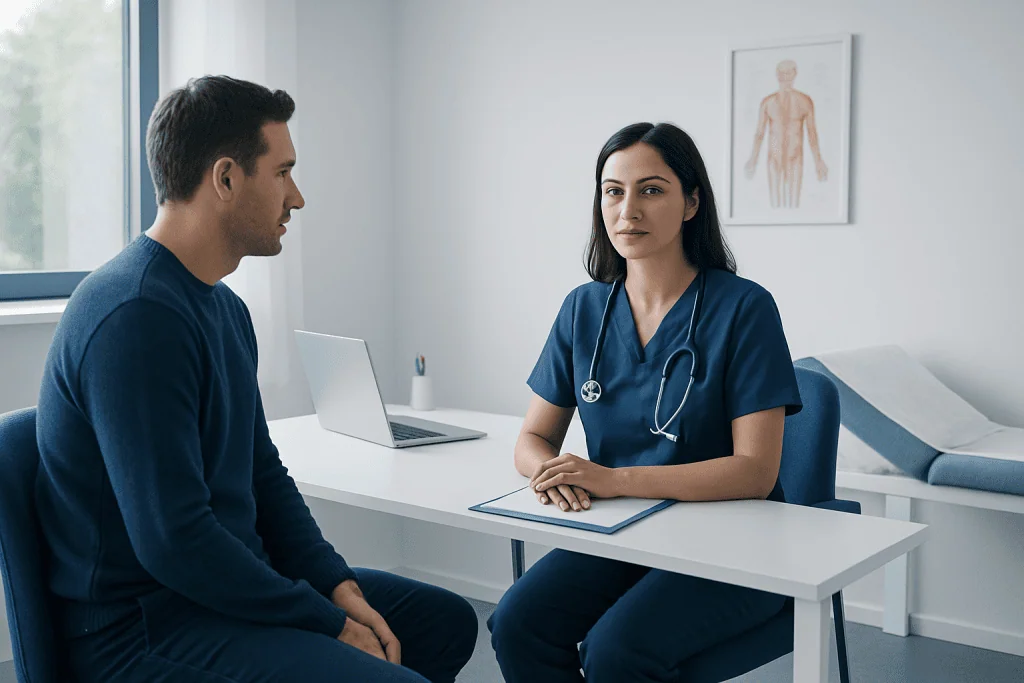
A simple division of labour makes most decisions easier. Your treating team in Turkey holds the context: the operative or treatment details, the reasoning behind your medication plan, the expected shape of your recovery and any follow-up schedule. It is the natural place for questions about what was done, wound photographs where your team has advised them, medication clarifications and non-urgent concerns tied directly to the treatment plan. Many patients also schedule a remote results review after returning home, so that scans or blood tests taken locally are read in the light of the original treatment.
A local clinician holds the hands and the equipment. Examination, dressing changes, stitch or staple removal, blood tests, imaging, hydration support and any urgent treatment all happen near you, not across a border. When symptoms are severe or rapidly worsening, local emergency services are the right first step anywhere in the world; contact with a hospital abroad comes afterwards, once you are safe and being assessed. No reply to a message can substitute for that.
In practice the two sides work best together. A local doctor can assess and treat what is in front of them; the treating specialists can explain the postoperative plan, share reports and answer the questions a new clinician will reasonably have about a procedure they did not perform. At larger organisations such as Acibadem, international patient coordinators routinely support this kind of handover, passing documents, arranging interpreter-supported conversations and keeping the treating doctor informed of local findings, which makes cross-border continuity a documented process rather than a chain of forwarded emails.
The records that make local care work
The most efficient follow-up conversations happen when you can show clear records within the first minute of an appointment. Keep digital and printed copies of your discharge summary, the operative or treatment summary if one was provided, pathology and lab results, imaging reports, your medication list, your allergy list and the hospital’s contact details. If you received an implant or device, keep its identification card or documentation with the rest; a local clinician may need those exact details.
Medication records deserve particular care, because overlap and duplication are among the most common cross-border problems. A list showing drug names (ideally generic names), doses, timings and planned stop dates lets a local prescriber see the whole picture at once. If you travelled home with new prescriptions, the practicalities, supplies, equivalents, repeat prescribing, are covered in our guide to returning home with new medicines after treatment in Turkey. Any change to what you take, when, or whether you take it at all belongs with the doctor treating you, never with a guide.
Add a simple timeline of your own: the date of the procedure, the date you flew, when any symptom started, what makes it better or worse, and your temperature if you have measured it. Written notes beat memory when you are tired or worried, and they save a local clinician from reconstructing events from scratch.
- Discharge summary and aftercare instructions, digital and printed
- Medication names, doses, timings and start/stop dates
- Recent blood test, imaging and pathology reports
- Implant or device documentation where relevant
- Travel dates, flight details and a symptom timeline
- Hospital and coordinator contact details
If your home doctor works in another language, ask before discharge whether a translated summary is possible. A summary your local clinician can actually read is worth far more than a thick folder they cannot.
Situations where local care is usually the practical answer
Not every reason to see a local clinician is urgent. Many are simply matters of geography: wound reviews, dressing changes, removal of stitches or staples, blood pressure checks, routine blood tests, ultrasound and pain reviews are far easier to manage in person than remotely. If your treating team asked for specific checks after you got home, our guide to follow-up tests after treatment in Turkey explains how imaging and labs typically fit into a plan.
Daily-life difficulties count as well. If you cannot eat or drink enough, struggle to walk safely, cannot pass urine, become constipated for several days after a medication change, or are too drowsy to function normally, a local assessment is sensible even when nothing feels dramatic. These are practical problems with practical fixes, and they respond better to early attention than to endurance.
Some patients travel home with ongoing medical equipment, which adds its own aftercare layer. Anyone flying with vascular access, for instance, should read our guide to returning home with a PICC line or port after treatment in Turkey, because line care almost always requires a named local service, not improvisation.
How the journey itself can muddy the picture
Travel adds noise to recovery. Long flights, dehydration, disrupted sleep and hours of sitting can worsen swelling, fatigue and general discomfort, and they can make ordinary healing feel less ordinary. A symptom that appears in the days after a flight raises a fair question: is this the journey, or is this medical? You do not have to answer that alone, separating travel effects from clinical problems is exactly what a local review is for.
It helps to plan the first days at home as part of recovery rather than the end of it. Rest, fluids, gentle movement within the limits your discharge instructions set, and a realistic pause before returning to work or heavy activity all reduce the number of ambiguous symptoms you will have to interpret. If your team gave you specific post-flight guidance, treat it with the same seriousness as the in-hospital instructions.
Who provides local follow-up, and who pays for it
This is where honesty matters, because arrangements differ widely between countries and no guide can promise what your system will do. In some countries, your regular GP or family doctor is the natural first port of call and can arrange tests locally. In others, follow-up after planned treatment abroad sits awkwardly between public services and private clinics, and some insurers and public systems handle care connected to elective treatment abroad differently from other care. None of this involves fixed figures anyone can quote in advance; what a local visit or test involves depends on your country, your cover and the service you use.
The way to remove the uncertainty is to ask specific questions before you travel, not after: whether your GP will see you for post-treatment checks, whether your insurance covers tests or treatment connected to a planned procedure abroad, and whether any exclusions apply. Put the answers in writing where you can. A named clinic and a clear understanding of cover turn a stressful evening search into a phone call you have already rehearsed.
Setting up aftercare abroad before you leave Turkey
The best time to organise aftercare abroad is while you still have your treating team in the same building. Before discharge, make sure you understand which symptoms are expected and for how long, which medicines to continue and until when, what activity limits apply, whether any tests are needed at home and on what schedule, and how your team prefers to receive updates. If follow-up visits in Turkey are part of your plan, our guide to aftercare appointments in Turkey explains how those are usually structured before you travel home at all.
If you know you will need hands-on care, dressings, drains, rehabilitation, injections, blood monitoring, arrange the first local appointment before you fly, and share your discharge documents with that clinician in advance where possible. Attending a booked appointment is easier than finding a new doctor while unwell, and a clinician who has read your summary beforehand asks better questions. For a broader pre-departure walkthrough, see how to prepare for recovery once you return home.
International patient services can smooth this stage considerably. At Acibadem, coordinators can help clarify follow-up timing, assemble documentation, arrange interpreter support and explain the practical channels for staying in touch after you return. The aim is never to replace your local doctor: it is to make sure every clinician who sees you has the information they need to be useful.
If you worry you are overreacting
Many patients hesitate to raise concerns because they do not want to seem dramatic, ungrateful or anxious. This is one of the most common feelings after medical travel, and it is worth naming, because hesitation is the main reason small problems get late attention. Nobody involved in your care expects you to grade your own symptoms correctly; that is the clinician’s job, not yours.
Focus on facts rather than fear. What changed, when did it change, how severe is it, and can you still manage the basics, drinking, walking, resting, taking your medication as prescribed? Those observations are more useful to any doctor than your own verdict on whether the symptom is “serious enough”. Being checked does not mean something is wrong; often the outcome is reassurance and a clearer plan. And when there is a genuine problem, early attention generally means more options and less stress, for you and for everyone treating you.
Step by step
- Read your discharge instructions before you travel, not after. Go through them while your treating team is still available to explain anything unclear, expected symptoms, medication timing, activity limits, wound care and the signs that fall outside normal recovery.
- Put every key contact in one place. Save hospital numbers, coordinator details and your home doctor’s contact both on your phone and on paper. When you feel unwell, you should not be searching through old emails.
- Book the first local appointment before you fly if you will need hands-on care. Dressings, drains, rehabilitation, blood tests and wound checks are easier to attend than to arrange from scratch. Share your discharge summary with that clinician in advance where you can.
- Confirm what your insurance and health system will cover. Follow-up connected to planned treatment abroad is handled differently in different countries. Get the answers in writing before departure.
- Keep a simple symptom log at home. Note when symptoms start, whether they improve or worsen, and any fever, bleeding, swelling or medication changes. Clear notes speed up every conversation that follows.
- Bring your records to every local visit. A discharge summary, medication list and recent results prevent duplicated tests, guesswork about what was done, and unsafe medication overlap.
- Close the loop after any local assessment. Where appropriate, share local findings with your treating team in Turkey so that both sides continue working from the same picture.
Your checklist
- Discharge summary saved on your phone and printed
- Medication list with doses, timings and stop dates
- Implant or device documentation, if any
- Hospital and coordinator contact details in one place
- A local GP, clinic or hospital identified before you fly
- Insurance and cover questions answered in writing
- Travel dates and a symptom timeline written down
- Imaging, lab and pathology reports available to share
- Translated summary or interpreter support arranged if needed
Key takeaways
- Most recovery symptoms are expected; what matters is whether they are improving on the timeline your discharge instructions described.
- Anything that needs examination, testing or urgent treatment is a local job. Emergency care is local by definition.
- Your treating team in Turkey supplies context and continuity: what was done, why, and what recovery should look like.
- Clear records, discharge summary, medication list, results, timeline, make every local visit faster and safer.
- Insurance and health-system rules for follow-up after planned treatment abroad vary widely; check yours before you travel, in writing.
- Arranging local follow-up before leaving Turkey is easier than finding a doctor while unwell.
Frequently asked questions
Do I need a local doctor first, or my treating team in Turkey?
It depends on what the concern needs. Anything requiring examination, testing or urgent treatment is a local matter, and severe symptoms belong with local emergency services first. Your treating team’s role is context: explaining what was done, what recovery should look like and what your records mean. For most non-urgent concerns, both sides end up involved.
What changes after returning home usually need in-person review?
Clinicians generally want to examine increasing wound redness, warmth or discharge, fever, new or worsening breathlessness, heavy bleeding, repeated vomiting, new confusion, swelling or pain in one calf, and pain that intensifies rather than eases. These changes do not always mean a serious problem, but they need assessment that cannot happen remotely.
What documents should I show a local doctor after treatment in Turkey?
Bring your discharge summary, medication and allergy lists, recent blood test and imaging reports, and the operative or treatment summary if you have one, plus any implant or device documentation. A short timeline, procedure date, travel date, when symptoms began, helps a clinician who has never met you get up to speed quickly.
Can a local doctor work together with my hospital in Turkey?
Yes, and this is usually the best arrangement. The local doctor examines you and arranges tests or treatment near home, while the treating team clarifies the original plan and expected recovery course. Sharing documents in both directions, with your consent, keeps everyone working from the same information.
Will my insurance or health system cover follow-up after planned treatment abroad?
Rules vary widely by country, insurer and policy. Some systems treat follow-up connected to elective treatment abroad differently from other care, and some policies contain specific exclusions. The only reliable answer is the one you obtain in writing from your own insurer or health service before you travel.
Is it normal to need local follow-up after medical travel?
Yes. Local follow-up, wound checks, blood tests, rehabilitation, medication review or simple reassurance, is part of sensible recovery planning, not a sign that anything went wrong. Treatment abroad and aftercare at home are designed to work as two halves of the same plan.
How does Acibadem support patients after they return home?
International patient coordinators can support communication with the treating team, help clarify discharge instructions, assemble and share medical documentation, and arrange interpreter support for cross-border conversations. This coordination works alongside your local doctor rather than replacing local care.
Add us as a Preferred Source to see more of our trusted health content across Google Search, AI Overviews and Discover.

Update history
- PublishedJuly 6, 2026
- Medical review approvedSeptember 13, 2026
- Last content updateSeptember 12, 2026
References2
- Medical Tourism: CDC Travelers' Health wwwnc.cdc.gov
- After Surgery: MedlinePlus medlineplus.gov
More Patient Guides
Septoplasty Recovery: Week by Week
Learn what to expect after deviated septum surgery: a week-by-week septoplasty recovery timeline, when it is usually safe to fly home, and…

Gallbladder Surgery Recovery: Week by Week
Learn what to expect after gallbladder surgery: a week-by-week recovery timeline, pain, diet, wound care, when it is safe to fly home…
Robotic Hysterectomy Recovery: Week by Week
Recovery from robotic hysterectomy week by week: pain, lifting, wounds, driving, flying home safely, warning signs and questions to ask before you…
Breast Reconstruction Recovery: Week by Week
DIEP flap recovery week by week: hospital stay, drains, pain, walking, showering, driving, when it is usually safe to fly home, and…