

At Acibadem, How We Share Hospital Technology Relevant to Your Treatment Plan

Ask your care team which technology actually applies to your case, not what the hospital owns. At Acibadem International, relevant equipment is explained in plain language and tied to your treatment pathway: what it is for, when it happens, whether preparation like fasting or contrast is needed, and how it affects your schedule. Interpreter support may be arranged when needed.
You have a treatment date in mind, flights to book, and a brochure full of impressive-sounding equipment. What you probably want to know is simpler: which of it has anything to do with you?
When you are planning care abroad, it helps to know how hospital technology relates to your own treatment plan, not just what equipment exists. At Acibadem International, the goal is to explain relevant technology in plain language so you can make informed decisions, understand safety steps, and know what to expect before you travel.
At a glance
- Best for: Patients who want clear, practical explanations of treatment-related hospital technology
- What you will learn: How relevant technology is introduced, explained, and connected to your care plan
- Why it matters: It supports informed consent, planning, safety, and realistic expectations
- Who helps explain it: Your specialist, care coordinators, radiology/lab teams, and international patient services
- Language support: Interpreter support may be arranged when needed
- Setting: JCI-accredited Acibadem hospitals and multidisciplinary care pathways
What “sharing hospital technology” means for you
When you read about advanced hospital technology, it can sound impressive but still feel vague. What usually matters most to you is simpler: what technology may be involved in your own treatment, when it is used, who operates it, and how it affects your experience, safety, timing, and follow-up.
At Acibadem International, technology is typically discussed in relation to your treatment pathway rather than as a list of machines. That means the focus is not on promoting equipment, but on helping you understand which tools may be relevant for diagnosis, planning, treatment delivery, monitoring, or recovery, depending on your condition and your doctor’s recommendations.
This approach is especially helpful if you are traveling to Turkey for care. You may be making decisions quickly, coordinating flights and accommodation, or comparing options from abroad. Clear explanations of relevant technology can help you feel more confident about what is necessary, what is optional, and what questions to ask before you arrive.
How technology is matched to your treatment plan
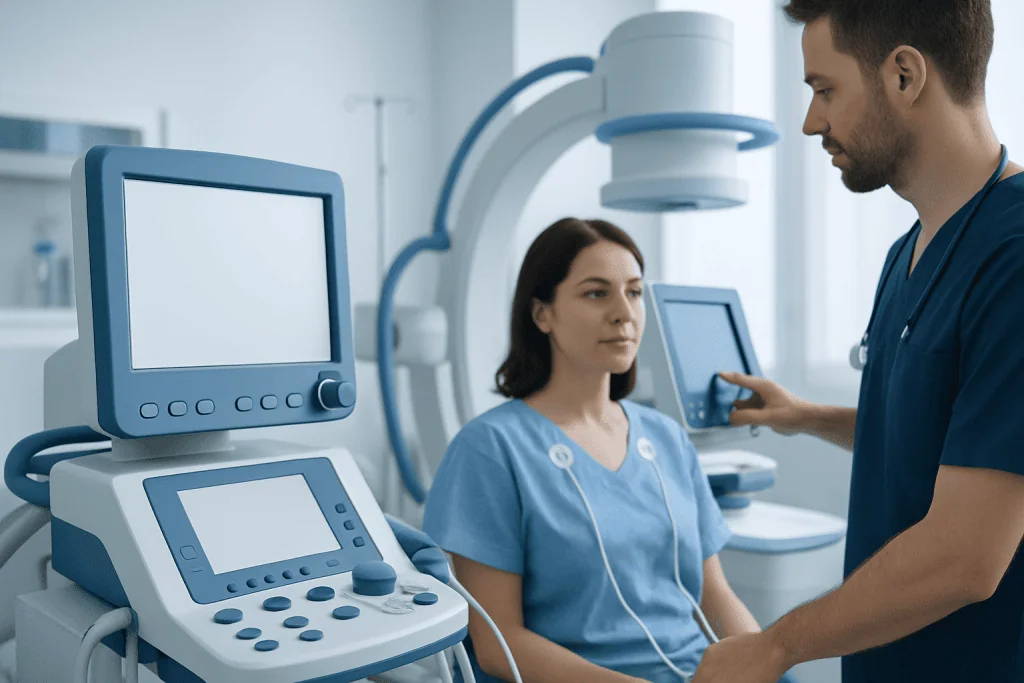
Not every patient needs the same type of hospital technology, even when two people have similar diagnoses. Your care team generally starts with your medical records, imaging, pathology reports, lab results, symptoms, and treatment goals. From there, specialists consider what tools are actually needed to confirm a diagnosis, guide a procedure, monitor your condition, or support safer recovery.
In practical terms, you may hear about imaging systems, operating room technologies, radiotherapy planning tools, laboratory platforms, intensive care monitoring, rehabilitation equipment, or digital systems used for coordination. The important point is whether a specific technology changes your care in a meaningful way, such as improving precision, helping the team monitor you more closely, or supporting multidisciplinary decision-making.
At Acibadem’s JCI-accredited hospitals, this discussion is often part of a coordinated care process. If your case involves more than one specialty, different teams may review the same information together so that technology choices align with the broader treatment plan, not just one step in isolation.
- Diagnostic technology helps clarify what is happening.
- Planning technology helps map the safest or most precise approach.
- Treatment technology helps deliver care as intended.
- Monitoring technology helps the team track your response and safety.
What kind of explanation you can expect

A helpful explanation should be understandable even if you do not have a medical background. You should expect your team to describe the role of a technology in plain language, for example, whether it helps locate an area more accurately, supports minimally invasive access, checks vital signs more closely, or helps the doctor evaluate results during or after treatment.
You can also ask practical questions, not just medical ones. For instance: Will this require a separate appointment? Does it happen before admission or during your stay? Will it add time to recovery? Is contrast, sedation, or fasting involved? Will results be available quickly enough to keep your travel schedule on track? These are often the details international patients care about most.
Acibadem International patient services can help organize these explanations in a way that is easier to follow, especially if several appointments are involved. If English is not your preferred language, interpreter support may also help you understand not only what a technology does, but what it means for your day-to-day logistics.
If a tool is not relevant to your case, that should be clear too. Good communication is not about mentioning every available technology in the hospital; it is about identifying what applies to you and avoiding unnecessary confusion.
Why this matters for safety, consent, and accreditation
Understanding the technology connected to your care is part of understanding the care itself. If you know why a scan is needed, how treatment is guided, or how monitoring will happen after a procedure, you are better placed to give informed consent and prepare realistically for each stage of your stay.
This also relates closely to hospital safety standards. In a structured environment, technology is not used on its own; it is part of protocols, staff training, maintenance procedures, identity checks, documentation, infection prevention, and quality review. That broader system matters as much as the equipment itself.
For international patients, accreditation can offer reassurance that hospitals work within recognized quality and safety frameworks. Acibadem’s JCI-accredited hospitals are designed around standardized processes that support safe care delivery, clear documentation, and coordinated communication across departments. While accreditation does not guarantee a specific outcome, it does help you understand that technology is used within an organized quality system.
Questions to ask before you travel to Turkey
Before you confirm your trip, it is reasonable to ask how any relevant hospital technology fits into your proposed plan. This can help you avoid surprises and make practical arrangements for time off work, travel companions, accommodation, and follow-up. It also helps you compare treatment pathways more fairly, based on your actual needs rather than general claims.
Ask which technologies are expected to be used for diagnosis, treatment, or monitoring in your case. Then ask what effect this has on the schedule: whether tests can be done on the same day, whether there is preparation required, and whether the results could change the final treatment decision after you arrive.
You may also want to ask who will explain the findings to you and when. Some patients prefer a written summary after imaging or treatment planning discussions, especially if they are coordinating with doctors at home. Acibadem International can often help you understand how records, reports, and discharge documents may be organized for your onward care.
- What technology is relevant to my specific treatment plan?
- Is it essential, recommended, or conditional on further evaluation?
- Does it affect the number of days I should stay in Istanbul or Turkey?
- Will I need any preparation, such as fasting or bringing prior scans?
- How will results be explained, and will I receive copies of reports?
How international patient support makes the process easier
For many patients, the hardest part is not the technology itself: it is coordinating information across time zones, languages, and multiple appointments. International patient services can make this process easier by helping gather your records, arranging appointment flow, and clarifying what happens before arrival, on admission day, and during discharge planning.
This support is practical. You may need help understanding which previous scans to send, whether new imaging is likely to be repeated, how long a planning visit will take, or whether a companion should be with you on a certain day. If several departments are involved, coordinated scheduling can reduce unnecessary waiting and make your stay more manageable.
At Acibadem International, interpreter and care coordination support can also help when technology explanations involve specialist terminology. That matters because feeling informed is not only about receiving information: it is about receiving it in a form you can use to make decisions, prepare for travel, and organize your recovery.
Once your treatment is completed, the same coordination can help with follow-up documents, discharge summaries, imaging copies, medication instructions, and communication for your doctor back home. This is often where a clear explanation of what technology was used and why becomes especially valuable.
What you can do to get the most useful explanation
You do not need technical knowledge to have a productive discussion. The best approach is to be specific about your goals: whether you want to understand safety, timing, alternatives, comfort, or recovery. If you tell the team what you are most concerned about, they can usually explain the technology in a way that is more relevant to you.
Bring or send complete records when possible, including prior imaging discs or reports, blood tests, pathology results, medication lists, and a short summary of your medical history. The better your records, the easier it is for specialists to judge which hospital technologies are actually needed and whether any tests may need to be repeated.
It is also helpful to write down your questions in advance and keep notes during discussions. If something is unclear, ask for simpler wording. A good patient guide conversation should leave you with a clear picture of what happens next, not just a list of technical terms.
Finally, remember that technology supports clinical judgment; it does not replace it. What matters most is that the technology, specialist team, safety process, and travel plan all work together in a way that fits your condition and helps you move through treatment with clarity.
Step by step
- Share your records early. Send your medical reports, scans, medication list, and any pathology or lab results before you travel if possible. This helps the team review your case in advance and explain which hospital technology may be relevant to your treatment plan.
- Ask what is relevant to your case. Focus on the technologies that may actually affect your diagnosis, procedure, monitoring, or recovery. This keeps the discussion practical and helps you avoid confusion from broad lists of equipment that may not apply to you.
- Clarify the timeline. Ask when each scan, test, or planning step is expected to happen and whether any result could change the treatment plan after arrival. This is especially important when you are booking flights, accommodation, and time off work.
- Discuss preparation needs. Check whether any technology-related step requires fasting, contrast, sedation, stopping certain medicines, or bringing previous imaging. Knowing this in advance makes your trip smoother and helps avoid delays.
- Request plain-language explanations. If technical terms are used, ask what they mean in simple words and how they affect your care experience. You can also ask what benefits, limits, or practical implications a technology has for your specific plan.
- Use international patient support. If you are traveling from abroad, ask Acibadem International for help with coordination, interpreters, and visit planning. This can make technology discussions easier to follow and help align appointments efficiently.
- Leave with usable documents. Before discharge or follow-up, ask what reports, imaging copies, summaries, and instructions you will receive. These records can be important for your own understanding and for the doctor who continues your care at home.
Your checklist
- Send previous imaging reports and, if available, image files before travel
- Prepare a current medication and allergy list
- Write down questions about tests, planning, treatment, and monitoring
- Ask whether any technology step may change your schedule or length of stay
- Confirm if fasting, contrast, sedation, or medication adjustments are needed
- Request interpreter support if you prefer explanations in another language
- Bring contact details for your doctor at home if follow-up coordination may be needed
- Ask how you will receive reports, discharge papers, and imaging copies
Key takeaways
- Hospital technology is most useful when explained in relation to your own treatment plan.
- You should expect clear, plain-language information about why a technology is used and what it means for your visit.
- Safety depends not only on equipment, but also on protocols, trained teams, documentation, and quality systems.
- JCI-accredited Acibadem hospitals use structured care pathways that can help international patients navigate complex treatment journeys.
- International patient services, interpreters, and coordinated scheduling can make technical information much easier to understand and act on.
Frequently asked questions
Will Acibadem explain every technology in the hospital to me?
Usually, the focus is on the technology relevant to your own diagnosis, treatment, monitoring, or recovery. This is more useful than a general equipment list because it helps you understand what may actually affect your care plan.
Can I ask how a specific scan or device will change my treatment?
Yes, and that is often one of the best questions to ask. You can ask whether a test confirms the diagnosis, helps with treatment precision, changes timing, or supports safer monitoring during or after your procedure.
What if I do not understand the technical explanation?
Ask for a plain-language explanation and do not hesitate to ask follow-up questions. If needed, Acibadem International may help coordinate interpreter support so you can understand the discussion more comfortably.
Does advanced technology mean my treatment outcome is guaranteed?
No. Technology can support diagnosis, planning, precision, and monitoring, but it does not guarantee a specific result. Your overall outcome depends on many factors, including your condition, medical history, treatment response, and follow-up care.
Why does accreditation matter when technology is discussed?
Accreditation helps show that technology is used within a broader quality and safety framework, including protocols, staff training, documentation, and oversight. For international patients in Turkey, this can provide added reassurance about how care is organized.
Could my treatment plan change after I arrive in Istanbul?
Sometimes, yes. New imaging, specialist review, or updated test results may refine the plan after in-person evaluation. That is why it is helpful to ask in advance which steps are confirmatory and which could influence the final recommendation.
Will I receive records about the technology or tests used during my care?
In many cases, you can receive relevant reports, discharge documentation, and instructions for follow-up. Ask in advance what documents will be provided and whether they can be shared with your doctor at home after you return.
Add us as a Preferred Source to see more of our trusted health content across Google Search, AI Overviews and Discover.

Update history
- PublishedJune 22, 2026
- Medical review approvedAugust 25, 2026
- Last content updateAugust 24, 2026
References3
- Travelers' Health – CDC wwwnc.cdc.gov
- MedlinePlus: Diagnostic Imaging medlineplus.gov
- Foreign travel advice – GOV.UK gov.uk
More Patient Guides

When to Delay Travel for Treatment in Turkey Because of Cold, Flu, or Fever
Delay travel for treatment in Turkey if you have fever, worsening flu symptoms, or breathing difficulty; contact your care team before flying.

Traveling to Turkey for Treatment While Pregnant: Safety Questions to Ask First
Traveling to Turkey while pregnant can be safe with medical clearance, airline checks and a tailored care plan. Ask these key safety…
When to Seek Urgent Help After Leaving the Hospital in Turkey
When to seek urgent help after leaving the hospital in Turkey: act fast for breathing trouble, chest pain, heavy bleeding, high fever,…

At Acibadem, How We Handle Consent, Privacy, and Patient Decision-Making
Consent, privacy, and patient decision-making at Acibadem in Turkey are handled with clear information, confidentiality, interpreters, and respect for your choices.