

At Acibadem, What a Treatment Package Includes and Excludes

An Acibadem treatment package normally covers the planned care itself: specialist consultations, routine pre-treatment tests, the hospital stay, standard inpatient medicines and the procedure or ward services. It normally excludes flights, hotels, companion costs, take-home medicines, unrelated tests and care for unexpected findings or complications. The exact boundary sits in the written document, so ask for inclusions and exclusions listed in plain language before you confirm travel.
Before you book flights, you want the answer to one question: if I pay this price, what might I still have to pay for? That is the right instinct. When you read a package document, the exclusions deserve at least as much attention as the inclusions.
This guide explains, in plain terms, what a treatment package includes and excludes at Acibadem: the services usually built into the package, the exclusions that most often surprise international patients, and the practical points worth confirming in writing before you travel to Turkey.
At a glance
- Best for: International patients reviewing a package before confirming travel
- Main question: Which services sit inside the package, and which are billed separately?
- Usually included: Planned consultations, routine pre-treatment tests, the hospital stay, standard inpatient medicines, procedure or ward services
- Usually excluded: Flights, hotels, companion costs, take-home medicines, unrelated tests, care for unexpected findings
- What to confirm: A written list of inclusions, exclusions, and items that depend on in-person assessment
- Support available: International patient coordinators, interpreter support, and help with travel logistics
Why what a treatment package includes and excludes matters before you travel
A package groups the expected hospital services around your planned care and shows them in one place. Read well, it works as a practical travel-and-treatment plan: it tells you which items sit inside the quoted arrangement and which items may generate separate bills. Read badly, skimmed for the bottom line and nothing else, it becomes the source of most misunderstandings between international patients and hospitals.
Understanding what a treatment package includes and excludes matters more when you are travelling than when you are treated at home. You are coordinating medical reports, flights, a companion, accommodation and time off work at the same time. A clearly structured package lets you plan your budget and your calendar with fewer surprises. An unclear one leaves gaps you only discover on the ground.
One honest limit first. No package covers every possible scenario, at Acibadem or anywhere else. Medicine is individual. After examining you in person, your doctor may recommend extra tests, a different technique, or a longer stay than the plan anticipated. That is not a sign the package was poorly written; it reflects the fact that some clinical decisions can only be made safely after a direct assessment. A well-built package makes this boundary explicit rather than leaving you to guess where it sits. Acibadem’s international patient teams walk you through the structure of the document before you arrive, and the broader support they provide is described in what Acibadem international patient support includes.
What a treatment package usually includes
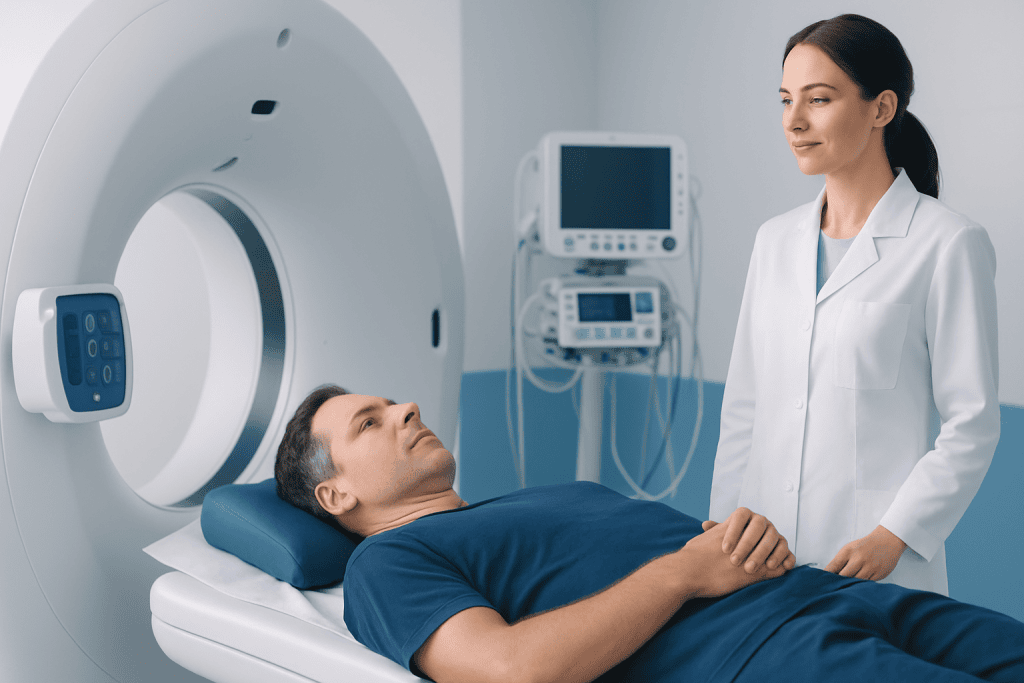
Most packages are built around the core medical services your planned treatment needs. That normally means the pre-arranged specialist consultation, the routine pre-treatment tests directly linked to the planned procedure, use of the hospital facilities, and standard nursing care for the expected length of stay. Where your treatment involves a procedure, the package generally covers the operating theatre or procedure room, standard equipment, and the main professional fees connected to the planned care, including anaesthesia where it applies.
Medicines and consumables used routinely during the stay usually sit inside the package as well: standard inpatient medications, dressings, and the materials the expected care pathway requires. The document should also state the room type, often a standard private room, and the number of hospital nights the plan is built around. Both details matter, because a different room category or an extra night are two of the most common sources of additional charges.
For international patients there is often a non-clinical layer too. At Acibadem, this can include coordination through the international patient services team, interpreter support when you need it, and help arranging appointments, airport transfers or accommodation as part of your itinerary. Some of these services may be included in the package price; others may be coordinated for you but billed separately or paid directly by you. The distinction is easy to confirm and worth confirming.
- Planned specialist consultations related to the treatment
- Routine tests directly linked to the planned care
- Hospital room for the stated number of nights
- Standard medicines and supplies used during the planned stay
- Operating theatre, procedure room or ward services as applicable
- Standard nursing care and discharge instructions
- An initial follow-up review, where the package states one
The pattern above is common across Turkish hospitals, not unique to any one group; if you want the general picture for comparison, see what a Turkish medical treatment package usually includes. What varies between providers is how precisely the document draws its own boundaries, and that precision is exactly what you should be checking.
What is often excluded from a package

Start with the travel layer, because it is the largest and the most predictable. Flights, visas, travel insurance, meals outside the hospital, hotel nights before or after admission, and local transport are not part of a medical package unless the document says so explicitly. If you are bringing a companion, treat their costs as separate by default: their flights, meals and accommodation are generally your responsibility unless your arrangement states otherwise.
The medical exclusions matter just as much and are less obvious. A package built around a planned treatment typically does not cover unrelated specialist consultations, additional imaging or laboratory work that becomes necessary after your doctor examines you, treatment of newly discovered conditions, intensive care beyond what the plan anticipated, or the management of complications that require extra time, staff or supplies. Extended hospitalisation beyond the stated number of nights is another common area of additional cost.
Then there are the items that sound minor on paper and are not minor in practice. Take-home medicines after discharge, extra follow-up visits beyond any included review, rehabilitation or physiotherapy sessions, pathology and advanced laboratory work, blood products, special implants or devices above the standard specification, and emergency care unrelated to the original plan may all sit outside the package. None of this is hidden when the document is written properly, but you have to read for it, and you are entitled to ask for the exclusions listed in plain language.
A practical habit: when anything is described as standard, ask what non-standard would look like for your case, and what it would mean for the bill. That single question surfaces most of the grey areas before they become surprises. For a fuller method, how to compare surgery packages in Turkey without missing hidden extras works through the comparison line by line.
How in-person assessment can change the final plan
Your package is built from the information available before you travel: your reports, imaging, pathology results and medical history. Once you arrive, your specialist may need to repeat a test, clarify a finding, or adjust the plan based on a physical examination. This is a normal part of safe care. It is also the main reason a package should be read as a plan for expected care, not a fixed promise covering every eventuality.
Changes take recognisable forms. A doctor may judge that a different technique suits your anatomy better, that a longer observation period is the safer choice, or that another specialty should review your case before treatment goes ahead. In a multidisciplinary hospital setting, that kind of joint review is routine, and it can shift which services your care actually uses, which in turn affects what the package covers and what falls outside it.
What you can reasonably expect when the plan changes is transparency. Where the situation allows, ask for the reason for the change, a revised cost breakdown, and a clear note of any newly added services before you approve them. Understanding what a treatment package includes and excludes at the outset makes these conversations easier, because you already know which items were inside the original boundary and which were always conditional. Keep the updated documents alongside the original quote so you have a complete record of what was agreed and when.
Questions worth asking before you approve the package
The simplest protection against confusion is a short list of direct questions, asked before you confirm anything. Begin with the basics: which consultations, tests, procedures and hospital nights does the package cover, and what would trigger an additional charge? Ask specifically whether the pre-anaesthesia review, standard inpatient medicines, routine nursing care and the first post-discharge follow-up sit inside the price.
Then work through the grey areas. Is pathology included? Advanced imaging? Intensive care, if it becomes necessary? Blood products, take-home medicines, rehabilitation sessions, and the management of complications? For each one, the useful answer is not a reassurance but a category: included, excluded, or dependent on medical assessment. If transfers, interpreter support or hotel arrangements are part of your itinerary, ask whether each is included in the quoted price or coordinated for you as a separate service.
Finally, ask how changes are handled. Who informs you if your doctor recommends extra tests or a longer stay? How is your consent to additional costs recorded? What payment steps apply if the plan changes mid-treatment? Written answers beat verbal assurances every time, particularly when you are managing time-sensitive travel from another country. A longer checklist of these questions, organised by topic, is in questions to ask before booking a treatment package in Turkey.
Budgeting in three layers
Plan your money in three separate layers rather than one figure. The first layer is the medical package itself: the expected planned care. The second is possible medical extras: additional tests after examination, take-home medicines, extra hospital nights, or follow-up beyond what the package states. The third is travel and living costs: flights, hotels, meals, local transport, and everything your companion needs. Packages address the first layer. You carry the second and third, so leave genuine room for both.
Build flexibility into your schedule as well as your budget. Avoid booking a return flight tight against your expected discharge date, because your doctor may want to review you before clearing you to fly, and some treatments carry recommended waiting periods before air travel. If a companion is coming, decide in advance where they will stay during your admission and whether they will need language support of their own.
Acibadem’s coordinators can help with appointments, interpreters and travel logistics, but organisation on your side still pays off. Keep your quote, passport, test results, current medications list, insurance documents where relevant, and emergency contact details together in one folder, physical or digital, that you and your companion can both reach. Good filing sounds dull. It is also what lets you concentrate on treatment instead of paperwork when plans shift.
How to read the document with confidence
The most useful package is one you could explain back in your own words. When you receive it, sort every line into one of three columns: included, excluded, or dependent on the doctor’s in-person assessment. Anything you cannot place in a column is a question to ask before you approve. A short clarifying question now prevents a much harder conversation later.
Watch the boundary words: standard, routine, expected, if necessary, additional. These terms mark where the package’s edge sits. Standard medicines during the planned stay may be inside; non-routine medicines or extended care may not be. Reading for these words is also what lets you compare two providers fairly: a lower headline figure can simply mean a shorter list of inclusions. Because packages and quotes are related but not identical documents, it also helps to read what your Acibadem treatment quote includes alongside this guide, so you know which document answers which question.
Being a well-prepared patient does not require memorising every line item. It requires knowing the main structure of your care, your likely out-of-pocket areas, and how updates will reach you if the plan changes. With that in hand, the package stops being fine print and becomes what it should be: a plan you understand.
Step by step
- Request the package in writing. Before you confirm travel, ask for a document showing the planned treatment, the expected hospital stay, and the main included services in a format you can review calmly, with time to ask questions.
- Sort every line into three columns. Included, excluded, dependent on assessment. If a service matters to you, interpreter help, take-home medicines, transfers, do not assume it is covered unless it is written clearly in the first column.
- Ask what could change after in-person assessment. Find out which parts of the plan depend on examination or updated tests once you arrive. This tells you where the final treatment path, length of stay, or cost may legitimately move.
- Confirm travel and companion logistics. Establish whether airport transfers, accommodation support and companion arrangements are included, coordinated separately, or entirely yours to arrange, before you book flights around them.
- Ask how additional costs are communicated. You should know who will speak with you if extra tests, more nights or another specialist consultation becomes necessary, how your approval is recorded, and when revised cost information is provided.
- Keep a contingency budget and flexible dates. Set aside funds for common extras, additional hotel nights, take-home medicines, non-routine tests, and, where possible, choose flights that can be changed if your doctor advises a longer stay.
Your checklist
- Get the package in writing before confirming travel
- Ask for the exclusions listed in plain language
- Confirm the room type and number of hospital nights included
- Check whether pre-treatment tests and the pre-anaesthesia review are included
- Ask about take-home medicines and follow-up visits after discharge
- Clarify how complications, intensive care and blood products are handled
- Confirm whether interpreter and transfer services are included or separate
- Establish how plan changes and added costs will be communicated to you
- Hold back budget and calendar flexibility for medical and travel extras
Key takeaways
- A treatment package covers the expected planned care, not every possible scenario.
- Travel, accommodation, companion costs and personal expenses are commonly excluded unless the document states otherwise.
- Extra tests, longer stays or a changed treatment approach after in-person assessment can add costs outside the package.
- Sort every line into included, excluded, or assessment-dependent, and question anything that will not sort cleanly.
- Acibadem coordinators can help with medical and travel logistics, but confirm in writing which support services sit inside the quoted price.
Frequently asked questions
Does a treatment package include my flights and hotel?
Usually, no. Flights, hotel stays, visas, meals outside the hospital and other personal travel costs are normally separate unless the package document specifically states that they are included. Read the travel layer as yours by default.
Are all tests included in a package?
Not always. Packages commonly include the routine tests linked to the planned treatment. Extra imaging, additional laboratory work or consultations with other specialists that become necessary after your doctor examines you are often charged separately.
If my doctor changes the treatment plan, does the package still apply?
The package applies to the planned treatment it was built around. If in-person assessment leads to a different approach, a longer stay or additional services, expect an updated explanation and, where costs change, a revised breakdown before you approve the new plan.
Are complications or emergency care included?
This depends on the wording and the clinical situation. Expected elements of routine care are usually covered, but unexpected complications, extended intensive care, emergency treatment unrelated to the plan, and extra hospitalisation commonly sit outside standard package limits. Ask for this boundary in writing.
Does the package include medicines after I leave hospital?
Often, inpatient medicines used during the planned stay are included while take-home medicines after discharge are separate. Confirm this before travel so you can budget accurately, and ask whether any included follow-up covers a prescription review.
Are interpreter support and airport transfers part of the price?
They can be, but not automatically. Acibadem’s international patient team can coordinate interpreters, appointments and travel arrangements; whether each service is included in the package price or arranged as a separate paid item should be confirmed in writing.
How can I compare two treatment packages fairly?
Compare line by line rather than by total figure alone. Check consultations, tests, room type, number of nights, standard medicines, follow-up and, above all, the exclusions list. A lower headline figure may simply omit items you will still need to pay for.
What should I do if wording in the package seems vague?
Ask for examples. Terms such as standard, routine and if necessary mark the package boundary, and a concrete example, what counts as a non-routine medicine, what would extend the stay, turns vague wording into something you can plan around.
Add us as a Preferred Source to see more of our trusted health content across Google Search, AI Overviews and Discover.

Update history
- PublishedJune 22, 2026
- Medical review approvedSeptember 13, 2026
- Last content updateSeptember 13, 2026
References1
- CDC Yellow Book: Medical Tourism wwwnc.cdc.gov
More Patient Guides

Private MRI, CT and Check-Up Costs in Turkey: How Scans Are Priced
How private MRI, CT, PET-CT and full check-up packages are priced in Turkey, modality, region, contrast, reporting, and what a…

Cataract Surgery Cost in Turkey: Per-Eye Prices and Lens Options
Cataract surgery in Turkey is priced per eye and the lens decides the quote. Biometry, both eyes on one trip, and what…

Lip Filler Cost in Turkey: Per-ml Prices Explained
Lip filler in Turkey is priced per millilitre with licensed hyaluronic acid brands and physician injectors. Volume, product, dissolving, safety and what…

Botox Cost in Turkey: Per-Area and Per-Unit Prices
How Botox is priced in Turkey, per area or per unit, brand, physician injectors, medical indications, and what a serious…