

Finasteride and Minoxidil After a Hair Transplant: Are They Necessary?
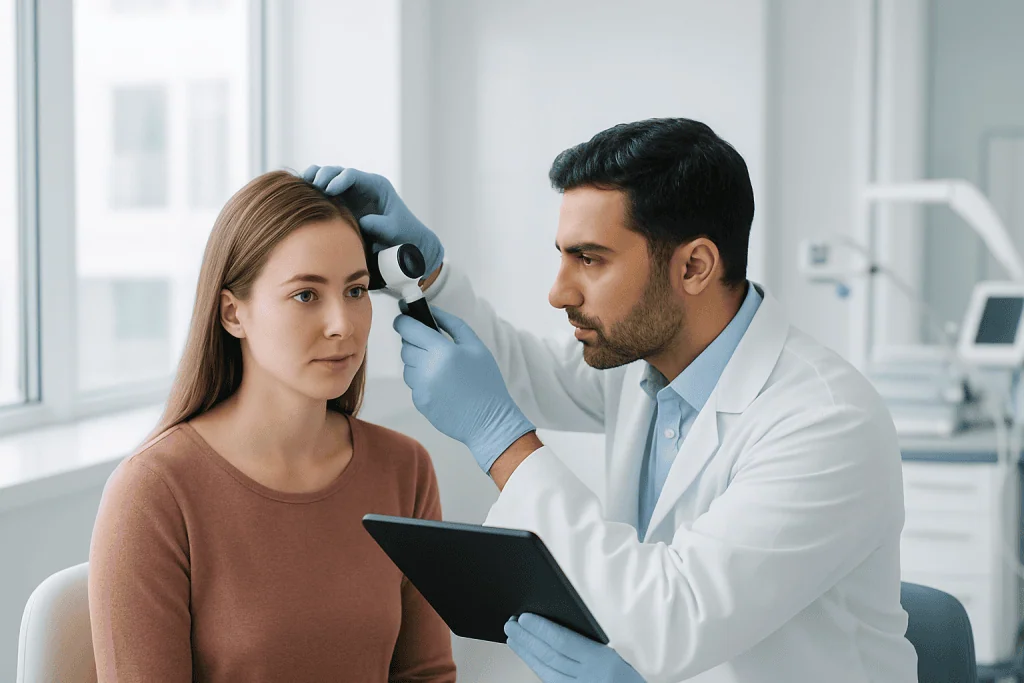
Finasteride and minoxidil are not automatically required after a hair transplant. Transplanted grafts can grow without them. Surgeons discuss them because a transplant does not stop ongoing thinning in the surrounding native hair, and these medicines may help preserve it. Whether either suits you depends on your hair-loss pattern, medical history and the plan agreed with your prescribing clinician.
Packing to fly home and wondering whether to restart your tablets or your topical spray? It is one of the most common questions after surgery. The honest answer: finasteride and minoxidil after a hair transplant are not automatically required. They are frequently discussed, though, and the reasoning is worth understanding before you decide anything.
A transplant moves follicles; it does not switch off the biological process that caused your hair loss in the first place. That is why many surgeons raise medication as part of a longer-term plan, not to protect the grafts, but to protect the native hair around them. Whether that applies to you is an individual decision, and the timing of any restart during early healing belongs to your own surgeon.
At a glance
- Are they necessary? No, not for every patient. Grafts can grow without them.
- What they do: They may help preserve existing, non-transplanted hair. They are not a substitute for graft aftercare.
- Restart timing: Topical minoxidil is usually postponed until the scalp has healed; finasteride timing follows the prescriber’s plan.
- Main decision points: Your hair-loss pattern, age, medical history, tolerance and goals.
- If you stop: Medication-dependent native hair may gradually resume thinning; established grafts do not usually depend on the medicines.
The short answer: are finasteride and minoxidil necessary after a hair transplant?
No. Finasteride and minoxidil after a hair transplant are not essential for every person, and a transplant can grow and mature without either. What the medicines address is different from what the surgery addresses. The transplant relocates follicles from a donor area that is relatively resistant to androgen-related loss. The medicines, where suitable, aim to slow further loss in the hair you already had.
That distinction explains why advice varies so much between patients. Someone in their late forties with a stable, limited pattern of loss may reasonably choose surgery alone. Someone in their twenties with active, progressive thinning has more native hair at risk, so their surgeon is more likely to discuss long-term maintenance alongside the procedure itself.
Neither medicine should be started, restarted or stopped on your own initiative after surgery. The scalp is healing, and timing matters. Your written discharge plan, the same document that covers washing, sleeping and activity, should state what to use, when, and who will prescribe and monitor it once you are home. If anything in this guide differs from that plan, the plan wins. The broader routine it sits inside is covered in our complete post-op care instructions.
Why medication may still matter after transplanted hair is in place

Transplanted follicles are usually taken from the back and sides of the scalp, where hair tends to resist the hormonal signal that drives common pattern loss. The hair already growing in and around the recipient area is a different story. If it remains genetically susceptible, it can continue to miniaturise year by year, and the contrast between the stable transplanted zone and the thinning native hair can become more visible over time.
This is where the two medicines come in, and they work in unrelated ways:
- Finasteride is a prescription tablet that lowers levels of dihydrotestosterone (DHT), the hormone most involved in male-pattern hair loss. By reducing the signal, it may slow or partly stabilise further thinning in susceptible follicles. It is a systemic medicine with possible side effects, and it is not suitable for everyone: it is generally not prescribed for women of childbearing potential.
- Minoxidil is a topical solution or foam applied to the scalp. It does not act on hormones; it appears to prolong the growth phase of the hair cycle and may support thicker growth in responsive follicles. Its effect lasts only while it is used.
Because they act through different mechanisms, some clinicians discuss them together, some suggest one, and some recommend neither. The assessment weighs your age, the pattern and pace of your loss, family history, remaining donor supply, current medicines, plans for a family, and how much preserving native density matters to you. The team at a dedicated hair transplant unit should map this out with you before surgery, not as an afterthought at discharge.
Do you have to keep taking finasteride and minoxidil after a hair transplant?

You do not have to keep taking them simply because you had surgery. There is no rule that a transplant obliges you to lifelong medication. What is true, and worth stating plainly, is that both medicines only work while they are used. Finasteride’s effect on DHT reverses within days to weeks of stopping, and minoxidil’s support for the hair cycle fades once applications end. Hair that was being maintained by either medicine can gradually return to the course it would otherwise have followed.
That is not the same as the grafts falling out. Established transplanted follicles do not usually depend on these medicines for survival. The change people notice after stopping is typically in the surrounding native hair: slow, resumed thinning over months, which can alter the overall balance and density of the result.
In practice, patients land in several reasonable places. Some take both medicines long term. Some use one, commonly finasteride alone, or minoxidil alone where finasteride is unsuitable or unwanted. Some stop after a period of stability, accepting the trade-off. Others never start, because of contraindications, previous side effects, pregnancy-related considerations or simple preference. None of these choices is automatically wrong; each carries different expectations for how the result will age. Do not copy a friend’s routine, and do not change a prescribed medicine without discussing it with the clinician who prescribed it.
What if I don’t take finasteride after a hair transplant?
Your grafts can still heal and grow. The main consideration is not graft survival; it is that susceptible native hair may keep thinning behind and around the transplanted zone, which can reduce visual density over the years and, in some cases, lead people to consider a further procedure later.
How much this matters depends on your starting point. If your loss has been stable for years and the transplant addresses a defined area, observation and periodic review may be entirely reasonable. If your loss is clearly progressive, the gap left by declining native hair is more likely to show, and your surgeon should plan the hairline and graft distribution conservatively with that in mind.
Finasteride is also simply not right for some people. It can cause side effects, including sexual side effects and mood changes in some users, and an honest discussion of your medical history, mental health history, fertility plans and current medicines belongs at the start of the decision, not the end. A balanced prescriber will set out potential benefits, limits and risks, and will respect a decision against the medicine as much as a decision for it.
What if I don’t use minoxidil after a hair transplant?
The procedure can still produce a good result without it. Most surgeons treat minoxidil as optional supportive care rather than a universal requirement. In suitable patients it may help native hair, and some surgeons include it in a maintenance plan once healing allows; others do not routinely recommend it at all.
Two practical points matter more than the yes-or-no question. First, timing: minoxidil can irritate a healing or sensitive scalp, so it should not go anywhere near fresh grafts, scabs or inflamed skin unless your surgeon has specifically approved it. Most clinics postpone it for a period after surgery: the exact interval varies by technique and by how your scalp is recovering. Second, consistency: if you do use it, it works as a routine, not a rescue. Intermittent use gives intermittent benefit.
If you decide against minoxidil, protect your result the unglamorous way, careful early healing, patience through the shedding phase, and realistic long-term planning. Our guide to the hair transplant recovery timeline explains what each stage normally looks like, medication or not.
A practical timeline for restarting finasteride and minoxidil
The table below is general orientation, not a prescription. Protocols differ between clinics and between techniques: an FUE procedure and a DHI procedure may come with different topical timings, and your written discharge plan overrides anything generic.
| Recovery period | What to focus on | Finasteride and minoxidil considerations |
|---|---|---|
| Day 0–3 | Protect grafts; follow washing, sleeping and activity instructions exactly. | No topical products on the recipient area unless specifically instructed. Ask before taking or restarting any tablet. |
| Days 4–10 | Gentle washing; avoid dislodging scabs. | Topical minoxidil is commonly postponed while skin heals. Finasteride timing follows the prescriber’s advice, which varies by clinic. |
| Weeks 2–4 | Scabs clear; temporary shedding of transplanted hairs may begin: this is expected. | Your surgeon may review whether starting or restarting medication is appropriate. A healed-looking scalp is not, by itself, a green light. |
| Months 1–3 | A quiet phase; shedding often precedes visible new growth. | Use any agreed maintenance treatment consistently. Raise side effects with the prescriber rather than quietly stopping. |
| Months 4–12 | Growth and density build gradually. | Review native-hair stability and treatment tolerance at follow-up; consistent monthly photos make the conversation easier. |
If you are travelling home shortly after surgery, sort out before departure which clinician will handle prescriptions locally. Finasteride is prescription-only in most countries, and your home doctor or dermatologist may want a copy of your procedure summary and the clinic’s medication recommendations. What to expect at each milestone after you land is covered in our results timeline guide.
Is it worth getting a hair transplant without finasteride?
It can be, provided the plan is honest about the limitations. A transplant without finasteride is most defensible when the loss appears stable, when the design is conservative enough to still look natural if surrounding hair recedes further, and when the donor area holds enough reserve for a possible future session. It is least defensible when a young patient with fast-moving loss is given an aggressive low hairline and no maintenance strategy: that combination tends to age badly.
Before committing, ask the surgeon to walk you through the proposed hairline design, the pattern your loss is likely to follow, the limits of your donor area and what maintenance looks like without medication. A good answer is specific to your scalp; a vague answer is a reason to keep asking questions.
One further note: this guide describes the typical male-pattern situation. Finasteride is generally not prescribed for women of childbearing potential, and female hair loss is assessed differently from the outset, so the medication conversation looks different too. Women considering surgery can read more under hair transplant for women.
Step by step
- Understand your hair-loss plan before surgery. Ask whether your loss appears active or stable and which areas still contain vulnerable native hair. The plan should separate two goals: growing the grafts and preserving what you already have.
- Leave with written medication instructions. Confirm exactly which medicines to continue, pause, start or avoid, including dose, formulation, intended start date and how follow-up questions are handled once you are home.
- Prioritise early graft protection. In the first days, washing technique, sleeping position and avoiding trauma matter far more than any medicine. Keep all scalp products off the recipient area unless clearly approved.
- Restart only on your surgeon’s timing. A scalp that looks healed is not necessarily ready for every topical product. Follow the specific dates given for finasteride, minoxidil and any medicated shampoos.
- Keep notes on tolerance. Record any new symptoms after beginning or restarting treatment and bring them to the prescribing clinician’s attention rather than adjusting doses yourself.
- Photograph progress monthly. Same lighting, same angles, same hairstyle. This is the only reliable way to separate normal post-transplant shedding from genuine change in untreated native hair.
- Arrange long-term review. The transplant matures over about a year; hair-loss management can run longer. Set up follow-up with your surgeon remotely and a local dermatologist if needed, especially if you are returning from Turkey to another country.
Your checklist
- Carry your surgeon’s written post-transplant instructions when travelling home.
- Confirm whether to continue, pause or restart finasteride, and on what date.
- Keep topical minoxidil away from fresh grafts unless explicitly told otherwise.
- Bring a full list of medicines, supplements and allergies to every follow-up.
- Identify who will prescribe and monitor treatment in your home country.
- Take monthly progress photographs in consistent lighting.
- Note any new symptoms after starting a medicine and raise them at review with the prescriber.
- Discuss future hair-loss risk and donor-area limits before ruling out maintenance treatment.
Key takeaways
- Finasteride and minoxidil are not mandatory after a hair transplant; grafts can grow without them.
- Their main role is preserving existing, non-transplanted hair that remains susceptible to thinning.
- Both medicines work only while used; stopping allows medication-dependent hair to gradually resume its prior course.
- Established grafts do not usually depend on either medicine for survival.
- Topical minoxidil is normally postponed until the scalp has healed, restart timing belongs to your surgeon.
- A transplant without finasteride can be reasonable, but it demands conservative design and realistic planning.
Frequently asked questions
Can I use minoxidil after a hair transplant?
Usually yes, once the scalp has healed enough and your surgeon confirms the timing. It should not be applied over fresh grafts, scabs or irritated skin. The exact restart interval varies by clinic, technique and how your scalp recovers, so follow your own written instructions rather than a generic online timeline.
How long should I use finasteride after a hair transplant?
There is no fixed universal duration. Finasteride works only while taken, so the honest framing is: for as long as preserving susceptible native hair matters to you and the medicine remains suitable and well tolerated. Some patients use it long term; others use it for a period and then review. The decision is made, and revisited, with the prescribing clinician.
Do you have to take finasteride for the rest of your life after a transplant?
No. It is a choice, not an obligation of the surgery. If you stop, established grafts do not usually suffer, but native hair that was being maintained by the medicine may gradually thin again, which can change the overall density of the result over time.
Is minoxidil permanent after a hair transplant?
Minoxidil’s benefit is not permanent: it supports responsive hair only while it is applied, and the effect fades after stopping. The transplanted follicles themselves are a separate matter: they do not rely on minoxidil to survive, so stopping the product does not undo the surgery.
Can minoxidil cause shedding after a hair transplant?
Some users notice an initial shedding phase when starting minoxidil as hair cycles reset. Separately, transplanted hairs commonly shed in the early weeks as part of normal recovery. Because the two can overlap, interpreting shedding after surgery is genuinely difficult without your clinician’s input at follow-up.
Can I use only minoxidil and not finasteride?
Some patients do, particularly when finasteride is unsuitable or unwanted. The two medicines act through different mechanisms, so one does not simply replace the other. Whether minoxidil alone is a sensible plan depends on your hair-loss pattern, health history and goals, which a clinician can assess individually.
Will stopping finasteride damage my transplanted grafts?
Stopping finasteride does not usually directly harm established grafts, which come from follicles that are relatively resistant to hormone-driven loss. The change tends to appear in surrounding native hair, which may slowly thin again if it remains genetically susceptible, altering the apparent density around the transplanted zone.
Can women use finasteride and minoxidil after a hair transplant?
Topical minoxidil is used by women in appropriate formulations under clinical guidance. Finasteride is generally not prescribed for women of childbearing potential, and female hair loss is assessed differently, so the maintenance plan after a transplant in women is built individually with a dermatologist or the surgical team.
Add us as a Preferred Source to see more of our trusted health content across Google Search, AI Overviews and Discover.

Update history
- PublishedAugust 17, 2026
- Medical review approvedSeptember 2, 2026
- Last content updateSeptember 2, 2026
References3
- Finasteride: NHS medicines information nhs.uk
- Minoxidil topical: MedlinePlus drug information medlineplus.gov
- Androgenetic alopecia: StatPearls, NCBI Bookshelf ncbi.nlm.nih.gov
More Patient Guides

Septoplasty Recovery: Week by Week
Learn what to expect after deviated septum surgery: a week-by-week septoplasty recovery timeline, when it is usually safe to fly home, and…

Gallbladder Surgery Recovery: Week by Week
Learn what to expect after gallbladder surgery: a week-by-week recovery timeline, pain, diet, wound care, when it is safe to fly home…

Robotic Hysterectomy Recovery: Week by Week
Recovery from robotic hysterectomy week by week: pain, lifting, wounds, driving, flying home safely, warning signs and questions to ask before you…

Breast Reconstruction Recovery: Week by Week
DIEP flap recovery week by week: hospital stay, drains, pain, walking, showering, driving, when it is usually safe to fly home, and…