

Flying to Turkey with Recent Test Results: What Records to Pack

Pack your newest relevant records in both paper and digital form: recent blood tests, radiology reports with the actual image files, pathology reports, discharge summaries, a current medication list, and a short summary letter from your doctor. Keep everything in your cabin bag. English versions help, but originals in any language are still worth bringing. Some tests may be repeated on arrival: that is normal, not a failure of preparation.
If you are flying to Turkey with recent test results, the real question is not whether to bring them. It is which ones, in what format, and how to make them usable on the day you land. This guide sets out what to pack, what can safely stay at home, how to organise the folder, and why some tests may still be repeated after arrival. The short version: a small, well-ordered set of recent records beats a suitcase of loose paper every time.
At a glance
- Best format: Both printed copies and digital files, each covers the other’s failure
- Most important records: Recent lab reports, imaging files plus written reports, pathology, discharge summaries, medication list, and a doctor’s summary letter
- Translation: English versions of key documents help most; bring originals in any language regardless
- Packing rule: All records and medicines travel in your cabin bag, never in checked luggage
- Honest expectation: Some tests may be repeated in Turkey even with perfect records, usually for timing or technical reasons
Why flying to Turkey with recent test results changes your first appointment
When you arrive for a consultation, a second opinion, or planned surgery, your recent results tell the medical team where you are starting from. They show your diagnosis, your treatment history, and, often more importantly, the timeline: what changed, and when. Flying to Turkey with recent test results in an organised folder means the first appointment can be spent on decisions rather than reconstruction of your history from memory.
Even when a specialist decides to repeat a test, your existing records still do useful work. They give a baseline to compare against, they show which investigations have already been ruled in or out, and they can shorten the list of what still needs doing. A repeated scan read alongside last year’s scan is worth considerably more than a repeated scan read alone.
Hospitals that regularly treat international patients typically review records before arrival when patients choose to share them. That pre-arrival review can flag missing documents while you are still at home, where they are usually easy to obtain, rather than after you have flown, when they are not.
What records to pack
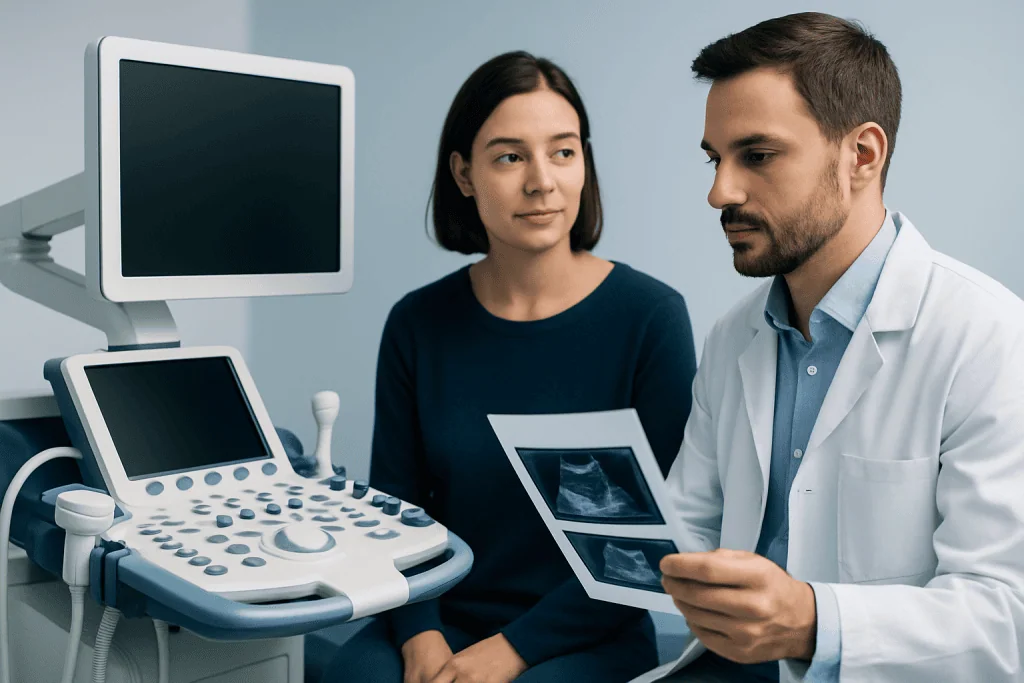
Think in categories, not volume. You are building a picture of your current situation, not an archive of your medical life. Start with a core summary: your diagnosis if known, the reason for travel, your symptoms, and the treatments you have already had, then add the documents that support it.
The core set
- Recent blood test reports, including the reference ranges printed on them
- Radiology reports for any MRI, CT, PET-CT, X-ray, mammography, or ultrasound
- The actual imaging files on CD, USB, or a secure download link, not just the written report
- Pathology or biopsy reports, and ideally information on where slides or blocks are stored
- Operative notes and discharge summaries from previous hospital stays
- Your current medication list with names, doses, and known allergies
- A summary letter from your treating doctor or specialist
- Vaccination records or infection screening results, where relevant to the planned treatment
Condition-specific extras
If you live with a chronic condition, diabetes, heart disease, epilepsy, kidney disease, a clotting disorderbring records that show your usual baseline, not only the most recent abnormal result. A specialist reading a single number cannot tell whether it is new or normal for you. If you have implanted devices, pack the documentation: pacemaker cards, stent cards, prosthesis details, shunt records. These affect how imaging and anaesthesia are planned, and the card is the fastest way to confirm the exact model.
For children, older adults, and supported decision-makers
If you are travelling as a companion or carer, bring your own identification, any legal consent or guardianship papers that apply, and a short written timeline of the patient’s major diagnoses, admissions, and operations. A half-page timeline written at home is far more reliable than a timeline reconstructed in a consultation room after a long flight.
How current do your results need to be?
There is no single expiry date for medical records, because different tests age at different speeds. As a general pattern: blood counts, clotting profiles, and infection screens tend to be treated as short-lived and are the tests most often repeated close to a procedure. Imaging for a stable, slow-moving condition may remain useful for longer. Pathology reports do not really expire at all: a biopsy result from two years ago still describes what was found then, and that history matters.
The practical consequence is this: do not delay travel to chase a fresh version of every test. Bring what you have, dated clearly, and let the specialist decide what needs updating. The detailed picture, which reports tend to hold and which are routinely refreshed, is covered in our guide on how current your reports need to be, and if you are travelling for surgery, the companion guide on which pre-op results are valid and when they are repeated explains the timing logic in more depth.
Bring versus repeat: why repeats happen even with good records
Be prepared for some tests to be repeated after you arrive, and understand what that does and does not mean. Repeat testing is rarely a judgement on the quality of your previous care. The usual reasons are practical:
- Timing. The result was accurate when taken but is now too old to base a decision on.
- Technical compatibility. The images exist but the disc will not open, the files are compressed exports rather than full DICOM data, or the resolution is insufficient.
- Protocol. The specialist needs the same scan done a different way, with contrast, with different sequences, or covering a different area.
- Change. Your symptoms or condition have moved on since the test was done, so a current picture is needed.
Bringing your records does not eliminate repeats. What it does is make each repeat deliberate rather than default, done because it adds information, not because nobody could see what had already been done.
How to organise records so they are easy to use

Organise before you fly, not at the hotel the night before your appointment. Put everything in date order, newest first, and separate written reports from imaging. A labelled folder with six sections works well: doctor letters and summaries; lab tests; radiology reports; pathology; medications and allergies; and insurance or administrative documents. If you have a thick file, add a one-page summary on top with key dates, diagnoses, procedures, and your current concerns. That single page is often the first thing a specialist reads.
Digital copies matter as much as paper. Save PDFs in at least two places: your phone and a cloud folder, plus a USB stick if you have one. Imaging usually comes on a CD or through a hospital download portal. Test the files before you fly: open the disc on a computer, check the download link still works, and keep any password or access code somewhere secure but findable. A disc that will not open is one of the most common and most avoidable reasons a scan gets repeated.
Two of our other guides go deeper here: how to organise your test results before travelling covers the folder system step by step, and how to organise scan reports and images deals specifically with DICOM discs, portals, and image transfers.
Do your records need to be translated?
English versions are the most practical option for international care. If your records are in another language, bring the originals anyway. Lab values, dates, medication names, and imaging references are often readable across languages, and the documents still establish your timeline even before anyone translates a word.
When you can arrange translation before travel, prioritise the decision-critical documents: pathology reports, imaging summaries, discharge letters, and your medication list. You do not need to translate every routine note from years past. A focused set of translated key documents serves you better than a full but rushed translation of everything.
Check consistency while you are at it. Names, dates of birth, and test dates should match across your documents and your passport. Small mismatches, a transliterated surname, a reversed date format, can slow registration. If your passport name is spelled differently from your medical records, a brief written note explaining the variation saves time.
Hospitals with established international patient services commonly provide interpreter support during visits. Interpreters are excellent for conversations and logistics. Written translations, though, are what speed up the review of your file itself: a specialist reading your records before your appointment cannot use an interpreter to do it.
What to keep in your hand luggage
Everything medical travels in the cabin with you. Checked bags get delayed, and a delayed bag is a manageable nuisance for clothes but a genuine problem for records you need at an appointment the day after landing. Your cabin bag should hold: passport and visa documents, appointment confirmations, your medication list, prescription medicines in their original packaging, the records folder, imaging discs or USB drives, device cards, and allergy information. If you use glasses, hearing aids, or mobility aids, those stay with you too.
Medicines deserve their own attention. Injectables, liquids over standard cabin limits, and sharps generally need a doctor’s letter or prescription to travel smoothly, and airline rules vary, so check with your carrier before departure. Temperature-sensitive medication needs a plan for the flight and for storage after arrival. Our guide on flying to Turkey with prescription medicines covers packing and declaration in detail, and what to print, pack, and keep on your phone sets out the paper-versus-digital split document by document.
Finally, keep one printed page with local essentials: hospital address, hotel details, local contact numbers, and the name of your patient coordinator if you have one. After a long flight, having that page in a pocket rather than in an email thread is quietly reassuring.
Entry requirements are a separate question
Do not confuse your medical file with border paperwork. Entry requirements for Turkey, visas, health declarations, and any testing rules, are set by the Turkish authorities and by airlines, and they have changed over time. Routine COVID-19 testing requirements that applied during the pandemic, for example, were introduced and later lifted according to official policy, not hospital policy. The reliable approach is to check current official government travel guidance and your airline’s own conditions of carriage close to your departure date, because rules can change with little notice. Your treatment records are for your medical team; whether a border officer or airline wants to see any test result is a separate matter governed by current regulations, not by this guide.
Step by step
- Ask your current doctor for a concise summary letter. A short letter covering diagnosis, recent symptoms, treatment history, and the current plan gives any new team a fast, accurate overview, often more useful than the full stack of papers beneath it.
- Collect the newest reports and the actual images. Prioritise results most likely to affect decisions now: recent bloods, pathology, radiology reports, and discharge papers. For scans, obtain both the written report and the image files themselves.
- Prepare paper and digital copies of everything important. Print the key reports and save PDFs to your phone and cloud storage. If one format fails in transit, the other still works.
- Translate the decision-critical documents where possible. Pathology, imaging summaries, discharge letters, and the medication list come first. Originals in any language still travel with you.
- Test your imaging files before departure. Open the CD, check the download link, confirm passwords work. Fixing a broken disc is easy at home and difficult abroad.
- Pack the folder and all medicines in your carry-on. Nothing you might need on landing day or at your first hospital visit goes into checked luggage.
- Have your file ready before you fly, not after. Gaps found while you are still at home are the easiest to fill, and an organised file means the first appointment starts further ahead.
Your checklist
- Passport and travel documents
- Appointment confirmations and hospital contact details
- Recent blood test reports with reference ranges
- Radiology reports plus scan CD, USB, or working download link
- Pathology or biopsy reports, if relevant
- Current medication list with doses and allergies
- Doctor’s summary letter and past discharge summaries
- Device cards for any implants or pacemakers
- Paper copies plus digital backups of every key record
- English translations of decision-critical documents, if available
- One printed page of local addresses and contacts
Key takeaways
- Pack recent results in both printed and digital form, each format backs up the other.
- Bring written reports and the actual scan files; the images matter as much as the words.
- Different tests age at different speeds; do not delay travel to refresh everything, and expect some repeats regardless.
- Translate the decision-critical documents into English where possible, but bring originals in any language.
- All records and medicines travel in your cabin bag, never in checked luggage.
- Border and airline requirements are separate from your medical file, check official guidance close to departure.
Frequently asked questions
How recent should my test results be when flying to Turkey?
It depends on the test. Blood counts, clotting profiles, and infection screens tend to be treated as short-lived, while imaging of a stable condition may stay useful for longer, and pathology reports do not really expire. The newest relevant results, typically from the last weeks or months, carry the most weight, but older records still provide valuable comparison points.
Should I bring the scan images or just the written report?
Both, whenever possible. The written report summarises findings, but specialists often want to review the actual images on CD, USB, or secure download, particularly for MRI, CT, PET-CT, mammography, and ultrasound. Test that the files open before you fly.
Do I need a COVID-19 or PCR test result to enter Turkey?
Entry testing rules are set by the Turkish authorities and airlines, and they have changed over time, pandemic-era requirements were introduced and later lifted by official policy. Check current official government travel guidance and your airline’s requirements close to your departure date rather than relying on older information.
What if my test results are not in English?
Bring the originals regardless of language. Lab values, dates, and medication names are often readable across languages. If you can translate before travel, prioritise pathology reports, imaging summaries, discharge letters, and your medication list: these are the documents most likely to guide decisions.
Will tests be repeated in Turkey even if I bring everything?
Possibly, yes. Repeats happen when results are too old to base a decision on, when files are technically incompatible, when a different scanning protocol is needed, or when your condition has changed. Bringing your records makes repeats deliberate and targeted rather than done by default.
Can I keep everything on my phone instead of printing it?
Digital copies are essential, but not sufficient on their own. Phones run out of battery, files fail to open, and registration is sometimes quicker with paper. Print the key reports and carry both formats, each covers the other’s failure.
What if some of my records are missing or incomplete?
Bring what you have and label it clearly. A partial but organised file, even phone photos of a paper report or a disc that may not open, is far more useful than nothing. Missing documents can often be obtained later, and gaps identified before travel are easiest to fill while you are still at home.
Add us as a Preferred Source to see more of our trusted health content across Google Search, AI Overviews and Discover.

Update history
- PublishedJuly 6, 2026
- Medical review approvedSeptember 13, 2026
- Last content updateSeptember 12, 2026
References2
- Turkey: Traveler View, CDC Travelers' Health wwwnc.cdc.gov
- Foreign travel advice: Turkey: GOV.UK gov.uk
More Patient Guides

GHIC and EHIC in Turkey: Why They Do Not Cover You
The blue card that quietly covers you across Europe stops working at the Turkish border, and every summer, travelers discover this…

Do You Need Vaccinations for Turkey?
Here is the answer travel clinics give every day: no vaccinations are required to enter Turkey from anywhere in the normal course…

Flying With a Broken Leg or Cast: Airline Rules and Comfort
A broken leg does not cancel a flight, airlines carry passengers in casts every single day. What surprises travelers is that…

Travel Insurance After Cancer: What Patients Should Know
A cancer diagnosis changes how insurers read your name, but it does not end your traveling life. Thousands of people with…