

Pre-Op Tests in Turkey: Which Results Are Valid and When to Repeat Them

Test results from home are often usable in Turkey if they are recent, complete, clearly identified as yours, and relevant to your procedure. Imaging tends to stay useful longer than blood work. Fast-changing tests, blood counts, clotting, glucose, infection screening, are commonly repeated after arrival, because the anaesthesia team needs results that reflect your condition on the day of surgery, not weeks earlier.
You have blood tests, an ECG and a scan from home, and you are wondering whether any of it will count once you land in Turkey. It is the right question to ask before you book flights, because the answer shapes how many days you need on the ground.
The short version: for pre-op tests in Turkey, results from home are often usable if they are recent, clearly documented and relevant to your procedure. Some tests will still be repeated after arrival, not because your reports are distrusted, but because certain values change quickly and the team operating on you needs a current picture. This guide explains which is which, and why.
At a glance
- Best for: International patients bringing test results from home
- Main question: Which existing results are accepted for pre-op tests in Turkey, and which are redone
- Common rule: Recent, complete, readable and identifiably yours: those results travel best
- Repeat triggers: Time elapsed, new symptoms, missing pages, borderline values, or an anaesthesiologist’s request
- Worth carrying: Full lab reports, imaging discs or files, a medication list, and a passport that matches the name on every report
What “valid” usually means for pre-op tests in Turkey
When a hospital team asks whether your pre-op tests are valid, they are weighing four things at once. Is the test recent enough for its purpose? Does it match the treatment you are having? Is the report complete and readable? And does the result still reflect your current health? A blood count from several months ago may be fine for one purpose and useless for another. An MRI can remain valuable for surgical planning long after a blood glucose reading has lost all meaning.
For international patients, there is a second, more administrative layer. Pre-op tests in Turkey are reviewed by people who did not order the originals, so the report has to stand on its own. It needs your full name matching your passport, the date it was performed, the laboratory or imaging centre that produced it, and values the treating team can actually interpret. If pages are missing, the name is spelled differently from your travel documents, or the formatting makes the numbers ambiguous, a recent test may still be repeated simply because it cannot be verified.
Finally, acceptance is never decided by the calendar alone. Your surgeon, your anaesthesiologist and sometimes other specialists make the call based on your diagnosis, age, medical history, medications and the complexity of the planned operation. Two patients with identical blood results can receive different answers, because one is having a short day-case procedure and the other is having major surgery under general anaesthesia. That is normal, and it is how the system is supposed to work.
Which results are often accepted from your home country
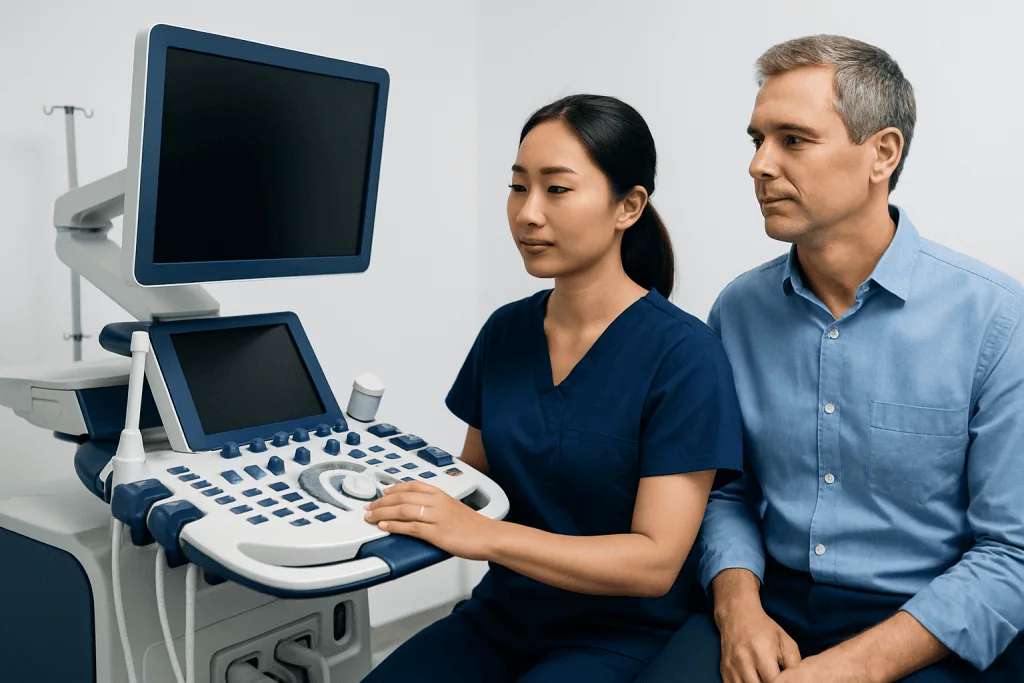
Many tests done before travel keep their value in Turkey, particularly those that describe structure or long-term condition rather than a moment-in-time reading. Common examples include imaging such as MRI, CT, ultrasound, mammography and X-rays; specialist clearance letters from a cardiologist or other physician; biopsy and pathology reports; ECGs; and reasonably recent routine blood work. These records help the treating team confirm the diagnosis, understand your baseline and avoid duplicating expensive studies for no clinical gain.
Acceptance, however, is not the same as replacement. A scan from home may be perfectly adequate for planning the operation, while a fresh local blood test is still requested before anaesthesia. The logic is straightforward: some results have to reflect your condition in that week, and travel itself, dehydration on a long flight, a mild infection picked up en route, a change in medication routine, can shift them.
You can improve the odds that home-country results are accepted by bringing the full document, not a one-line summary. For imaging, that means both the written radiology report and the original image files on disc, USB or secure digital access, because the treating radiologist will usually want to see the images themselves. If your reports are not in English, find out before travel whether translations are needed. A practical walkthrough of file formats and folder order is in how to organize your test results before traveling to Turkey.
- Lab results carrying your full name and date of birth
- Report dates clearly shown on every page
- Reference ranges printed alongside blood values
- Imaging report plus disc, USB or secure online access to the images
- Doctor letters listing diagnosis, current medications and past operations
When tests are commonly repeated after you arrive

Even with excellent records, some categories of testing are routinely redone after arrival. The usual candidates are anything tied to anaesthesia clearance: blood counts, clotting studies, kidney and liver values, blood glucose, infection screening, blood group confirmation, and, where relevant, a pregnancy test on or near the day of the procedure. These values can genuinely change within weeks, and hospital policy often requires a local, verifiable result before an operating theatre is booked in your name.
Repeat testing becomes more likely in a few specific situations: a long gap between the original test and your surgery date, new symptoms since the test was done, a borderline value in the original report, results that do not fit your current presentation, or a report that is incomplete or unverifiable. The scale of the operation matters too. Major surgery, anything involving implants, and procedures requiring admission tend to have stricter confirmation requirements than a short outpatient procedure. The reasoning behind each of these triggers is covered in more depth in why blood tests and scans before treatment in Turkey may be repeated.
It helps to reframe what a repeat request means. It is rarely a comment on the quality of your home laboratory. Most often it is a standing safety step built into the hospital’s pre-admission workflow, applied to every surgical patient regardless of nationality. If a repeat leads to something unexpected: an extra consultation, a further scanwhat happens if you need extra tests after arriving in Turkey explains how that usually unfolds.
Do all surgeries require pre-op testing?
No, and it is worth understanding why, because it explains the variation you will see between quotes and itineraries. The depth of pre-op testing scales with two things: the invasiveness of the procedure and your own health background. A young, healthy patient having a minor procedure under local anaesthetic may need very little formal testing. A patient with diabetes, heart disease or kidney disease having major surgery under general anaesthesia will need considerably more, possibly including specialist reviews before final clearance.
This is also why you should be cautious about any provider, anywhere in the world, that treats pre-op testing as an optional formality for significant surgery. Skipping appropriate checks does not make a procedure simpler; it removes the step designed to catch problems while they are still easy to manage. A reasonable hospital will always be able to explain which tests it requires for your procedure and why. If your history includes a condition that affects blood or clotting, for example polycythemia veraexpect the pre-op work-up to be more detailed rather than less, and treat that as reassurance.
How timing usually works before surgery
There is no single validity period covering all pre-op tests in Turkey, because there is no single validity period anywhere. Different tests have different practical lifespans, and each hospital and department applies its own cut-offs depending on the procedure. Broadly, tests describing long-term structure, many imaging studies, pathology reports, stay useful longer than tests describing short-term body chemistry, such as electrolytes, glucose, blood counts or infection markers.
A useful way to think about it is in three layers. Older records still help with diagnosis and planning; they set the context. Moderately recent tests may be enough for the administrative and medical review done before you travel; they let the team draft a plan. Very recent tests are what anaesthesia and final surgical clearance rest on; these are the ones most often done locally, close to the date. This layering is why the same review can tell you that your MRI from four months ago is acceptable while your blood work from four weeks ago is not.
If your procedure date moves, the timing question resets. A delay of a week or two can push a previously acceptable result outside its window, so it is worth asking specifically whether your existing results still hold whenever a schedule changes. For a pre-departure view of the same problem, which tests are best completed at home versus left until arrival, see which medical tests to complete before flying to Turkey.
What pre-op testing costs depend on
This guide gives no figures, because honest figures do not exist in the abstract: the cost of pre-op work-up depends on variables that differ for every patient. The main ones: how many tests your procedure and history require; whether testing is itemised separately or bundled into a surgical package; whether any of your home results are accepted, reducing what must be redone; and whether repeat results trigger additional consultations or imaging.
What you can do is make the structure transparent before you travel. Ask for a written quotation that states which pre-op tests are included in the package, which would be billed separately, and what happens financially if a repeat test leads to an extra investigation. A hospital that answers those three questions in writing is telling you something useful about how it works. The same applies to “full health check” or check-up programmes: their scope varies widely, so compare the actual test lists rather than the headline names.
Preparing your records and how advance review works
The single most effective thing you can do is assemble a complete medical file early: clear scans or PDFs of all test reports, a short medical history, your current medication list, allergy information and details of any chronic conditions. Include anything that changes the testing picture, recent infections, possible pregnancy, a pacemaker, contrast allergies, bleeding disorders, or anticoagulant use. Advance review of a complete file is what flags missing pages, translation needs and likely repeat tests while you can still do something about them; the practical routine is described in how to prepare for blood tests, scans and pre-op checks.
On travel day, carry both digital and printed copies of the key documents in your hand luggage. Phones fail, airport Wi-Fi fails, and a paper backup costs you nothing but weight. Check that the name on every report matches your passport exactly; surname spelling differences between countries are a genuinely common cause of avoidable delay, and they are much easier to resolve before admission than during it.
One boundary worth stating plainly: nothing in your preparation should involve adjusting your own medication. Whether any medicine needs changing before blood tests or surgery is a decision for your treating doctor, made with your full history in front of them. Your job is to make sure the list they see is accurate and complete.
If a repeat test changes your schedule
Most repeat tests are quick and change nothing. Occasionally, a fresh result prompts an extra consultation, a medication review by the treating team, or a short postponement to make the operation safer. After international travel this is frustrating, and it is still unambiguously the better outcome, because the alternative is discovering the same problem during or after the procedure.
Build flexibility into the trip where you can. If the operation is major or your history is complex, plan to arrive with time for sampling, specialist review and result turnaround rather than scheduling surgery straight off the flight. Cardiology, respiratory, endocrinology or anaesthesia reviews before final clearance are not exotic events; they are how careful hospitals handle patients with real medical histories. And whenever a repeat is requested, you are entitled to ask exactly why it is needed, whether it is routine policy or specific to you, and how it affects your timetable. Clear answers exist, and asking for them is not rude.
Step by step
- Gather your recent medical records. Collect every relevant report, blood tests, urine tests, ECGs, imaging reports, specialist letters, before finalising your plans. For scans, keep the original image files or disc as well as the written report.
- Share the file early for advance review. Ask how the hospital prefers to receive records and provide the complete set well before you book flights. Early review is what allows the surgical and anaesthesia teams to say which results stand and which will be redone.
- Confirm likely validity by test type. Ask about timing windows specifically, not just whether your results are “okay”. Expect layered answers: imaging acceptable, blood work to be refreshed closer to surgery.
- Declare anything that changes the picture. New symptoms, medication changes, recent infections, possible pregnancy, allergies and chronic conditions can all alter the pre-op plan even when the old numbers looked normal.
- Plan arrival around the work-up, not just the operation. If repeats are likely, allow time for sampling, consultations and result review, especially for major procedures or where more than one specialist must clear you.
- Carry organised copies on travel day. Printed and digital versions of key documents in hand luggage, passport-matching names throughout, imaging files included.
- Get a final written checklist before admission. Fasting instructions, medication rules as set by your treating doctor, and which repeat tests are booked and when. Knowing the order of the day is what makes admission smooth.
Your checklist
- Passport, with matching identity details on every report
- Recent lab results showing dates and reference ranges
- ECG and any cardiac or respiratory clearance letters, if applicable
- Imaging report plus CD, USB or online access to the images
- Current medication list, including anticoagulants and insulin
- Allergy list, including contrast dye or latex where relevant
- Brief summary of past surgeries and chronic conditions
- Printed and digital copies of everything above
Key takeaways
- Home-country results are often useful when they are recent, complete and clearly linked to you by name and date.
- Fast-changing tests, blood counts, clotting, glucose, infection screening, are the ones most commonly repeated after arrival.
- Imaging generally stays useful longer than laboratory values, but final acceptance rests with the surgeon and anaesthesiologist.
- There is no universal validity window; timing rules vary by test, procedure and hospital, and reset if your date moves.
- Sharing a complete file early and arriving with a margin of time removes most of the stress from repeat testing.
Frequently asked questions
Will my pre-op blood tests from home be accepted in Turkey?
Possibly, if they are recent, clearly documented and relevant to your procedure. That said, blood tests are the most commonly repeated category, because the values change quickly and anaesthesia clearance usually requires results taken close to the surgery date.
Do all surgeries require pre-op testing?
No. The depth of testing scales with the procedure and your health background. Minor procedures in healthy patients may need very little; major surgery under general anaesthesia, or any surgery in a patient with chronic conditions, requires a fuller work-up and sometimes specialist clearance.
Do I need to repeat imaging such as MRI or CT after I arrive?
Not always. Imaging from home is often adequate for diagnosis and planning, especially when both the written report and the original image files are available. A repeat may be requested if the images are old, incomplete, poor quality, or do not answer the current surgical question.
How recent do my pre-op tests need to be?
There is no single rule. Structural studies such as imaging often remain acceptable for longer, while blood chemistry, clotting and infection screening usually need to be very recent. The applicable windows depend on your procedure and the hospital’s policy, so ask for them explicitly during advance review.
Why repeat tests that were normal a few weeks ago?
Because normal results can change, after travel, illness, dehydration, medication adjustments, or simply time. Repeating them confirms that it is still safe to proceed on the planned day, which is the entire purpose of pre-op testing.
What if my reports are not in English?
Ask before travel whether translations are needed. Often a translated summary of the key reports is sufficient for review, but requirements vary by document type, pathology reports and clearance letters usually matter more than routine printouts.
Is it a good idea to get surgery in Turkey?
That depends on your procedure, your health, and how carefully the trip is planned: the same factors that apply to surgery anywhere. What you can control is the quality of preparation: complete records reviewed in advance, clear written information about testing and costs, and enough time on the ground for the pre-op work-up to be done properly.
Should I arrive a day early for pre-op tests?
Often, yes, particularly for major surgery, a complex medical history, or when repeat testing is expected. Arriving early leaves room for blood work, any imaging, specialist consultations and result review without pressure on the surgery date.
Add us as a Preferred Source to see more of our trusted health content across Google Search, AI Overviews and Discover.

Update history
- PublishedJuly 8, 2026
- Medical review approvedSeptember 1, 2026
- Last content updateSeptember 1, 2026
References3
- NHS: Before surgery: preparing for an operation nhs.uk
- MedlinePlus: Tests and visits before surgery medlineplus.gov
- CDC Travelers' Health: Medical Tourism wwwnc.cdc.gov
More Patient Guides

Sleep Apnea Testing in Turkey: What Happens During Your Evaluation
Sleep apnea testing in Turkey may include a consultation, overnight sleep study or home test, and a clear review of your results…

How to Organize Your Test Results Before Traveling to Turkey
Organize your test results before traveling to Turkey by sorting records, images, medicines and timelines so your Istanbul care team can review…

When Extra Tests Are Needed Before Treatment in Turkey
Extra tests before treatment in Turkey may be needed to confirm diagnosis, timing, and safety. Here is what you can expect in…

At Acibadem, How to Prepare for Blood Tests, Scans, and Pre-Op Checks
Blood tests, scans, and pre-op checks at Acibadem in Turkey help confirm you are ready for treatment and avoid delays on the…