

Gastric Sleeve Recovery Time: Week-by-Week Timeline

Most people manage light daily activities within one to two weeks of gastric sleeve surgery and return to many normal routines within two to six weeks. Physical work, exercise and a broader diet usually take four to eight weeks. Internal healing continues for months, which is why diet stages and activity limits matter long after you feel well. Your own surgeon's plan always takes priority.
You want to know when you can work, fly home and eat something that feels like a normal meal. The honest short version: most people manage light daily activities within one to two weeks of a gastric sleeve, and more physical work, exercise and a broader diet usually take four to eight weeks. The longer version is more useful, because different parts of you recover on different timelines.
Everything below is a general guide. Your own bariatric surgeon’s instructions, diet plan and follow-up schedule always override it, because they are based on your operation and your health, not an average.
At a glance
- Hospital stay: often 1–3 nights, depending on your recovery
- Light activity: short walks begin within hours of surgery, as advised
- Desk work: commonly 1–2 weeks, if recovery is uncomplicated
- Physical work: often 4–6 weeks or longer, with surgeon clearance
- Diet: staged progression from liquids to soft foods to regular textures over several weeks
- Internal healing: continues for months, well after you feel comfortable
Gastric Sleeve Recovery Time: The Short Answer
Gastric sleeve recovery time is commonly two to six weeks for a return to most everyday activities. But healing does not end when you feel well enough to move around or board a flight. Your stomach, your small incision sites, your energy levels, your eating habits and your mood all recover on separate timelines, and the internal one is the slowest.
The stomach sleeve gastrectomy removes a large portion of the stomach, leaving a narrow tube. You may also see it called VSG surgery, short for vertical sleeve gastrectomy. Because a gastric sleeve is almost always performed laparoscopically, through small incisions, the outside of your abdomen heals quickly. The staple line inside your stomach does not. That gap between how you feel and how healed you are explains most of the rules your surgeon will give you.
In the first days, the priorities are walking safely, managing discomfort and sipping fluids. Over the following weeks, you move through the diet stages your team prescribes and rebuild activity gradually. If your health history or your operation differs from the usual pathway, your timeline will too.
For international patients, the sensible approach is to plan your stay in Turkey around your discharge assessment and early surgical review, not around the cheapest flight. Our separate guide on how long to stay in Turkey after gastric sleeve surgery covers this in detail.
Gastric Sleeve Recovery Timeline: Day by Day and Week by Week

This table assumes an uncomplicated laparoscopic recovery. Your team may adapt the schedule based on your health, the surgical approach and how well you tolerate fluids. Treat it as a planning guide, not a substitute for your discharge instructions.
| Time after surgery | What you may experience | Typical priorities |
|---|---|---|
| Days 0–2 | Tiredness, abdominal soreness, gas discomfort; frequent short walks on the ward. | Hydration, breathing exercises, pain control, walking, monitoring by the ward team. |
| Days 3–7 | Fatigue continues; incision discomfort usually starts to settle. | Prescribed fluids and protein goals, gentle movement, no lifting. |
| Week 2 | More mobile, but you tire easily and need frequent fluid breaks. | Advance to the next diet stage only when cleared; assess desk-work readiness honestly. |
| Weeks 3–4 | Energy often improves; food tolerance can still be unpredictable. | Increase walking gradually, attend follow-up, keep to the staged diet. |
| Weeks 5–6 | Daily routines feel easier; incisions are usually comfortable. | Ask before resuming gym exercise, swimming, long drives or heavy work. |
| Months 2–3 | Diet texture and activity broaden under guidance. | Build sustainable protein, hydration, vitamin and movement habits. |
| Months 3–12+ | Weight loss and adaptation continue; plateaus can occur. | Ongoing follow-up, blood tests, supplements and nutrition support. |
Your discharge paperwork will list the specific symptoms your team wants reported and how to reach them. Keep that document with you, including on your journey home. The timeline above describes a recovery that goes to plan; your written instructions describe what to do when something does not.
Eating, Drinking and Energy During Recovery
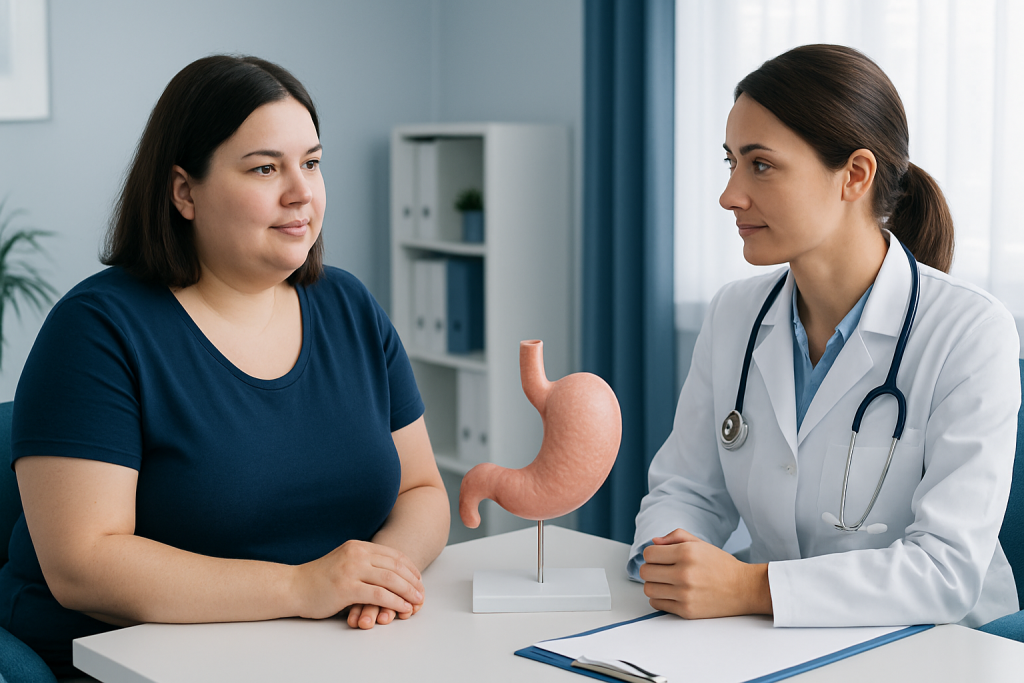
After gastric sleeve surgery, the diet advances in stages to protect the healing stomach while you meet fluid and protein needs. Exact stages vary by programme, but the usual sequence runs from clear fluids to full liquids, then puréed foods, soft foods and finally carefully chosen regular textures over several weeks. The staging is not a formality. The staple line needs time before it handles solid food.
Take small sips and small bites, eat slowly, and stop when you feel comfortably satisfied. Your bariatric dietitian sets your specific fluid, protein and supplement targets. Dehydration can develop quickly after this operation because you physically cannot drink large volumes at once, and nausea makes it harder.
- Keep a drink bottle within reach all day and sip constantly rather than drinking in bursts.
- Prioritise the protein foods and supplements your team recommends; protein supports tissue healing.
- Avoid carbonated drinks, alcohol and anything your programme excludes at your current stage.
- Check with your team before using straws, caffeine or any over-the-counter medicine, several common painkillers are routinely restricted after bariatric surgery, and your surgeon will tell you which apply to you.
Low energy is normal in the early weeks because intake is limited while your body heals. Rest often, but do not stay in bed for long stretches. Short, frequent walks support circulation, lung function and recovery, which is why they start so early.
Going Back to Work After a Gastric Sleeve
A quiet, remote or desk-based role after one week is possible if your recovery is uncomplicated and your surgeon agrees. Many people need closer to two weeks, and some need more. At the one-week mark, fatigue, low calorie intake, medication effects and the need for frequent fluid breaks can make a full working day genuinely hard, even when you feel fine sitting on the sofa.
Jobs involving lifting, prolonged standing, driving, caring for others or safety-sensitive tasks need more time. Surgeons commonly restrict heavy lifting for several weeks after a sleeve stomach procedure to protect the healing abdominal wall.
If you are travelling for treatment, build slack into your leave. Do not schedule your return flight and your first day back around the earliest possible date the internet suggests. Plan around the clearance you actually receive at your follow-up review.
How Weight Loss Progresses: Without a Fixed Timeline
There is no reliable schedule for how much weight you will lose, or by when, after a gastric sleeve. Starting weight, body composition, medical conditions, age, activity and how closely you follow the nutrition plan all shape the curve. Anyone who gives you a precise figure is guessing.
What can be said honestly: weight loss is usually fastest in the early months and then slows. Plateaus, weeks where the scale barely moves, are normal and expected, particularly as your body adapts. Your clinical team will focus on your overall health, nutritional status, mobility and sustainable habits rather than a single number.
Keep every planned follow-up, including blood tests and dietitian reviews. If you had surgery in Turkey, ask before departure how your local clinician and the original team will share follow-up information, so your monitoring does not stall when you land. Our guide to gastric sleeve recovery and aftercare in Turkey explains how that handover typically works.
When Do Regular Foods Come Back?
The question usually arrives as “when can I have a slice of pizza?”, so let’s answer that one. Not during the liquid, purée or soft-food phases. Many programmes approve regular textures somewhere around six to eight weeks, some later, and the exact timing is your dietitian’s call, not a calendar’s.
Even once regular foods are approved, rich, dense foods can be uncomfortable. Bread and pizza crust tend to sit heavily; cheese is rich; eating too fast or too much can cause pain, nausea or vomiting. A food being technically allowed does not make it comfortable, and it does not make it useful, pizza offers a lot of refined carbohydrate and fat for very little protein, in a stomach with very limited capacity.
When your team says the time is right, the realistic approach is a very small amount, eaten slowly and chewed thoroughly, with protein-dense meals remaining the default most of the time.
How Long Do Your Insides Take to Heal?
Internal tissues begin healing immediately, but meaningful internal healing after a sleeve gastric operation continues for weeks to months. This is the single most important fact in this guide, because you will feel much better on the outside long before the surgical area has fully adapted. Every rule that seems overcautious, the slow diet stages, the lifting restrictions, the delayed gym clearance, exists to protect tissue you cannot see or feel.
Healing can be slowed by smoking or any nicotine use, dehydration, poor protein intake, uncontrolled medical conditions, infection and returning to strenuous activity too soon. Tell your team honestly about symptoms and about any part of the plan you are struggling to follow. They can only adjust what they know about.
The Honest Downsides
A balanced guide should say this plainly. The gastric sleeve is not reversible: the removed portion of stomach does not grow back. Acid reflux can develop or worsen afterwards in some people. Nutrient deficiencies are possible without lifelong supplements and monitoring. Some foods that you used to enjoy may never sit comfortably again, and which foods those are varies unpredictably between people. Significant weight loss can leave loose skin. Weight regain is possible over the years if eating habits drift, because the operation changes your stomach, not your environment. And, like any operation, it carries surgical risks your surgeon must discuss with you individually before consent.
None of this means the sleeve is a bad option. It means it is a serious one, and the decision belongs in a proper assessment with a bariatric and metabolic surgery team, weighing your health, your history and the alternatives, including other procedures. If you are comparing options, our guide to gastric bypass versus gastric sleeve recovery sets the two side by side.
What Changes for Good
Very little is forbidden forever, but several things change permanently. Portions stay small for life. Lifelong vitamin and mineral supplementation, with regular blood monitoring, is standard after a sleeve. Many programmes advise permanently limiting or avoiding carbonated drinks. Alcohol affects you differently after bariatric surgeryit is absorbed faster and hits harder, so teams typically advise long-term caution. Certain common painkillers are often restricted long term; your surgeon will tell you exactly which medicines this covers in your case. Eating habits change permanently too: slower meals, thorough chewing, protein first, and separating drinking from eating are lifelong patterns, not a recovery phase.
How Cost Works: What a Quote Actually Depends On
This guide does not quote figures, because a number without context misleads. What you can usefully know is what shapes a quote. The main variables are the length of the hospital stay, the pre-operative assessment and tests, the surgical team and facility, and, most importantly, what the quote includes. Some quotes cover only the operation; others bundle anaesthesia, hospital nights, early follow-up appointments, dietitian support, accommodation and transfers. Two quotes that look far apart may be close once you list what each contains. Whether the operation is a first procedure or a revision of earlier surgery also changes the picture. When you compare, compare the contents, not the headline.
Step by step
- Confirm your discharge and travel plan. Before leaving hospital, make sure you understand your medication schedule, diet stage, wound-care instructions and how to reach your team. If you are travelling internationally, ask your surgeon when flying is appropriate for you and whether you need clot-prevention measures for the journey.
- Make hydration your first daily priority. Sip fluids steadily through the day according to your plan rather than drinking large amounts at once. Small, constant intake is the only way to meet fluid targets with a healing sleeve.
- Follow each diet stage exactly. Do not advance from liquids to purées, soft foods or regular textures because you feel hungry or well. The staging protects the staple line, and your programme’s version may differ from advice you read online.
- Walk little and often. Short walks start soon after surgery and increase gradually as energy allows. Strenuous exercise, heavy lifting and abdominal strain wait for your surgeon’s clearance.
- Stick to the medication plan you were given. Your team sets what you take and when. Check with them before adding anything over the counter, including painkillers, herbal products and vitamins, because several common products are restricted after bariatric surgery.
- Attend every follow-up. Early reviews catch dehydration, wound concerns and dietary problems while they are easy to address. Leave Turkey with written aftercare instructions and a confirmed plan for follow-up at home.
- Prepare for the emotional side. Recovery can include mood changes, tiredness and an adjustment period around food. Dietitian support, psychological support and patient groups exist for exactly this; ask your team what is available.
Your checklist
- Written discharge instructions and your team’s contact details
- Surgeon-approved flight and travel timing
- Prescribed medicines and supplements, with enough supply for the journey
- A staged diet plan with fluid and protein targets
- A follow-up appointment before departure, or a confirmed remote follow-up plan
- Comfortable loose clothing and easy access to water while travelling
- A copy of your operation summary and relevant test results
- A local doctor or bariatric follow-up contact at home
- A flexible work and activity plan with extra recovery time built in
Key takeaways
- Most people return to light routines within two to six weeks, but internal recovery continues for months.
- Diet stages, hydration and protein intake are the core of a safe gastric sleeve recovery.
- Desk work after one week is possible for some people; it is not the plan to build your leave around.
- Weight-loss timelines vary too much between individuals to promise; plateaus are normal.
- Regular-texture foods, including pizza, wait until your bariatric team approves them.
- Travel home should be planned around clinical clearance and follow-up, not convenience.
Frequently asked questions
What is the recovery time for gastric sleeve surgery?
Most people manage light daily activities within one to two weeks and return to many normal routines within two to six weeks, with an uncomplicated laparoscopic operation. Physical work, exercise and a broader diet typically take four to eight weeks. Internal healing continues for months, which is why activity and diet restrictions outlast how quickly you feel better. Your surgeon’s individual advice overrides any general timeline.
How long should I stay in Turkey after gastric sleeve surgery?
Long enough to complete your discharge assessment and an early surgical review before flying, which your surgeon will schedule based on your recovery. The right length varies between patients, so ask for personalised travel clearance rather than booking around a standard itinerary. Building a buffer into your trip is cheaper than changing flights.
When can I fly after gastric sleeve surgery?
Your surgeon decides, based on your recovery and individual risk factors such as clotting risk and hydration. Long flights may come with specific movement, hydration and clot-prevention instructions for the journey. Follow the guidance you receive at discharge and tell your team about every flight you have planned, including connections.
How much pain is normal after gastric sleeve surgery?
Some abdominal soreness, incision tenderness and gas-related discomfort, sometimes felt in the shoulder, is common in the early days and generally improves over the first week or two. Your team manages this with prescribed pain relief. Your discharge notes will list the specific symptoms they want reported and how to reach them.
When can I drive after gastric sleeve surgery?
Not while taking sedating pain medication, and not until you can comfortably perform an emergency stop. Many people need several days to a couple of weeks, but your surgeon’s advice is the deciding factor. Check your insurance terms and local driving rules as well, since some insurers have their own post-surgery requirements.
When can I exercise after gastric sleeve surgery?
Gentle walking is encouraged from the first days. Strenuous activity, core training, swimming and heavy lifting wait for surgical clearance, typically after several weeks, depending on incision healing and overall recovery. Increase gradually and expect your stamina to lag behind your motivation while calorie intake is still low.
Will I need vitamins after gastric sleeve surgery?
Most patients need long-term vitamin and mineral supplementation after a sleeve, alongside regular blood monitoring. The exact products and doses depend on your diet, test results and history, and are set by your bariatric team. Bring their written recommendations home so your local doctor can continue the monitoring.
Add us as a Preferred Source to see more of our trusted health content across Google Search, AI Overviews and Discover.

Update history
- PublishedAugust 19, 2026
- Medical review approvedSeptember 13, 2026
- Last content updateSeptember 12, 2026
References2
- NHS: Weight loss surgery nhs.uk
- MedlinePlus: Vertical sleeve gastrectomy medlineplus.gov
More Patient Guides

Septoplasty Recovery: Week by Week
Learn what to expect after deviated septum surgery: a week-by-week septoplasty recovery timeline, when it is usually safe to fly home, and…

Gallbladder Surgery Recovery: Week by Week
Learn what to expect after gallbladder surgery: a week-by-week recovery timeline, pain, diet, wound care, when it is safe to fly home…
Robotic Hysterectomy Recovery: Week by Week
Recovery from robotic hysterectomy week by week: pain, lifting, wounds, driving, flying home safely, warning signs and questions to ask before you…

Breast Reconstruction Recovery: Week by Week
DIEP flap recovery week by week: hospital stay, drains, pain, walking, showering, driving, when it is usually safe to fly home, and…