

Hospital Infection Control Standards in Turkey
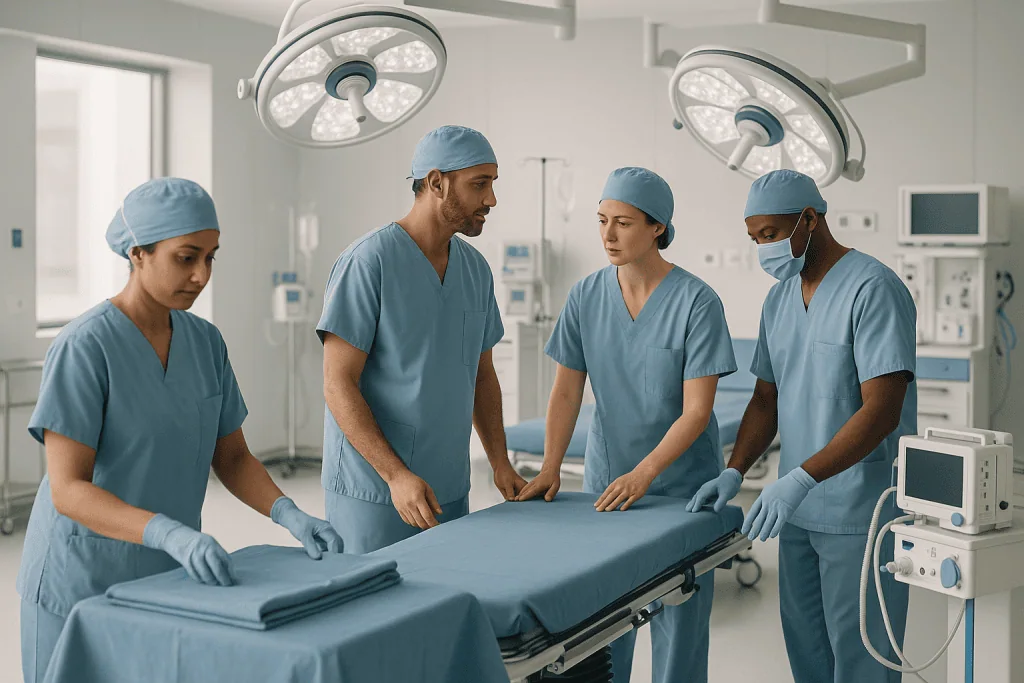
Hospital infection control standards in Turkey rest on national Ministry of Health regulations, hospital-level infection control committees, and, in some private hospitals, including the Acibadem network, international accreditation frameworks such as JCI. In practice, this means structured hand hygiene, sterilisation, cleaning, isolation and surveillance systems. As a patient, you can ask direct questions about these systems before you confirm treatment, and your questions should be welcomed.
Worried about picking up an infection in a hospital far from home? It is one of the most common questions international patients ask before booking surgery or an inpatient stay in Turkey, and it is a fair one to ask out loud.
This guide explains how hospital infection control standards in Turkey are organised, what safe practice looks like when you are actually on a ward, which questions you are allowed to ask, and what you can do yourself before, during and after your stay. It will not tell you that risk can be eliminated, no honest guide can, but it will show you what a well-run system looks like and how to check for it.
At a glance
- Main concern: Reducing the risk of healthcare-associated infections during hospital care in Turkey
- Who sets standards: The Turkish Ministry of Health through national regulation, hospital infection control committees, and international accreditation bodies such as JCI where a hospital holds accreditation
- The core areas: Hand hygiene, protective equipment, sterilisation and cleaning, isolation precautions, and surveillance of infections
- What you can check: Accreditation status, hand hygiene practice, room cleaning, sterilisation processes, isolation rules and visitor policies
- Helpful for: International patients planning surgery, inpatient treatment, intensive care or repeated hospital visits
- Support available: Interpreters, international patient coordinators, admission guidance and discharge planning
How hospital infection control standards in Turkey are organised
Infection control is not a cleaning schedule. It is an organised system of rules, training, monitoring and accountability designed to reduce healthcare-associated infections: the infections a patient can acquire during care rather than bring in with them. Hospital infection control standards in Turkey operate on three levels, and it helps to understand all three before you travel.
First, national regulation. Turkish hospitals operate under Ministry of Health requirements. Hospitals are expected to maintain infection prevention and control programmes, and larger hospitals maintain infection control committees: multidisciplinary groups that write policy, review infection data, investigate problems and train staff. Turkey also has an active professional community in this field, including specialist societies focused on hospital infections, which is one reason the topic is taken seriously in clinical training.
Second, hospital-level quality systems. Each hospital turns national requirements into its own written infection control policy: who does what, on which ward, with which product, checked by whom. A hospital infection control policy typically covers hand hygiene rules, sterilisation and disinfection procedures, isolation criteria, antibiotic stewardship, staff health, waste handling and outbreak response. When people ask “what is a hospital infection control policy?”, this is the honest answer: it is the document and the routines behind it, not a poster in the lobby.
Third, international accreditation where a hospital holds it. Some private Turkish hospitals are accredited by Joint Commission International (JCI), which assesses hospitals against international patient safety standards, including infection prevention. Acibadem connects international patients with JCI-accredited hospitals in its network, where infection prevention sits inside daily clinical governance rather than alongside it. You can read more about what that assessment involves in our guide to how JCI accreditation and clinical standards support safe care at Acibadem. Accreditation does not remove all risk, no framework can, but it does mean an independent body has examined the hospital’s systems against a recognised standard.
A note on the Turkish healthcare system and rankings
Patients often ask how Turkey’s healthcare system ranks in the world. There is no single honest answer, because rankings vary widely depending on what is measured, access, spending, capacity or outcomes, and different indices reach different conclusions. What can be said plainly: Turkey has a mixed public and private system regulated by the Ministry of Health, a large private hospital sector that treats significant numbers of international patients, and universal coverage for residents through its national insurance scheme. For an international patient, the ranking of the whole system matters far less than the standards of the specific hospital treating you. That is where your questions should go.
Standards you can expect in Turkish hospitals
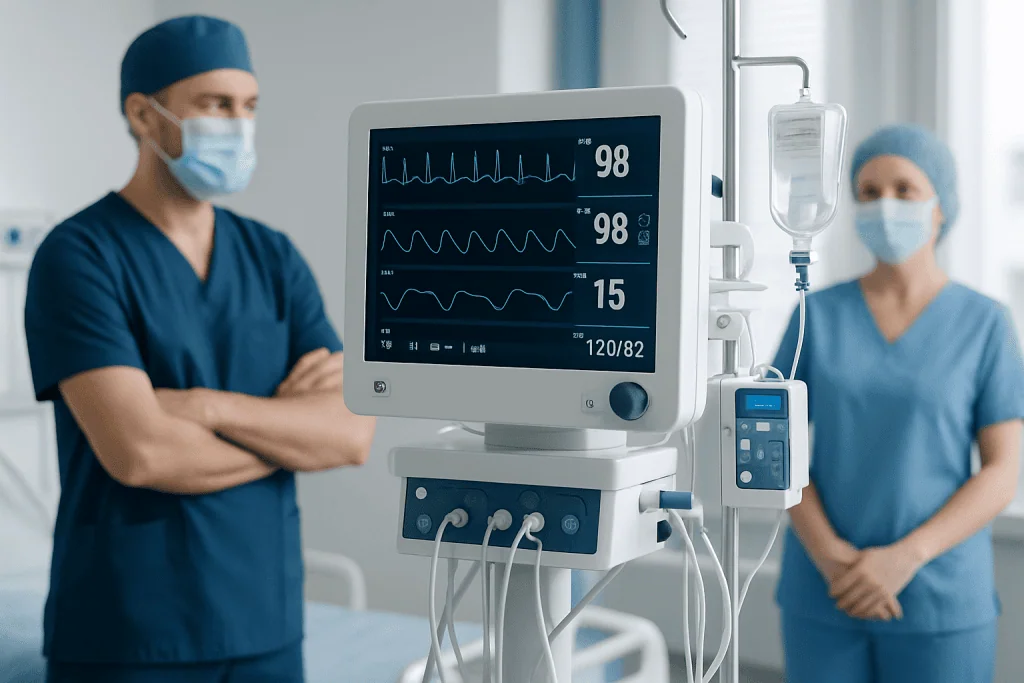
Well-managed hospitals in Turkey maintain infection control committees, written policies, staff training programmes and surveillance systems that track healthcare-associated infections over time. These systems cover the areas where infection risk concentrates: operating theatres, intensive care units, inpatient wards, dialysis units, endoscopy suites, laboratories and outpatient clinics. The point of a system is consistency: the same precautions applied at every point of care, not just where visitors can see them.
When infection control professionals describe the core of their work, it usually comes down to five areas. If you have searched for “the five standards of infection control”, this is what they mean in practice:
- Hand hygienecleaning hands at defined moments of care, not just when convenient.
- Personal protective equipmentgloves, gowns, masks and eye protection used when the task requires them.
- Cleaning, disinfection and sterilisationof the environment, of equipment, and of reusable surgical instruments through dedicated, documented systems.
- Isolation and transmission-based precautionsextra measures when a patient has, or may have, a transmissible infection or a resistant organism.
- Surveillance and responsetracking infection rates, investigating clusters and acting on what the data shows.
As a patient you will see the surface of this: alcohol-based hand rub dispensers at bedsides and corridors, staff in protective equipment where needed, colour-coded waste containers, controlled access to operating areas, and routine cleaning of high-touch surfaces. Behind the scenes sit the parts you will not see: central sterilisation departments, equipment validation, safe laundry handling and a defined process for responding quickly when a risk is identified.
Before you confirm travel, it is entirely reasonable to ask whether the hospital holds international accreditation, how infection control is monitored, and whether your specific procedure needs special precautions. Acibadem International patient coordinators can route these questions to the relevant hospital team so you have answers before you book flights, not after.
Hand hygiene, cleaning and sterilisation: what you may notice
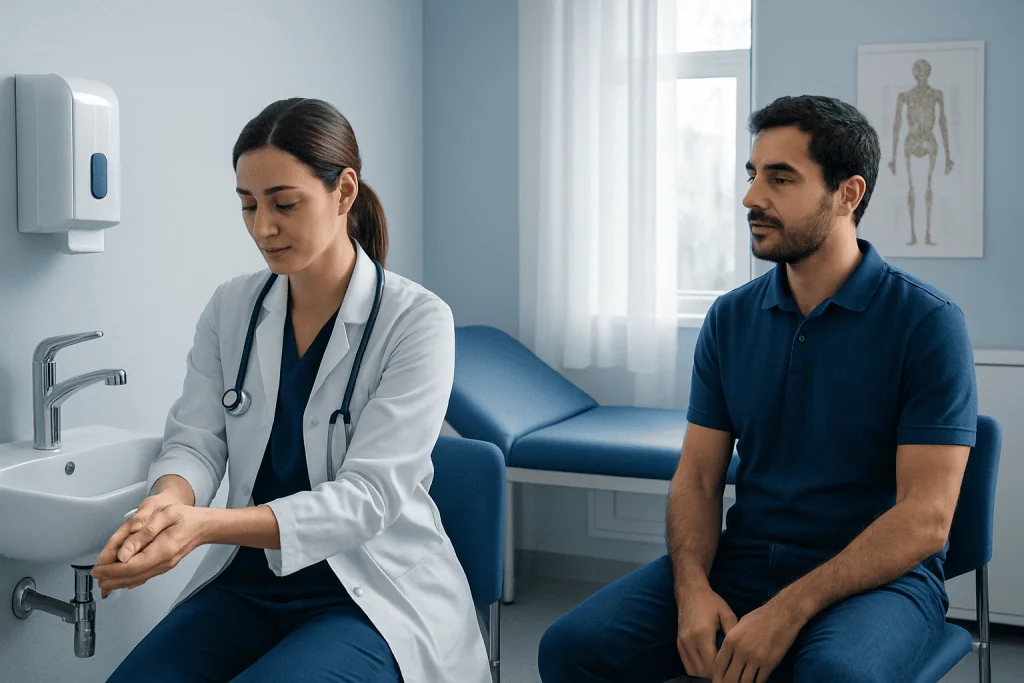
Hand hygiene is the single most important routine in any hospital, anywhere in the world. Expect staff to clean their hands before touching you, before any procedure, after contact with body fluids, after touching you, and after touching your immediate environment: these are the moments the World Health Organization defines. If you are unsure whether it has happened, you are allowed to ask: “Could you please clean your hands before we begin?” A well-run team will not be offended. Patient participation is part of safety culture, not a challenge to it.
Room cleaning should go beyond floors. High-touch surfaces carry the real risk: bed rails, over-bed tables, call buttons, door handles, bathroom fittings and infusion stands. In surgical and procedure areas, cleaning and disinfection follow more controlled protocols with defined products and contact times. Reusable surgical instruments should pass through a dedicated sterilisation department with documented workflows, never improvised reprocessing near the point of care.
Your own habits matter more than most patients realise. Wash or sanitise your hands before eating, after using the bathroom, after touching dressings or medical devices, and whenever you return from shared areas. Keep personal items off the floor. If a dressing, catheter site or IV line looks wet, loose, painful or unusual, tell your nurse rather than adjusting it yourself. Devices such as urinary catheters are a known route for a urinary tract infection, which is exactly why good hospitals review daily whether each device is still needed, and why you can ask that question too.
Isolation precautions and visitor rules
Isolation precautions protect you, other patients, visitors and staff. Being placed under precautions does not mean something is seriously wrong. Hospitals use them when a patient has a known or suspected transmissible infection, carries a resistant organism such as MRSA, or has a weakened immune system that needs protecting from others. You may see signage on the door, staff wearing gowns or masks, or limits on who may enter.
If precautions apply to you or a nearby patient, ask your nurse what the rules mean in everyday terms. You may need to clean your hands more often, wear a mask when leaving the room, avoid certain shared areas or limit visitors. Family members may need instructions on gowns, gloves, masks and hand hygiene before entering and leaving. None of this is punitive; it is the system working as designed.
Visitor rules are part of infection prevention, and they are strictest where patients are most vulnerable: intensive care, transplant-related units, oncology wards, neonatal areas and post-operative floors. If your companion feels unwell, fever, cough, diarrhoea, vomiting or a new rash, they should tell the hospital team before visiting, even if they travelled with you and want to be at your side. Acibadem International can explain visitor expectations in your preferred language and help arrange practical alternatives for companions when access is limited.
Before you travel: what to share and prepare
Share your medical history clearly and early. Recent hospitalisations, previous surgeries, implanted devices, current wounds, recent antibiotic courses, dialysis, chemotherapy, immune-suppressing treatment, and any known resistant organisms such as MRSA, VRE or CRE all matter. These details help the hospital decide whether you need screening tests, particular room arrangements or additional precautions, decisions that are far easier to make before you arrive than after.
If you have had a recent infection of any kind, fever, respiratory symptoms, urinary symptoms, a dental abscess, a skin infection or an open wound, tell your coordinator before travelling. Your care team can then advise whether treatment can proceed as planned or whether assessment is needed first. Do not change any medication on your own account before travel; every adjustment belongs to your treating doctor. Our guide to preventing infection during medical travel covers the journey itself, and if your trip involves vaccination questions, see pre-travel vaccines and infection precautions for medical trips to Turkey.
Travel with your essential records: recent laboratory results, culture reports, discharge summaries, a current medication list, allergy information and vaccination records where relevant. If documents are not in English or Turkish, ask your coordinator whether translation is needed. Clear documentation reduces delays at admission and supports safer decisions from day one, including infection-related decisions such as antibiotic choice and room placement.
During admission: practical ways to protect yourself
Once admitted, the safest approach is engaged but not anxious. You do not need to supervise every detail; the system exists so you do not have to. Confirm your identity before medications and procedures, follow pre-operative bathing and fasting instructions exactly, and keep your hands away from wounds, drains, lines and dressings. If an instruction is unclear, ask for an interpreter rather than guessing: a misunderstood wound-care instruction is a genuine infection risk.
Simple precautions that make a real difference:
- Clean your hands frequently and ask visitors to do the same before they touch you or your belongings.
- Keep bags, shoes and outdoor clothing off the bed.
- Use hospital-provided wound care supplies only as directed.
- Tell staff promptly about fever, chills, increasing pain, redness, swelling, discharge, diarrhoea or breathing symptoms.
- Ask each day whether catheters, drains or IV lines can be safely removed, devices should stay in only as long as they are needed.
Good pain management is also part of infection prevention: patients who can breathe deeply, cough and move early after surgery reduce their risk of chest complications. If you want to understand how that is handled, read what patients can expect from pain control after surgery in Turkey. And if infection risk worries you, say so to your team, reassurance is most useful when it is based on your exact situation, not a general script.
After discharge: prevention continues at your hotel or home
Infection control does not stop at the hospital door. If you are staying in Turkey to recover, ask for written instructions covering wound care, showering, activity restrictions, medication timing, follow-up appointments and warning signs. Make sure you know who to contact during business hours and after hours if symptoms appear.
Keep dressings clean and dry unless your care team tells you otherwise. Avoid swimming pools, saunas, shared baths and unapproved spa treatments until you are cleared. Do not apply creams, herbal products, disinfectants or over-the-counter ointments to surgical sites unless your doctor specifically recommends them. If antibiotics were prescribed, follow the prescription exactly as your doctor directed and never share it with anyone else.
If you are flying home soon after treatment, confirm whether you need a final check before departure and which symptoms should delay travel. Report fever, spreading wound redness, pus-like drainage or worsening diarrhoea to your care team urgently. If you develop severe breathing difficulty, confusion, or feel suddenly and seriously unwell, call your local emergency number or go to the nearest emergency department now. Your discharge pack should include records you can hand to your doctor at home: operative notes, medication details and any infection-related test results.
Step by step
- Ask about accreditation and safety systems. Before you confirm treatment, ask whether the hospital is accredited and how infection prevention is organised. JCI accreditation is one recognised marker of structured safety processes; internal infection control committees and surveillance are another.
- Share your infection and hospitalisation history. Recent infections, antibiotic courses, resistant bacteria, wounds, catheters, dialysis and previous hospital stays can all affect screening, room planning and timing of treatment.
- Prepare documents before travel. Discharge summaries, culture results, medication lists, allergies, vaccination records and relevant laboratory reports. Unsure what matters? Send everything to your coordinator in advance.
- Follow pre-admission instructions exactly. Showering, fasting, skin preparation and arrival times all exist for a reason. Following them helps the team prepare safely and avoids delays.
- Practise hand hygiene and visitor discipline. Clean your hands often, ask visitors to do the same, and keep anyone who feels unwell away from your bedside, even close family who travelled with you.
- Speak up early. Report fever, chills, wound changes, diarrhoea, breathing symptoms, increasing pain or problems with lines and catheters. Early mention beats late escalation every time.
- Leave with a clear plan. Before discharge, confirm wound care, medications, follow-up dates, travel restrictions and emergency contacts. Ask for written instructions in a language you understand.
Your checklist
- Ask whether your hospital is JCI-accredited or follows comparable quality and infection prevention systems.
- Send recent medical records before travel, including any culture or resistant bacteria results.
- Tell the team about fever, cough, diarrhoea, skin infection, dental infection or open wounds before admission.
- Pack a current medication list, allergy details and copies of discharge summaries.
- Use hand sanitiser regularly and remind companions to clean their hands before touching you or your belongings.
- Do not touch wounds, catheters, drains, IV lines or dressings unless instructed.
- Keep visitors away if they are unwell, even mildly.
- Ask for an interpreter if any infection control instruction is unclear.
- Confirm warning signs and contact numbers before leaving the hospital.
- Keep all discharge documents for your doctor at home.
Key takeaways
- Hospital infection control standards in Turkey rest on three layers: national Ministry of Health regulation, hospital-level infection control committees and policies, and international accreditation where a hospital holds it.
- The core of infection control worldwide is the same five areas: hand hygiene, protective equipment, cleaning and sterilisation, isolation precautions, and surveillance.
- JCI-accredited hospitals, such as those in the Acibadem network, are independently assessed against international patient safety and infection prevention standards.
- Your role is practical: share your history early, clean your hands, follow instructions, limit unwell visitors and report symptoms promptly.
- Safe recovery continues after discharge, wound care, follow-up, travel timing and knowing which symptoms need urgent attention.
Frequently asked questions
What are the 5 standards of infection control?
Infection control is usually described in five core areas: hand hygiene at defined moments of care; appropriate use of personal protective equipment; cleaning, disinfection and sterilisation of environments and instruments; isolation and transmission-based precautions for contagious or resistant infections; and surveillance, tracking infections and acting on the data. Well-run Turkish hospitals build their written policies around these same areas.
What is a hospital infection control policy?
It is the hospital’s written framework setting out how infections are prevented and managed: hand hygiene rules, sterilisation procedures, isolation criteria, antibiotic use, staff training, waste handling and outbreak response, usually overseen by an infection control committee. You can reasonably ask any hospital how its infection control programme is organised and monitored.
What is the ranking of Turkey’s healthcare system in the world?
There is no single agreed ranking, different international indices measure different things and reach different conclusions, so any specific number would be misleading. What matters far more for you as a patient is the standard of the individual hospital: its accreditation status, its infection control systems and how openly it answers your questions.
What does JCI accreditation mean for infection control?
Joint Commission International accreditation means a hospital has been independently assessed against international standards for patient safety, quality improvement, infection prevention, medication safety and care coordination. It does not remove all infection risk, nothing can, but it shows the hospital’s systems have been examined against a recognised external benchmark.
Can I ask hospital staff to clean their hands?
Yes. You can politely ask any staff member to clean their hands before examining you, changing a dressing or handling a line. Good healthcare teams treat patient participation as part of the safety culture, not as criticism.
Should I travel if I have a fever or infection before treatment?
Do not ignore symptoms before travel. Contact your patient coordinator or medical team and describe your fever, cough, wound problem, urinary symptoms, diarrhoea or other concerns. They can advise whether you should be assessed locally, delay travel or continue with additional precautions. Deciding alone is the one option to avoid.
Will I be isolated if I have a resistant bacteria history?
Possibly. A previous resistant organism result, such as MRSA, may lead to screening tests or extra precautions depending on your situation and hospital policy. Isolation is a protective measure, not a punishment, and staff should explain clearly what it means for you and your visitors.
What should my companion do to reduce infection risk?
Clean their hands often, avoid sitting on your bed, follow visitor rules and stay away from the hospital if they feel unwell, even mildly. They can help you remember instructions without touching dressings, drains, IV lines or medical equipment.
Add us as a Preferred Source to see more of our trusted health content across Google Search, AI Overviews and Discover.

Update history
- PublishedJune 8, 2026
- Medical review approvedSeptember 13, 2026
- Last content updateSeptember 12, 2026
References2
More Patient Guides

When to Delay Travel for Treatment in Turkey Because of Cold, Flu, or Fever
Delay travel for treatment in Turkey if you have fever, worsening flu symptoms, or breathing difficulty; contact your care team before flying.

Traveling to Turkey for Treatment While Pregnant: Safety Questions to Ask First
Traveling to Turkey while pregnant can be safe with medical clearance, airline checks and a tailored care plan. Ask these key safety…
When to Seek Urgent Help After Leaving the Hospital in Turkey
When to seek urgent help after leaving the hospital in Turkey: act fast for breathing trouble, chest pain, heavy bleeding, high fever,…

At Acibadem, How We Handle Consent, Privacy, and Patient Decision-Making
Consent, privacy, and patient decision-making at Acibadem in Turkey are handled with clear information, confidentiality, interpreters, and respect for your choices.