

How to Keep Valuables and Medical Documents Safe During Treatment Travel
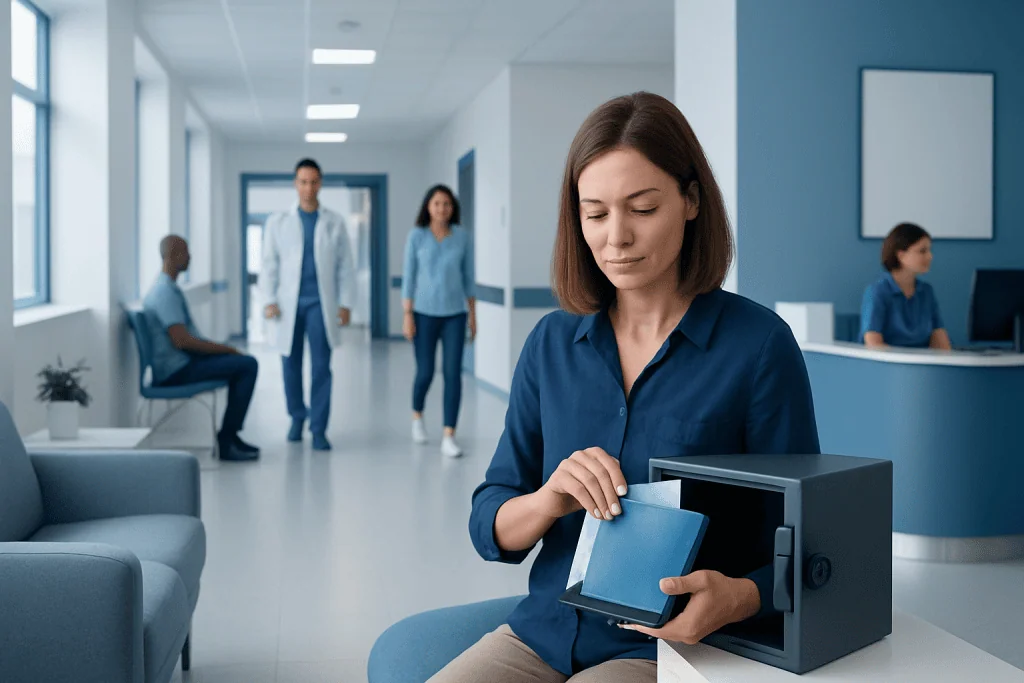
Keep your passport, medical documents, medications, phone and one payment card on your person or in your hand luggage — never in checked baggage. Before departure, make secure digital copies and one printed set stored separately. Lock away anything you do not need that day, and follow the same storage routine at every stop so nothing gets left behind during transfers.
Picture the airport check-in desk. One hand is on your suitcase, the other is searching for your appointment letter. Where is your passport? Which bag holds your prescriptions? These are the moments that catch travelling patients out — not dramatic theft, but ordinary confusion at a busy counter when you are tired and thinking about your treatment.
When you travel for care, your passport, medical records, payment cards, phone and medications matter as much as anything in your suitcase. A clear system to keep valuables and medical documents safe during treatment travel does not need special equipment. It needs three habits: carry the right things on you, back everything up before you leave, and put items back in the same place every time. This guide walks through each habit in the order you will use it, from packing at home to the day you fly back.
At a glance
- Best approach: Carry essential documents on your person or in your hand luggage, never in checked baggage
- Most important backup: Secure digital copies plus one printed set, stored apart from the originals
- Highest-risk moments: Airport screening, immigration, transfers, hotel check-in and hospital registration
- What to separate: Split cash, cards, document copies and medication reserves across more than one place
- Simplest safeguard: One fixed routine — the same pouch, the same pocket, the same shelf, every day
What to protect first
Not everything you pack carries the same level of risk. Losing a jumper is an inconvenience. Losing your passport, visa paperwork, treatment correspondence, imaging reports, prescriptions, insurance documents, payment cards, phone or regular medications can affect appointments, registration, payments or your ability to travel home. Those are the items this guide is about.
Start by sorting your essentials into three groups: identity and travel documents, medical information, and valuables. The grouping matters more than the containers. Once you know which group an item belongs to, you also know how to treat it — identity documents stay with you, medical information travels in one dedicated folder, and valuables are reduced to the minimum before you leave home.
To keep valuables and medical documents safe during treatment travel, the single most useful decision is what not to bring. Expensive jewellery, sentimental items, spare electronics and large amounts of cash add risk without adding usefulness. Every high-value item you leave at home is one less thing to track through airports, taxis, waiting rooms and hotel rooms while your attention is on your treatment.
If Turkey is your destination, keep the hospital’s contact details and your accommodation address in both digital and printed form. A dead phone battery or a patchy data connection should never leave you unable to state where you are staying or where your appointment is. There is a companion guide with Turkey-specific detail on keeping valuables and documents safe during treatment in Turkey if you want the local picture as well.
How to pack documents so they are easy to use and hard to lose

The best way to carry documents while travelling is a small zippered travel wallet or document organiser that lives in your personal item — the bag that stays under your control from your front door to your hotel room. Inside it: passport, treatment confirmation, flight details, transfer information and a concise medical summary. Add a pen and a printed list of key contacts, because arrival forms and registration desks still exist in a paper world.
Never put essential documents in checked luggage. Checked bags get delayed, misrouted and occasionally opened in transit, and none of those problems should be able to touch your passport or your treatment paperwork. The rule is simple: if being without it would seriously delay you, it travels on your body or in the bag at your feet.
Order the papers the way you will need them. Travel documents at the front, then hospital correspondence, then test results and prescriptions. When someone asks for a document at a counter, you want to reach it in seconds, not unpack your bag on the floor. A well-organised folder is also a courtesy to the clinicians who will read it — a short, current summary is far more useful than a stack of unsorted printouts. If you have not built one yet, the guide to creating a medical travel folder lists exactly which documents belong in it.
- Use waterproof sleeves or a zippered document wallet — airports, rain and spilt coffee are all real hazards
- Label sections clearly: travel, medical, payments, prescriptions
- Do not overfill the pouch; papers that fall out at a checkpoint are papers you may not notice are gone
- Keep one printed itinerary with addresses and phone numbers, independent of your phone
Create smart backups before you leave home
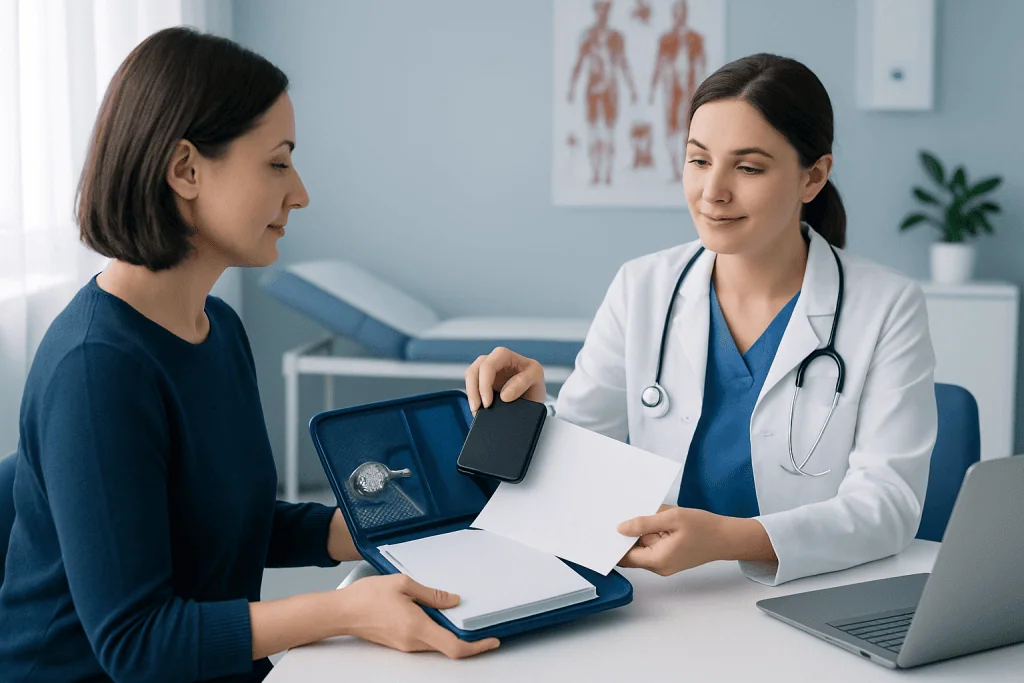
The safest document is one you can replace quickly. Before departure, scan or photograph your passport identification page, visa, tickets, accommodation booking, hospital letters, imaging reports, prescriptions and insurance information. Store the files in a secure cloud folder, and keep one offline copy on a password-protected device in case internet access is unreliable when you need it most.
The safest place to keep documents is, honestly, three places. Originals stay with you. One printed copy of the most important pages travels separately — in a companion’s bag if you have one, or in a different bag of your own if you do not. Digital copies sit in the cloud and offline. This layered approach means no single loss — a stolen bag, a dead phone, a misplaced folder — can take everything at once. If you travel alone, leave a complete set with a trusted person at home who can resend anything on request.
Digital convenience comes with privacy responsibilities. Use strong passwords, switch on device locking, and avoid leaving sensitive medical files open on shared or hotel computers. If a hospital asks for records in advance, send them through the official channel the care team specifies rather than an ad hoc email thread; it keeps your information in one traceable place and reduces the paper you must carry daily. For the filing side of this — naming, ordering and updating records as your treatment progresses — see the guide on keeping your medical records organised during treatment in Turkey.
Protecting valuables during flights, transfers and hospital visits
The busiest moments are the riskiest ones. Airport security, immigration counters, transfer pick-ups, taxi stops and hospital registration desks all demand that you produce items, put them down, and move on — often while tired, in pain, or distracted by what comes next. Most losses happen here, not through theft but through the ordinary act of setting something down and walking away.
The defence is boring and effective: one consistent home for each frequently used item, and the discipline to return it there immediately after every check. Passport back in the pouch before you step away from the counter. Phone back in the same pocket. Nothing carried loose in your hand while you manage a trolley or a suitcase.
To keep your valuables safe while travelling, wear them close to your body where practical and keep them invisible. Avoid displaying cash, jewellery or multiple cards. Carry one primary payment card, store a backup card in a separate bag or with your companion, and hold only the cash you genuinely need for the next day or two. Splitting things up means one loss stays an inconvenience instead of becoming a crisis.
On hospital days, carry less, not more. Bring the day’s papers, your ID, your phone, one payment method and any medications you need on schedule. During imaging, consultations or day procedures you may be asked to change clothes or leave belongings in a waiting area, and the less you brought, the simpler that moment is. If a companion is with you, they can hold your day bag during those stretches. Most hospitals can tell you in advance what a given appointment requires you to bring — find out when the appointment is confirmed, and leave the rest locked away.
Safe storage at your hotel, apartment or hospital room
Once you arrive, the work to keep valuables and medical documents safe during treatment travel shifts to your room: choose one storage routine and repeat it without exception. If your room has a safe, use it for your passport on days it is not needed, spare cards, backup cash and original documents that can stay behind. If there is no safe, a lockable suitcase kept out of obvious view is the fallback — while the genuinely critical items still travel with you.
Hospital rooms deserve the same thinking. Wards are busy places with cleaners, clinical staff and visitors moving through, and you may be taken to other departments at short notice. Keep only what you need at the bedside, ask on admission whether lockable storage is available, and let a companion hold anything valuable during procedures if you have one. An open bedside table is not secure storage anywhere in the world.
Build an evening ritual: documents back to the folder, cards to the wallet, chargers to the same pocket, medications to the same accessible place. It sounds trivial. It is the habit that prevents the most common loss of all — the item left behind in a drawer during an early check-out or an unplanned move between hotel, hospital and recovery accommodation. Before every departure, run a one-minute inventory: passports, phones, chargers, medications, cards, folders. Count them out loud if you are travelling as a pair and have split items between bags.
Medications, prescriptions and treatment paperwork
Treat your medical documents as daily essentials, not general travel papers. Your medication list, allergies, current diagnoses, previous procedures and recent test results should be reachable in under a minute. When a clinician asks an unexpected question, a short organised summary answers it faster than scrolling through months of emails and photos.
Carry medications in their original packaging with the prescription or a doctor’s letter where relevant, and keep enough in your hand luggage to cover realistic delays — a diverted flight or a lost suitcase should never separate you from doses you depend on. Never pack all of a medication in one bag. The practical detail, including what belongs in original packaging and how to split supplies sensibly, is covered in how to store and carry your medicines safely during treatment travel, and the timing side — doses across time zones and long travel days — in keeping your regular medicines on schedule.
Expect your paperwork to grow during your stay. Appointment schedules, consent forms, test requests, imaging discs and discharge instructions arrive over several days, and your folder needs room for them. Ask whether digital copies of new documents can be shared with you as well, and file them in the same phone folder as your pre-travel scans so everything lives in one place. If you work with an interpreter, confirm at each stage which papers you must keep with you and which can stay in your room — discharge instructions in particular should never be in the bag you cannot find.
If something is lost, stolen or misplaced
Even careful travellers lose things. When it happens, act early rather than at the end of the day. Retrace your last three locations first — vehicle or airport, hotel reception or room, clinic or hospital desk — and telephone each one immediately. Items are far easier to identify while your route is fresh and staff still remember you.
For missing bank cards, freeze or block them through your banking app straight away; most apps let you unfreeze later if the card turns up. For a lost or stolen passport, report it and contact your embassy or consulate to begin replacement — the guide on when to contact your embassy during medical travel in Turkey explains what consular staff can and cannot do. For lost phones, use your device’s remote locate, lock or wipe function, then change passwords for important accounts from another device.
Missing medical paperwork is usually the most recoverable loss. Hospitals hold their own records, so appointment confirmations, test results and discharge documents can generally be reissued digitally or reprinted. This is one more reason to keep a single contact sheet — embassy, insurer, airline, accommodation front desk and hospital support line — saved in your phone and printed in your folder. When something goes wrong, you should be dialling, not searching.
Step by step
- Make one master list before packing. Write down every essential you cannot afford to lose: passport, cards, phone, chargers, medical records, prescriptions, medications. Reuse the same list when you leave home, change hotels, attend appointments and check out.
- Separate originals, copies and backups. Originals on you, printed copies in a separate bag, digital copies in a secure cloud folder plus one offline device. No single loss should be able to stop your treatment or your journey home.
- Use one dedicated document pouch. A small zippered wallet that always travels in your personal item, with papers in the order you will need them. Return every document to it immediately after each check-in, registration or payment.
- Carry only what the day requires. Before each hospital visit, strip your bag down to the day’s papers, ID, one payment method, phone and scheduled medications. Everything else stays locked away.
- Build a room routine. Same folder, same wallet, same pocket, same shelf — every evening, without exception. Repetition is what protects you on the days you are exhausted or distracted.
- Prepare for checkpoints and transfers. Before security, taxi drop-offs or registration desks, know exactly where your passport, phone and appointment papers sit. Put them away before you walk off, never carrying them loose.
- Plan for a loss before it happens. Save embassy, insurer, airline, accommodation and hospital contacts in your phone and on paper. Acting fast is easy when you already know who to call and which copies you hold.
Your checklist
- Passport and visa in hand luggage, never checked baggage
- Printed copies of key travel and medical documents packed separately from originals
- Secure digital copies saved to the cloud and accessible offline
- Medications in original packaging with prescription details, split across bags
- Primary and backup payment methods stored in different places
- Emergency contacts, hospital details and accommodation address printed out
- Only essential valuables carried to each appointment
- Room safe or lockable luggage identified on arrival
- Companion briefed on where backups and reserves are kept, if travelling together
- One-minute inventory run before every departure or check-out
Key takeaways
- Passports, core medical documents, medications and phones travel on you or in your personal bag — never in checked luggage.
- Use a three-layer system: originals with you, printed copies stored separately, digital copies secured online and offline.
- The riskiest moments are transitions — screening, transfers, check-in, registration — and a fixed put-it-back routine is the best defence.
- Bring only what each appointment requires and lock the rest away; the fewer valuables you carry, the less there is to lose.
- Most medical paperwork can be reissued by the hospital, which makes documents the most recoverable loss — provided you ask early.
Frequently asked questions
How do you keep your documents safe while travelling?
Carry originals in one zippered pouch inside your personal item, keep a printed copy of the key pages in a separate bag, and hold digital copies in a secure cloud folder plus one offline device. Return documents to the pouch immediately after every checkpoint, and lock away anything not needed that day.
What is the best way to carry documents while travelling?
A small zippered travel wallet or document organiser that stays in the bag under your direct control at all times. Arrange papers in the order you will need them — travel first, then hospital correspondence, then medical results — so you can produce any document in seconds without unpacking.
Where is the safest place to keep documents?
No single place is safest; spreading risk is. Originals stay on your person, one printed copy travels in a separate bag or with your companion, and digital copies sit in the cloud and on a locked device. At your accommodation, use the room safe or a lockable suitcase for anything not needed that day.
How do you keep your valuables safe while travelling?
Bring fewer of them. Leave jewellery, spare electronics and large amounts of cash at home, wear what you do carry close to your body, and split cash and cards across more than one place. On appointment days, take only the essentials and lock the rest in your room safe or luggage.
Should you carry your passport to every hospital appointment?
Not always. Carry it when it is needed for identification, registration or payment; otherwise it is often safer in the room safe, with a copy in your day bag. Requirements vary, so check before each visit rather than defaulting to carrying it everywhere.
Is it better to keep medical records on paper or on your phone?
Both. Digital files are easy to resend and search; paper works when your battery dies, data is unavailable, or staff need to glance at something quickly. Keep the core summary short and current in each format, and file new documents from your stay in the same places.
What should you do if your phone is lost and it contains your documents?
Use your device’s remote locate, lock or wipe function as soon as possible, then reach your backup copies from another device or through a trusted person at home. Change passwords for important accounts afterwards. This scenario is exactly why a printed backup and a cloud copy exist.
Can a hospital help if treatment paperwork goes missing?
Usually, yes. Hospitals hold their own records, so appointment confirmations, test results and discharge documents can generally be reissued digitally or reprinted. Report the loss early — paperwork is normally the most recoverable thing you can misplace during treatment travel.
Add us as a Preferred Source to see more of our trusted health content across Google Search, AI Overviews and Discover.

Update history
- PublishedAugust 21, 2026
- Medical review approvedSeptember 2, 2026
- Last content updateSeptember 2, 2026
References2
- Foreign travel checklist — GOV.UK — gov.uk
- Pack Smart — CDC Travelers' Health — wwwnc.cdc.gov
More Patient Guides
GHIC and EHIC in Turkey: Why They Do Not Cover You
The blue card that quietly covers you across Europe stops working at the Turkish border — and every summer, travelers discover this…

Do You Need Vaccinations for Turkey?
Here is the answer travel clinics give every day: no vaccinations are required to enter Turkey from anywhere in the normal course…

Flying With a Broken Leg or Cast: Airline Rules and Comfort
A broken leg does not cancel a flight — airlines carry passengers in casts every single day. What surprises travelers is that…

Travel Insurance After Cancer: What Patients Should Know
A cancer diagnosis changes how insurers read your name — but it does not end your traveling life. Thousands of people with…