

Keeping Valuables and Documents Safe During Treatment in Turkey

Carry only what each day requires: passport or an accepted copy, one payment method, your phone and key medical papers. Store everything else in the hotel safe, split cash and cards across two places, and keep paper and digital copies of every important document. If something goes missing, report it promptly to the hotel, hospital desk, your bank or your embassy.
Where will your passport be on the morning of admission? It is a small question, but it can occupy your mind at exactly the moment you want to be thinking about your treatment.
When you travel for medical care, your passport, payment cards, phone and medical records are part of the journey, not an afterthought. This guide sets out a practical system for keeping valuables and documents safe during treatment in Turkey: what stays with you, what stays locked away, how to prepare copies before you fly, and what to do if something goes missing. None of it is complicated. All of it works better if you decide it before you leave home.
At a glance
- Main priority: keep your passport, payment access, phone and key medical papers protected but reachable
- Best preparation: make paper and digital copies of every important document before you travel, stored separately from the originals
- Daily rule: carry only what that day’s appointment actually requires; store the rest securely
- Money: split cash and cards between two places; never keep everything in one wallet
- If something is lost: report it promptly to the hotel, hospital desk, your bank or your embassy, in that order of relevance
Why keeping valuables and documents safe during treatment in Turkey needs a plan
A medical trip involves more paperwork and more movement than an ordinary holiday. Over one or two weeks you may pass through the airport, a hotel, hospital registration, imaging departments, pharmacies, taxis and follow-up appointments. Each of those transitions is a moment when a bag can be set down, a folder left on a counter, or a card handed over in a hurry. You will also do some of this while tired, fasting before a procedure, or recovering after one: the exact conditions in which people misplace things.
The aim is not to carry everything everywhere, and it is not to lock everything away either. It is to know three things clearly: what must stay with you, what can be stored, and who can help if you need a copy, a translation or a replacement. That is the whole system. A patient who has decided these three things before departure rarely has a document problem in Turkey; a patient who improvises day by day often does.
International patient teams at Acibadem help guests navigate registration, interpretation and the administrative sequence of a hospital stay, and they can tell you which papers are typically needed at each stage. Responsibility for your personal belongings and official documents, however, stays with you, which is why keeping valuables and documents safe during treatment in Turkey deserves ten minutes of planning before you pack.
What to keep with you at all times
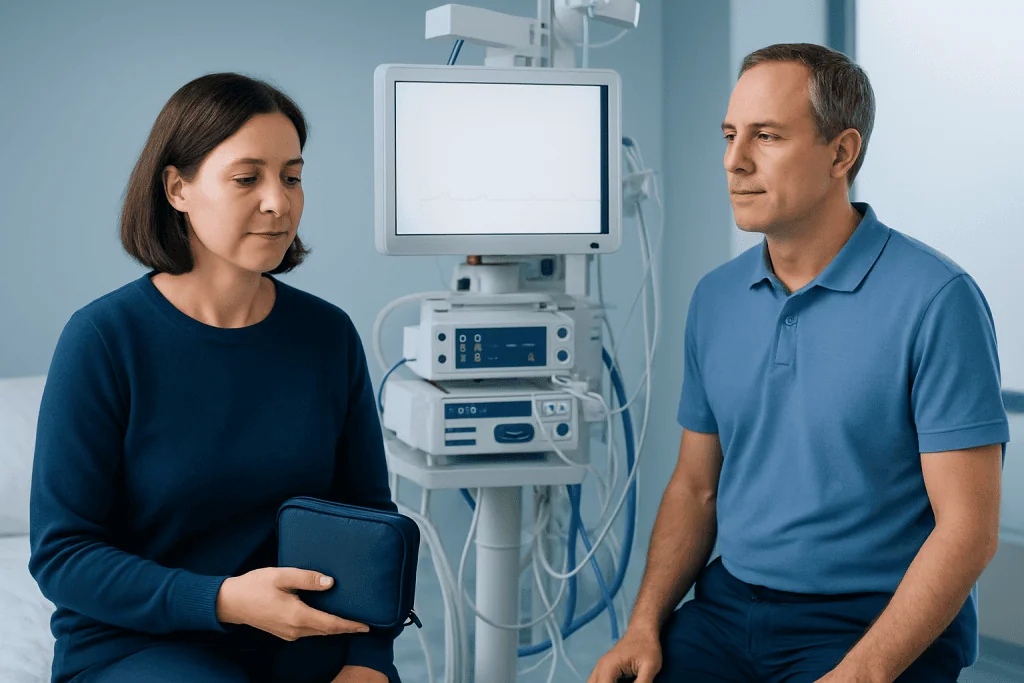
A small set of items should stay close to you because they are hard to replace quickly or may be needed without warning:
- Passport, plus visa or entry documentation if applicable
- Phone, with a charger or power bank: a dead battery is a genuine practical problem when you need to reach your companion, coordinator or hotel
- One payment card and a modest amount of Turkish lira in small denominations
- Essential medicines in their original packaging, with your medication list and allergy information, see how to store and carry your medicines safely during treatment travel
- Emergency contacts on paper as well as in your phone: your hotel address, hospital contact, companion’s number and someone at home
Keep these in a zipped inner pocket, a cross-body bag worn in front of you, or a small pouch, not an open handbag or a loose coat pocket. On appointment days, add the papers that day requires: appointment confirmation, referral letters, recent test results. Nothing more.
One habit matters more than any gadget: separation. Keep one payment method on you and a second stored elsewhere. Do not put all cash, all cards and your passport in the same wallet if you can avoid it. If one bag is misplaced, separation turns a crisis into an inconvenience.
What to store securely at your hotel or accommodation

Anything you do not need for the day belongs in secure storage at your accommodation: spare cash, backup cards, jewellery, non-essential electronics, printed copies of records, and travel documents not required for that appointment. If your room has a safe, use it exactly as the hotel instructs and choose a code that is not your birth year or room number. If there is no safe, ask reception about secure storage before you assume the wardrobe will do.
Two small disciplines help here. First, never leave valuables visible on tables, beds or near windows, out of sight is the baseline, not the exception. Second, keep documents in a dedicated folder or envelope so they cannot be mixed with receipts, clothing or hospital paperwork that might be thrown away by mistake. Discharge papers and invoices look remarkably like scrap paper at the end of a long day.
Before leaving for the hospital, run a fixed three-item check: passport or accepted ID, phone, payment access. Ten seconds, every time. If a companion is travelling with you, agree in advance who carries what. Clear roles prevent the classic admission-day exchange in which each person assumed the other had the folder.
Protecting your passport, visa and official papers
Your passport is the single most important document you hold in Turkey. Protect the original from water, bending and unnecessary handling; a passport cover or waterproof pouch earns its place if your day bag also carries drinks, medicine bottles or toiletries.
Before you travel, make at least two paper copies of the photo page, your visa or entry record where available, your insurance documents and your flight details. Keep one set separate from the originals in a different bag, and leave another set with someone you trust at home. Save digital copies in secure cloud storage or an encrypted folder that you can open from a borrowed device: a backup you can only reach through your own phone is no backup at all if the phone is what you lose.
Do not hand your passport to anyone without a clear administrative reason. Legitimate reasons exist: hotel check-in registration, hospital registration and official procedures. If a request seems unclear, it is reasonable to ask why the document is needed and when it will be returned; an interpreter or patient coordinator can help you understand the answer. A copy is sufficient more often than people assume, so it is always worth asking whether the original is truly required that day.
Managing money, cards and payment documents
Bring more than one payment method if you can, for example a debit card, a credit card and a modest cash reserve. Tell your bank you will be in Turkey before you fly, so legitimate transactions are less likely to be blocked at an inconvenient moment. Make sure you can freeze a card quickly, either through your banking app or an emergency phone line saved offline.
Do not carry large amounts of cash around the hospital or the city. Small denominations cover taxis, pharmacies and meals more practically than large notes. Keep every receipt for medical payments, pharmacy purchases, transport and accommodation: your insurer, employer or home doctor may ask for them long after you have flown home, and reconstructing them later is difficult.
Payments made before you travel deserve the same care as cash in your pocket. If you are transferring money in advance, read how to send a deposit for treatment in Turkey safely before you send anything. Once in Turkey, keep cost estimates, invoices and payment confirmations in one dedicated folder rather than scattered through your luggage. You should hold your own copy of every payment-related document, regardless of what the hospital keeps on file.
Keeping medical records organised and private
Your medical documents are valuable for a different reason: they help clinical teams understand your history and make informed decisions. Bring the key records in a tidy folder, diagnosis summaries, imaging reports, laboratory results, operation notes where relevant, medication lists and allergy details. If documents are in a language other than English or Turkish, ask in advance whether translations are recommended; the guide to documents international patients should bring for hospital admission in Turkey covers what is usually needed and in what form.
A simple folder structure works better than a thick, unsorted stack: identification, insurance and payment documents, medical reports, prescriptions, travel papers, receipts. Label the sections. You will be looking for the right paper while tired or nervous, and labels do the thinking for you.
Privacy deserves the same attention as loss. Avoid spreading medical records across hotel lobbies or public waiting areas, and do not send them through unsecured messaging groups. If you need to transmit files, use the method your patient coordinator or healthcare provider recommends. The same caution applies to speech: if you rely on a phone for communication, using translation apps safely during medical visits in Turkey explains how to do so without exposing personal health information.
At discharge, new documents join the folder, reports, prescriptions and travel notes you will need at home. Acibadem explains what discharge documents you receive before you travel home; keep them flat, together and separate from receipts, because your home doctor will want the originals intact.
Hospital days: belongings during admission and procedures
Admission and procedure days are the moments when belongings most often change hands. You may be asked to change into hospital clothing, move between departments, or spend hours in areas where you cannot supervise a bag. Plan for this rather than reacting to it.
- Bring less on procedure days. Leave jewellery, spare cards and non-essential electronics at your accommodation. Most hospitals advise removing jewellery before procedures in any case.
- Agree a handover with your companion. A small labelled pouch containing your phone, wallet and glasses, passed to a companion before a procedure, is simpler than tracking loose items. Decide this in advance, not at the ward door.
- Ask about storage if you are alone. If you are travelling without a companion, ask staff at admission how personal items are handled during your procedure and follow their guidance. Solo travellers will find broader planning advice in how to plan a safe solo patient journey.
- Keep documents out of busy areas. If you are unsure which paper registration needs, ask your coordinator or interpreter rather than unpacking your whole folder at a crowded desk.
Is Turkey safe for medical travel? What official guidance actually says
Patients researching keeping valuables and documents safe during treatment in Turkey usually also ask a broader question: is the trip itself safe? The honest answer is that no single article can decide this for you, and you should not rely on one, including this one. The right sources are your own government’s travel advisories, which are updated continuously and distinguish between regions of the country.
The UK Foreign Office and the US State Department both publish standing travel advice for Turkey covering security, entry requirements, local laws and health. Read the current version shortly before you travel, not months in advance, and note that advice often differs sharply between major cities and specific border regions. US citizens asking whether to avoid Turkey as a tourist should read the State Department’s country page and make the judgement against their own itinerary; blanket answers in either direction are not honest ones.
On petty crime, the practical picture is the same as in any large international city: pickpocketing and bag theft concentrate in crowded tourist areas and on public transport, and the habits described in this guide, front-worn bags, separated cards, nothing valuable on display, are the standard countermeasures. Hospitals themselves are comparatively controlled environments, but waiting areas, lobbies and taxis between appointments deserve the same routine care as anywhere else.
If you become unwell in Turkey outside your planned treatment, the practical framework is your travel insurance policy: know what it covers, carry its emergency number offline, and keep receipts for anything you pay. Pharmacies (eczane) are widespread in Turkish cities and hospitals operate emergency departments; the standing clinical notice at the top of this page applies to any urgent situation.
What to do if something is lost or stolen
If an item goes missing, act quickly but methodically. Retrace your steps: hotel room, taxi, hospital waiting area, restroom, restaurant table. Tell the hospital desk or your international patient contact if the loss may have happened during a visit, items handed in at hospitals usually reach a specific desk, and staff know which one.
For a lost bank card: freeze or cancel it immediately through your banking app or the emergency line you saved offline, then switch to your backup payment method. This is the moment the separation habit pays for itself.
For a lost or stolen passport: contact your embassy or consulate in Turkey and ask what is required for an emergency travel document. Expect to need a police report in some circumstances, plus your passport copy, photographs and proof of travel plans. Insurance claims for stolen items almost always require a police report as well, so obtain one even when it feels like a formality.
For a lost phone: use the device-tracking service you enabled before travel to locate, lock or wipe it, then change the passwords for banking and email from another device.
Every one of these steps is faster if you prepared copies. Your passport copy, digital flight details, hotel address and emergency contact list are exactly what the embassy, police, airline and hospital will ask for. If you are a patient at Acibadem, your coordinator can offer practical direction and interpreter support while you deal with the bank, embassy or local authorities.
Step by step
- Build a document pack before you travel. Passport copy, visa or entry information, insurance details, appointment confirmations and medical summaries in one folder, with originals and copies packed separately, so one lost bag cannot take everything.
- Save digital backups you can reach from any device. Scan or photograph key documents into a password-protected cloud folder or secure email account, and test that you can open them without your own phone.
- Prepare your phone. Set a passcode, enable device tracking, save your bank’s emergency number and your hotel and hospital contacts offline.
- Decide each morning what the day requires. Passport or copy? Full wallet or one card? Original reports or the folder’s relevant section? Carry only that.
- Use a consistent storage routine. Same items, same pockets, same bag sections every day, so a missing item announces itself immediately.
- Separate money and cards. One payment method on you, a backup in the hotel safe or with a trusted companion. Never everything in one wallet.
- Plan handovers for procedure days. Agree in advance who holds your pouch of essentials while you are in theatre or recovery, or ask staff how belongings are stored if you are alone.
- Report losses immediately. Hotel, hospital desk, bank or transport provider first; for official documents, your embassy or consulate. Obtain a police report where insurance or replacement procedures require one.
Your checklist
- Passport and visa or entry documentation
- Printed passport copy stored separately from the original
- Secure digital copies of travel and medical documents, reachable from any device
- Emergency contact list in your phone and on paper
- Medication list, allergy information and recent medical reports in a labelled folder
- Two payment methods kept in separate places
- Small amount of Turkish lira in small denominations
- Phone charger, adapter and power bank
- Dedicated folder for invoices, receipts and discharge papers
- Hotel and hospital contact details saved offline
- Small labelled pouch for handovers on procedure days
Key takeaways
- Carry only what each day genuinely requires; store everything else securely at your accommodation.
- Keep passport, payment access, phone and essential medicines close, zipped and in front of you.
- Separate originals from copies and cash from cards, so one loss never becomes a total loss.
- Organise medical records in a labelled folder and protect your privacy when sharing them.
- Read your government’s current travel advice for Turkey before you fly, not months before.
- If something is lost, act promptly: hotel, hospital desk, bank or embassy, and your prepared copies will carry you through.
Frequently asked questions
How do I keep my documents safe while travelling for treatment?
Use a three-layer system: originals carried only when needed, in a zipped inner pocket or cross-body bag; paper copies packed separately from the originals; and digital copies in secure cloud storage you can open from any device. Store whatever the day does not require in your hotel safe, and keep a labelled folder so documents never mix with disposable paperwork.
Is it safe to go to Turkey for medical procedures?
Safety has two parts: the trip and the treatment. For the trip, read your government’s current travel advisory for Turkey, which is updated continuously and distinguishes between regions. For the treatment, safety depends on the specific procedure, your health, and the hospital’s processes, questions your treating team should answer for your individual case before you commit to travel.
Should US citizens avoid Turkey as a tourist?
The US State Department publishes standing travel advice for Turkey, including region-specific guidance. Read the current version at travel.state.gov shortly before departure and weigh it against your own itinerary, advice for major cities often differs from advice for specific border regions. That advisory, not a hospital website, is the right basis for the decision.
What should I do if I get sick in Turkey?
Know your travel insurance policy before you fly: what it covers, its emergency assistance number saved offline, and what documentation it requires. Turkish cities have widespread pharmacies and hospitals with emergency departments. Keep receipts for anything you pay, as insurers ask for them. The standing clinical notice above this page applies to any urgent situation.
Should I carry my passport with me in Turkey during treatment?
You may need the original for hospital registration, hotel check-in, banking and official identification. On other days, ask whether a copy is sufficient and keep the original in your hotel safe. Always keep at least one passport copy stored separately from the original, plus a digital copy you can reach from another device.
Is it sensible to bring jewellery or expensive items on a treatment trip?
Bring as few high-value items as possible. Jewellery, luxury watches and spare electronics are rarely needed for medical appointments, are usually removed before procedures anyway, and add worry you do not need while recovering. If you must bring them, keep them in secure storage and avoid wearing them in crowded areas.
Should my companion hold my documents after a procedure?
If you trust your companion, it is practical for them to hold your phone, wallet and documents while you are in theatre, recovery or moving between hospital areas. Agree the arrangement in advance and use a small labelled pouch so both of you know exactly what it contains and where it is.
What should I do if I lose my passport in Turkey?
Contact your embassy or consulate as soon as possible and ask what is needed for an emergency travel document, typically a police report in some circumstances, a passport copy, photographs and proof of travel plans. Inform your hotel, airline and hospital coordinator so appointments and departure arrangements can be adjusted while the replacement is processed.
Add us as a Preferred Source to see more of our trusted health content across Google Search, AI Overviews and Discover.

Update history
- PublishedJune 22, 2026
- Medical review approvedSeptember 13, 2026
- Last content updateSeptember 12, 2026
References2
- Foreign travel advice: Turkey – GOV.UK gov.uk
- Türkiye (Turkey) – Traveler View – CDC wwwnc.cdc.gov
More Patient Guides

When a Hospital Stay in Turkey Becomes Longer Than Planned: What to Arrange
If your hospital stay in Turkey is longer than planned, arrange medical updates, accommodation, travel changes, insurance and support for your companion.
Waiting for Test Results in Turkey: How to Use Time Between Appointments
Waiting for test results in Turkey is easier with a clear plan for appointments, rest, records, questions and support in Istanbul.

Unexpected ICU Stay in Turkey: What Patients and Families Should Expect
Unexpected ICU stay in Turkey: learn what patients and families can expect, from communication and visiting to care updates and travel support.

How to Manage Special Diets During Medical Travel in Turkey
Special diets during medical travel in Turkey are easier to manage when you share your needs early, confirm meals and carry safe…