

How to Verify Your Acibadem Appointment and Official Messages

Check that the message states your full name, the exact Acibadem hospital or campus, the department, the date and time, and a clear purpose. Compare it with your earlier correspondence, then confirm through a contact route you already trust — such as the details published on the official Acibadem International website — before you pay anything, send documents, or book travel.
A message about your appointment has arrived. Flights, hotel nights, a visa timeline and time off work may all hinge on it. Before you act on any of that, it is worth taking a few minutes to confirm the message is genuine and the details are current. This guide explains how to verify your appointment and official messages, what a real confirmation looks like, and when to slow down.
None of this is complicated. It is a short habit — read carefully, compare with what you already know, confirm through a channel you trust — that removes most of the confusion international patients run into before travelling.
At a glance
- Best for: International patients checking appointment confirmations, schedule changes and messages before travelling
- What to verify: Your name, the exact hospital or campus, the department or team, the date and time, and the purpose of the message
- Main safety habit: Pause before paying or sending documents if a message is unexpected, urgent or inconsistent with earlier communication
- How to confirm: Reply through your existing thread or use contact details from the official Acibadem International website — not only the details inside the new message
- When to double-check: Before booking travel, before any payment, and whenever a detail changes without explanation
Why it pays to verify your appointment and official messages
An appointment abroad is rarely a single event. It sits at the centre of a chain of decisions: when you fly, where you stay, whether a companion travels with you, how long you are away from work. If the appointment detail at the centre is wrong — or the message carrying it is not genuine — every link in that chain wobbles. Verifying first protects the whole plan, not just one date in a calendar.
There is also a plainer reason. Medical travellers are a known target for impersonation. People planning treatment abroad exchange passports, medical reports and payments with a hospital they have often never visited, which is exactly the situation opportunists look for. Taking a moment to verify your appointment and official messages is the single most effective protection you have, and it costs nothing. If you want a broader picture of how impersonation attempts work, read how to recognise official hospital messages and avoid medical travel scams in Turkey.
One honest caveat: an unclear message is not automatically a fraudulent one. International coordination involves people writing in a second language, schedules that shift for clinical reasons, and details that are confirmed in stages. The point of verification is not suspicion for its own sake. It is knowing the difference between a message that is merely imperfect and one that is asking you to do something you should not do yet.
What an official appointment message should clearly include
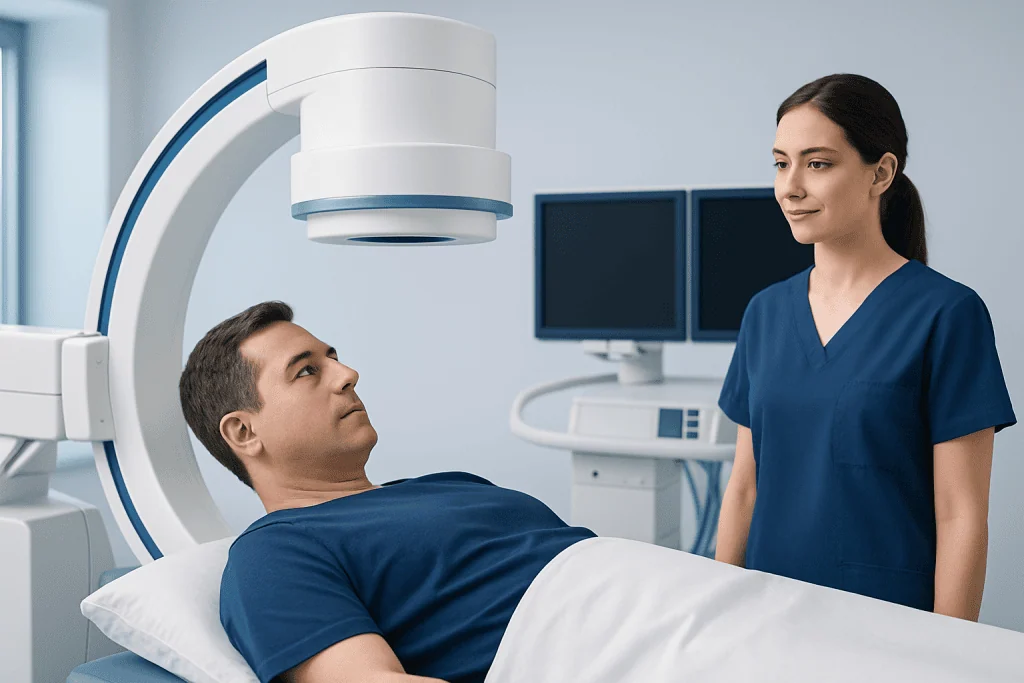
A genuine confirmation is specific. It should carry your full name as given for registration, the Acibadem hospital or facility by name, the department or specialty involved, and a date and time you can act on. If your care plan is still being finalised, an honest message says so — it tells you what is confirmed now and what is still pending, rather than papering over the gap.
You should also be able to tell who is writing and why. A message from an international patient coordinator or patient services team will normally state its purpose: booking a consultation, reviewing documents you sent, planning your arrival, or updating a schedule. Genuine messages tend to give you next steps rather than pressure — bring your passport and prior reports, arrive earlier for registration, or wait for a further update after the specialist team has reviewed your file.
As a working checklist, a solid confirmation contains:
- Your name, spelled as it appears on your travel documents
- The Acibadem hospital or facility name — and for larger cities, the specific campus
- The department or specialty you are seeing
- Date and time, with time-zone clarity if you are corresponding from abroad
- A named contact point for questions
- Any practical instruction: documents to bring, fasting requirements, arrival timing
If several of these are missing, the message is not necessarily fake — but it is incomplete, and incomplete details are exactly what you should confirm before building travel plans on top of them. The same logic applies before departure more broadly; see how to confirm official hospital messages before travelling to Turkey.
Signs you should pause and double-check

Certain patterns deserve extra scrutiny before you reply, transfer money or send identity documents. The strongest warning sign is manufactured urgency: a demand to pay immediately “or lose your slot”, or to act within hours. Legitimate hospital administration does not usually work that way, and a genuine deadline can always be confirmed through a second channel.
Be equally careful with sudden changes of route. A new phone number, a different email domain, an unfamiliar payment method, or — most seriously — a request to pay into a personal bank account should all stop you in your tracks until you have confirmed them independently. The same goes for a hospital name, doctor, department or date that quietly differs from what you discussed earlier. Real schedule changes happen in any busy hospital, but they come with context and are easy to confirm.
Watch for these specifics:
- Spelling errors in your name or in major appointment details
- Pressure to pay immediately to hold your appointment
- Requests to send passport copies or medical records to a contact you have never dealt with
- Inconsistent logos, signatures or hospital names within the same message
- Communication arriving only through a new, unverified channel with no continuity from earlier threads
None of these signs proves fraud on its own. Together, or combined with pressure to act fast, they are your cue to verify before doing anything else. If you also want to check the institution itself rather than just the message, how to verify hospital accreditation in Turkey covers that separately.
How to verify your appointment through a channel you trust
The core principle is simple: verify through a route you already trust, not the route the new message hands you. A fraudulent message will always supply its own “confirmation” contact, so calling the number inside a suspicious email proves nothing. Instead, reply within your established email thread with your coordinator, or use the contact details published on the official Acibadem International website. A description of the channels the hospital group itself treats as official is set out in how Acibadem helps you verify its hospitals, doctors and official channels.
When you verify your appointment and official messages, ask for everything in one place: the hospital, the campus or building, the consultant or specialist team, the date and time, whether any tests are booked the same day, and whether you need to prepare in any particular way. If you are travelling to Istanbul or another Turkish city, the exact campus address matters — it is what your driver, your companion and your hotel will work from.
Then keep a record on your side. Save the latest confirmed message, note the date you verified it, and screenshot any subsequent changes. When different messages arrive weeks apart — as they often do in international care — a single dated reference point resolves most confusion instantly.
How to confirm an appointment politely — and what to write
Many patients search for the right wording, so here it is plainly. A good confirmation message does three things: it states who you are, restates the details as you understand them, and asks one direct question. There is no need for elaborate phrasing. Something like this works by email:
- “Dear team, I am writing to confirm my appointment at [hospital name] on [date] at [time] with the [department]. Please confirm these details are correct and let me know if there is anything I should bring or prepare. Kind regards, [your full name, date of birth].”
By text or messaging app, shorter is better, but the same structure holds: your name, the date and time as you understand them, and a request for written confirmation. For example: “Hello, this is [name]. Confirming my appointment on [date] at [time] at [hospital]. Please reply to confirm.” Restating the details in your own message is deliberate — if anything in the hospital’s records differs, your restatement forces the discrepancy into the open early, when it is cheap to fix.
Politeness, in practice, is clarity. A courteous confirmation acknowledges the message you received, repeats the essentials, and avoids burying the one question you need answered in a long paragraph. If you have several questions — arrival time, documents, interpreter arrangements, same-day tests — number them. Coordinators handling patients across many time zones answer numbered questions faster and more completely than open-ended ones.
Whatever you write, always ask for the final confirmation in writing. A phone call is useful for speed, but a written record is what you, your companion and your travel plans can actually rely on.
Payments, documents and travel plans: what to confirm before you act
Before any payment, make sure you understand exactly what it covers and who requested it. International treatment journeys can involve consultations, diagnostics, treatment planning and support services such as transfers or accommodation guidance, so a request that is genuine can still be unclear. If a payment request differs in any way from earlier communication — the amount structure, the account, the person asking — get formal written confirmation through your trusted channel before transferring anything.
Treat personal documents with the same care. Passports, reports, scans and insurance papers are genuinely needed for planning care, but they should travel only through channels you are confident are real. If a new person asks for sensitive files, verifying their role first is not rude; it is exactly what a well-run patient services team expects careful patients to do.
Travel bookings ideally come after appointment verification, not before — especially if your plan depends on a specialist review or several same-day assessments whose order may still shift. Once your dates are confirmed, the outpatient appointment checklist for your stay in Turkey walks through what to have ready on the day itself.
If your appointment changes or you are unsure what happens next
Changes do not always signal a problem. Clinic times move, additional imaging may be recommended after a file review, or a multidisciplinary discussion may reorder your appointments. What matters is that a change arrives with a clear explanation and an updated plan from an official source — and that it stands up to the same verification as the original confirmation did.
If you are uncertain, ask direct questions in simple terms: you want written confirmation of the new time, the hospital location, and whether your preparation or travel instructions have changed. If an interpreter, airport transfer or hotel arrangement was previously discussed, ask whether those still stand under the new schedule.
Keep all communication in one place where you can. A single thread with your coordinator, plus a folder of saved confirmations and screenshots, means that when plans shift across time zones, you always know which version is current — and so does everyone travelling with you.
Step by step
- Read the full message before responding. Check whether it clearly states your name, the Acibadem hospital or campus, the appointment date and time, and the purpose of the contact.
- Compare it with your earlier communication. Set the new message against existing emails, chat history or call notes. Any change to the location, time, payment route or contact person is a reason to verify, not a reason to panic.
- Confirm through a trusted route. Reply in your established thread, or use the contact details published on the official Acibadem International website — never only the details supplied inside the new message.
- Ask for everything in one written reply. Hospital and campus, department, date and time, same-day tests, documents to bring, and interpreter or transfer arrangements. One complete answer saves days of back-and-forth.
- Pause before paying or sending documents. Confirm what is being requested, why it is needed, and that the request comes from an authorised contact — in writing — before you act.
- Save the final confirmed details. Keep one up-to-date written confirmation and screenshots of any changes. A single dated reference keeps you, your companion and your driver aligned.
Your checklist
- My full name matches the appointment record and my passport
- I know exactly which Acibadem hospital or campus I am going to
- The date and time are confirmed in writing, with time-zone clarity
- I know which department or specialist team I am seeing
- Any payment request has been verified through a trusted channel
- I have sent documents only through channels I know are genuine
- I know what to bring for registration and consultation
- I have checked whether I need fasting, prior reports, scans or a medications list
- I have saved the current confirmation and a dated record of when I verified it
Key takeaways
- Always verify your appointment and official messages through a contact route you already trust, not only the one inside the newest message.
- A genuine confirmation names you, the hospital and campus, the department, the date and time, and its own purpose.
- Urgency, new payment routes, unfamiliar contacts and quietly changed details are your cues to pause.
- Confirm appointments in writing before booking flights or hotels, and keep one dated record of the current plan.
- Unclear is not the same as fraudulent — but unclear details should always be resolved before you act on them.
Frequently asked questions
How can I tell whether an Acibadem appointment message is genuine?
Look for specifics: your full name, the hospital and campus, the department, the date and time, and a stated purpose. Then compare the message with your earlier correspondence and confirm it through a channel you already trust, such as your existing coordinator thread or the contact details on the official Acibadem International website. A genuine message survives that check easily.
How can I confirm an appointment?
Reply through your established communication thread, restate the details as you understand them — hospital, department, date, time — and ask for written confirmation that they are correct. Restating the details yourself surfaces any discrepancy early. Avoid relying solely on contact details supplied inside a new or unexpected message.
What is a good message to confirm an appointment?
State who you are, restate the essentials, and ask one direct question. For example: “Dear team, I am writing to confirm my appointment at [hospital] on [date] at [time] with the [department]. Please confirm these details and let me know what I should bring. Kind regards, [full name].” Clear beats elaborate every time.
How do I confirm an appointment by text message?
Keep it short but complete: your name, the date and time as you understand them, and a request for a written reply. For example: “Hello, this is [name]. Confirming my appointment on [date] at [time] at [hospital]. Please reply to confirm.” Save the reply — it becomes your reference if details change later.
How do I politely confirm an appointment?
Politeness here is mostly clarity. Acknowledge the message you received, repeat the key details, and ask your question directly rather than burying it. If you have several questions — documents, arrival time, interpreter support — number them. Coordinators working across time zones answer numbered questions faster and more completely.
Should I book travel before my appointment is verified?
It is usually best to confirm the appointment in writing first, especially if your plan involves a specialist review or several same-day assessments whose order may still shift. Once dates are fixed in writing, flights and hotels can be arranged with far less risk of expensive changes.
What if a payment request comes from a new contact person?
Pause. Verify through your established channel what the payment covers, why it is needed, and whether the person requesting it is authorised — and get that confirmation in writing before transferring anything. Requests to pay into personal bank accounts warrant particular caution.
Is it normal for appointment times to change?
Yes. Clinic schedules shift for practical and clinical reasons, particularly when imaging, consultations and team reviews are being coordinated together. What matters is that a change arrives with a clear explanation and an updated written confirmation from an official source — and that it verifies the same way the original did.
Add us as a Preferred Source to see more of our trusted health content across Google Search, AI Overviews and Discover.

Update history
- PublishedJune 22, 2026
- Medical review approvedAugust 31, 2026
- Last content updateAugust 31, 2026
More Patient Guides

Medical Chaperones in Turkey: When Patients Can Request One
Medical chaperones in Turkey can be requested for sensitive exams or when you want added reassurance during care in Istanbul.
8 min read
Medical Interpreter or Family Member: Who Should Help During Appointments in Turkey?
Medical interpreter or family member in Turkey? Use a trained interpreter for clinical communication and keep family involved for support and notes.
8 min read
How to Plan for Prayer, Modesty, and Cultural Needs During Care in Turkey
Prayer, modesty, and cultural care needs in Turkey can be planned in advance by sharing your preferences with your care team and…
8 min read
ICU After Surgery in Turkey: What Patients and Families Should Expect
ICU after surgery in Turkey involves close monitoring, family updates and a planned step-down to recovery when you are stable.
8 min read