

Medication Rules for Traveling to Turkey

You can usually bring prescription and common over-the-counter medicines into Turkey for personal use. Keep them in original packaging, carry a copy of the prescription and a doctor's letter, and pack essentials in your carry-on. Controlled medicines, strong painkillers, sedatives, stimulants and some psychiatric medicines, need extra checks before travel. Confirm current rules with a Turkish embassy or consulate, and never change a prescribed medicine without your doctor's advice.
If you take daily tablets, insulin pens or regular pain relief, the question is simple: will your medicines get through the airport without a problem, and will you have what you need for the whole trip? With some preparation, the answer for most travellers is yes.
This guide explains the medication rules for traveling to Turkey in practical terms: what you can bring, what needs extra documentation, how to pack for security screening, and what to do once you arrive at the hospital. It is written for patients coming for treatment, but the same rules apply to companions travelling with you.
At a glance
- Personal-use medicines: Generally allowed when properly packed and documented, bring enough for your stay plus a small buffer
- Packing method: Original pharmacy packaging with your name on the label, essentials in your carry-on
- Documents to carry: Prescription copy, doctor’s letter and a full medication list with generic names
- Controlled medicines: Opioids, sedatives, stimulants and some psychiatric medicines need extra checks before travel
- Common OTC items: Ibuprofen and paracetamol for personal use are usually straightforward; codeine combinations are not
- Patient support: Acibadem International can help you organise your medication information and arrange interpreter support, but cannot replace official customs advice
How medication rules for traveling to Turkey actually work
The medication rules for traveling to Turkey sit in two separate systems, and it helps to understand both. The first is the border: Turkish customs and, before that, airport security in your departure country. The second is your care plan: what your medicines mean for anaesthesia, surgery timing, blood tests, blood pressure and blood sugar once you are in hospital. A traveller who prepares only for the border can still run into trouble at the hospital, and vice versa.
At the border, the general principle is this: routine prescription and over-the-counter medicines carried in personal-use quantities, in original packaging, with documentation, are normally not a problem. The medicines that need real preparation are controlled substances, strong painkillers, sedatives, sleeping tablets, anti-anxiety medicines, stimulants used for ADHD and certain psychiatric medicines. These are regulated in most countries, and classifications differ, so a medicine that is routine at home may be treated differently on arrival.
Two honest limits before we go further. Rules change, and no patient guide can promise what a customs officer will accept on a given day. Check current guidance close to your travel date using official sources: your airline, the Turkish embassy or consulate in your country, and your prescribing doctor. Second, if you are coming to Acibadem, your patient services contact can help you prepare a clear medication list and share it with your care team, but they are not a legal or customs authority, and this guide is not either.
What to bring for prescription medicines
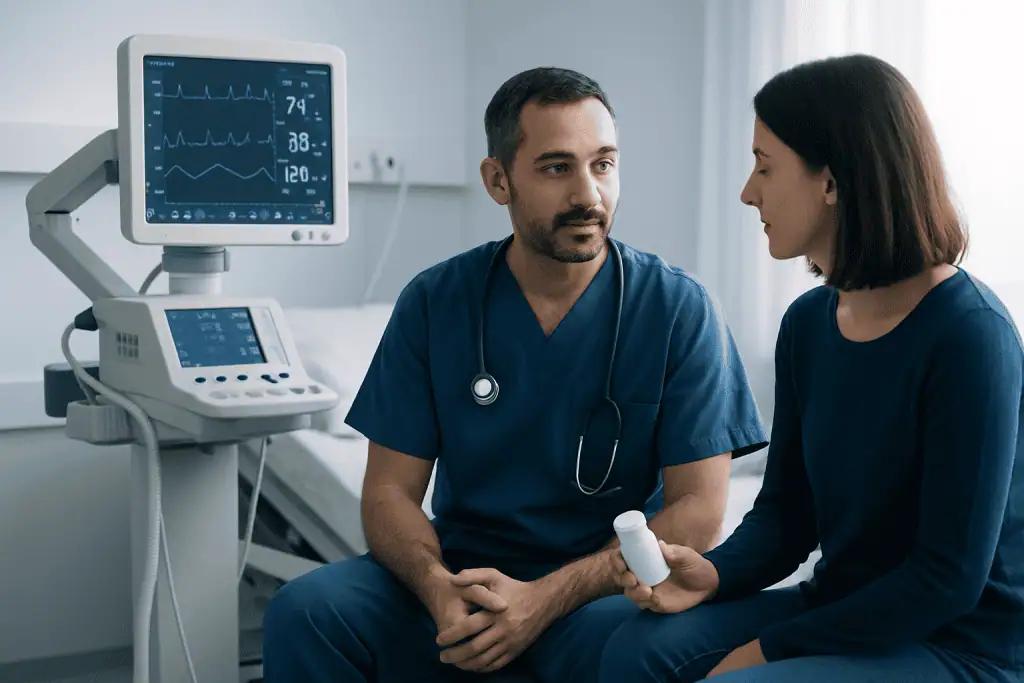
Bring enough medication for your planned stay, plus a modest extra supply to cover flight delays, rescheduled appointments or a longer recovery than expected. The key word is reasonable. A quantity that matches your trip looks like personal use; a suitcase pocket full of boxes does not. If your treatment plan may change after your first consultation, for example, if a procedure date is not yet fixed, ask your prescribing doctor what to do if you need to extend your stay.
Keep medicines in their original pharmacy packaging. The label should show your name, the medicine name, strength, dosing instructions and the prescribing doctor or pharmacy. This single habit solves most problems: it satisfies security staff, helps customs officers, and lets any clinician in Turkey identify exactly what you take. If you prefer a pill organiser, fill it after you arrive, or carry it alongside the original boxes rather than instead of them.
Carry three documents with your medicines:
- A copy of each prescription, showing your name and the generic medicine name.
- A doctor’s letter, ideally listing your diagnosis or reason for treatment, generic names, strengths, doses and frequency, and confirming any need for needles, syringes, pens or refrigeration.
- A complete medication list that includes over-the-counter items and supplements, see how to prepare a medication list for treatment in Turkey for a template approach.
If these documents are not in English or Turkish, bring a simple translation. It does not need to be certified for routine situations; it needs to be legible and accurate. For a deeper walkthrough of packing and paperwork, see travelling to Turkey with prescription medicines: what to pack and declare.
Controlled medicines and higher-risk items

This is the category where preparation matters most. Controlled medicines typically include opioid painkillers, medicines used for ADHD, some sedatives and sleeping tablets, anti-anxiety medicines, certain epilepsy medicines and some psychiatric medicines. Classifications vary between countries, so never assume a medicine that is unrestricted at home is treated the same way when you enter Turkey.
If you take anything in this group, do the following well before departure:
- Confirm the medicine’s status in Turkey through a Turkish embassy or consulate, or other official guidance for your country of departure.
- Get a formal letter from your prescribing doctor naming the medicine by its generic name, the dose, and the medical reason.
- Carry the smallest reasonable personal-use quantity, in original packaging with your name visible.
- Keep it in your carry-on, together with the documentation, so everything can be shown at once if asked.
What is not allowed is easier to state. Recreational drugs are illegal in Turkey and penalties are serious. Cannabis and many cannabis-derived products, including some CBD oils sold openly in other countries, can fall foul of Turkish drug law, do not pack them without confirming their legal status through official channels. Beyond that, avoid anything that cannot be identified: loose tablets in unmarked bags, medicines with missing labels, or products bought online without a clear ingredient list. Unidentifiable medicine is a problem at the border and useless to your medical team.
Never carry medication for another person unless you are legally responsible for their care and carry their documentation too. And if an essential medicine turns out to be restricted, raise it early: your prescribing doctor may be able to discuss alternatives or a documented plan before you fly, which is far better than improvising at the airport.
Can you bring ibuprofen and other over-the-counter medicines?
Yes, in almost all routine cases. Common over-the-counter medicines such as ibuprofen, paracetamol, antihistamines, antacids and travel sickness tablets are generally fine to carry for personal use. Keep them in their original packaging and in sensible quantities, one or two packs, not a bulk supply.
Two cautions. First, some combination products sold over the counter at home contain controlled ingredients, codeine-based painkillers are the classic example, and some cold remedies contain pseudoephedrine. Check the ingredient list, and treat anything containing a controlled substance under the controlled-medicine rules above. Second, if you are travelling for surgery, tell your care team about every over-the-counter medicine you take, including occasional ibuprofen. Anti-inflammatory painkillers and many supplements can affect bleeding and may need to be discussed before a procedure: a decision for your doctors, not for you alone.
Do you need to declare medication at Turkish customs?
For routine personal-use prescription and over-the-counter medicines, travellers are not normally required to make a formal declaration on arrival. In practice, the expectation is that you can demonstrate the medicine is yours and is for personal medical use if asked, which is exactly what original packaging, a prescription copy and a doctor’s letter achieve.
Controlled medicines are different. Depending on the medicine and your departure country, additional documentation or notification requirements may apply, and these can change. This is the one area where you should get an answer from an official source: a Turkish embassy or consulate, or your own government’s travel guidance, rather than relying on a forum post or an old blog. If you are asked questions at the border, answer plainly, show your documents, and keep your medicines accessible rather than buried in checked luggage.
Packing your medicines for the airport and flight
Essential medicines travel in your carry-on, full stop. Checked bags can be delayed, lost or exposed to temperature extremes in the hold. Keep at least several days of any critical medicine with you, anything for diabetes, heart conditions, asthma, epilepsy, blood pressure, blood clotting, transplant care or hormone therapy, and anything that should not be interrupted.
Security screening has its own logic:
- Liquids, gels and creams: medically necessary liquids above standard cabin limits are usually permitted, but keep them separate for screening and carry documentation.
- Needles, syringes and pens: allowed with evidence of medical need: your prescription or doctor’s letter covers this. Carry a sharps solution for used needles if you inject during the flight.
- Ice packs and coolers: permitted for medical use; expect them to be inspected.
- Devices: if you travel with a CPAP machine or similar equipment, see the CPAP checklist for hospital patients.
Temperature-sensitive medicines such as insulin need an insulated travel pouch and the storage instructions from your pharmacist or the manufacturer. Do not press medicine directly against frozen gel packs unless the product is meant to be frozen, freezing damages some medications. On arrival, check that your accommodation has a fridge if you need one, and ask your care coordinator for help if it does not. If you have diabetes and are travelling for surgery, the guide on travelling to Turkey for surgery with diabetes covers timing, fasting and insulin storage in more detail.
Time zones deserve a moment of planning too. For most once-daily medicines a shift of an hour or two matters little, but for insulin, anticoagulants and medicines taken at strict intervals, ask your doctor or pharmacist before you fly how to adjust dose timing across the journey. Write the plan down; do not improvise at 30,000 feet.
Sharing your medication list with your hospital team
Once you arrive for care, your medication list becomes safety information. Bring a complete list to every consultation: prescription medicines, over-the-counter medicines, herbal products, vitamins, supplements, eye drops, inhalers, patches, injections and anything you take only as needed. For each item, note the dose, the timing and the reason you take it, using generic names where you can.
Why the insistence on completeness? Because some medicines may need to be continued, paused or adjusted before a procedure. Blood thinners, diabetes medicines, blood pressure medicines, immune suppressants and steroids are obvious examples, but supplements matter too, fish oil, ginkgo, garlic and St. John’s wort are all worth mentioning. The rule is absolute in both directions: do not stop a prescribed medicine on your own, and do not assume something is too minor to mention. Those decisions belong to your treating doctors, who can only make them with full information.
Acibadem International’s patient services team can arrange interpreter support for appointments, so you can explain your usual routine and ask questions in your preferred language. If possible, send your medication list before you travel so the team can flag questions early: it pairs naturally with sending your medical records, covered in travelling to Turkey with medical records: what to bring. If your treatment involves fasting before anaesthesia, medication timing on the day is handled separately, see fasting before surgery in Turkey.
Buying or replacing medicine in Turkey
If you run out, lose a package or need a replacement, speak with a doctor or pharmacist before buying a substitute. Brand names differ between countries, and occasionally the same brand name covers a different formulation. The generic name, strength and dosage form are the reliable way to match a medicine, another reason your list should include generic names from the start.
Turkey has a dense network of licensed pharmacies, known as eczane, and many common medicines are available through them. However, availability, prescription requirements and equivalent formulations vary. Some medicines used in your home country may not be sold in Turkey at all, or may exist under a different name or strength. A pharmacist can check the active ingredient, but for prescription medicines you may need a local prescription from a doctor in Turkey.
If you are under Acibadem’s care during your visit, ask your care team before replacing or changing any regular medicine. They can review your treatment plan, identify the active ingredient and advise whether a local prescription or a clinical review is needed. This matters most if you are preparing for surgery, chemotherapy, cardiac care, fertility treatment or anything involving anaesthesia: a substitution that looks trivial can change how a procedure is planned.
Step by step
- Make a complete medication list. Write down every medicine and supplement, with dose, strength, timing and reason. Include generic names as well as brand names, generic names are what doctors and pharmacists in Turkey will recognise.
- Ask your prescribing doctor for travel documents. Request a prescription copy and a doctor’s letter confirming the medicines are for personal medical use, and mentioning any needles, syringes, devices or refrigeration needs.
- Check controlled medicine rules early. If you take strong pain medicine, sedatives, stimulants or psychiatric medication, verify Turkey’s current requirements through a Turkish embassy or consulate before you book anything you cannot change.
- Pack medicines in original containers. Keep pharmacy labels visible and avoid loose tablets in unmarked bags. If you use a pill organiser, carry the original packages too, at least for the flight and your first appointment.
- Keep essentials in your carry-on. Critical medicines, prescriptions and letters travel in the cabin with you. Checked luggage is for the buffer supply, not the only supply.
- Plan for temperature and time zones. Ask your doctor or pharmacist how to time doses across the flight, and use an insulated pouch for refrigerated medicines. Confirm safe storage at your accommodation.
- Review everything with your Turkish care team. Show your full list at your first appointment and before any procedure. Your doctors will advise what to continue, pause or adjust: those calls are theirs to make.
Your checklist
- Original medicine packaging with your name on the label
- Copy of each prescription
- Doctor’s letter explaining medical need, doses and any equipment
- Generic and brand names for every medicine and supplement
- Reasonable personal-use supply plus a small delay buffer
- Carry-on pouch for essential medicines and documents
- Insulated container for temperature-sensitive medicines
- Documentation for needles, syringes, injectables or devices
- Ingredient check on OTC products for codeine or other controlled substances
- Translated medication list if your documents are not in English or Turkish
- Acibadem appointment details and patient services contact
Key takeaways
- Personal-use medicines in original packaging, with a prescription and doctor’s letter, are the foundation of trouble-free travel.
- Controlled medicines, opioids, sedatives, stimulants, some psychiatric medicines, need official confirmation before you fly.
- Common OTC medicines like ibuprofen are usually straightforward; check combination products for controlled ingredients such as codeine.
- Essential medicines belong in your carry-on, never only in checked luggage.
- Share a complete medication and supplement list with your hospital team, ideally before you travel.
- If you need a replacement in Turkey, work from the generic name and consult a doctor or pharmacist first.
Frequently asked questions
Can you bring prescription drugs into Turkey?
Generally yes, for personal use, when the medicine is properly documented and kept in its original packaging. Carry a copy of the prescription and ideally a doctor’s letter explaining your medical need. Controlled medicines, opioids, sedatives, stimulants and some psychiatric medicines, need extra checks with official sources before you travel.
What meds are not allowed in Turkey?
Recreational drugs are illegal, and cannabis-derived products, including some CBD oils sold legally elsewhere, can be restricted. Controlled medicines without proper documentation can also cause problems at the border. Because classifications differ between countries and can change, confirm the status of any controlled or unusual medicine with a Turkish embassy or consulate before departure.
Do I need to declare my prescription medication at customs?
Routine personal-use medicines do not normally require a formal declaration, but you should be able to show they are yours if asked, original packaging, a prescription copy and a doctor’s letter cover this. Controlled medicines may carry additional requirements, so confirm those with an official source before you fly rather than assuming.
Can I bring ibuprofen to Turkey?
Yes, ibuprofen for personal use in sensible quantities is generally fine, ideally in its original packaging. Be careful with combination painkillers containing codeine or cold remedies containing pseudoephedrine, which may be treated as controlled substances. If you are travelling for surgery, tell your care team about any ibuprofen use, as anti-inflammatories may need discussing before a procedure.
Can I bring insulin, syringes or injectable medication?
Yes, for personal medical use, with a prescription or doctor’s letter explaining the need for needles, syringes or pens. Keep these in your carry-on, expect them to be screened, and use an insulated pouch for temperature-sensitive products. Ask your pharmacist how to keep the medicine at the right temperature throughout the journey.
What if my medicine is lost or I run out in Turkey?
Speak with a doctor or a licensed pharmacy (eczane) rather than choosing a substitute yourself. Names and strengths differ between countries, so work from the generic name on your medication list. If you are being treated at Acibadem, tell your care team: they can identify the active ingredient and advise whether a local prescription or review is needed.
Should I stop blood thinners or diabetes medicine before treatment?
Not without medical advice. Blood thinners, diabetes medicines and some heart and blood pressure medicines need careful planning around procedures, and the decision depends on your treatment, test results and overall health. Your treating doctors will tell you exactly what to continue, pause or adjust, and when.
Can Acibadem help with medication questions before arrival?
Acibadem International can help you organise your medication list, share it with the relevant clinical team and arrange interpreter support for your appointments. They can also advise which documents are useful to bring. For official customs and import rules, you should still confirm requirements with a Turkish embassy, consulate or other official authority.
Add us as a Preferred Source to see more of our trusted health content across Google Search, AI Overviews and Discover.

Update history
- PublishedJune 8, 2026
- Medical review approvedSeptember 13, 2026
- Last content updateSeptember 12, 2026
References2
More Patient Guides

GHIC and EHIC in Turkey: Why They Do Not Cover You
The blue card that quietly covers you across Europe stops working at the Turkish border, and every summer, travelers discover this…

Do You Need Vaccinations for Turkey?
Here is the answer travel clinics give every day: no vaccinations are required to enter Turkey from anywhere in the normal course…

Flying With a Broken Leg or Cast: Airline Rules and Comfort
A broken leg does not cancel a flight, airlines carry passengers in casts every single day. What surprises travelers is that…

Travel Insurance After Cancer: What Patients Should Know
A cancer diagnosis changes how insurers read your name, but it does not end your traveling life. Thousands of people with…