

Preparing for Your Return Flight After Treatment in Turkey: Timing, Clearance, and Comfort

Plan your return flight around your recovery, not the other way round. Ask your doctor when flying is likely to be safe before you book, keep the ticket flexible, and confirm whether you need a fit-to-fly letter. Carry your discharge summary and all medicines in hand luggage, arrange airport assistance in advance, and build rest into both ends of the journey.
Have you already booked your return flight, or are you waiting to hear when it is safe to fly? Preparing for your return flight after treatment in Turkey comes down to three things: knowing when your doctor considers flying appropriate, having the right paperwork in your hand luggage, and making the journey itself as comfortable as your recovery allows.
This guide walks you through the return trip step by step. It covers timing, medical clearance, medicines, booking flexibility, airport logistics and in-flight comfort. It explains how these decisions are usually made, so you can plan realistically rather than guess.
At a glance
- Best time to plan: Before your treatment date is confirmed, when flexibility is cheapest to build in
- Most important step: Confirm your travel timing with your treating doctor before fixing a return date
- Who is involved: Your treating team, international patient services, and your airline
- Key travel concerns: Timing, mobility, medication access, seating comfort, and airport assistance
- Documents to carry: Discharge summary, fit-to-fly note if advised, prescriptions, and passport
- A useful principle: A flexible ticket costs less stress than a fixed one that fights your recovery
Why your return flight needs planning
The flight home is not just transport. It is the first stage of your recovery that happens outside the hospital, without nurses nearby and without the routine of a ward. Preparing for your return flight after treatment in Turkey means treating that journey as part of your care plan: the timing, the seat, the bag you pack and the help you arrange all affect how you feel when you land.
Flying too soon after treatment can be uncomfortable and, in some situations, unwise. Cabin pressure, long periods of sitting, dry air, heavy bags and airport distances all place demands on a body that is still healing. The right timing depends on what treatment you had, how long the procedure lasted, whether you had sedation or general anaesthesia, how mobile you are, and how your recovery is progressing in the first days afterwards.
There are also practical details that feel small until travel day arrives: walking between terminals, lifting a case into an overhead locker, standing in a passport queue, taking medication on schedule across time zones, and finding a position you can hold for several hours. A companion can absorb some of this, but even with help, the journey goes better when it has been thought through in advance.
At Acibadem, international patient services teams help coordinate the non-clinical parts of departure, discharge planning, translated documents, interpreter support and practical travel guidance. This does not replace the medical judgement of your treating doctor, but it does make the final days of your stay in Turkey feel organised rather than rushed.
When is it safe to fly after treatment?
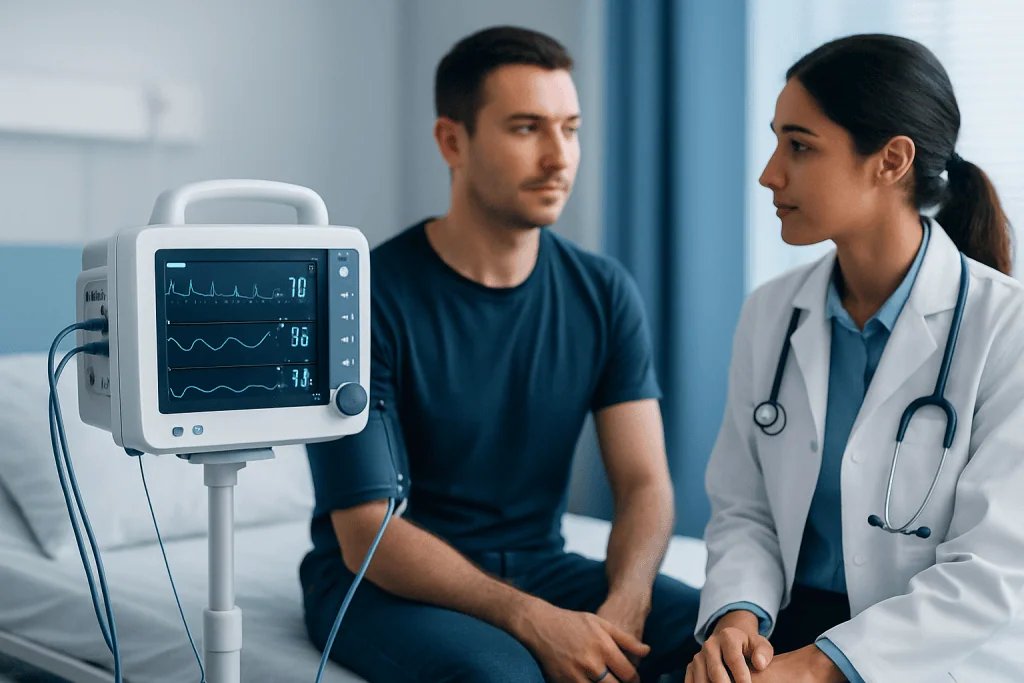
There is no single rule that fits everyone, and any website that gives you one number for all treatments is simplifying too far. Some patients travel relatively soon after minor procedures; others need extra days in Turkey before a doctor is comfortable with a long-haul flight. What matters is the individual assessment, not the average.
When your doctor considers your travel timing, they typically weigh:
- Wound healingwhether incisions are settling as expected and dressings or drains are still needed
- Anaesthesia recoveryhow your body has responded to sedation or general anaesthesia
- Pain and swellingwhether you can sit, stand and walk through an airport without significant difficulty
- Bleeding riskwhether the early period of highest risk has passed
- Circulationhow prolonged sitting and cabin conditions may interact with your specific procedure
- Follow-up needswhether you should stay nearby for a dressing change, a review or the removal of stitches
Timing is weighed differently depending on the area treated. The table below shows the kind of reasoning involved: it is a guide to the questions, not a substitute for your doctor’s answer.
| Type of treatment | Why flight timing matters | What your doctor typically checks |
|---|---|---|
| Dental and oral procedures | Pressure changes and swelling can affect comfort in the treated area | Healing at the site, bleeding, infection signs, pain control |
| Cosmetic and reconstructive surgery | Swelling, garments and wound care shape how soon sitting for hours is reasonable | Incision healing, drain removal, garment fit, mobility |
| Abdominal and chest procedures | Cabin pressure and trapped gas after some operations make timing especially important | Recovery milestones, imaging where relevant, breathing comfort |
| Eye and facial procedures | Dry cabin air and pressure changes can affect the treated area | Specialist review of healing before travel is approved |
| Orthopaedic procedures | Mobility, seating position and clot considerations all depend on the joint treated | Weight-bearing status, mobility aids, circulation advice |
Because timing can shift, the safest booking strategy is simple: do not lock in a tight return date unless your care team has already endorsed that timeline. Choose a changeable ticket or leave a buffer of extra days, so your doctor can assess your body rather than your boarding pass. Our guide on how to book flexible return flights safely explains fare types and change rules in detail.
What medical clearance usually involves

Medical clearance means two separate things, and it helps to keep them apart. The first is your doctor’s clinical judgement that you are well enough to fly. The second is the airline’s own requirement for documentation, which varies between carriers. Some airlines ask for a fit-to-fly letter or a completed medical information form if you have had recent surgery, need a wheelchair, are travelling with injectable medication, or require oxygen or special assistance during the journey. Check your airline’s policy before travel day, because these forms sometimes need to be submitted days in advance.
Your discharge paperwork should normally include a summary of your treatment, your current medication list, wound care instructions and the warning signs your team wants you to know about after you arrive home. If you have stitches, a drain, a compression garment or any temporary restrictions, on lifting, driving or bathing, for example, make sure these are written down clearly. Keep printed and digital copies; airport staff, the airline, or your doctor at home may all ask to see them.
Patients treated at Acibadem can have this documentation prepared in English before discharge, which is useful both at the airport and for whichever clinician follows your care at home. Before you leave the hospital, check that you hold:
- Discharge summary
- Fit-to-fly note, if your doctor or airline requires one
- Prescription list and a written medication schedule
- Copies of imaging or test results where relevant
- Hospital contact details and emergency numbers
- A written follow-up plan for after you return home
Carrying your medicines home
Medication deserves its own planning. Keep every medicine in your hand luggage, in its original packaging, together with the prescription or a letter naming it. Checked baggage can be delayed or lost, and a missed dose because of a missing suitcase is an avoidable problem.
Two sets of rules apply when you fly with medicines: the rules of the country you are leaving and the rules of the country you are entering. Turkey, like most countries, restricts certain controlled substances, typically strong painkillers, sedatives and some psychiatric medicines, and travellers carrying them are generally expected to have a prescription and to carry only personal quantities. The same logic applies in reverse when you land: your home country may require documentation for controlled medicines prescribed in Turkey. Checking your home country’s import rules before you fly is far easier than explaining an undocumented medicine at the border. Our guide on returning home with new medicines after treatment in Turkey covers this in depth, including injectables and refrigerated medicines.
Never adjust doses or stop a medicine to simplify travel. Dosing decisions, including how to handle time-zone shifts, belong to your treating doctor, ask before you leave so the plan is written into your discharge papers.
How to make the trip more comfortable
Comfort is not a luxury after treatment; it is what allows you to arrive home in reasonable shape rather than exhausted. Choose the least complicated route available, fewer connections, shorter walking distances, less waiting. A direct flight at a slightly less convenient hour usually beats a cheaper itinerary with a tight transfer through a large hub.
If your budget and your doctor’s advice allow, extra legroom or a more spacious seat can make a genuine difference, particularly if you are sore, swollen, or wearing a brace or compression garment. An aisle seat makes it easier to stand and move without disturbing others.
Pack your hand luggage as a small recovery kit: medicines and the written schedule, documents, spare dressings if you were given them, a phone charger, tissues, lip balm for dry cabin air, an empty water bottle to fill after security, and plain snacks. Loose clothing and slip-on shoes help, since feet and ankles can swell during long flights. There is a full packing list in our guide to packing a post-surgery flight home comfort kit.
If stairs, queues or long walks may be difficult, request wheelchair assistance from the airline before travel day, ideally when booking, or at least 48 hours before departure. This is one of the most useful services available to patients flying after treatment. It conserves energy, reduces strain, and makes security and boarding far more manageable. You do not need to be unable to walk to qualify; reduced stamina during recovery is reason enough.
Reducing common travel risks after treatment
Long periods of sitting are tiring after treatment and, for some travellers, are associated with a higher chance of blood clots in the legs. Whether this applies to you, and what to do about it, is something your doctor will address specifically, some patients are advised on movement routines, compression wear or other measures based on their procedure and history. As general practice, and subject to your doctor’s advice: move your ankles and feet regularly, change position when you can, and take short walks in the cabin if it is safe for you to do so. Wear any prescribed compression garment exactly as instructed, and do not substitute it with a non-medical alternative unless your doctor confirms that is acceptable.
Cabin air is dry, and dehydration can make you feel noticeably worse during recovery. Sip water regularly unless you have been given fluid restrictions. Limit alcohol, and treat sedating tablets with caution unless your doctor has specifically approved them for the journey: you want to be comfortable, but also alert enough to move around, keep to your medication schedule and notice how you feel.
Your discharge summary will list the specific warning signs relevant to your treatment. Read that section before you travel, so you know what your team considers normal healing and what they do not. If recovery takes longer than expected once you are home, our guide on what happens after you return home explains how ongoing communication with your care team in Turkey usually works.
Booking flexibility, flight changes and refunds
Recovery does not always follow a schedule, which is why flexibility is worth paying for. When comparing fares, look past the headline price to the change rules: whether the date can be moved, whether a fee applies, and whether the fare difference is charged on top. Semi-flexible fares often strike the best balance for medical travellers.
Refunds work differently depending on who changes the flight. If you change or cancel, your fare conditions decide what you get back, fully flexible tickets are usually refundable, restricted ones often are not, though taxes may be recoverable. If the airline changes or cancels the flight, most jurisdictions require the carrier to offer rebooking or a refund, and flights departing the UK or EU carry specific passenger rights. Travel insurance is a separate layer again: some policies cover changes made on written medical advice, which is one more reason a fit-to-fly assessment in writing is valuable. Our guide to booking for recovery delays goes through these scenarios one by one.
Airport, airline and arrival planning
Keep travel day simple. Arrive early enough to avoid rushing, but not so early that you spend hours sitting upright in a terminal if that is uncomfortable. If someone can accompany you to the airport, their help with check-in, bags and medication timing reduces both effort and stress.
Before leaving Turkey, confirm your transport from the hospital or hotel to the airport, particularly if you need extra space, a smoother ride or help with luggage. Many international patients spend the final night or two in accommodation close to the hospital, so they are not managing a long transfer immediately after discharge. In Istanbul especially, traffic is unpredictable, leave more time than the map suggests.
Then plan the far end of the journey with the same care. Who collects you when you land? How do you get from the car into your home? Where will you rest, and how will you get food, fluids and medication for the first 24 to 48 hours? If you need a follow-up appointment with a doctor at home, booking it before you travel removes one task from your tired first days back. Our guide on preparing for recovery once you return home covers this stage in full.
Step by step
- Ask about travel timing early. As soon as your treatment plan is discussed, ask when you may be able to fly home and whether that timeline could change. This stops you booking a return date that is more optimistic than your body.
- Choose flexible travel arrangements. Book a fare that can be changed without major difficulty, or leave buffer days after your expected discharge. Recovery rarely follows a perfect schedule.
- Get your discharge and fit-to-fly documents. Before leaving the hospital, make sure you have all necessary paperwork in English if needed, including medication instructions, aftercare advice and contact details.
- Check medicine rules for the journey. Confirm that any controlled medicines are documented for both Turkish departure and your home country’s arrival rules, and keep everything in original packaging in hand luggage.
- Arrange airport assistance in advance. Contact the airline as early as possible if you need wheelchair support, priority boarding or transfer help. Pre-arranged assistance is far more reliable than a request made on the day.
- Pack your hand luggage as a recovery kit. Medicines, dressings, documents, water, snacks and a change of essentials stay with you, so a delayed suitcase cannot disrupt your recovery.
- Follow your doctor’s in-flight advice. Use compression garments, movement routines and wound care exactly as recommended. Small steps during the journey add up.
- Plan support for when you get home. Arrange transport, help with bags and a quiet place to rest. Being tired and sore is much easier with support already in place.
Your checklist
- Passport, visa documents if applicable, and boarding pass
- Discharge summary and fit-to-fly note if advised
- All medications in hand luggage, in original packaging with prescriptions
- Written medication schedule, including timing across time zones
- Phone charger, emergency contacts, and hospital contact details
- Compression garments, dressings, or medical supplies you were told to use
- Airline wheelchair or special assistance confirmed in advance
- Airport transfer in Turkey and home pickup arranged
- Water bottle, snacks, and loose comfortable clothing
- Follow-up appointments noted, at home and remotely if planned
Key takeaways
- Safe return flight timing depends on your treatment, your recovery and your doctor’s individual assessment, not a universal rule.
- Ask early whether you need formal clearance or a fit-to-fly letter, because some airlines require forms days in advance.
- Keep medicines documented and in hand luggage; two countries’ rules apply to every flight.
- Flexible tickets, pre-booked airport assistance and a well-packed hand luggage kit do more for comfort than anything bought at the gate.
- Preparing for your return flight after treatment in Turkey means planning the whole journey, hospital to airport, flight, and the first 48 hours at home, not just the flight itself.
Frequently asked questions
How soon can you fly after treatment in Turkey?
It depends on the type of treatment, how your recovery is progressing and your doctor’s assessment. Some patients travel relatively soon after minor procedures, while others need extra days in Turkey for review before a long flight is sensible. The individual assessment matters more than any general timeline you read online.
Do you need a fit-to-fly letter after surgery?
Sometimes. Airlines set their own rules, and many ask for a letter or a medical information form after recent surgery, or if you need special assistance, oxygen or injectable medication on board. Ask your treating team whether one is advisable and check your airline’s policy well before travel day.
What medications can I not take into Turkey?
Turkey restricts certain controlled substances, typically including strong painkillers, sedatives and some psychiatric medicines. Travellers carrying them are generally expected to hold a prescription and only personal-use quantities, in original packaging. The same principle applies in reverse when you fly home with medicines prescribed in Turkey, so check your home country’s import rules too.
Is it safe to go to Turkey for medical procedures?
Turkey has a large, regulated hospital sector that treats many international patients, and standards vary between providers, as they do in any country. Safety depends on choosing a licensed hospital, being properly assessed before treatment, and allowing realistic time for recovery and follow-up before flying home. Careful planning of the whole journey, not just the procedure, is part of that.
What can I do to recover from a long flight?
Rest on arrival, drink water regularly, eat normally and get gentle daylight to help your body clock adjust. Keep to your written medication schedule, follow any movement or compression advice your doctor gave you, and avoid planning demanding activities for the first day or two at home.
Can I get a refund if the airline changes my flight?
Usually, yes, if the airline cancels or significantly changes your flight, most jurisdictions require it to offer rebooking or a refund, and flights departing the UK or EU carry defined passenger rights. If you change the flight yourself, your fare conditions apply instead, which is why flexible fares are worth considering for medical travel.
What documents should you carry on your return flight?
Carry your discharge summary, prescriptions and medication list, your passport, and any fit-to-fly note or airline medical forms required. Keep digital copies on your phone as a backup in case printed papers are misplaced during the journey.
Can you travel alone after treatment?
Some patients can, depending on how well they are moving, how tired they are, what treatment they had and whether they may need help with luggage or medication during the journey. If your doctor recommends a companion, take that advice seriously, airport assistance can cover some gaps, but not all of them.
Add us as a Preferred Source to see more of our trusted health content across Google Search, AI Overviews and Discover.

Update history
- PublishedAugust 15, 2026
- Medical review approvedSeptember 13, 2026
- Last content updateSeptember 12, 2026
References3
- NHS: Deep vein thrombosis (DVT) nhs.uk
- CDC Travelers' Health: Traveling Abroad with Medicine wwwnc.cdc.gov
- MedlinePlus: Traveler's Health medlineplus.gov
More Patient Guides

GHIC and EHIC in Turkey: Why They Do Not Cover You
The blue card that quietly covers you across Europe stops working at the Turkish border, and every summer, travelers discover this…

Do You Need Vaccinations for Turkey?
Here is the answer travel clinics give every day: no vaccinations are required to enter Turkey from anywhere in the normal course…

Flying With a Broken Leg or Cast: Airline Rules and Comfort
A broken leg does not cancel a flight, airlines carry passengers in casts every single day. What surprises travelers is that…

Travel Insurance After Cancer: What Patients Should Know
A cancer diagnosis changes how insurers read your name, but it does not end your traveling life. Thousands of people with…