

How to Pack a Post-Surgery Flight Home Comfort Kit

Keep everything you might need in transit, medications in original packaging, discharge papers, passport, any wound supplies your team told you to carry, a charger and soft comfort items, in a personal bag that fits under the seat in front of you. Pack for a delay of several hours, and confirm with your surgeon that you are fit to fly before you finalise anything.
Discharge day is close, your flight is booked, and you are quietly wondering how you will manage a full travel day while you are still sore. That worry is normal. A small, well-packed comfort kit will not change your recovery, but it can make the journey home noticeably smoother, cleaner and less stressful.
This guide shows you how to pack a post-surgery flight home comfort kit: what belongs in it, where it should sit, and how to prepare for the parts of the journey most patients underestimate, queues, delays, and the trip from the arrival airport to your own front door.
At a glance
- Best for: Patients flying home after surgery or hospital treatment abroad
- Main goal: Keep essentials within reach so you never dig through bags while sore or tired
- Pack location: A personal item under the seat in front of you, not checked luggage
- Before you pack: Your surgeon or care team confirms you are fit to fly and sets any travel-specific rules
- Always with you: Medications in original packaging, discharge summary, prescriptions, passport
- Plan for: A delay of several hours, plus the ground journey after landing
Why you should pack a post-surgery flight home comfort kit
After surgery, an ordinary travel day becomes harder in small, cumulative ways. Walking between terminals, standing at security, sitting for hours in a fixed position, and lifting a bag into an overhead locker are all more tiring, and sometimes not advisable, while you are healing. When you pack a post-surgery flight home comfort kit properly, you remove most of the moments where you would otherwise have to stand up, twist, bend or search for something at exactly the point you feel worst.
The kit does not replace your medical instructions; it supports them. Think of it as the practical bridge between hospital discharge and your own home: medications, documents, hydration, simple hygiene supplies, and a few comfort items chosen for your specific procedure. Everything else can travel in your suitcase.
Two things come before packing. First, your surgeon or care team must confirm you are fit to fly: the timing varies by procedure and by patient, and it is explained in more detail in After Surgery in Turkey: When Is It Safe to Fly Home?. Second, ask at discharge whether anything specific needs to stay accessible during the journey: compression garments, a wound supply, a particular medication schedule. Those answers shape the kit far more than any generic list can.
If possible, assemble the kit a day or two before you travel rather than on the morning of the flight. Packing while sore, medicated or rushed is how documents end up in checked luggage and painkillers end up in the hotel bathroom.
What to keep in your personal item, not your checked bag
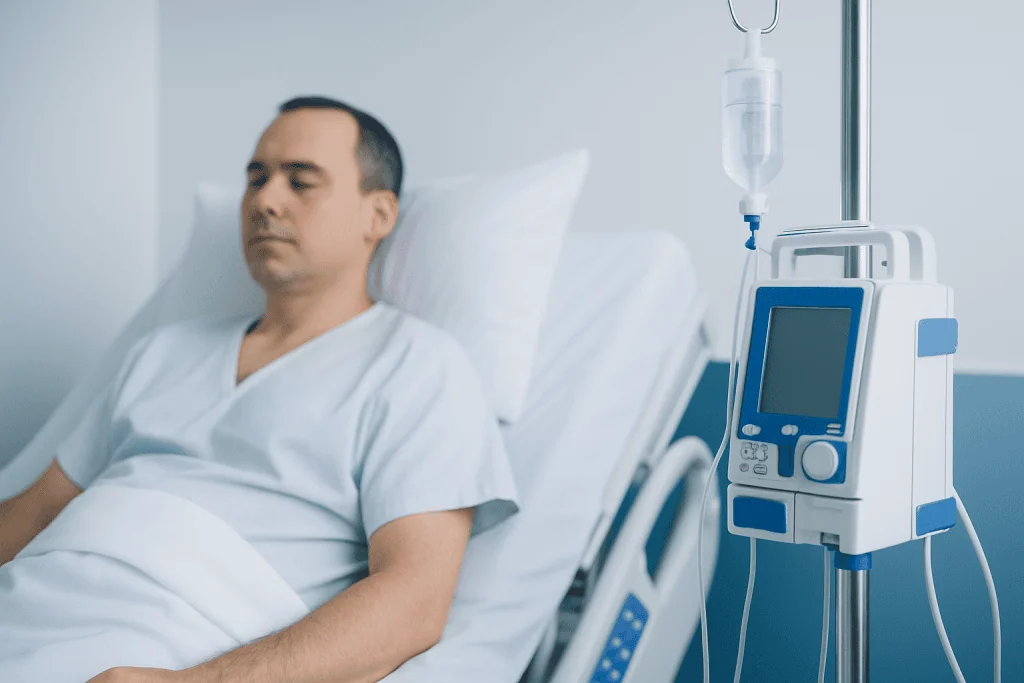
The rule is simple: anything you may need during the flight, during a delay, or in the first few hours after landing stays with you. Checked luggage can be delayed, rerouted or simply inaccessible for a long stretch of the day. A backpack, tote or small cabin bag that fits under the seat in front of you means you can reach essentials without standing up, which matters more than it sounds when getting up is slow and uncomfortable.
Non-negotiables for your hand luggage
- All prescription medicines in their original, labelled packaging, plus copies of the prescriptions
- Your discharge summary, follow-up instructions, and any fit-to-fly note or medication letter your doctor provided
- Passport, boarding documents, phone, charger, and a written list of emergency contacts
- Compression garments or stockings, only if your team has advised them
- Any wound supplies you have specifically been told to keep accessible
- Glasses, hearing aids, mobility aids, and anything else you rely on hourly
Strongly recommended
- An empty water bottle to fill after security, if your care team has not restricted fluids
- Light snacks that suit your post-operative diet
- Tissues, hand sanitiser and antibacterial wipes
- One spare change of loose, easy clothing: a spill, a dressing issue or an overnight delay is far easier to handle with fresh clothes in reach
- A small pillow, shawl or eye mask
Keep documents and medicines together in their own pouch, separate from toiletries. Security checks go faster, and when airline or border staff ask for paperwork you can produce it in seconds rather than unpacking your bag on a counter. If you also want a checklist for the outbound journey, How to Pack for Surgery in Turkey covers what to bring with you before treatment.
Comfort items that make sitting and waiting easier
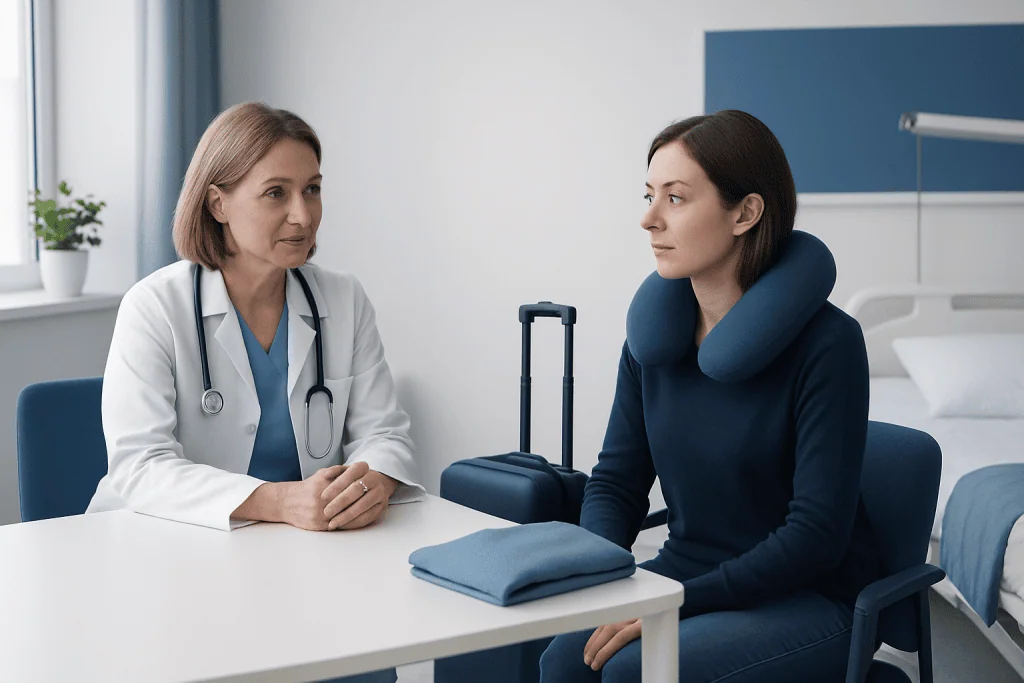
The best comfort items reduce pressure, help you rest, and make small movements simpler. Depending on your procedure and your clinician’s advice, useful additions include a travel pillow, a small lumbar cushion, a soft scarf or light blanket, and slip-on shoes you can remove and put back on without bending. Loose, breathable layers almost always beat tight waistbands and structured clothing on a long travel day.
Dress around the surgical site, not around the weather forecast. If swelling is possible, choose clothing that neither rubs nor compresses the area, unless compression has been specifically prescribed, in which case wear exactly what you were given. Front-opening tops save you from lifting your arms overhead. Trousers with a soft waistband save you from bending and twisting in a small aircraft toilet.
Cabin air is dry, so lip balm, a small moisturiser and saline nasal spray earn their place in the kit. Noise-cancelling headphones or simple earplugs help you rest in a loud terminal, and a sleep mask is worth carrying on longer flights when your energy is low. If your team has recommended walking at intervals during the flight, an aisle seat lets you get up with less disruption and less strain on your abdomen or chest.
Clothing and comfort by surgical area
| Surgical area | What tends to help |
|---|---|
| Abdomen (general, bariatric, gynaecological) | High, soft waistbands or none at all; a small pillow to hold against the abdomen when coughing or during turbulence; aisle seat for easier standing |
| Chest (cardiac, thoracic, breast) | Front-opening tops; a light scarf as padding under the seatbelt; avoiding overhead lifting entirely, ask staff to stow your bag |
| Head, face, neck | Button or zip tops that never pass over the head; a supportive travel pillow; sunglasses and a hat if you are light-sensitive or swollen |
| Legs, hips, spine | Slip-on shoes; a long-handled reacher if bending is restricted; pre-booked wheelchair or buggy assistance through the terminal |
These are comfort patterns, not medical rules. Your own surgeon’s instructions always come first, and if pain management during the journey is on your mind, Managing Pain on the Flight Home After Treatment looks at that subject on its own.
Medication, hydration and hygiene essentials
Medication
Your medication plan should be settled before you leave the hospital: the travel day is not the time to improvise. Carry enough of every medicine for the journey plus a buffer for delays, and keep everything in hand luggage, together in a transparent pouch with the prescriptions or pharmacy labels. If any medicine is time-sensitive, ask your doctor before discharge how the schedule works across time zones, then set phone alarms to match the plan you were given. Any change to what you take, or when, is a decision for your treating doctor, not for the departure lounge.
Hydration
Airports and aircraft cabins are dehydrating environments. Once through security, fill a bottle or buy water if that is appropriate for you, and sip regularly rather than waiting until you feel thirsty. If your care team has given you fluid restrictions or dietary rules, common after some procedures, those instructions override every piece of general travel advice, including this one.
Hygiene and wound supplies
Carry hand sanitiser, wipes, tissues, and only the wound-care items you have been specifically told to keep on hand. Do not plan to improvise dressing changes in an airport bathroom; if something genuinely needs doing in transit, your team should have shown you exactly how before discharge. If you have drains, dressings or sensitive skin, keep the supplies minimal but purposeful, and confirm at discharge precisely what needs to stay accessible during the journey home.
Documents and practical support to prepare in advance
Paperwork is the part patients most often underestimate. Keep passport, boarding documents, transfer details, hospital contact numbers, discharge summary, prescriptions and follow-up instructions together in one easy-to-reach folder. If your doctor has provided a fit-to-fly note, a medication letter or handling advice for airport staff, those go at the front, because they are the pages you may need to produce at short notice.
Photograph every document on your phone as a backup, but still carry the physical copies. If you travel with a companion, give them copies too, if you are asleep or unwell, they can answer questions on your behalf. Save key numbers under clear labels: hospital, hotel, driver, airline, emergency contact. Tired people scroll badly; labels help.
Two pieces of ground support are worth arranging before travel day rather than on it. First, airline special assistance, wheelchair support, priority boarding, help with bags, is far easier to book in advance, and Airport Assistance When Returning Home After Surgery explains how it works. Second, the flight itself: seat position, connection times and cabin class all affect comfort after surgery, and Questions to Ask Before You Book a Recovery Flight Home covers what to check before you commit to an itinerary.
International patient teams, including those at Acibadem, commonly help with coordinating discharge paperwork, interpreter support and travel planning. That support reduces friction, but it does not replace your own checks: the folder in your hand is still your responsibility.
Packing for delays, layovers and the trip from airport to home
Most journeys go to plan. Comfort improves dramatically, though, when you pack as if yours will not. Assume a delay of several hours: extra medication doses, one or two suitable snacks, a portable power bank, and nothing in your checked suitcase that you would be unhappy to lose access to overnight. A short list on your phone, checked against the hotel room, the hospital room and the transfer vehicle, is the cheapest insurance against leaving something behind.
Think beyond the flight itself. Your kit needs to cover the whole chain: the taxi to the airport, the security queue, boarding, the flight, passport control, baggage claim, and the journey from your arrival airport to your home. The last leg is often the hardest, because you are most tired and least supported. If stairs, lifting or carrying will be difficult at your destination, arrange help there in advance too: a family member at arrivals is worth more than anything in the bag.
Layovers deserve their own thought. A connection means a second security check, a second boarding, and often a long walk between gates. If you have a choice, a direct flight usually costs you less energy than a cheaper-looking itinerary with a tight connection; the broader trade-offs are covered in Preparing for Your Return Flight After Treatment in Turkey.
Once you land, keep following your aftercare instructions. Do not rush to unpack or resume normal activity on day one. Keep the document folder out of the suitcase and somewhere obvious for the first days at home, so medication timing, activity limits and follow-up contact details are always a glance away.
If you are travelling with, or as, a companion
A companion changes the packing maths. They can carry the heavier bag, stow luggage overhead, queue for water and handle documents while the patient sits. If you are the companion, keep duplicate copies of the discharge summary and prescriptions in your own bag, learn the medication schedule so you can prompt rather than manage it, and pack your own patience: post-surgical travellers move slowly, tire quickly, and often underestimate both.
Caring for someone after surgery, in transit or at home, is mostly about removing effort: pre-booked assistance instead of long walks, an aisle seat and a nearby toilet instead of a window seat, food and water offered before they are asked for, and the discharge instructions read by two people instead of one. The clinical side, wounds, medicines, activity limits, always stays with the treating team’s written guidance.
Step by step
- Confirm you are fit to fly. Before packing anything, make sure your surgeon or care team has clearly said you can travel, and ask about sitting time, walking, compression, wound care, eating and drinking, and anything that should delay the flight.
- Build one small, easy-reach comfort kit. Choose a pouch or compact bag that fits inside your personal item and keeps essentials together, so you never dig through multiple bags for pain relief, documents, wipes or a charger.
- Separate medical essentials from general travel items. Medications, prescriptions, discharge papers and wound supplies get their own section. Security checks go faster and a companion can find what matters in seconds.
- Dress for healing, not appearance. Loose, soft layers; front-opening tops; slip-on shoes; nothing tight, heavy or awkward in a small aircraft toilet.
- Prepare for hydration and delays. Plan to get water after security unless your doctor has said otherwise, carry suitable snacks, and pack extra doses of important medication plus a power bank so a delayed flight stays an inconvenience, not a problem.
- Arrange airport help before travel day. If long walks, queues or lifting will be hard, request airline assistance in advance and think through transfers, boarding and baggage collection while you still have energy to plan.
- Keep follow-up information close after landing. Do not bury the discharge instructions in a suitcase. Keep them accessible for the first days at home to check medication timing, activity limits and follow-up contact details.
Your checklist
- Passport, boarding documents and emergency contacts
- Discharge summary, prescriptions and fit-to-fly note if provided
- All medications in original packaging, plus a buffer for delays
- Water bottle plan and snacks suitable for your post-operative diet
- Travel pillow, light layer and loose, front-opening clothing
- Hand sanitiser, tissues, wipes, lip balm and saline spray
- Phone, charger, power bank and photographed copies of documents
- One spare set of easy clothing in your cabin bag
- Compression garments and wound supplies, only if advised
Key takeaways
- Pack for access, not quantity: essentials must be reachable while seated.
- Medications, discharge papers and medical letters always travel in your hand luggage.
- Dress around the surgical site: soft layers, front openings, slip-on shoes.
- Plan for a delay of several hours and for the ground journey after landing.
- Your care team’s travel-specific instructions override every generic packing tip.
Frequently asked questions
What is the most important item in a post-surgery flight home comfort kit?
Your medications and medical documents. If you prioritise only a few things, keep those in your hand luggage alongside your passport and phone, because they are the items hardest to replace quickly mid-journey.
What should I pack in an overnight bag for surgery itself?
For the hospital stay before this journey, the pattern is similar but smaller: identification and paperwork, medications in original packaging, loose front-opening clothing, slip-on footwear, basic toiletries, a charger, and glasses or hearing aids. Leave valuables at your accommodation or with a companion where possible.
Where do my belongings go during surgery?
Hospitals typically provide secure storage in or near your room, or ask a companion to hold your things during the procedure. Practice varies, so ask on admission how storage works and keep genuinely valuable items, passport, cash, jewellery, with a companion or in a safe rather than on the ward.
What are good ideas for a post-surgical care package?
For travel, useful additions are lip balm, saline spray, wipes, a soft scarf or small blanket, earplugs or headphones, easy snacks, a power bank, and a small pillow to brace against the surgical area. Avoid anything heavy, scented or fiddly to open one-handed.
Should I pack wound-care supplies in my carry-on?
Yes, but only the items your care team has told you to keep accessible. You generally should not plan complicated dressing care in transit unless your team has shown you exactly how and when to do it.
How much medication should I carry for the journey?
Enough for the travel day plus extra in case of delays, kept in original packaging in your hand luggage. Ask your doctor before discharge how to handle time-sensitive medicines, especially when crossing time zones: the schedule is theirs to set.
Do I need a doctor’s letter for the airport or airline?
Sometimes, particularly if you travel with prescription medication, medical supplies or mobility needs, and some airlines ask for fit-to-fly documentation after recent surgery. Ask your hospital team before discharge which papers are worth carrying, and keep them at the front of your document folder.
How do I care for someone flying home after surgery?
Carry duplicate copies of their documents, handle bags and queues so they do not have to, learn their medication schedule so you can prompt them, and build extra time into every stage. The clinical side of care always follows the treating team’s written discharge instructions.
Add us as a Preferred Source to see more of our trusted health content across Google Search, AI Overviews and Discover.

Update history
- PublishedAugust 6, 2026
- Medical review approvedSeptember 1, 2026
- Last content updateSeptember 1, 2026
References2
- Pack Smart: CDC Travelers' Health wwwnc.cdc.gov
- Traveling Abroad with Medicine: CDC Travelers' Health wwwnc.cdc.gov
More Patient Guides

Flying After a C-Section: Timing for New Mothers
A C-section is real abdominal surgery that happens to come with a newborn attached, so the flying question has two clocks…

When Can You Drive After Anesthesia or Sedation?
You feel fine an hour after the procedure. You are chatting, you walked to the car unaided, you could obviously drive it.…

Flying After Hip Replacement: When Is It Safe?
Hip replacement recovers famously well, many patients walk further at three weeks than they had in three years. Flying is part…

Flying After Knee Replacement: When Is It Safe?
The knee is new, the physio is going well, and there is a boarding pass with your name on it. Flying after…