

How to Pack for Surgery in Turkey: A Practical Patient Checklist

Pack around four groups: documents, medicines, comfort and recovery. Keep your passport, medical records and all prescription medicines in your hand luggage, choose loose front-opening clothing for the days after surgery, and travel light enough that you or a companion can manage the bag when you are tired. Your hospital's written pre-admission instructions always take priority over any general checklist.
Standing over an open suitcase, unsure what you will actually need after an operation in a country you have never visited? Most patients overpack clothes and underpack the things that matter. The reliable way to pack for surgery in Turkey is to think in four groups: documents, medicines, comfort, and recovery essentials.
This guide works through each group in turn, explains why certain items belong in your hand luggage rather than your suitcase, and finishes with a step-by-step routine you can follow the night before you fly. It is a general checklist. The written pre-admission instructions from your hospital always come first.
At a glance
- Best for: Patients travelling to Turkey for a planned procedure
- Main focus: Documents, medicines, clothing, electronics, and recovery comfort
- What not to forget: Passport, medical records, prescription medicines in original packaging, chargers, and loose front-opening clothing
- Packing style: Light, organised in pouches, and manageable one-handed after surgery
- Golden rule: Anything needed on the flight, on admission day, or in the first day after surgery stays in your hand luggage
Think in four groups, not in outfits
When you pack for surgery in Turkey, the temptation is to pack for a holiday with a hospital stay attached. Resist it. You are packing for a few specific days when you may be tired, sore, or moving less freely than usual. Everything in your bag should earn its place against that reality.
The four groups are simple. Documents cover your identity, your bookings, and your medical history. Medicines cover everything you take regularly, in a form that survives lost luggage and airport questions. Comfort covers clothing, toiletries, and the small items that make hospital and hotel nights easier. Recovery essentials cover what you will want in the first day or two after the procedure, when reaching into the bottom of a suitcase feels like a project.
Before you put anything in a bag, read the instructions your hospital has sent you. They may specify what records to bring, whether imaging is needed on disc or USB, and what to do about jewellery, nail polish, or contact lenses on admission day. If you are still comparing hospitals or finalising details, our guide to questions to ask before surgery in Turkey covers what to confirm before you travel.
Keep your documents and medical information together

Documents are the one category where losing something can genuinely disrupt your treatment. Keep everything in a single folder or zip pouch that stays in your hand luggage from door to door. Never put your only copy of anything in checked baggage.
The travel side of the folder should hold your passport, flight details, accommodation information, hospital appointment confirmations, insurance paperwork if relevant, and emergency contact numbers. The medical side should hold recent test results, imaging reports, referral letters, a summary of your diagnosis, and a written list of your current medicines and allergies. If any records are not in English, ask before you travel whether translation is needed; the answer varies by hospital and by document.
One page is worth preparing even if nobody has asked for it: a personal medical summary. Write your full name, date of birth, health conditions, previous surgeries, current medicines with doses and timing, known allergies, and your home doctor’s contact details. If you arrive tired after a long flight and someone asks a question you cannot immediately answer, this page answers it for you.
- Passport plus paper and digital copies of identification
- Hospital booking confirmations and contact numbers
- Medication list, dose schedule, and allergy list
- Test reports, imaging, and referral documents as requested
- Insurance or payment paperwork, if applicable
- A one-page personal medical summary
Pack medicines carefully and safely
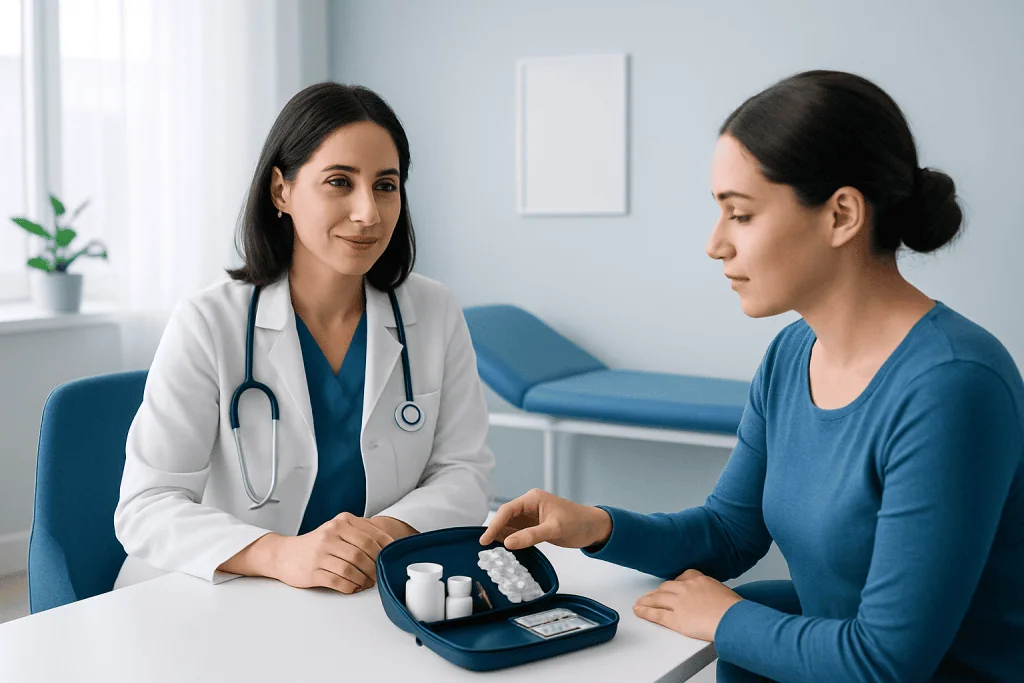
Bring enough of every regular prescription medicine to cover your travel days, your hospital stay, and a buffer in case flights are delayed or your return is postponed. Keep everything in its original labelled packaging and carry it all in your cabin bag. Original packaging matters twice over: it makes airport and customs questions straightforward, and it prevents mix-ups once you arrive.
Do not assume that every medicine or brand from home can be replaced abroad at short notice. Formulations differ between countries, and some products are simply not stocked. If you use inhalers, insulin, eye drops, or any daily tablet, bring what you need plus a written prescription or a medication letter from your doctor if you can obtain one. Some medicines are subject to import rules when carried across borders, so check the requirements for your specific medicines before you fly rather than at the airport.
Tell your surgical team in advance about everything you take: prescriptions, supplements, herbal products, and over-the-counter remedies. Some medicines may need to be adjusted before an operation, but that decision belongs entirely to your treating doctor. Never pause, change, or restart anything on your own while packing. Your job is to carry the medicines and the accurate list; the plan for what to take on the morning of surgery comes from the team looking after you.
Pack the medicines as their own kit: one clear pouch, the written list on top, everything in the cabin bag. If a companion is travelling with you, agree who carries it and make sure both of you know where it is.
Choose clothing for comfort, mobility, and discharge day
After surgery, the quality of your clothing matters far more than the quantity. Pack loose, soft items that go on and come off without stretching, bending, or lifting your arms high. Front-opening tops, elastic-waist trousers, a light robe or cardigan, comfortable underwear, and slip-on shoes with good grip cover almost every situation.
Your hospital will usually provide gowns and basic necessities during the stay itself, so you do not need a full hospital wardrobe. One or two familiar outfits are enough: something for walking the corridor, something for discharge and the trip back to your hotel. If your procedure involves the abdomen, chest, limbs, or face, avoid anything tight, heavy, or awkward to remove. Getting dressed should not be the most tiring part of your day.
Think separately about the journey home. Choose an outfit that will still feel comfortable if you have swelling, dressings, or movement restrictions. Compression garments, travel pillows, or similar items should only be packed if your care team has specifically advised them for your procedure. For the flight itself, a small dedicated bag helps; our guide to packing a post-surgery flight home comfort kit covers that journey in detail.
Electronics, chargers, and adapters
Turkey uses 230-volt mains power with two-pin European-style sockets (types C and F). If your devices use a different plug, bring at least one adapter, and consider two: one for the hospital room, one for the hotel. Pack your phone charger, a power bank for travel days, glasses, hearing aids, and any spare batteries or cases those need.
Charge everything the night before admission, and keep the charger where you can reach it from a hospital bed. A phone is your map, your translator, your document backup, and your link to family, so treat its battery as an essential rather than an afterthought. A small notebook or a notes app is worth having too, for writing down instructions and questions while they are fresh.
The small items that make recovery easier
Patients tend to focus on the hospital and forget the days around it. Travel-size toiletries, lip balm, tissues, hand sanitiser, unscented moisturiser, and dry shampoo all make the first days after a procedure more comfortable. Hospital and hotel rooms can be bright and unfamiliar at night, so earplugs and a sleep mask help many people rest. A refillable water bottle is useful if your care team permits it for your situation.
None of these items is essential for everyone, and the list changes with the procedure and the length of stay. If you want a fuller inventory built around the ward itself, see our international patient checklist for a hospital stay in Turkey. If you will spend several recovery days in a hotel afterwards, the hotel recovery room setup checklist covers how to arrange that space before you need it.
Leave valuables at home. Expensive jewellery, large amounts of cash, and nonessential electronics add worry without adding comfort. Bring only what you are happy managing while tired, because for a few days that is exactly what you will be.
Adjust the list to your procedure
A general checklist covers most needs, but the details shift with the type of operation. After plastic, reconstructive and aesthetic surgery, dressings and garments are often specified by the surgical team, and packing your own without instruction can mean carrying the wrong thing. After bariatric and metabolic surgery, your team may give specific guidance on what to bring for the early post-operative days. Abdominal, chest, and limb procedures each change which clothes are practical and which movements are difficult.
The principle is the same in every case: your pre-admission instructions are procedure-specific, and this checklist is not. Where the two differ, follow the instructions. Where the instructions are silent, the four-group approach fills the gaps.
Plan for language, logistics, and your companion
When you pack for surgery in Turkey, the job is not only what goes in the bag. It is also about making key information reachable when you are tired or your phone is flat. Save the hospital address, your coordinator’s number, your driver’s details if arranged, and your accommodation address in your phone and on paper. The paper copy feels old-fashioned until the moment you need it.
If you do not speak Turkish, keep a short list of important words or needs on your phone. Many international hospitals, including Acibadem, provide interpreter support and coordination for international patients, which reduces how much day-to-day communication falls on you, but a small language backup costs nothing to carry.
If someone is travelling with you, pack with them in mind. Your companion may need copies of your schedule and the hospital contact details, plus room in their bag for shared essentials such as chargers and paperwork. Agree in advance who carries the documents, who manages the medicine pouch, and how you will handle transport on the day of surgery. Deciding this at home is easy; deciding it in a hospital lobby is not.
What to leave out and how to pack smart
The most useful decision when you pack for surgery in Turkey is often subtraction. Skip the large suitcase if your stay is short, skip formal clothing, and skip anything you would struggle to carry after treatment. A small wheeled case plus one lightweight personal bag is the combination most patients manage best, because it leaves one hand free and nothing heavy to lift.
Pack in pouches or layers so you can find things without unpacking. Documents in one section, medicines in another, and the first-48-hours items, loose clothes, charger, glasses, written instructions, at the top where you can reach them without digging. After surgery, a well-organised bag is the difference between a thirty-second task and a frustrating one.
Before leaving home, do one final check against the hospital’s instructions: fasting rules, medication timing, arrival time, and whether nail polish, contact lenses, or jewellery need to be removed for admission. Ten minutes of checking at home saves real stress on the day.
Step by step
- Read your hospital instructions first. Before anything goes in a bag, review the written guidance from your hospital or coordinator. Check arrival time, fasting rules, medication instructions, and whether records or imaging must be brought in person.
- Build one travel-and-medical folder. Passport, booking confirmations, medical reports, medication list, personal medical summary, and emergency contacts in one clearly labelled folder, kept in your hand luggage throughout.
- Assemble a cabin-bag medicine kit. All daily prescription medicines in original packaging, a written list of doses and timing on top, and a small buffer supply for delays. Check any import rules for your specific medicines before flying.
- Choose recovery-friendly clothing. Loose, soft, easy-on items: front-opening tops, elastic-waist trousers, slip-on shoes. One or two outfits for the ward and discharge, one comfortable outfit for the journey home.
- Pack a comfort pouch for the first 48 hours. Charger, adapter, lip balm, glasses, tissues, basic toiletries, earplugs, sleep mask. Keep it at the top of your bag.
- Prepare phone and paper backups. Save the hospital, hotel, coordinator, and transport details on your phone, then write the same details on paper in case of battery or connectivity problems.
- Repack before the journey home. Before discharge, move medicines, written instructions, and travel documents to the most accessible part of your bag. Moving slowly is fine; searching slowly is miserable.
Your checklist
- Passport, ID copies, and flight details
- Hospital confirmations and accommodation information
- Recent medical records, scans, and test reports if requested
- Prescription medicines in original packaging, in hand luggage
- Written list of medicines, allergies, and health conditions
- Loose front-opening clothing, underwear, and slip-on shoes
- Phone, charger, plug adapter, and power bank
- Basic toiletries, glasses, hearing aid supplies if needed
- Earplugs, sleep mask, and small comfort items
- Emergency contact list and coordinator phone number, on paper
Key takeaways
- Pack around documents, medicines, comfort, and recovery, not around outfits.
- Medical records and all prescription medicines travel in your cabin bag, never in checked luggage.
- Loose, front-opening clothing and slip-on shoes make the days after surgery easier.
- Save hospital, hotel, and transport details on your phone and on paper.
- Your hospital’s specific pre-admission instructions override any general checklist, including this one.
Frequently asked questions
What documents should you bring for surgery in Turkey?
Bring your passport, appointment confirmations, accommodation details, and any insurance or payment paperwork relevant to your case. Add your medical reports, imaging if requested, a medication and allergy list, and a short written summary of your health conditions and previous surgeries. Keep it all together in your hand luggage.
Should medicines go in hand luggage or checked baggage?
Hand luggage, always. Checked bags can be delayed or lost, and replacing a specific medicine abroad at short notice can be slow or, for some products, not possible at all. Original labelled packaging also makes airport and customs questions much easier to answer.
What clothes are best to pack for a surgical trip?
Loose, soft, easy-to-remove clothing is the most practical choice. Front-opening tops, elastic-waist trousers, and slip-on shoes make dressing easier before discharge and during early recovery. The right cut depends on where your procedure is: avoid anything tight or awkward over the surgical area.
Do you need paper records if the hospital already has your files?
Often the uploaded records are sufficient, but carrying copies or digital backups costs nothing and covers you if a file is missing or a system is unavailable. Your pre-admission instructions should state exactly what must be brought on the day; if they do not, bring copies anyway.
How much should you pack for a short surgery stay in Turkey?
A small wheeled suitcase and one lightweight personal bag suit most patients. Pack for the hospital stay, a few recovery days, and the journey home. The test is simple: could you or your companion manage every bag while tired? If not, remove something.
What should you leave at home?
Expensive jewellery, large amounts of cash, nonessential electronics, formal clothing, and anything heavy or awkward to carry. Many hospitals also ask that jewellery and nail polish be removed before surgery, so leaving them at home avoids managing valuables during your stay.
What practical support may be available for international patients?
Many international hospitals offer non-clinical support such as interpreters, appointment coordination, and help with transport or accommodation planning. Acibadem provides this kind of coordination for international patients, which reduces the logistics you need to manage from your suitcase.
Add us as a Preferred Source to see more of our trusted health content across Google Search, AI Overviews and Discover.

Update history
- PublishedAugust 6, 2026
- Medical review approvedSeptember 13, 2026
- Last content updateSeptember 12, 2026
More Patient Guides

How Long Does Anesthesia Last? Wear-Off Times by Type
Coming round from an operation, almost everyone asks the same two questions: when will my head feel normal, and how long is…

Flying to Turkey After a Recent Illness: When Is It Safe to Travel?
Flying to Turkey after a recent illness may be safe once you are medically stable and cleared to travel; plan airline support…
Braces, Retainers, and Dental Work Before Surgery in Turkey: What to Tell Your Team
Braces, retainers and dental work before surgery in Turkey should be shared with your care team early to plan safe anaesthesia and…

When to Stop Eating, Drinking, or Smoking Before a Procedure in Turkey
When to stop eating before a procedure in Turkey depends on your anesthesia plan; follow your care team’s exact fasting instructions for…