

Recovery Symptom Diary for International Patients in Turkey

A recovery symptom diary is a dated daily record of your symptoms, medicines, wound observations, activity and questions while you recover in Turkey. Start it before treatment or on your first recovery day, copy details from your written discharge instructions rather than memory, and bring it to every follow-up. It supports communication with your care team: it never replaces urgent contact when a symptom worsens.
You are back at the hotel, the appointment was two days ago, and you cannot quite remember whether the swelling started before or after that long walk. This is the exact gap a recovery symptom diary for international patients in Turkey closes. It gives you one place to record how you feel, what changes, and what you want to ask your care team, during your stay in Turkey and after you fly home.
This guide shows you how to keep that record simple enough to maintain and specific enough to be genuinely useful to your doctor, your nurses, your interpreter and, later, your physician at home.
At a glance
- Best started: Before treatment, or on the first recovery day at the latest
- What to track: Symptoms, medicines as prescribed, temperature if advised, wound and swelling changes, appetite, mobility, sleep and a running list of questions
- Helpful formats: Paper notebook, phone notes, spreadsheet or an app your hospital approves
- Who uses it: You, your companion, nurses, doctors, interpreters and your home physician
- Most important rule: Urgent or worsening symptoms are reported immediately, never saved for the next diary entry
Why a recovery symptom diary matters when you are abroad
A recovery symptom diary for international patients in Turkey solves a problem that rarely exists at home: you are recovering somewhere unfamiliar, often in a hotel rather than your own bed, sometimes speaking through an interpreter, and usually with a return flight fixed in the calendar. Memory is unreliable under those conditions. A dated written record is not.
The diary is not a tool for diagnosing yourself, and it does not replace medical advice. Its job is narrower and more practical: it helps you notice patterns, describe changes precisely, and arrive at each appointment with the facts already organised. When your doctor asks whether the discomfort began before or after you stopped a particular activity, you answer from the page instead of guessing.
If you are receiving care through Acibadem International, your international patient contact, nurses and interpreters can tell you which details matter most for your specific treatment and discharge plan. A knee procedure, a dental treatment and abdominal surgery all call for different observations, so treat your team’s guidance as the master list and this guide as the framework around it.
There is a quieter benefit too. A diary reduces the load on your companion. Instead of trying to remember whether you took the midday dose, when the redness first appeared, or exactly what was said at discharge, both of you can check the record. That matters most in the first few days, when you are tired and the details blur together.
What to include each day
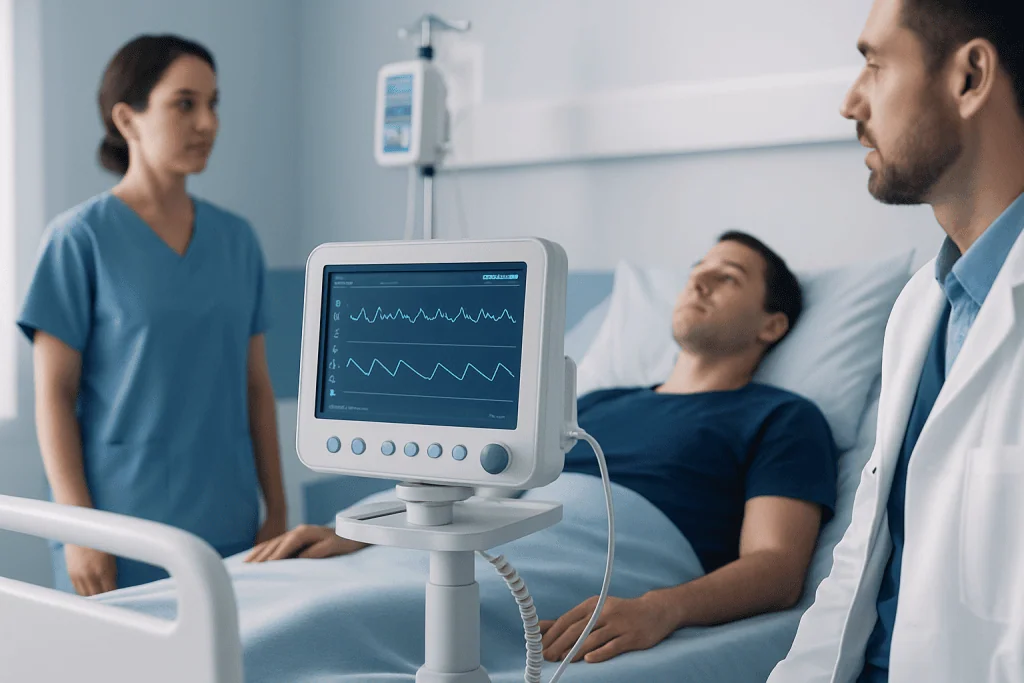
The most useful diary entries are short, consistent and specific. Long essays are hard to maintain and hard for a clinician to scan. Aim for entries at the same times each day, morning and evening works for most people, plus a quick extra note whenever something new appears. If you are too tired to write, your companion can write while you confirm the details.
Core items usually include your pain or discomfort level, your temperature if your care team asked you to monitor it, appetite, fluid intake, bowel or urinary changes where relevant, sleep quality, energy, walking or movement, and any wound, dressing or swelling observations. Record medicines exactly as instructed: the time you took each dose, and whether any dose was missed or delayed. That last point is easy to skip and frequently the first thing a doctor asks about.
Helpful daily details include:
- Date, time and your current recovery location, hospital, hotel or back in your home country.
- Main symptoms: where you feel them, when they started, and whether they are improving, stable or worsening compared with yesterday.
- Medication names, doses and times, copied from your written discharge instructions rather than from memory.
- Food and fluid intake, especially if you have nausea, low appetite or specific dietary instructions.
- Activity: short walks, stairs, breathing exercises or rest periods, if your team recommended them.
- Questions you want to raise at the next appointment or before your flight, written down the moment they occur to you.
Only monitor what your team has asked you to monitor. If nobody has asked you to take your temperature or blood pressure, adding those numbers usually creates anxiety rather than insight. When in doubt, ask before discharge which measurements are worth recording for your treatment.
Choosing a format you will actually keep
The best format is the one you will still be using on day five, not the most sophisticated one. A small paper notebook works well because it never runs out of battery, can be handed across a desk, and is easy for a companion to update. Phone notes work well because your phone is always with you and entries are automatically dated. A simple spreadsheet suits people who like columns: date, time, symptom, severity, medicines, notes.
Whichever you choose, make sure two people can access it. If you keep the diary on your phone, tell your companion how to open it. If it is paper, keep it in one fixed place: the same bag as your discharge summary and prescriptions is ideal, because those documents travel to every appointment together. If you are still preparing for your trip, our practical packing list for hospital and recovery covers what else belongs in that bag.
Some hospitals offer patient apps or messaging channels. If your care team recommends one, use it for communication, but keep your own diary as well. The diary is your record, in your words, and it stays with you after the trip ends.
How to describe symptoms clearly

Doctors and nurses can act faster when your description is concrete. “I feel bad” tells them almost nothing. “Dull ache below the dressing, started around 14:00, worse when standing, eased after resting” tells them a great deal. For each symptom, try to capture what you feel, where it is, how strong it is, how long it lasts, and what makes it better or worse.
A simple 0 to 10 scale is useful for pain if your care team works with one: 0 meaning no pain and 10 the worst you can imagine. Rate it consistently, at the same times each day, so the trend is visible. If pain management is on your mind before treatment, our guide to pain control after surgery in Turkey explains what to expect and what to ask.
Describe change, not just presence. Is the swelling new or the same swelling your team told you to expect? Is redness spreading beyond where it was yesterday, or unchanged? Does nausea come after meals, after a medicine, or at random? Does dizziness happen when you stand up quickly? These distinctions often decide whether you need reassurance, an adjusted instruction, an earlier check, or urgent assessment.
Record context as well: what you were doing before the symptom appeared. A long car ride, a dressing change, a bigger meal, an hour of walking, small details like these help your team interpret what they are seeing. If there is a visible change, ask whether taking a photo is appropriate for your situation. Date each photo, keep it private, and share it only through the channel your care provider recommends. A photo can show change over time; it does not replace an examination when one is needed.
Medication, discharge instructions and follow-up notes
Medication records are the backbone of the diary. International patients are often prescribed medicines whose brand names, packaging or dosing schedules differ from what they know at home: the active ingredient may be familiar while the box looks completely foreign. Keep the original discharge papers and the medicine boxes themselves, and record doses exactly as written. If anything is unclear, ask before leaving the hospital or before taking the first dose. Never adjust a medicine yourself; any change belongs to your treating doctor.
Give your discharge plan its own page or section. Copy in follow-up appointment dates, dressing and wound care instructions, activity limits, dietary advice, guidance on flight timing, and, most importantly, the specific warning signs your team told you to watch for. If an interpreter is present at discharge, use that moment to confirm the key words and ask for written information where available. Understanding what you sign and what you are told matters throughout the journey; our guide to medical consent forms in Turkey covers the paperwork side in detail.
At Acibadem International, coordination for international patients may include help with appointment scheduling, interpreter support, medical report collection and communication with clinical departments. Your diary makes all of these interactions faster, because you can hand over a clear timeline instead of reconstructing several days from memory. Keep the diary together with your passport, insurance documents, discharge summary and test results whenever you attend a follow-up visit.
When to contact your care team promptly
A diary is a memory aid, not a triage system. If a symptom feels serious, is worsening quickly, or matches a warning sign in your discharge instructions, contact your care team straight away. Do not wait for the evening entry or the next scheduled appointment.
Warning signs depend on your treatment and your medical history, so your own discharge instructions are the authoritative list. In general, symptoms such as severe or rapidly increasing pain, difficulty breathing, chest pain, fainting, sudden confusion, heavy bleeding, or a suspected allergic reaction are time-critical: call your local emergency number or go to the nearest emergency department now. In Turkey, the national emergency number is 112. Keep it written on the first page of your diary alongside your hospital’s contact details.
For concerns that are worrying but not emergencies, a question about a medicine at 11pm, a symptom that seems slightly off, ask your care team, and if you are unsure whether something is urgent, it is always safer to ask than to wait. Before discharge, write down the correct contact pathway for daytime questions, evening concerns and emergencies: phone numbers, messaging instructions if offered, your patient number, the hospital address, and the name of your international patient contact if one has been assigned. Our guide to after-hours medical help in Turkey explains these pathways step by step. If you do not speak Turkish, keep a short translated note in your phone or wallet describing your treatment and listing your emergency contacts.
Using your diary for hotel recovery and travel home
Many international patients spend part of recovery in a hotel or serviced apartment before flying home. During this period, the diary tracks whether you are meeting the milestones your team discussed, tolerating food, walking short distances, managing your medicines on schedule, attending follow-ups and feeling ready to travel. If you have not yet chosen where to stay, it is worth reading what to check when booking recovery accommodation in Turkey, because a suitable room makes diary-keeping and rest far easier.
Before your flight, use the diary to prepare a concise update for your medical team, and ask directly whether your symptoms, medicine schedule, mobility and planned travel date are appropriate for flying. Confirm the practical points at the same time: compression garments or stockings if prescribed, dressing supplies for the journey, how to time medicines across time zones, carrying all medicines in hand luggage with their documentation, and whether you need a fit-to-fly note or medical letters for the airline. It is also sensible to check what your policy covers before and during the trip: our guide to travel insurance for treatment in Turkey lists the questions worth asking.
Once you are home, the diary becomes a handover document. Your local doctor was not there during your treatment, so a recovery symptom diary for international patients in Turkey often does the explaining for you: treatment date, hospital, medicines used, a dated symptom timeline, follow-up recommendations and anything that changed during travel. Keep it with your discharge summary, imaging and any translated reports so your home physician can see the full picture in one sitting.
Step by step
- Choose one diary format before treatment. Pick something you will actually use: a small notebook, your phone notes, a spreadsheet or a printed template. Make sure your companion knows where it is and can update it while you rest.
- Create a first page with key details. Write your full name, date of birth, hospital, treatment date, allergies, important diagnoses, emergency contacts and the best number for your care team. Add the emergency number 112, plus your hotel address and room number during your stay in Turkey.
- Copy your discharge instructions carefully. Use the written papers as your source, not memory. Record medicine names, doses, timing, activity restrictions, wound care advice, follow-up appointments and warning signs.
- Make short entries at regular times. Morning and evening, plus an extra note whenever a new symptom appears. Include the time, what happened, how strong it felt, what you were doing, and whether it improved.
- Keep questions in one running list. Write them the moment they occur, however small. At appointments, start with the most important: medicines, travel readiness, wound changes, anything unexpected.
- Bring the diary to every follow-up conversation. Have it open during hospital visits and phone or video calls. If you work through an interpreter, clear written notes make the conversation more accurate and less stressful for everyone.
- Prepare a return-home summary. Before you travel, summarise your current symptoms, medicines, follow-up needs and restrictions on one page. Keep it with your discharge report and hand both to your doctor at home.
Your checklist
- Notebook or digital diary, with access for your companion
- Discharge summary, prescriptions and a written medication schedule
- Contact numbers for routine questions, after-hours concerns and emergencies, plus 112
- List of allergies, chronic conditions and your regular medicines from home
- Thermometer or other monitoring items only if your care team recommends them
- Copies of test results, imaging reports and translated documents if provided
- Running question list for follow-up appointments and flight clearance discussions
- Medication supply for your stay and the journey home, packed in hand luggage
- Hotel address, hospital address and your international patient coordinator’s contact
- Your local doctor’s details for follow-up after you return home
Key takeaways
- A recovery symptom diary gives your care team clear, dated information while you recover in Turkey, and gives your home doctor a usable timeline afterwards.
- Track symptoms, medicines, activity, appetite, sleep, wound observations and questions in short, consistent daily entries.
- Treat your written discharge instructions as the master reference and clarify anything unclear before leaving the hospital.
- Keep urgent contact details on the first page and report serious or worsening symptoms immediately, never at the next scheduled entry.
- Bring the diary to every follow-up and use it as the handover document when you return home.
Frequently asked questions
Can foreigners go to hospital in Turkey?
Yes. International patients are treated in Turkish hospitals routinely, and larger hospitals often have international patient departments that handle appointments, interpreters and medical documents. Bring your passport, any insurance details and your medical records. If you are already a patient, keep your hospital’s contact details and your patient number in your diary so any facility can identify your treatment history quickly.
What should I do if I get sick in Turkey?
It depends on how serious it is. For a severe, sudden or rapidly worsening symptom, call your local emergency number or go to the nearest emergency department now, in Turkey the emergency number is 112. For non-urgent concerns during recovery, contact your care team through the pathway agreed at discharge, and describe what you have recorded in your diary: when it started, how it has changed, and what you have already tried within your instructions.
How much does it cost to see a doctor in Turkey?
There is no single figure, because the cost depends on the hospital, the specialty, whether tests or imaging are needed, and whether the visit is part of an existing treatment plan or a new consultation. If you are already under a care plan, ask your international patient contact whether follow-up visits are included. For anything new, request a written quote before the appointment and check whether your travel or health insurance applies.
Where can I get a full body health check-up in Turkey?
Many larger hospitals in Turkey, including Acibadem facilities, offer structured check-up programmes that combine consultations, laboratory tests and imaging in a planned schedule. What a programme includes varies by hospital and by the package chosen, so ask for the exact list of examinations in writing and check how the results will be reported and translated. If you are recovering from treatment, ask your treating doctor first whether a check-up is appropriate at this stage.
Should I write in English, my own language or Turkish?
Use whichever language lets you record accurately and consistently: the diary is primarily for you. Copy medicine names and key medical terms exactly as they appear on your discharge papers, whatever language the rest is in. If interpreters support your appointments, a short English summary of the main points can make the conversation faster and reduce the risk of anything being lost in translation.
Can my companion keep the diary for me?
Yes, and in the first days after treatment this is often the most realistic arrangement. Your companion can log medicine times, questions and observations while you rest. Review the entries together each day so the record reflects what you are actually feeling, not only what was visible from the outside.
Should I include photos of wounds or swelling?
Only if it is appropriate for your situation and you are comfortable doing so. Date each photo, keep it private, and share it only through the method your care team recommends. Photos are useful for showing change over time, but they never replace an examination when your team decides one is needed.
How can the diary help when I return home?
Your local doctor did not see you during treatment, so a clear timeline is valuable. The diary shows when symptoms began, which medicines you took and when, what follow-up advice you received, and whether anything changed during travel. Keep it with your discharge summary, reports and any translated documents, and hand the set over at your first appointment at home.
Add us as a Preferred Source to see more of our trusted health content across Google Search, AI Overviews and Discover.

Update history
- PublishedJune 8, 2026
- Medical review approvedSeptember 13, 2026
- Last content updateSeptember 12, 2026
References1
More Patient Guides

Septoplasty Recovery: Week by Week
Learn what to expect after deviated septum surgery: a week-by-week septoplasty recovery timeline, when it is usually safe to fly home, and…

Gallbladder Surgery Recovery: Week by Week
Learn what to expect after gallbladder surgery: a week-by-week recovery timeline, pain, diet, wound care, when it is safe to fly home…
Robotic Hysterectomy Recovery: Week by Week
Recovery from robotic hysterectomy week by week: pain, lifting, wounds, driving, flying home safely, warning signs and questions to ask before you…

Breast Reconstruction Recovery: Week by Week
DIEP flap recovery week by week: hospital stay, drains, pain, walking, showering, driving, when it is usually safe to fly home, and…