

Showering After Surgery in Turkey: Safe Hygiene Tips

There is no single safe day for a first shower: it depends on your operation, incision, dressings, and drains. Follow the written instructions your surgeon gives you at discharge, keep the first shower short and warm, avoid soaking or scrubbing the incision, and contact your care team before getting the wound wet if anything is unclear.
You are standing in a hotel bathroom in Istanbul, a day or two after your operation, looking at your dressing and wondering whether water will ruin it. This is one of the most common questions international patients ask after discharge, and the honest answer is that no two patients get exactly the same instructions.
Showering after surgery in Turkey feels more uncertain than it would at home, because you are recovering in an unfamiliar bathroom, possibly in a language you do not speak, without your usual supplies. This guide explains how to plan your first shower, how to protect incisions, dressings, and drains, how to prepare a hotel bathroom, and when to stop and call your care team instead of guessing.
At a glance
- Best first step: Ask your surgeon or nurse, before discharge, when your first shower is allowed and what must stay dry
- Main safety rule: Keep the incision clean and protected; do not soak, scrub, or peel anything unless your team approves
- Helpful support: Interpreters and international patient coordinators can clarify instructions before and after discharge
- Avoid at first: Baths, pools, saunas, hammams, sea swimming, and anything that keeps the wound wet
- Call your team if: You notice fever, spreading redness, pus, bleeding, wound opening, or worsening pain
Before your first shower: confirm your personal instructions
The single most useful thing to know about showering after surgery in Turkey is that the timing is personal. It depends on the type of operation, where the incision sits, how it was closed, whether you have drains, what kind of dressing was used, and how your recovery is going overall. Some patients are allowed a careful shower within a day or two. Others are asked to sponge-bathe for a while and keep the surgical area completely dry. Neither approach is better in general, one of them is right for your wound, and only your surgical team knows which.
That is why the safest source of instructions is your written discharge plan, not general advice from the internet, other patients in online groups, or well-meaning hotel staff. Before you leave the hospital, ask a nurse to show you, physically, on your own dressing, what must stay dry, what may get briefly wet, and how a dressing change works if you need one. If anything in the instructions is unclear, say so before discharge. At Acibadem, interpreters and international patient services can go through the steps with you in a language you understand, so you are not decoding medical instructions alone in your hotel room later.
A few practical questions are worth asking while you still have the nurse in front of you. What should you do if the dressing loosens or gets splashed in the shower? Do you need a waterproof cover, and if so, which kind? Should you replace gauze after washing, and where do you get more? Are there movement restrictions, no raising the arms, no bending at the waist, that change how you wash? If you are managing several prescriptions at the same time, it also helps to plan showers around your medicine routine; our guide to taking multiple medicines after surgery in Turkey covers how to build a daily schedule that does not fall apart on tiring days.
Finally, save the hospital contact number and your patient coordinator’s details on your phone, and write them down somewhere your companion can find them. If a question about your wound comes up at 9pm in your hotel, you want the right number one tap away.
How to shower safely without disturbing your incision
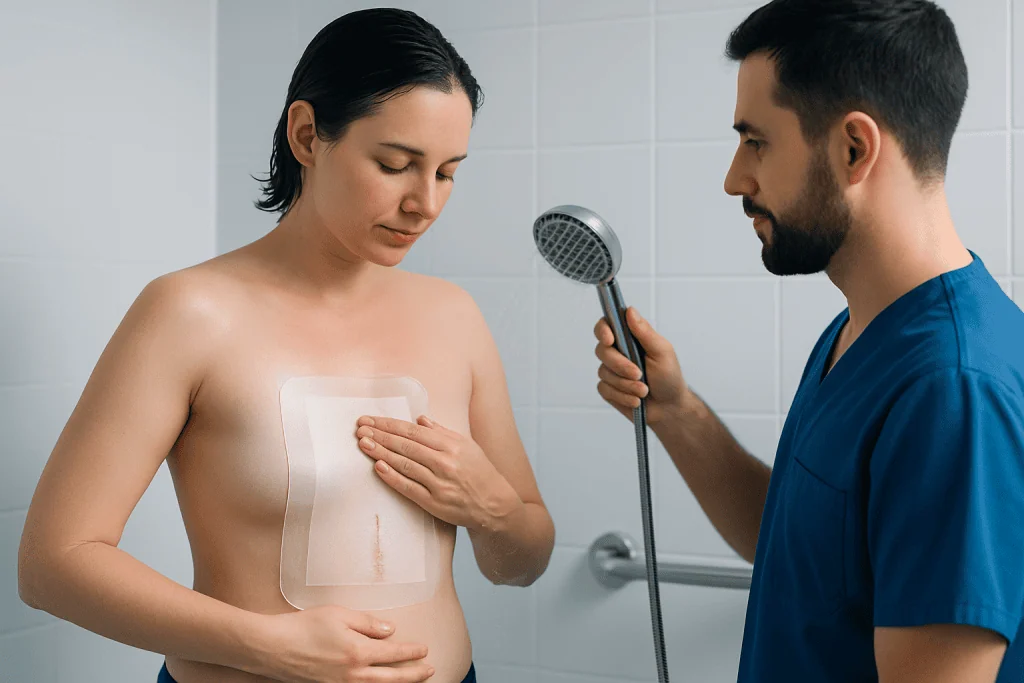
Once your care team confirms that showering is allowed, keep the first attempt short, warm, and unhurried. Very hot water is a poor idea early on: it can make you feel dizzy, increase swelling, and irritate skin that is already sensitive around the incision. Let the water run over nearby areas rather than aiming the showerhead directly at the wound or dressing. A gentle indirect flow is usually enough to feel clean.
Use a mild, fragrance-free soap unless your team has recommended a specific cleanser. Wash around the incision with clean hands only, no rough sponge, exfoliating glove, or loofah near the surgical area. Do not scrub at scabs, surgical glue, steri-strips, staples, or stitches, and do not apply creams, oils, powders, or antiseptics to the wound unless your surgeon has specifically told you to. Products that are harmless on intact skin can interfere with a healing incision.
Afterwards, pat the area dry with a clean towel or sterile gauze, depending on your instructions, pat, never rub. If the wound must stay covered, apply a fresh dressing exactly as the nurse demonstrated, washing your hands before and after. Then dress in loose, clean clothing so fabric does not rub or press on the incision. Tight waistbands, straps, and seams can irritate a wound you have just carefully protected.
Expect the whole process to be more tiring than you think. Many patients are surprised at how much a simple shower takes out of them in the first days. If pain is limiting your ability to move or wash, that is worth raising with your team rather than pushing through: our guide to pain control after surgery in Turkey explains what support you can reasonably expect.
Managing dressings, drains, stitches, and surgical glue
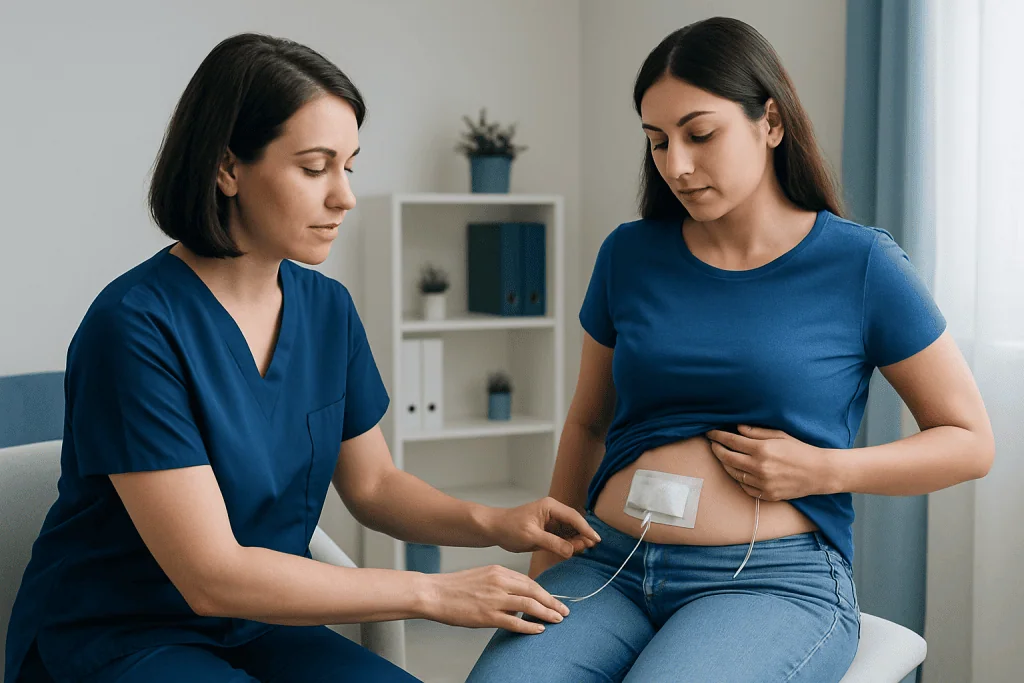
Different closures need different care, and mixing up the rules is a common source of trouble. Surgical glue is usually left alone until it flakes away naturally; picking or peeling it can open the wound edge. Steri-strips generally stay in place until they loosen on their own or until your team removes them at a follow-up visit. Stitches, staples, compression garments, and drain sites each come with their own hygiene instructions, and yours may combine several of these at once. Write down which rule applies to which part of your body, after a long day, it is easy to forget.
If you have a drain, ask before discharge whether you may shower with it and how to secure it. Some drains can be clipped to clothing or held steadily during a wash; others mean no showering yet. Never pull on the tubing, let a drain dangle by its line, or disconnect anything yourself. If fluid leaks around the drain site, if the drain stops collecting, or if the tubing comes loose, contact your care team rather than improvising a fix in the bathroom.
Waterproof dressings help some patients, but they are not right for every incision, and used incorrectly they can trap moisture against the wound: the opposite of what you want. Only use a waterproof cover if your team recommends one, and follow their guidance on how long it can stay on. If any dressing becomes wet, dirty, loose, or blood-soaked, ask whether it should be changed straight away and what materials to use. Acibadem patients can put these questions to their coordinator after discharge; a two-minute message is always better than a guess.
Hotel and accommodation hygiene in Turkey
Recovering in a hotel or serviced apartment can be perfectly comfortable, but the bathroom needs a little preparation before your first shower. Set everything out before you undress: clean towels, mild soap, dressing supplies, and the loose clothing you will put on afterwards. Remove or avoid slippery bath mats, and check that the floor is dry before you step in. If bending is difficult after your procedure, ask your companion to handle shampoo bottles, low shelves, and anything that has fallen.
Shower shoes are sensible on an unfamiliar bathroom floor, and it is best not to sit directly on surfaces you cannot be sure are clean. If you would benefit from a shower chair, a non-slip mat, or extra towels, ask the hotel or your patient coordinator in advance: these are routine requests, not awkward ones. Getting the bathroom right is part of the same job as getting the bed right; our guide to sleep positions and hotel recovery in Turkey covers the rest of the room.
Do not shower alone immediately after anaesthesia or a major procedure if you can avoid it. If you feel weak, dizzy, nauseated, or short of breath mid-shower, stop, sit down, and call for help. Keep the bathroom door unlocked and your phone within reach but away from the water. If you are recovering without a companion, plan around that honestly: shower when hotel staff know to check on you, keep sessions very short, and read our guide to travelling to Turkey for surgery alone for how solo patients build a safety net.
What to avoid while you are healing
A shower is not the same as a soak, and the difference matters. Until your surgeon clears you, avoid baths, hot tubs, pools, hammams, saunas, thermal baths, and sea swimming, anything that keeps the wound wet for a sustained period. Turkey’s hammams and thermal springs are tempting, but heat, sweating, prolonged soaking, and shared water are a poor combination for a healing incision. They can wait until your team says otherwise.
Some hands-off rules are just as important. Do not shave over or near the incision unless your team confirms it is safe. Do not peel skin adhesive, pick scabs, or massage the wound. Do not apply alcohol, hydrogen peroxide, iodine, herbal preparations, or cosmetic creams to the surgical area without medical approval, even familiar products can irritate healing tissue or interfere with closure materials.
Movement restrictions apply in the shower too. Abdominal, chest, orthopaedic, and cosmetic procedures often come with limits on stretching, bending, twisting, or raising the arms, and it is easy to break those limits reaching for a shampoo bottle. If your operation was in general surgery or plastic, reconstructive and aesthetic surgery, ask your nurse to demonstrate safe washing positions before discharge rather than working them out by trial and error.
One more timing point: your hygiene routine and your travel plans are connected. If your dressing schedule or drain removal is due around your departure date, raise it early: our guide to when it is safe to fly home after surgery in Turkey explains how discharge, follow-up, and flights fit together.
When to contact your medical team
Some tenderness, bruising, and small spotting can be normal in the days after an operation. Certain changes are not, and they need prompt medical advice. Contact your care team if you notice fever or chills, increasing redness or warmth around the wound, new or worsening swelling, pus or a bad smell, the wound edges opening, sudden bleeding, worsening pain, or new numbness. Showering is often when patients first look closely at their incision, so a quick check after each wash is a good habit.
If you develop chest pain, difficulty breathing, fainting, heavy bleeding that does not stop, or sudden calf pain and swelling, call your local emergency number or go to the nearest emergency department now.
While you are still in Turkey, report concerns early rather than waiting for your return flight. It is far easier to assess a wound, adjust a dressing, or arrange a follow-up appointment while you are near the hospital that operated on you. Acibadem’s international patient contacts can route your question to the correct department quickly, including outside normal clinic hours.
Take photographs of the wound only if your care team asks for them, and do not post wound images in public online groups for medical opinions. Strangers online do not know your procedure, your closure method, or your history. Your surgeon and nurse do, and their advice is built on those details.
Step by step
- Confirm your shower date before discharge. Ask your surgeon or nurse when you may shower and exactly which areas must stay dry. Request written instructions in a language you understand, and use an interpreter if you need one.
- Prepare the bathroom before you undress. Lay out clean towels, mild soap, dressing supplies, and loose clothing within easy reach. Check that the floor is not slippery, and have your companion nearby if you feel weak.
- Keep the shower short and warm. Use warm rather than hot water and keep strong water pressure off the incision. If you become dizzy, stop immediately, sit down, and call for help.
- Clean gently around the surgical area. Use clean hands and mild soap only if approved. Do not scrub, peel, shave, or apply anything to the incision that your team has not authorised.
- Dry and redress exactly as instructed. Pat the area dry with a clean towel or sterile gauze. Apply a fresh dressing as the nurse demonstrated, washing your hands before and after.
- Check the wound after each shower. Look for new redness, swelling, drainage, odour, bleeding, or opening. If anything worries you, contact your medical team rather than waiting to see.
- Avoid soaking until you are cleared. No baths, pools, saunas, hammams, hot tubs, or sea swimming until your surgeon confirms it is safe. A healing incision should not stay wet for long periods.
Your checklist
- Written discharge instructions covering showering and dressing care
- Patient coordinator and hospital contact numbers saved on your phone and written down
- Mild, fragrance-free soap approved by your care team
- Clean towels and loose, freshly washed clothing
- Sterile gauze or dressing supplies, if instructed
- Waterproof covering only if your team recommends it
- Non-slip bathroom mat or shower shoes for unfamiliar floors
- A companion nearby for your first shower if you feel weak
- Medication list and follow-up appointment details
- A clear plan for urgent help if fever, bleeding, or wound changes occur
Key takeaways
- Your surgeon’s written instructions are the only reliable guide for showering after surgery in Turkey, timing differs from patient to patient.
- Keep early showers short, warm, and gentle, and never soak the incision until you are cleared.
- Do not scrub, peel adhesives, shave near the wound, or change dressings differently from your care plan.
- Prepare your hotel bathroom in advance to reduce slipping, bending, and time on your feet.
- Check the wound after each shower, and contact your team promptly for fever, spreading redness, pus, bleeding, opening, or worsening pain.
- Acibadem’s interpreters and patient coordinators can clarify hygiene instructions before and after discharge, use them rather than guessing.
Frequently asked questions
When can I shower after surgery in Turkey?
It depends on your operation, incision, closure method, dressings, drains, and your surgeon’s assessment. Some patients may shower within a day or two; others need to wait longer or sponge-bathe first. Follow your written discharge instructions, and ask your team before getting the wound wet if you are unsure.
Can I wash my hair after surgery?
Often yes, if your incision location and movement restrictions allow it, but it can be surprisingly tiring. Avoid bending, stretching, or raising your arms if your procedure limits those movements. A companion’s help or a gentle seated wash, if approved, makes it much easier in the first days.
What should I do if my dressing gets wet?
Follow the dressing-change instructions you were given at discharge. If you were not told what to do, contact your nurse, surgeon, or patient coordinator before acting. Do not leave a soaked dressing in place for a long time unless your care team has specifically said it is safe.
Can I use Turkish hammams, saunas, or thermal baths during recovery?
Not until your surgeon clearly approves. Heat, sweating, prolonged soaking, and shared water are unsuitable for a healing incision. Wait until the wound has closed, your restrictions are lifted, and your medical team confirms it is safe, then enjoy them.
Is it safe to shower alone after anaesthesia?
For the first shower it is better to have someone nearby, especially after general anaesthesia, sedation, or major surgery, because you may feel lightheaded or unsteady. Keep the shower short and warm, leave the bathroom door unlocked, and keep your phone within reach but away from water.
Do I need a waterproof dressing to shower?
Only if your care team recommends one. Waterproof covers suit some incisions but not others, and used incorrectly they can trap moisture against the wound. Ask before discharge whether you need one, which type, and how long it may stay on.
Should I bring hygiene supplies from home or buy them in Turkey?
Basic products are easy to find in Turkey, but it helps to bring a familiar mild soap, any approved wound-care supplies, and loose clothing. Do not substitute antiseptics, creams, or herbal products for the dressings you were prescribed. If you need specific supplies, your coordinator can tell you where to get them.
Who should I contact if I notice redness or discharge after showering?
Contact your surgical team, the hospital follow-up line, or your international patient coordinator as soon as possible, and describe the symptoms, your temperature, and whether the wound is opening or draining. If you have severe bleeding, chest pain, difficulty breathing, or fainting, call your local emergency number or go to the nearest emergency department now.
Add us as a Preferred Source to see more of our trusted health content across Google Search, AI Overviews and Discover.

Update history
- PublishedJune 9, 2026
- Medical review approvedSeptember 13, 2026
- Last content updateSeptember 12, 2026
References1
- Surgical wound care - closed: MedlinePlus medlineplus.gov
More Patient Guides

Septoplasty Recovery: Week by Week
Learn what to expect after deviated septum surgery: a week-by-week septoplasty recovery timeline, when it is usually safe to fly home, and…

Gallbladder Surgery Recovery: Week by Week
Learn what to expect after gallbladder surgery: a week-by-week recovery timeline, pain, diet, wound care, when it is safe to fly home…
Robotic Hysterectomy Recovery: Week by Week
Recovery from robotic hysterectomy week by week: pain, lifting, wounds, driving, flying home safely, warning signs and questions to ask before you…

Breast Reconstruction Recovery: Week by Week
DIEP flap recovery week by week: hospital stay, drains, pain, walking, showering, driving, when it is usually safe to fly home, and…