

Traveling Home with Stitches, Drains, or Dressings

Yes, many patients can travel home with stitches, drains, or dressings, but only after their surgeon confirms a safe-to-travel date. Keep all wound supplies, medicines and documents in your carry-on, secure any drain below wound level, change dressings only as instructed, and arrange stitch or drain removal at home before you leave Turkey. Report fever, heavy bleeding or sudden changes promptly.
Will your dressing hold up through a long flight? Who takes your stitches out once you are home? What happens if a drain fills faster than expected somewhere over Europe? These are the questions most patients ask on the morning of discharge, and they deserve clear answers before you close your suitcase.
Traveling home with stitches, drains, or dressings is routine for international patients, and it usually goes smoothly when three things are in place: your surgeon has confirmed you are fit to travel, you know exactly how to care for what is on your body, and follow-up at home is already arranged. This guide walks you through each of those steps, from the discharge conversation in Turkey to the first days back home.
At a glance
- Best for: Patients returning home after surgery with stitches, staples, drains, or dressings
- Main priority: Protecting the wound in transit and keeping follow-up arrangements clear before you fly
- Travel timing: Only your surgeon can confirm your safe-to-travel date, do not book around a guess
- Carry-on essentials: Discharge documents, dressing supplies, prescribed medicines, drain instructions and a record notebook
- When to seek help: Fever, increasing pain, heavy bleeding, foul discharge, spreading redness, or a drain that stops working or comes out
Before You Leave the Hospital
Start by making sure you understand exactly what is on your body and what each item does. Depending on your operation, you may have stitches, staples, adhesive strips, a surgical dressing, a compression garment, or one or more drains, sometimes several of these at once. Ask your care team to show you the wound area while you are still on the ward, explain what normal healing looks like at this stage, and spell out which changes should make you contact a doctor urgently. Traveling home with stitches, drains, or dressings is far less stressful when you have seen the wound yourself and know what counts as expected and what does not.
At Acibadem, the discharge conversation can include your surgeon, the nursing team, international patient services, and an interpreter if you need one. This is the moment to pin down practical detail: when you may shower, whether the dressing must stay dry, how to measure drain output, and when stitches or staples are due to come out. Do not feel rushed. It is safer to ask the same question twice than to travel unsure, and a good team would rather repeat an answer than have you guess at 10,000 metres.
Before you leave, request written discharge notes in English where available, along with medication instructions, wound care guidance, relevant imaging or lab summaries, and emergency contact details. Our guide to the discharge documents you receive before you travel home explains what each paper is for. Keep digital copies on your phone and paper copies in your hand luggage, not your checked bag. If a doctor in your home country will take over your care, ask the team here what information that doctor will need, and get it before you leave rather than by email afterwards.
One more thing worth repeating: confirm your safe-to-travel date directly with your surgeon. Feeling well on the day of discharge is encouraging, but it is not the same as being cleared to fly. The decision depends on your operation, anaesthesia, wound location, drain status and individual risk factors, not on how you feel in the taxi.
Flying or Driving with Stitches and Dressings
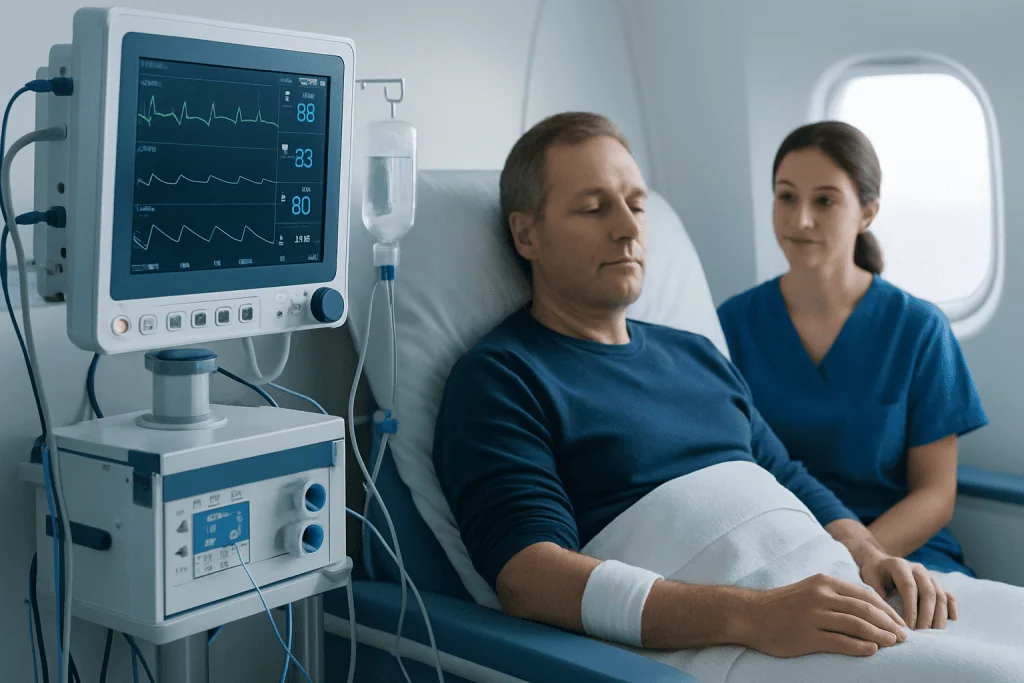
Travel itself does not automatically harm stitches or dressings. What makes wound care harder on the road is a combination of movement, pressure, heat, cramped seating and long waiting times. Plan around those. Choose loose, soft clothing that does not rub the incision, and shoes you can slip on without bending against a fresh abdominal or chest wound. If your surgical site is on the abdomen, chest, leg or shoulder, think about seat position in advance so the area is not compressed by a belt, a bag on your lap, or an armrest for several hours.
If you are flying, keep every wound care item in your carry-on, never in checked luggage. Suitcases go missing; your dressing supplies must not. Airport security staff may ask about dressings, compression garments or visible tubing, and a short medical travel letter from the hospital usually settles those questions quickly. It confirms that you recently had surgery and are carrying sterile supplies, medicines or drainage equipment for a genuine medical reason. If your journey involves connections or a long-haul leg, read our guides on when it is safe to fly home after surgery and flying home with drains, casts, or stitches before booking anything.
For long journeys, plan gentle movement within whatever limits your surgeon has set. Standing briefly, walking the aisle when the seatbelt sign allows, or doing ankle circles in your seat can help circulation. What you should not do is stretch, lift or twist in ways that pull on the incision: that includes hauling a bag into the overhead locker. Ask cabin crew or a companion for help and say why; nobody minds. If you are driving, schedule regular stops so you can move, and keep heavy bags off your lap and away from the surgical area. Never pad or reposition a seatbelt in a way that stops it working properly; if the belt crosses your wound, ask your team what protection is acceptable before you travel.
Traveling with Surgical Drains
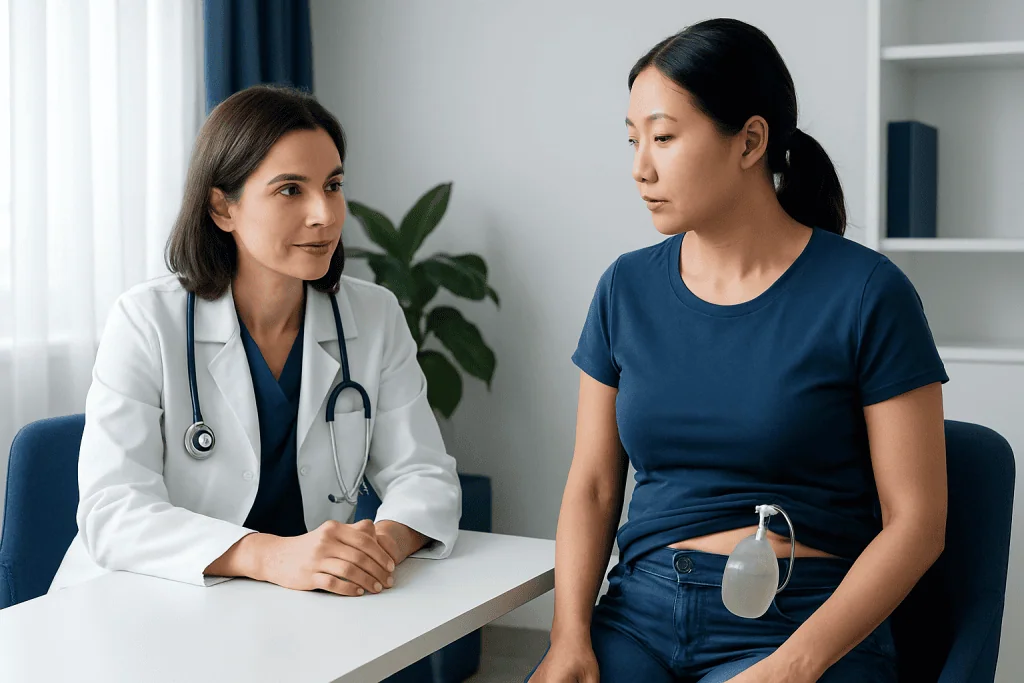
A drain can feel intimidating once you leave the hospital environment, but its job is simple: it collects fluid from the surgical area while healing continues. Before travel, make sure you can answer five questions without checking your notes. How often should you empty it? How do you measure and record the amount? What should the fluid look like at this stage? How do you re-establish suction after emptying, if your drain uses it? And how do you secure the tubing so nothing pulls when you stand, sit or reach?
Practical fixes make the journey easier. Use a drain belt, clip, small pouch, or clothing with secure inner pockets if your team recommends one. Keep the bulb or container below wound level where possible and check that the tubing is not kinked under a waistband or seatbelt. During travel, check the drain discreetly at regular intervals, especially after standing up, using the toilet or shifting position, which is when tubing tends to snag. Keep your measurement notebook with the drain supplies so the record travels with you; whoever removes the drain at home will want to see the daily output figures.
Contact your care team if the drain suddenly stops collecting fluid, fills very quickly, becomes disconnected, loses suction, or if the drainage turns bright red or develops a strong, unpleasant smell. Do not remove or shorten a drain yourself, and do not let anyone other than a qualified healthcare professional do so. Removal follows your surgeon’s plan, usually once output falls below a threshold the team will have told you about. Traveling home with stitches, drains, or dressings still in place is normal, removing anything early to make the journey “simpler” is not.
Packing Your Wound Care Travel Kit
Your kit should be simple, clean and reachable without unpacking. Pack more supplies than you expect to use, connecting flights, long drives and airport delays all stretch the journey. Put wound care items in a clean zip bag or pouch inside your carry-on, separate from snacks, electronics and toiletries, so nothing sterile shares space with things you handle constantly.
Ask your nursing team which supplies suit your specific dressing before you buy anything extra. In general, a kit includes sterile gauze, approved spare dressings, medical tape, hand sanitiser, disposable gloves, small waste bags, any prescribed ointments, and your written wound care instructions. Do not add antiseptics, powders, creams or herbal products unless your surgeon has approved them, well-meaning additions are a common source of wound irritation.
- Keep all medicines in their original packaging with the labels visible, and carry enough of each prescribed medicine for the full journey plus the first days at home.
- Carry a thermometer so you can actually check for fever rather than guessing.
- Keep your drain output record or a simple notebook with the supplies.
- Keep the hospital’s contact details written down, not only stored in your phone.
If you were prescribed new medicines at discharge, our guide to returning home with new medicines after treatment in Turkey covers documentation, customs questions and how to hand the information to your local doctor. Any question about doses, timing or stopping a medicine belongs to your treating doctor, never adjust anything on your own during travel.
Hygiene, Showering, and Dressing Changes on the Road
Hygiene during travel is mostly prevention. Clean your hands before and after touching the dressing, drain or surgical area, every time, even when it feels excessive. In airport, aeroplane or hotel bathrooms, avoid placing supplies directly on counters. Lay down a clean barrier first: a disposable towel, a fresh layer of tissue, or a clean plastic pouch.
Only change the dressing during the journey if your care team told you to, or if it becomes wet, loose or visibly soiled. Many modern surgical dressings are designed to stay in place until the follow-up appointment, and disturbing them early does more harm than good. If a change is genuinely needed, follow your written steps exactly, avoid touching the inner sterile surface, and dispose of the old dressing in a sealed waste bag. Photograph the wound afterwards if your team asked for photos, good light, same distance each time.
Showering rules vary with the surgery, the closure method and the dressing type. Some patients may shower after a set period with waterproof protection; others must keep the area completely dry until review. Do not assume your rule matches another patient’s. Avoid baths, swimming pools, hot tubs and sea water in all cases until your surgeon confirms the wound is sealed and it is safe, soaking a healing incision is a different risk from a brief shower, and the clearance dates are usually different too.
Follow-up After You Arrive Home
Getting home is not the end of care; it is a handover to the next stage. Before leaving Turkey, confirm your follow-up schedule and format, video call, phone, secure messaging or an in-person visit with a local doctor, and ask when wound photographs are useful and how to take them. If you will need local stitch removal, staple removal, dressing changes or drain removal, book that appointment before you travel rather than after the due date has passed. Local appointments can be hard to secure at short notice, and traveling home with stitches, drains, or dressings works best when the next appointment already exists.
Acibadem’s patient services can help coordinate post-discharge communication, share medical documents where appropriate, and guide you on contacting the hospital if concerns arise after travel. For a detailed picture of what normal healing looks like week by week, and which changes are red flags, see our guide on managing wound care, dressings, and red flags after discharge.
When you contact any healthcare professional, describe the situation in plain, specific terms: surgery date, type of wound closure, whether you have a drain, your temperature, pain level, drainage colour and volume, and any change in swelling or redness. Vague messages get vague answers. Clear details let the team decide quickly whether you need reassurance, a routine appointment or urgent assessment.
Step by step
- Confirm you are fit to travel. Do not rely on how you feel on discharge day. Ask your surgeon to confirm when flying or driving is safe for you specifically: the answer depends on your operation, anaesthesia, drain status, wound location and clot risk.
- Review wound care instructions before leaving. Ask a nurse to demonstrate dressing care, drain emptying and hand hygiene while you are still in the hospital, then repeat the instructions back in your own words so the team can correct anything unclear.
- Prepare your carry-on kit. Dressings, medicines, drain supplies, sanitiser, gloves, waste bags, thermometer and documents all go in hand luggage, organised so you never need to open your suitcase mid-journey.
- Protect the wound during the journey. Wear loose clothing, ask for help with luggage, avoid twisting and lifting, and never modify a seatbelt in a way that stops it working, ask your team beforehand what padding is acceptable.
- Monitor for changes. Check your dressing, drain, pain level and temperature as instructed. Light spotting may be expected for some wounds; increasing bleeding, spreading redness, fever or worsening pain should be reported promptly.
- Set up follow-up at home before you fly. Know exactly who will remove stitches, staples or drains, share your discharge documents with your local doctor, and keep Acibadem’s contact details to hand for treatment-related questions.
Your checklist
- Discharge summary and operative notes if provided
- Medical travel letter for airport security or airline questions
- Written wound care and drain care instructions
- Enough prescribed medicine for the journey and early recovery at home
- Sterile dressings or gauze approved by your care team
- Hand sanitiser, disposable gloves and small waste bags
- Thermometer and a simple drain output record
- Comfortable loose clothing and easy-to-wear shoes
- Emergency contact numbers for the hospital and your local doctor
- A booked appointment for stitch, staple or drain removal at home
Key takeaways
- Confirm your safe-to-travel date with your surgeon before booking or changing flights.
- Keep dressings, medicines, drain supplies and documents in your carry-on, never in checked luggage.
- Secure drains carefully, record output, and never remove or adjust them beyond your written instructions.
- Change dressings during travel only if instructed, or if the dressing becomes wet, loose or soiled.
- Arrange stitch, staple, dressing or drain follow-up at home before you leave Turkey.
- Report fever, increasing pain, heavy bleeding or unusual drainage early, clear details get faster answers.
Frequently asked questions
Can I fly home with stitches or staples?
Many patients can, but timing depends on the type of surgery, anaesthesia, wound location and your overall condition. Your surgeon should confirm when you are fit to travel and whether you need particular precautions. Keep the wound protected, avoid lifting heavy luggage, and carry your medical documents in hand luggage.
Is it safe to travel with a surgical drain?
It can be, provided your surgical team has assessed you and given clear instructions. You need to know how to secure the drain, empty it, measure output and recognise warning signs. If the drain comes out, loses suction, fills rapidly or the fluid changes suddenly, seek medical advice promptly rather than waiting until you land.
Should I change my dressing during the journey?
Only if your instructions say so, or if it becomes wet, loose or contaminated. Many surgical dressings are designed to stay in place for several days. If a change is needed mid-journey, clean your hands thoroughly, avoid touching the inner sterile surface, and use only the supplies your care team approved.
What if my drain comes out during travel?
Do not try to reinsert it. Cover the site with a clean dressing or gauze, note the time and how much fluid had drained, and contact your care team for instructions. If there is heavy bleeding or you feel suddenly unwell, call your local emergency number or go to the nearest emergency department now.
What if airport security asks about my dressings or drain?
Security staff may ask about medical items, particularly liquids, scissors or visible tubing. A medical travel letter explaining your recent surgery and the supplies you carry usually resolves questions quickly. Keep medicines in labelled original packaging and allow extra time at the airport so the process is not rushed.
When should stitches or staples be removed?
Timing varies by surgery type, wound location, healing progress and your surgeon’s plan. Before leaving the hospital, confirm the expected date and whether removal happens at Acibadem, via remote follow-up guidance, or with a local healthcare professional at home. Never remove stitches or staples yourself unless a qualified clinician specifically instructs you.
Can I shower after traveling home?
It depends on your dressing type, incision, drain status and your surgeon’s instructions. Some patients may shower with waterproof precautions; others must keep the area dry until review. Avoid baths, pools, hot tubs and swimming until your surgeon confirms the wound is sealed and soaking is safe.
How do I share wound concerns after I return home?
Use the contact method in your discharge plan and include clear detail: surgery date, symptoms, temperature, pain level, and any change in redness, swelling, bleeding or drainage. If asked for photos, take them in good light from the same distance each time. For severe or sudden symptoms, call your local emergency number or go to the nearest emergency department now.
Add us as a Preferred Source to see more of our trusted health content across Google Search, AI Overviews and Discover.

Update history
- PublishedJune 9, 2026
- Medical review approvedSeptember 13, 2026
- Last content updateSeptember 12, 2026
References3
- MedlinePlus: After Surgery medlineplus.gov
- NHS: How should I care for my stitches? nhs.uk
- CDC Travelers' Health: Blood Clots During Travel wwwnc.cdc.gov
More Patient Guides

Flying After a C-Section: Timing for New Mothers
A C-section is real abdominal surgery that happens to come with a newborn attached, so the flying question has two clocks…

When Can You Drive After Anesthesia or Sedation?
You feel fine an hour after the procedure. You are chatting, you walked to the car unaided, you could obviously drive it.…

Flying After Hip Replacement: When Is It Safe?
Hip replacement recovers famously well, many patients walk further at three weeks than they had in three years. Flying is part…

Flying After Knee Replacement: When Is It Safe?
The knee is new, the physio is going well, and there is a boarding pass with your name on it. Flying after…