

Flying Home After Treatment with Stitches, Casts, or Drains: What to Check First

Many patients can fly with stable stitches, a well-fitting cast, or a managed drain, but only after the treating doctor confirms fitness to fly for the planned date. The essential checks are wound stability, cast fit and expected swelling, clear drain instructions, workable pain control, mobility for the airport, and complete medical paperwork carried in hand luggage rather than the hold.
You are due to fly home in a few days. You still have stitches, a cast, or a drain. That combination raises fair questions, and most of them have practical answers. This guide walks through what to check before discharge, at the airport, and in the air, so that flying home after treatment with stitches, casts, or drains is a planned step in your recovery rather than a gamble.
Nothing here replaces the instructions your own surgeon gives you. Different procedures, wound sites, and recoveries change the details. What this guide does is show you which questions to ask, in what order, and why each one matters.
At a glance
- Best for: Patients returning home by air with stitches, a cast, or a surgical drain still in place
- First check: Confirmation from your treating doctor that flying is suitable on your planned date
- Main travel factors: Wound stability, cast fit and swelling, drain handling, pain control, mobility, paperwork
- Documents to carry: Discharge summary, medication list, fit-to-fly or clearance letter, relevant imaging and reports
- Plan early if: You have a new cast, a drain, limited mobility, lifting restrictions, or a recent major procedure
Flying home after treatment with stitches, casts, or drains: start with one question
Before baggage, boarding passes, or airport timing, one question comes first: is flying appropriate for you at this stage of recovery? A flight means long periods of sitting still, walking through terminals, queues, cabin pressure changes, and several hours without access to your usual care team. Feeling well on the ward is not the same as being ready for all of that.
The person who can answer is your surgeon or treating doctor, and the right time to ask is before your ticket date becomes fixed. The assessment usually covers whether the wound is stable, whether bleeding risk has settled, whether pain is controlled with the medicines you will carry, whether you can manage eating, toileting, and moving safely in transit, and whether your procedure carries any specific risk in a pressurised cabin. Some airlines also require a formal medical certificate for recent surgery; the guide on when you need fit-to-fly clearance explains how that process works and who issues the letter.
Stitches, casts, and drains each add their own layer to this decision. None of them automatically rules out flying. Each of them changes what needs to be checked first.
Why the aircraft cabin matters after surgery
Understanding what a cabin does to a recovering body makes the pre-flight checks less abstract. Commercial aircraft are pressurised, but not to sea level: the cabin environment is roughly equivalent to standing at 1,800 to 2,400 metres of altitude. At that pressure, gas trapped inside the body expands. This is why doctors are cautious about flying soon after procedures involving the abdomen, chest, eyes, ears, or skull, where trapped air can stretch healing tissue. It is one reason there is no single “safe number of days” that applies to every operation; timing questions are covered in more depth in how long before flying home you can travel after treatment.
Cabin air is also very dry, and sitting still for hours slows circulation in the legs. After surgery, when clotting activity is naturally higher, prolonged immobility deserves respect. Your doctor may recommend walking breaks, calf exercises, hydration, or compression stockings for the flight, follow whatever plan you are given for your specific procedure rather than generic advice.
Finally, a cabin is a place with limited help. Whatever your wound, cast, or drain might need during the journey, you or your travel companion must be able to handle it with what is in your hand luggage. That single idea drives most of the checks below.
What to check if you have stitches, a cast, or a drain
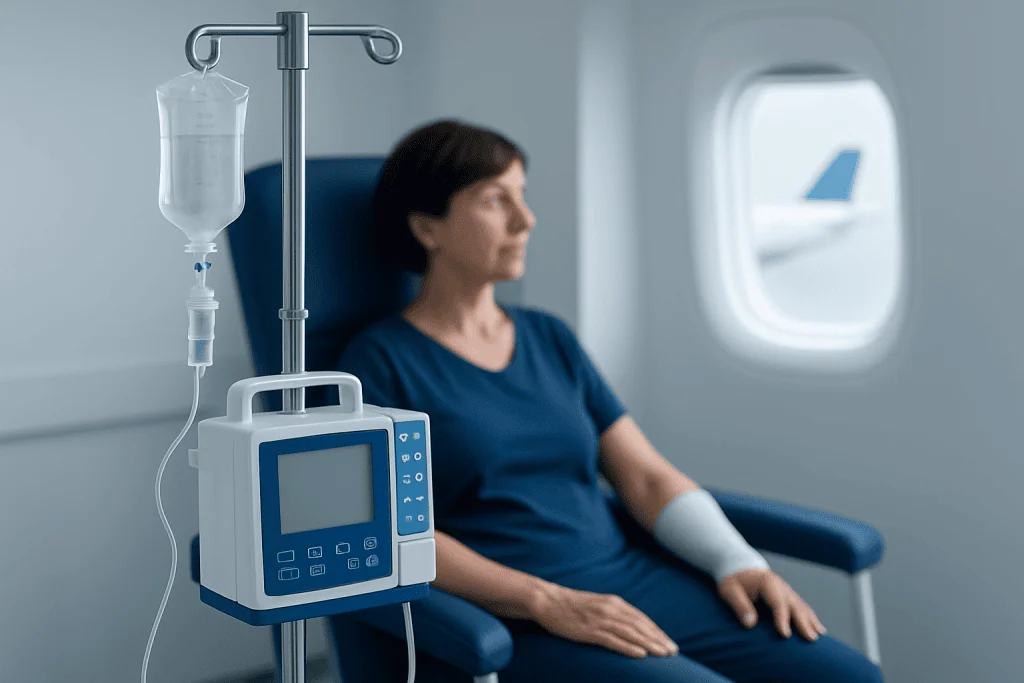
Stitches and closed wounds
A closed, dry, healing wound is usually the least of the three concerns, but it still needs a plan. Before you leave the hospital, confirm whether your stitches are dissolvable or need removal, and if removal is needed, on which date and by whom. Ask whether the dressing should be changed just before travel, whether the wound can get wet in the shower, and what a small amount of leakage looks like versus something that needs review. It helps to know exactly what “normal” is for your wound on days three, five, and seven, because that is the window in which many patients travel.
Pack spare dressings and any tape your team approves in your hand luggage. Wounds under clothing waistbands, seatbelt lines, or backpack straps deserve particular thought: a well-healing wound can still be rubbed raw by six hours of pressure in the wrong place.
Casts and splints
With a cast, the practical issues are fit and swelling. Sitting for long periods, warm cabins, and the mild pressure change can all make a limb swell inside a rigid shell. This is why many airlines ask whether a cast is recent: a plaster applied within the previous day or two may need to be split along its length before flying, so that swelling has somewhere to go. Ask your doctor directly whether your cast should be reviewed, split, or replaced with a splint before your flight, and what tightness, numbness, or colour change would mean the cast has become too snug.
Also settle the mobility basics: how much weight you may put on the limb, whether you need crutches or a wheelchair through the terminal, and how to position the limb in your seat. A full-length leg cast may need specific seating arrangements that airlines want notice of. There is a separate guide on flying home with a cast, brace, or limited mobility that covers seating, security screening, and airline notice periods in detail.
Surgical drains
A drain is the item that most needs a hands-on briefing before discharge. You should leave the hospital knowing how the drain is secured to your body, how to empty and measure it if that is part of your care, what daily output is expected at your stage, and what changes in volume, colour, or smell matter. Ask how to protect the tubing under clothing, whether to empty the reservoir before boarding, and how to keep the collection bulb below the level of the wound. Ask, too, who will review or remove the drain once you are home, and roughly when.
If any of this feels uncertain, request a practical demonstration on the ward and repeat it yourself while a nurse watches. Managing a drain for the first time should not happen in an aircraft toilet.
- Ask what normal healing looks like for your specific wound, cast, or drain on your travel dates
- Check whether any dressing changes or drain measurements fall on travel days, and plan where you will do them
- Confirm which changes are urgent and which can safely wait until you are home
- Photograph your written care instructions so they are always on your phone
Documents, medicines, and supplies to organise before discharge

Paperwork is the part of flying home after treatment with stitches, casts, or drains that patients most often leave until the last morning, and it is the easiest to fix early. At minimum, travel with a discharge summary, a full medication list, any fit-to-fly or medical clearance letter, and written follow-up instructions. If your treatment involved imaging, implants, or anything complex, ask whether copies of scans and reports should travel with you: a doctor at home can act faster with documents in hand than with a request sent abroad. Everything goes in hand luggage, never in the hold. If you have a metal implant or prosthesis, the guide on flying home with medical implants or prostheses explains what documentation helps at security.
Medicines need the same discipline. Carry enough of everything prescribed for the full journey plus a buffer for delays and your first days at home, pharmacies at home may not stock identical products, and replacing a prescription across borders takes time. If you are carrying syringes, liquid medicines above the usual cabin limits, or medical devices, ask for a letter explaining why they are necessary; security staff see these letters routinely and they smooth the process considerably. Take your medicines exactly as prescribed; any adjustment is a conversation with your treating doctor, not a travel-day decision.
Then build a small recovery kit for the flight itself: spare dressings, approved tape, hand sanitiser, wipes, drain supplies if relevant, snacks that suit your recovery, and a refillable water bottle for after security. Reviewing this kit with a nurse or care coordinator the day before departure catches gaps while they are still fixable.
Plan the airport and flight around your mobility and comfort
The safest assumption is that everything at the airport will take longer and cost more energy than it did on the way out. If walking distances will be difficult, request wheelchair or special assistance from the airline when you book or as soon as your travel date is confirmed, airlines generally want notice at least 48 hours before departure, and requesting it on the day is far less reliable. Assistance covers check-in, security, boarding, connections, and arrival, and it exists precisely for situations like a fresh cast, a painful wound, or post-treatment fatigue. For patients who need clinical support in the air rather than mobility help on the ground, a medical escort is a separate arrangement worth understanding before booking.
Seat choice matters more than usual. An aisle seat makes it easier to stand, stretch, reach the toilet, and manage a drain discreetly. If you need space for an extended leg, cannot lift bags overhead, or will struggle with a middle seat, tell the airline early and ask what is possible. Priority boarding sounds trivial until you are settling a drained, casted, or freshly stitched body into a seat while a queue forms behind you.
On the day, wear loose clothing that does not press on the treated area, and shoes you can slip on and off, feet and ankles swell in flight even without a cast. Do not carry heavy bags if you have lifting restrictions; a trolley, a companion, or assistance staff exist for that. Arrange the transfer from hospital or hotel so the route to the airport is direct, with time to spare rather than time to sprint.
When doctors say wait, and why that is sometimes the right answer
Sometimes the safest plan is a later flight. Surgeons routinely reassess travel timing when certain things change in the days before departure: pain that worsens despite the prescribed medicines, a wound that bleeds or begins to open, a cast that feels progressively tighter, a sudden change in drain output, fever, breathlessness, chest pain, marked new swelling, or fainting. These are changes doctors want to evaluate on the ground, with full facilities, not changes to manage at 11,000 metres. The separate guide on warning signs to report before flying home covers this territory in more detail.
It also helps to ask, before discharge, what degree of swelling, bruising, numbness, or drainage is expected for your specific recovery. Generic online lists mislead because a knee, an abdomen, and a face heal on different timelines with different normal appearances. Your own team knows what your day-five wound should look like; use that knowledge rather than a stranger’s photograph.
A postponed flight feels like a setback in the moment. In practice, moving a ticket by a few days is one of the cheapest forms of insurance a recovering patient can buy in effort, if not always in money.
Set up your follow-up before you leave Turkey
A good journey home ends with a plan that starts working the day you land. Before discharge, confirm who will handle your next review, stitch removal if needed, drain checks, dressing changes, and any repeat tests. If you already have a doctor or clinic at home, ask for a handover summary in English that states what treatment you had, what has already been done, and what remains. Some reviews can happen remotely; if that suits your case, agree the timing of the first check-in before you leave.
Ask about the milestones ahead: when you can shower normally, drive, return to work, climb stairs, sleep in your usual position, and restart exercise. If you have had surgery, ask specifically about infection signs, clot-prevention measures for the flight, and whether compression, elevation, or scheduled walking breaks are recommended in the air.
Finally, make landing easy on yourself. Arrange transport from the airport, help with luggage, simple meals, and a resting place that does not demand stairs. The guide to your first week at home after treatment picks up where this one ends. A calm arrival is not a luxury; it is part of the recovery.
Step by step
- Ask for medical clearance to fly. Before your ticket date is fixed, ask your surgeon or treating doctor whether flying is suitable on that date. This single conversation covers wound stability, pain control, clot risk, and any airline certificate you may need.
- Get a final hands-on review of your stitches, cast, or drain. Before discharge, have the wound checked, the cast fit assessed, and drain handling demonstrated until you can do it yourself. Ask for written instructions and photograph them.
- Assemble paperwork and medicines in hand luggage. Discharge summary, medication list, fit-to-fly letter, follow-up plan, and any imaging or implant documents travel with you in the cabin, along with enough medicines for the journey, delays, and your first days home.
- Request airline assistance early. If walking, standing, or carrying bags will be hard, ask for wheelchair or special assistance as soon as your date is confirmed, ideally at least 48 hours before departure.
- Plan seat, clothing, and comfort. Choose a seat that suits your mobility, wear loose clothing that spares the treated area, and keep water, medicines, dressings, and drain supplies within reach of your seat.
- Learn what would change the plan. Ask your team, before you leave the ward, exactly which changes in your wound, cast, drain, or general condition would mean the flight should be reassessed rather than boarded.
- Fix the follow-up before departure. Confirm who reviews you at home and when, especially if stitches need removal or a drain needs checking soon after arrival. Appointments arranged from the hospital are easier than appointments chased from a sofa.
Your checklist
- Fit-to-fly clearance or documented doctor approval for your travel date
- Discharge summary, medication list, and follow-up plan in hand luggage
- Enough medicines and wound-care supplies for travel days plus a delay buffer
- Written instructions for stitch care, cast checks, or drain management, photographed on your phone
- Cast reviewed for fit (and split if your doctor advises) before flying
- Airline notified of wheelchair or special assistance needs, ideally 48+ hours ahead
- Security letter for any syringes, liquid medicines, or devices you carry
- Airport transfer arranged with minimal lifting and walking
- Local follow-up appointment or contact confirmed for stitch removal or drain review
- Loose clothing, easy shoes, and a small in-flight recovery kit prepared
Key takeaways
- Confirm with your treating doctor that you are fit to fly on your planned date: that decision comes before every other arrangement.
- Stitches, casts, and drains each need specific pre-flight checks: wound stability, cast fit and swelling room, and confident drain handling.
- All medical paperwork, medicines, and wound supplies travel in hand luggage, never the hold.
- Request airline assistance early if mobility, pain, or fatigue could be an issue on the day.
- Flying home after treatment with stitches, casts, or drains works best when follow-up at home is arranged before you leave Turkey.
Frequently asked questions
Can I fly with surgical drains?
Some patients can, with their doctor’s approval and clear instructions. What matters is that the drain is secure, you know how to empty and measure it if required, you understand what output is expected, and you carry the supplies to manage it in flight. Some doctors prefer drains to be removed before long journeys; the decision depends on the procedure and how much fluid is still draining.
Can you fly after just getting stitches?
Often yes, if the wound is closed, stable, and not actively bleeding, but the answer depends on where the stitches are and what procedure they follow. Stitches after a minor skin procedure and stitches closing major surgery are very different situations. The reliable answer comes from the doctor who placed them, ideally before your travel date is fixed.
What surgery can you not fly after?
There is no fixed list, but doctors are most cautious after procedures where gas may be trapped inside the body, abdominal, chest, eye, ear, and brain surgery are common examples, because trapped gas expands at cabin altitude. Recommended waiting periods vary by operation and by patient, so timing is always set individually by the treating team, sometimes together with the airline’s medical department.
What injuries can you not fly with?
Airlines assess this case by case rather than from a universal list. Recent fractures in fresh rigid casts, injuries with uncontrolled bleeding, significant head injuries, and any condition that prevents sitting upright for take-off and landing are the situations most likely to need medical clearance or a delay. A cast applied within the previous day or two may need to be split before an airline will accept it.
Is it safe to fly with a cast?
It can be, provided the cast is reviewed before travel. Swelling can increase during a flight, so a recent cast may need to be split or adjusted, and you should know in advance what tightness, numbness, or colour change would mean the cast has become too snug. Weight-bearing rules, crutches, and seating needs are settled with your doctor and the airline before the day of travel.
What documents should you carry when flying home after treatment?
Carry your discharge summary, medication list, prescriptions, and any fit-to-fly or airline medical letters in your hand luggage. If relevant, add imaging reports, implant documentation, and written follow-up instructions for the doctor who will see you at home. A letter explaining any syringes, liquid medicines, or devices you carry helps at security.
When do doctors advise delaying a flight home?
Typically when something changes in the days before departure: worsening pain despite prescribed medicines, heavy bleeding, a wound opening, a cast becoming tighter, a sudden change in drain output, fever, breathlessness, or fainting. Doctors prefer to reassess these on the ground before travel, and moving a flight by a few days is usually a far smaller cost than managing a complication mid-journey.
Add us as a Preferred Source to see more of our trusted health content across Google Search, AI Overviews and Discover.

Update history
- PublishedJuly 8, 2026
- Medical review approvedSeptember 13, 2026
- Last content updateSeptember 12, 2026
References2
- After Surgery: MedlinePlus medlineplus.gov
- Surgical wound care: MedlinePlus Patient Instructions medlineplus.gov
More Patient Guides

Flying After a C-Section: Timing for New Mothers
A C-section is real abdominal surgery that happens to come with a newborn attached, so the flying question has two clocks…

When Can You Drive After Anesthesia or Sedation?
You feel fine an hour after the procedure. You are chatting, you walked to the car unaided, you could obviously drive it.…

Flying After Hip Replacement: When Is It Safe?
Hip replacement recovers famously well, many patients walk further at three weeks than they had in three years. Flying is part…

Flying After Knee Replacement: When Is It Safe?
The knee is new, the physio is going well, and there is a boarding pass with your name on it. Flying after…