

Walking and Gentle Movement After Surgery in Turkey
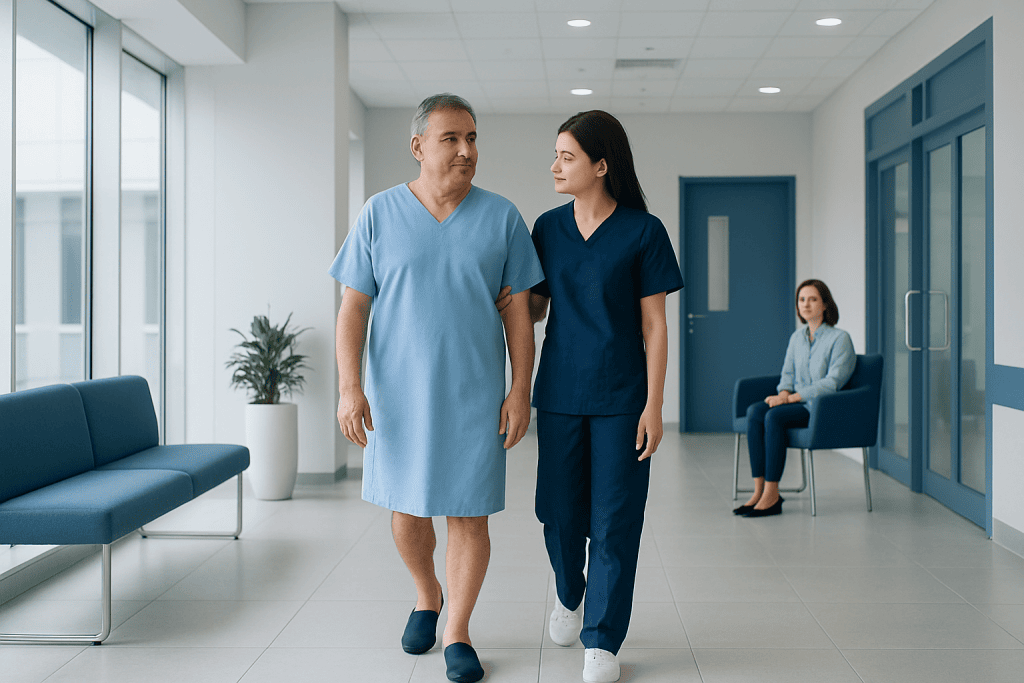
After surgery in Turkey, most care teams encourage short, slow, supported walks as one of the first steps in recovery, often the same day or the day after, depending on your operation. Walk little and often, stop before exhaustion, and follow your written discharge instructions. Your surgeon sets the limits; this guide explains how to apply them safely during your stay and journey home.
Wondering when it is safe to get up and walk again, and how far is too far? Most patients ask this within hours of waking from anaesthesia. Gentle walking is usually one of the first steps in recovery, but the right pace, the right support and the right environment matter, especially when you are recovering far from home.
This guide explains how walking and gentle movement after surgery in Turkey typically works: why teams get you moving early, what a sensible routine looks like, why the first walks feel harder than expected, and how to plan movement around your accommodation and your flight home. It also explains how Acibadem International can support the practical side of your aftercare. Your surgeon’s instructions always take priority over anything written here.
At a glance
- Best first step: Confirm your personal movement limits with your surgeon and nurses before increasing activity
- Typical pattern: Several short, slow walks each day rather than one long or tiring session
- Gentle means: A pace at which you can speak comfortably, with rest before you feel exhausted
- Support available: Interpreter assistance, discharge planning and aftercare coordination through Acibadem International patient services
- When to stop: Chest pain, severe breathlessness, fainting, heavy bleeding or sudden one-sided leg swelling, call your local emergency number or go to the nearest emergency department now
Why walking and gentle movement after surgery in Turkey matters
After an operation, it is normal to feel cautious about moving. You may worry about pain, stitches, drains, dizziness, or simply doing too much too soon. Modern recovery plans, however, usually encourage early gentle movement, not despite the surgery, but because of it. Getting out of bed and walking short distances is widely built into hospital protocols because movement supports circulation in the legs, encourages deeper breathing after anaesthesia, helps the bowel return to normal activity, and reduces the stiffness and deconditioning that come with lying still.
This is also the honest answer to a question many patients ask: why do nurses make you walk so soon after surgery? Long periods of immobility carry their own risks, including blood clots in the legs and chest complications. Early, supervised walking is one of the standard measures teams use to reduce those risks. It is not a test of toughness, and it is never meant to hurt. The first walk may only be from the bed to a chair, or a few metres along the corridor with a nurse beside you. That still counts.
Does walking speed up recovery? Walking is one part of a wider recovery plan, alongside wound care, pain control, nutrition, rest and follow-up, and no single activity determines how you heal. What can be said plainly is that early mobilisation is encouraged in recovery programmes worldwide because immobility creates problems that gentle movement helps avoid. Treat walking as a recovery activity, not exercise, in the first days.
At Acibadem hospitals, your movement instructions are based on your specific operation, the type of anaesthesia used, your medical history, your pain level and your mobility. Nurses, physicians, physiotherapists where needed, and international patient services can make sure you understand what is safe before you leave the ward or continue recovery in your accommodation.
Start with your personal discharge instructions
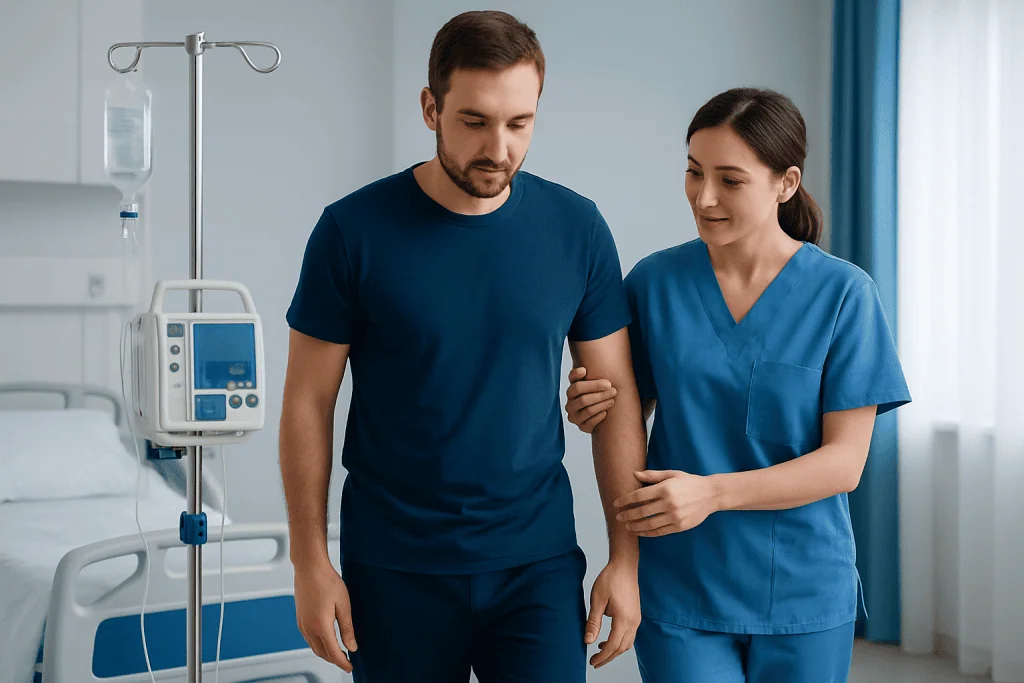
Your discharge plan is the single most important reference for walking and gentle movement after surgery in Turkey. It should state what activities are allowed, what to avoid, when to return for follow-up, how your medicines are to be taken, and which symptoms require urgent contact. If any point is unclear, ask before you leave the hospital: it is far easier to clarify instructions on the ward than from a hotel room.
Different procedures carry very different limits, and generic advice from the internet cannot replace them. A patient recovering from abdominal surgery may be told to avoid lifting and twisting for a set period. A patient after orthopaedic surgery may have weight-bearing rules or need crutches. A patient after cardiac, thoracic or other complex surgery may receive specific walking targets, breathing exercises and warning signs to watch. Patients who had a day surgery procedure often move sooner and further than those recovering from major operations, but the same principle applies: your written plan comes first.
If English is not your first language, ask for an interpreter when movement instructions are explained. Acibadem International can coordinate interpreter support so you and your companion understand practical details: how often to walk, how to manage stairs, how to shower safely, how to get in and out of a car, and when to call the care team. Repeating the instructions back in your own words is a simple way to catch misunderstandings before they matter.
What a gentle walking routine may look like
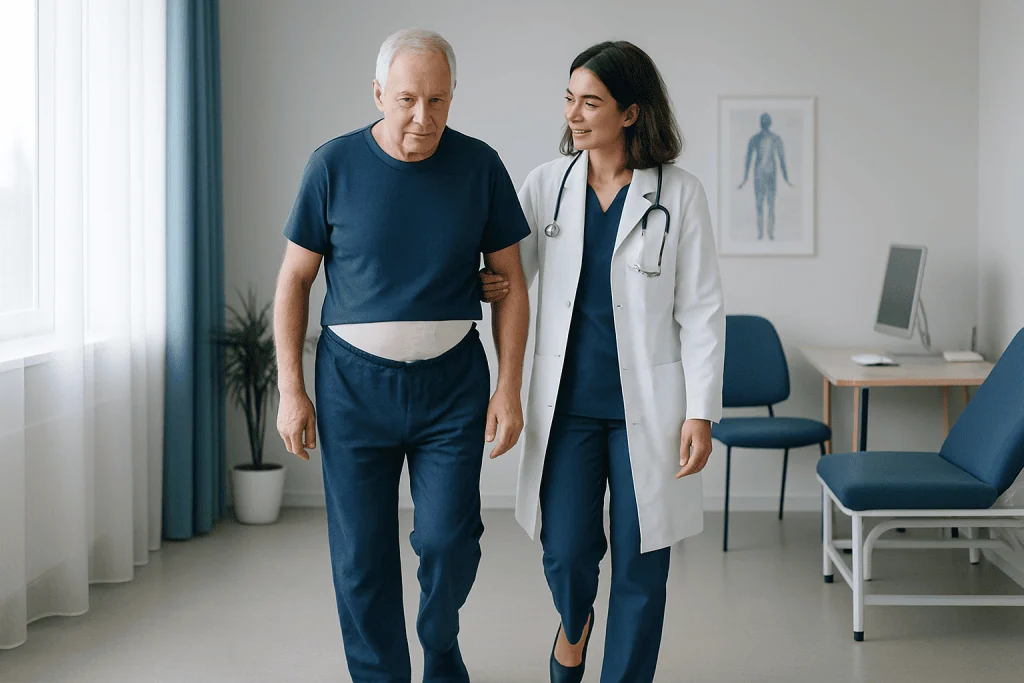
Gentle walking after surgery means slow, flat, short-distance walking at a pace where you could hold a conversation without gasping. There is no straining, no hills, no hurrying and no set distance to hit. In the first days after discharge, most patients do better with several short walks, a few minutes each, spread through the day, rather than one long effort. Walk, rest, drink water if allowed, and repeat later. The exact frequency should come from your care team, especially after major surgery or if you have heart or lung conditions, blood-loss concerns or mobility restrictions.
A practical trick is to attach walking to daily moments so it happens naturally: a short walk after using the bathroom, before meals, or along a quiet corridor with your companion. Increase distance gradually and only as your team advises. A useful self-check is how you feel two to three hours after a walk and the next morning, if pain, swelling or exhaustion clearly worsen after activity, you probably did too much, and it is worth telling your care team.
Useful habits for the early days:
- Wear supportive, non-slip footwear, not loose hotel slippers on smooth floors
- Stand up slowly in stages: sit on the edge of the bed first, pause, then rise
- Use handrails, walls or a companion’s arm until your balance feels reliable
- Keep walking paths clear of bags, cables and rugs in your room
- Carry your phone and hospital contact details, even for short walks
If you have drains, dressings, a catheter, compression stockings, a brace or crutches, ask a nurse to show you how to move with them before you try independently. Moving with equipment has a technique, and learning it once on the ward saves discomfort later.
Why walking feels so hard at first
Many patients are surprised by how difficult the first walks feel, even after a procedure they expected to be minor. There are ordinary reasons for this. Anaesthetic drugs can leave you drowsy and unsteady for a day or more. Pain makes muscles guard and breathing shallow. Time in bed, even a single day, reduces blood pressure regulation when you stand, which is why dizziness on first standing is common. Reduced food and fluid intake around the operation lowers your energy. Swelling around the surgical site can change how you hold your body and shorten your stride.
None of this means something is wrong, and it usually improves day by day. What it does mean is that your first walks deserve respect: go slowly, sit down if you feel lightheaded, sweaty or unusually breathless, and do not walk alone until you feel steady. If walking becomes dramatically harder rather than gradually easier, or a new symptom appears, such as calf pain, one-sided leg swelling or chest tightness, treat it as a signal to contact your care team, not something to push through.
Gentle movement beyond walking
Gentle movement includes more than walking, though nothing here replaces your surgeon-specific instructions. Depending on your procedure, you may be encouraged to do ankle circles and foot pumps while resting, deep-breathing exercises, regular position changes, or simple bed-to-chair transfers. Some patients receive structured physiotherapy, particularly after orthopaedic, neurological or cardiac procedures, or after a long hospital stay.
Breathing exercises help you take fuller breaths after anaesthesia or when pain makes breathing shallow. Ankle and foot movements support circulation during periods of sitting or lying still, useful on the ward, in your hotel and later on the plane. Changing position regularly reduces stiffness and pressure discomfort, provided you protect the surgical area and respect any movement limits you were given.
What to avoid is equally important. Do not guess with stretches, gym-style exercise, yoga, resistance bands, swimming or abdominal work until your care team approves them, gentle-looking movements can still strain a healing wound. Swimming and bathing in particular usually wait until the wound is fully closed and your surgeon confirms it. If you are unsure whether a specific movement is safe, ask through your patient coordinator or raise it at your follow-up appointment rather than experimenting.
Managing pain, tiredness and confidence
Some discomfort with movement is expected in early recovery, but severe or steadily worsening pain is a reason to pause and ask for advice, not to grit your teeth. Well-managed pain matters for movement: when pain is controlled, you breathe more deeply, walk more normally and feel less anxious. Your treating doctor sets your medication plan, never adjust doses or add medicines yourself. If pain is limiting your walking, say so; our guide to pain control after surgery in Turkey explains what to expect and which questions to ask.
Fatigue is also normal after surgery, travel, anaesthesia, disrupted sleep and emotional stress. Plan movement for the times of day you usually feel strongest, and rest before you become exhausted rather than after. Recovery is not a straight line: a good day can be followed by a slower one, especially after follow-up visits or a long transfer, and that pattern alone is not a cause for alarm.
Confidence grows fastest when you know exactly what to do. Ask your team to demonstrate getting out of bed, climbing stairs if you must use them, getting into a car, and walking with assistance. If you are staying in Turkey for a period before flying home, choose accommodation with easy bathroom access, a lift if you cannot manage stairs, comfortable seating and safe, level space for short walks.
Walking safely during your stay in Turkey
Your surroundings matter as much as your effort. Istanbul and other Turkish cities can involve slopes, uneven pavements, cobbles, busy crossings and crowded public areas, manageable when you are well, unhelpful in early recovery. For the first days after discharge, it is usually safer to walk indoors: hospital corridors, hotel hallways, or a calm, level area close to your accommodation. Sightseeing can wait, and your doctor can tell you when short, quiet outings become reasonable.
Keep walks practical and close to help. Carry your phone, the hospital’s contact details and any important medical documents. If you are taking medicines that may cause drowsiness or dizziness, do not walk alone. A companion is genuinely useful here: managing doors, lifts, taxis and bags, and noticing if you look pale or unsteady before you notice it yourself. Turkish summer heat is another factor, walk during cooler hours, stay hydrated if your team allows, and avoid long periods outdoors while you are still healing.
Know your escalation route before you need it. Your discharge papers should say whom to call and when. Some symptoms warrant a call to the hospital; our guide on when pain, swelling or fever should prompt an urgent call covers these in detail. For sudden chest pain, severe breathlessness, fainting, heavy bleeding or one-sided leg swelling with pain, call your local emergency number or go to the nearest emergency department now.
Acibadem International patient services can assist with the practical layer around all of this: transfer coordination, accommodation guidance, interpreter support and communication with your medical team. That support matters most when you are balancing recovery instructions against follow-up appointments and a return flight.
Preparing for your flight home
Plan your flight home with your surgeon, not only around your ticket date. Your team will weigh your procedure, wound healing, mobility, pain control, clot risk and whether you need a final check before travel. Feeling well for one day does not by itself mean you are ready to fly; our guide on when it is safe to fly home after surgery in Turkey explains how that decision is usually made, and occasionally recovery takes longer than planned, in which case extra nights in hospital may be advised.
The journey itself involves long periods of sitting, which is exactly what early recovery tries to avoid. Depending on your risk profile, your doctor may advise regular walking breaks in the cabin and during layovers, ankle and foot exercises while seated, hydration, compression stockings, or specific medicines. Follow your personalised instructions carefully, particularly if you have a history of blood clots, heart or lung disease, cancer treatment, or a major operation.
Before departure, confirm whether you need a fit-to-fly letter, wound-care supplies for the journey, medication documentation for customs, or airport assistance such as a wheelchair or buggy: these are usually easier to arrange in advance than on the day. Ask your team how often you should move during the journey and which symptoms mid-trip should make you seek urgent care. A clear written plan makes the flight calmer for you and your companion.
Step by step
- Confirm your movement limits before discharge. Ask your surgeon or nurse exactly which walking, stairs, bending, lifting and sitting rules apply to you. Repeat the instructions back in your own words, with interpreter support if needed, so any confusion is corrected on the spot.
- Take your first walks with support. Early walks should be short and supervised if you feel weak, dizzy or uncertain. Use handrails, walking aids or a companion’s arm until your balance and confidence return.
- Choose frequency over distance. Several short walks spread through the day are usually kinder to a healing body than one long push. Stop before exhaustion and increase only as your care team advises.
- Protect your wound and medical devices. Learn how to move with dressings, drains, catheters, braces or compression garments before trying alone. Keep clothing loose and avoid movements that pull on the surgical area.
- Track symptoms, not just steps. Notice pain, swelling, breathlessness, dizziness, bleeding and how you feel hours after each walk. Step counts mislead after surgery; your medical instructions matter more than a fitness target.
- Set up your accommodation for safe movement. Keep essentials within reach and walking paths clear between bed and bathroom. If stairs are unavoidable, ask your team for a safe technique before discharge.
- Coordinate your return travel. Discuss your flight date, airport mobility and in-flight movement with your doctor before leaving Turkey. Ask Acibadem International patient services for help with documents, transfers or follow-up communication where appropriate.
Your checklist
- Written discharge instructions covering walking, stairs, lifting and rest
- Emergency contact number and follow-up appointment details
- Comfortable non-slip shoes or well-fitting slippers
- Prescribed medications with clear, written timing instructions
- Wound-care supplies approved by your care team
- Compression stockings or mobility aids if prescribed
- Companion support for early walks and transfers
- Accommodation with safe bathroom access and minimal stairs
- Travel documents, fit-to-fly note if needed, and medication paperwork
- A plan for walking breaks and seated exercises during the journey home
Key takeaways
- Walking and gentle movement after surgery in Turkey should follow your personalised discharge plan, not a generic timeline found online.
- Early walking is encouraged because immobility carries its own risks, but it should be slow, short, supported and never painful to the point of distress.
- Short, frequent walks beat long efforts in early recovery; judge each day by how you feel afterwards, not by step counts.
- Interpreter support helps you understand movement limits, wound care and warning signs correctly the first time.
- Arrange accommodation and travel around recovery needs, and confirm mobility advice, clot-prevention steps and documents before flying home.
Frequently asked questions
What is gentle walking after surgery?
Gentle walking means short, slow, flat walking at a pace where you could hold a conversation comfortably, no hills, no hurrying, no set distance. In early recovery it is treated as a recovery activity rather than exercise: a few minutes at a time, several times a day, with rest before you feel exhausted and support nearby if you feel unsteady.
Why do they make you walk right after surgery?
Long periods of immobility after an operation carry risks of their own, including blood clots in the legs, chest complications and rapid loss of strength. Early, supervised walking is a standard part of modern recovery protocols because gentle movement supports circulation, breathing and bowel function. It is done with help, at your pace, and is never meant to be a test of endurance.
Does walking speed up surgery recovery?
Walking is one part of a wider recovery plan alongside wound care, pain control, nutrition, rest and follow-up, so no single activity determines how you heal. What is well established is that early gentle mobilisation is encouraged in recovery programmes worldwide because staying immobile creates problems that movement helps avoid. Follow the walking plan your team gives you rather than chasing distance.
Why is it so hard to walk after surgery?
Anaesthetic drugs, pain, swelling, time in bed and reduced food and fluid intake all make the first walks feel harder than expected, dizziness on first standing is common. This usually improves day by day. If walking becomes dramatically harder rather than gradually easier, or new symptoms such as calf pain or breathlessness appear, contact your care team rather than pushing through.
How much walking is too much after surgery?
Warning signs of overdoing it include unusual fatigue, increasing pain, dizziness, new swelling, bleeding, or feeling markedly worse hours after a walk or the next morning. In early recovery, short and frequent beats long and intense. If symptoms increase after activity, scale back and ask your care team for guidance before increasing again.
Can I go sightseeing in Turkey after my operation?
Not immediately. Crowds, uneven streets, slopes, stairs, heat and long walks can all set recovery back. Ask your doctor when light outings become reasonable, and start with short, calm, level, accessible activities close to your accommodation, only once approved, and ideally with a companion.
Is it safe to climb stairs after surgery?
Stair advice varies widely by procedure and mobility status. Some patients can use stairs slowly with a handrail; others should avoid them or use a specific technique for a period. Ask your nurse, surgeon or physiotherapist to demonstrate the safe method before you leave the hospital, and choose accommodation with a lift if stairs are restricted for you.
How can Acibadem International help with aftercare logistics?
Acibadem International helps international patients with the practical side of recovery: interpreter support, communication with your medical team, appointment coordination, transfer arrangements and guidance on accommodation logistics. Clinical instructions always come from your treating doctors; patient services make those instructions easier to follow during your stay in Turkey and your journey home.
Add us as a Preferred Source to see more of our trusted health content across Google Search, AI Overviews and Discover.

Update history
- PublishedJune 9, 2026
- Medical review approvedSeptember 13, 2026
- Last content updateSeptember 12, 2026
References2
- MedlinePlus: After Surgery medlineplus.gov
- NHS: Blood clots nhs.uk
More Patient Guides
Septoplasty Recovery: Week by Week
Learn what to expect after deviated septum surgery: a week-by-week septoplasty recovery timeline, when it is usually safe to fly home, and…

Gallbladder Surgery Recovery: Week by Week
Learn what to expect after gallbladder surgery: a week-by-week recovery timeline, pain, diet, wound care, when it is safe to fly home…
Robotic Hysterectomy Recovery: Week by Week
Recovery from robotic hysterectomy week by week: pain, lifting, wounds, driving, flying home safely, warning signs and questions to ask before you…
Breast Reconstruction Recovery: Week by Week
DIEP flap recovery week by week: hospital stay, drains, pain, walking, showering, driving, when it is usually safe to fly home, and…