

What to Wear to Hospital Appointments in Turkey

Wear a comfortable, modest two-piece outfit with a removable layer and supportive slip-on shoes. Avoid metal details and heavy jewellery in case of imaging, and choose sleeves that roll up easily for blood tests. Neat casual clothing is appropriate in Turkish hospitals, no formal dress is expected. Pack your ID, appointment papers, medication list and a charger in an organised bag.
The night before an appointment abroad, small questions grow large. What is appropriate? Will you need to change? Will your outfit slow down a test? Choosing what to wear to hospital appointments in Turkey is simpler than it feels, and getting it right removes one source of friction from a day that already asks a lot of you.
This guide covers clothing, footwear and packing for outpatient consultations, blood tests, imaging and follow-up visits. It also answers the practical questions international patients ask most often: whether foreigners can use Turkish hospitals at all, how modest you need to dress, and what actually matters on the day.
At a glance
- Best overall outfit: a loose two-piece outfit, a removable layer, and easy shoes
- For imaging or tests: avoid metal zips, underwires, buckles and heavy jewellery
- Cultural comfort: neat, modest casual clothing suits every Turkish hospital setting
- What to bring: passport or ID, appointment papers, medication list, charger, light layer
- Plan for: a longer day than expected, same-day tests are common for international patients
The simple rule: comfort, layers and access
For most hospital appointments in Turkey, the best clothing is comfortable, modest and easy to adjust. An outpatient visit rarely happens in one room. You may move between reception, a consultation room, the laboratory, an imaging department and a billing desk, sometimes with waiting between each stop. Dress for movement and for sitting, not for a single conversation.
Think in layers rather than one heavy item. Turkish hospitals are climate-controlled, so you may feel warm after arriving from outside and cool an hour later in a waiting area. A light cardigan, zip hoodie, scarf or loose jacket earns its place because you can remove it in seconds when a nurse needs your arm for a blood pressure cuff or a blood draw.
Access is the third principle, and the one people forget. If your appointment could involve an examination, injection, blood test or ultrasound, wear clothing that can be rolled up, opened or lifted without fully undressing. Loose sleeves, elastic waistbands, front-opening tops and simple trousers work better than tight jeans, jumpsuits or dresses with complicated fastenings. What to wear to hospital appointments in Turkey is, in the end, the same answer as anywhere: clothes that get out of the way of the medicine.
Modesty and local expectations in Turkey
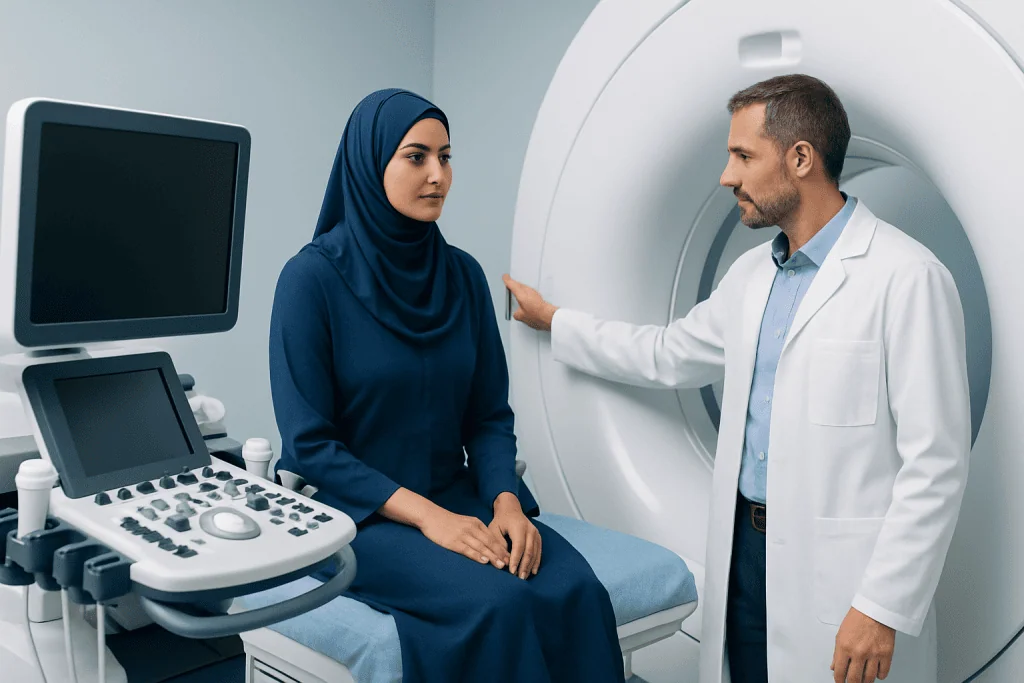
Turkey is a large, varied country, and its major cities are used to international visitors. In private hospitals in Istanbul, Ankara and Izmir you will see a wide range of clothing styles: Turkish patients themselves dress in everything from headscarves to summer dresses. There is no dress code posted at the door, and nobody is checking hemlines at reception.
That said, neat and modest clothing is the safe, respectful default, and it usually feels more comfortable in a shared waiting area. Trousers, long skirts, jeans with stretch, simple tops, shirts, tunics and relaxed dresses are all appropriate. Beachwear, very revealing outfits and very tight clothing tend to feel out of place in a medical environment, not forbidden, just noticeably less comfortable when you are moving between departments or sitting under bright lights.
Two questions come up often. Can female tourists wear shorts in Turkey? Yes, shorts are common in tourist areas and coastal cities, and you would not be turned away from a private hospital for wearing them. For a hospital visit specifically, longer shorts or lightweight trousers are simply more practical, since you may sit for long periods and may be examined. And if your goal is not to stand out, the answer is the same in a hospital as on the street: clean, neat casual clothing in the smart-casual middle ground. Locals in Turkish cities dress much as people do in any European city.
If you wear a headscarf, religious garment or culturally specific clothing, hospital teams that regularly treat international patients are experienced in supporting your comfort. Where an examination or imaging test requires a temporary adjustment, private changing areas exist, and it is normal to ask about a same-gender staff member where one is available. Interpreter support can make these preferences easy to express: this is worth thinking about when deciding whether an interpreter or a family member should help during your appointments.
Can foreigners go to hospital in Turkey?
Yes. Foreigners can attend both public and private hospitals in Turkey, and private hospitals in the major cities treat international patients routinely. Larger private groups run dedicated international patient departments with interpreters and coordinators, so arriving as a foreign patient is an ordinary event, not an exception. You will need identification, usually your passport, at registration, which is one reason it belongs in an easy-to-reach pocket of your bag rather than at the bottom of it.
On the related question of cost: tourists do not receive free healthcare in Turkey. The Turkish public health system covers residents enrolled in national insurance, not visitors. As a tourist or medical traveller you pay for care directly or through travel or health insurance, depending on your policy. What a private hospital charges depends on the scope of the visit: a consultation alone is priced differently from a consultation with same-day imaging and laboratory work, which is why written quotes are usually itemised by service. If you are travelling specifically for treatment, it is sensible to have any quote in writing before you fly; there is a separate guide on how to verify official messages, quotes and appointments so you know a document genuinely comes from the hospital.
What to wear for consultations, tests and imaging

For a standard consultation, wear something you can sit in comfortably for longer than planned. International appointments often include document checks, translation, a full medical history review and sometimes same-day tests, so dress for a half day rather than a half hour. If your itinerary includes combined appointments with more than one specialist, this matters even more.
If imaging is possible, X-ray, MRI, CT or ultrasound, avoid clothing with metal zips, underwires, metal buttons, large buckles or decorative studs. Depending on the test and the body area, you may be asked to change into a gown regardless, but metal-free clothing can sometimes let you skip that step and always speeds up the safety checks. Jewellery, watches, hairpins and belts typically come off for MRI, so the less you bring, the less you have to keep track of.
Match the outfit to the appointment type where you know it:
- Blood tests, IV access or blood pressure checks: sleeves that roll above the elbow without becoming tight.
- Abdominal ultrasound: an elastic waistband and a top that lifts easily.
- Cardiology visits: a two-piece outfit and minimal jewellery; if you are fitted with a monitoring device such as a Holter monitor, loose tops make wearing it under clothing easier.
- Orthopaedic or physiotherapy assessments: clothing that lets the relevant joint or limb be examined and moved, relaxed trousers, or shorts under a longer layer if you prefer more coverage.
- Dental or eye appointments: skip heavy makeup around the treatment area if you have been advised to.
When you genuinely do not know what the visit will involve, default to the loose two-piece outfit with a removable layer. It covers almost every scenario.
Shoes, bags and the small items that matter
Hospitals involve more walking than people expect. A single visit can take you from the main entrance to registration, then to a specialist clinic, the laboratory, imaging, the pharmacy and a cashier desk, often on different floors. Supportive shoes that are easy to walk in, and easy to remove if a test requires it, make the day noticeably easier. Slip-on trainers, comfortable flats or low-heeled shoes beat high heels, stiff new shoes and complicated laces.
If you have swelling, foot pain or mobility concerns, wear shoes with room to spare and bring any walking aid you normally use. Do not plan around the assumption of a short visit; plan for a full day and be pleasantly surprised.
Your bag deserves the same thought as your outfit. A crossbody bag, small backpack or tote with compartments works well, something that closes securely and keeps documents flat. Keep your passport or ID, appointment confirmation, insurance papers, payment method, medication list and phone charger where you can reach them in one movement, not buried under a jumper. Leave valuable jewellery and anything irreplaceable at your accommodation.
Dressing for the season and the hospital climate
Turkey has real seasons, and Istanbul weather can change within a day. Summers are warm and often humid; winters are cold, wet and windy. Your outfit has to work outdoors, on the walk from a metro station or taxi, and indoors in air-conditioned waiting areas. The guide to getting around Istanbul for hospital appointments covers the travel side; the clothing side is about flexibility.
In warmer months, choose breathable fabrics, cotton, linen blends or soft athletic fabrics that do not cling, and carry a light layer for the air conditioning. In cooler months, avoid one bulky item that is awkward to remove; build the outfit from thin layers instead, such as a light thermal top, a jumper and a coat that come off step by step at the examination room door.
If you are fasting for a test, tired from travel or simply anxious, you may feel temperature swings more than usual. A scarf or shawl is a small, comforting buffer while you wait, and waiting is part of most hospital days, so it helps to know how to manage waiting times between hospital appointments before you arrive.
Privacy, mobility and companions
Comfort includes privacy. If you are unsure whether you will need to change, wear underwear that feels secure and appropriate under a gown. A long cardigan, loose shirt or shawl helps you feel covered when moving between areas after changing.
If you use a wheelchair, walker, brace, compression garment, stoma bag, catheter or another medical device, dress around access and safety first. Avoid tight waistbands, narrow sleeves and anything that pulls on tubing. Hospitals that treat international patients routinely ask about mobility and accessibility needs when appointments are confirmed, precisely so the day can be planned around them rather than improvised on arrival.
Companions should dress with the same logic. They will wait, walk between departments and often handle documents, so comfortable shoes, modest casual clothing and a light layer serve them just as well. If you are still deciding whether to travel with someone, there is a dedicated guide on when to bring a family member to medical appointments in Turkey.
Step by step
- Check what type of appointment you have. A consultation, an imaging test, a blood test, a pre-operative assessment and a follow-up each make slightly different demands on your clothing. If the appointment confirmation is unclear about whether you may need to change or expose a specific area, that is a fair question for whoever arranged the booking.
- Choose a loose two-piece outfit. A top with trousers, a skirt or loose leggings gives more flexibility than a jumpsuit or fitted dress. Two pieces let staff reach your arm, abdomen, chest, back or leg while the rest of you stays covered.
- Add a removable layer. Bring a cardigan, zip jacket or shawl even in summer. It handles air conditioning, long waits and examination rooms without leaving you too hot or too cold.
- Minimise metal and jewellery. If imaging is even a possibility, skip underwires where practical for the appointment, and avoid large buckles, studs and decorative zips. Whatever you do wear, be ready to remove it.
- Wear safe, comfortable shoes. Choose a pair you can walk in confidently across long corridors, and that comes off easily if a test requires it.
- Pack an organised bag. Passport or ID, appointment details, previous reports, medication list, and payment or insurance information together in one place. Add a charger, glasses, hearing aids, water where allowed, and any regular medicines you would normally take during the day, exactly as your treating doctor has prescribed them.
- Flag clothing and access needs in advance. Privacy for religious clothing, help changing, wheelchair access or support around a medical device are all easier to arrange before the day than during it.
Your checklist
- Loose top with sleeves that roll above the elbow
- Trousers, skirt or leggings with a flexible waistband
- Light removable layer, cardigan, shawl or zip jacket
- Supportive, easy-off shoes suitable for walking and waiting
- Minimal jewellery, no unnecessary metal accessories
- Passport or ID, appointment confirmation and medical reports
- Medication list and any medicines you may need that day
- Phone, charger, glasses, hearing aids and other personal aids
- Small secure bag with easy-reach document compartment
- Interpreter or coordinator contact details saved in your phone
Key takeaways
- The best answer to what to wear to hospital appointments in Turkey: modest, comfortable, layered and easy to adjust.
- Two-piece clothing beats jumpsuits, tight dresses and complicated fastenings for almost every appointment type.
- For tests and imaging, avoid metal details and wear items that come off easily.
- Supportive shoes and an organised document bag do more for your day than anything else in the suitcase.
- Foreigners can use Turkish hospitals routinely, but care is paid for, directly or through insurance, so keep documents and payment details together.
Frequently asked questions
Can foreigners go to hospital in Turkey?
Yes. Foreigners can attend Turkish hospitals, and private hospitals in major cities treat international patients every day, often through dedicated international departments with interpreters. Bring your passport for registration.
Do tourists get free healthcare in Turkey?
No. The Turkish public system covers residents enrolled in national insurance, not visitors. Tourists and medical travellers pay for care directly or through travel or health insurance, depending on their policy, and quotes are usually itemised by the services included.
Can female tourists wear shorts in Turkey?
Yes, shorts are common in Turkish cities and tourist areas, and no private hospital enforces a dress code. For a hospital visit specifically, longer shorts or light trousers are simply more practical for sitting, waiting and being examined.
Do I need to dress formally for a hospital appointment in Turkey?
No. Clean, neat casual clothing is appropriate for almost every hospital appointment. Prioritise comfort, modesty and easy access for examinations or tests rather than formality.
What should I wear for an MRI or other imaging test?
Choose clothing with minimal metal, no large zips, buckles, studs or underwires where practical. The imaging team will tell you on the day whether you need to change into a gown or remove jewellery, watches, belts and hairpins.
What if I wear religious clothing or need privacy to change?
Hospitals that regularly support international patients are familiar with privacy needs. Private changing areas exist, same-gender staff can be requested where available, and interpreters can help you express preferences clearly. Raising this when the appointment is arranged makes the day smoother.
What should my companion wear?
Comfortable, modest casual clothing with shoes suited to walking and waiting. Companions often move between departments and spend long stretches in waiting areas, so a removable layer is just as useful for them.
Should I bring extra clothes to the hospital?
For a routine consultation, usually not. If the day may include a procedure, extended testing or possible admission, a small change of comfortable clothing is a sensible addition, and the booking confirmation or coordinator can tell you what is recommended for your specific visit.
Add us as a Preferred Source to see more of our trusted health content across Google Search, AI Overviews and Discover.

Update history
- PublishedJune 22, 2026
- Medical review approvedSeptember 13, 2026
- Last content updateSeptember 12, 2026
References2
- MRI scan: NHS nhs.uk
- Foreign travel advice: Turkey: GOV.UK gov.uk
More Patient Guides

When a Hospital Stay in Turkey Becomes Longer Than Planned: What to Arrange
If your hospital stay in Turkey is longer than planned, arrange medical updates, accommodation, travel changes, insurance and support for your companion.

Waiting for Test Results in Turkey: How to Use Time Between Appointments
Waiting for test results in Turkey is easier with a clear plan for appointments, rest, records, questions and support in Istanbul.

Unexpected ICU Stay in Turkey: What Patients and Families Should Expect
Unexpected ICU stay in Turkey: learn what patients and families can expect, from communication and visiting to care updates and travel support.

How to Manage Special Diets During Medical Travel in Turkey
Special diets during medical travel in Turkey are easier to manage when you share your needs early, confirm meals and carry safe…