

When Is Inpatient Rehabilitation Needed After Treatment in Turkey?
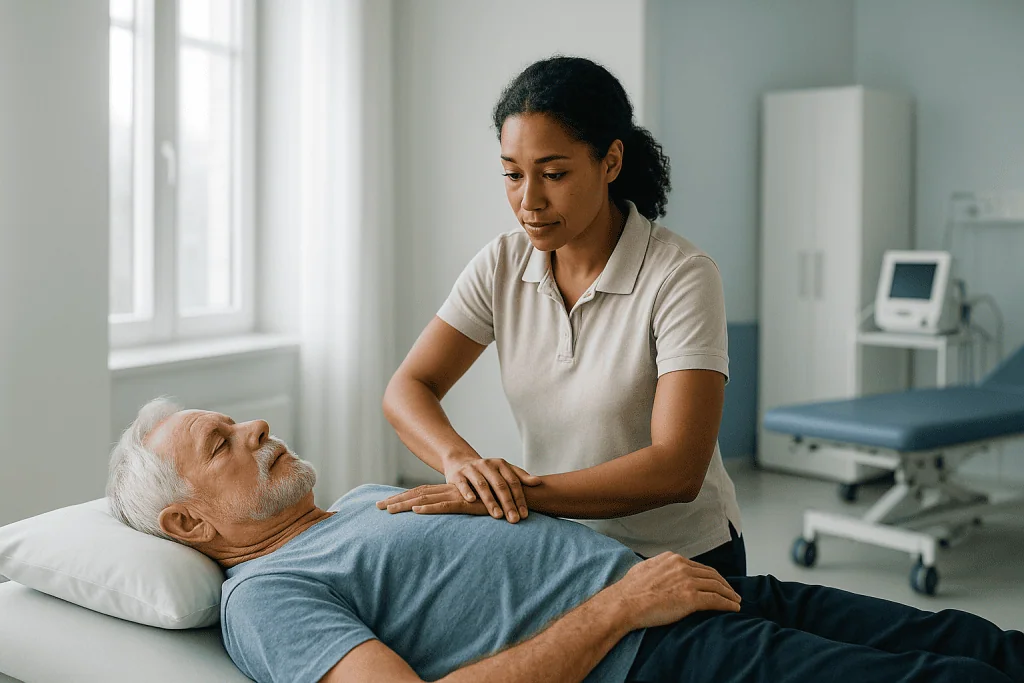
Inpatient rehabilitation is usually considered when your main treatment is finished and you are medically stable, but you cannot yet walk, transfer, or manage daily tasks safely without hands-on help. It is a supervised bridge between hospital discharge and independent recovery. Whether it is needed depends on your function, your travel plans, and the support available to you, not on the name of your procedure alone.
Your operation is done, your surgeon is satisfied, and your discharge date is set. That does not always mean you are ready for a hotel room or a long flight. Recovery from surgery, injury, or complex medical treatment does not end on discharge day, and for some patients a period of inpatient rehabilitation is the safest bridge between hospital and home.
This guide explains when inpatient rehabilitation is needed after treatment in Turkey, what a stay actually involves, how discharge decisions are made, and how to plan around it as an international patient. It will not tell you whether you personally need it: that judgement belongs to the team treating you, based on an assessment of what you can and cannot do safely.
At a glance
- Best for: Patients who are medically stable but still need daily therapy, nursing support, and supervised recovery
- Common reasons: Weakness, poor balance, limited walking, unsafe transfers, stroke recovery, orthopaedic or spinal recovery
- Typical setting: A hospital-based or specialised rehabilitation unit with a multidisciplinary team
- Key benefit: You rebuild function in a supervised setting before moving to a hotel, apartment, or flight home
- Who plans it: Your treating doctor, the rehabilitation team, and, for international patients, case coordinators
- Travel impact: It can move your return flight later, until sitting, moving, and self-care are safer
What inpatient rehabilitation means after treatment in Turkey
Inpatient rehabilitation is a structured recovery stay in a medical setting once your main treatment is complete. Instead of returning straight to a hotel or boarding a flight, you stay where scheduled therapy, nursing care, and regular reassessment are available while you rebuild strength and independence. The question of whether inpatient rehabilitation is needed after treatment in Turkey comes up most often after orthopaedic surgery, neurosurgery, stroke care, trauma treatment, or any illness that leaves you weak, unsteady, or unable to manage daily tasks without help.
The goals are practical rather than abstract: walking, transferring between bed and chair, dressing, washing, managing pain during activity, and preparing for whatever comes next. A rehabilitation stay is not an extension of acute treatment. It is a different phase with a different daily rhythm, led by physical medicine and rehabilitation specialists rather than by the surgical or medical team alone.
For international patients, the stakes are slightly different than for someone recovering ten minutes from home. Your recovery route includes hotel corridors, airport distances, security queues, and hours of sitting in an aircraft seat. Whether inpatient rehabilitation is needed after treatment in Turkey therefore depends not only on your medical condition, but on the physical demands of the journey ahead of you and the support you will have along the way.
When doctors usually consider inpatient rehabilitation
The usual trigger is a gap between medical stability and functional readiness. In plain terms: the treatment has done its job, but you still need hands-on help to move, exercise, or manage everyday activities safely. A discharge date tells you when acute care ends. It does not tell you whether you can climb the three steps into an airport shuttle.
Common reasons a team considers inpatient rehabilitation include significant weakness after surgery or illness, poor balance, limited walking distance, difficulty with stairs, reduced use of an arm or leg, and pain that restricts movement. It is also considered when a patient needs daily physical, occupational, or speech therapy, or supervision while learning to use crutches, a walker, or a wheelchair.
The decision is rarely about the procedure name alone. Two patients can have the same operation and leave with very different needs, depending on age, fitness before treatment, other health conditions, and how the early recovery went. That is why teams assess function directly rather than working from a standard formula. Situations where inpatient rehabilitation is commonly discussed include:
- After joint replacement or complex orthopaedic surgery
- After stroke or other neurological treatment, where neurological rehabilitation may be structured around specific deficits
- After spinal surgery or major trauma
- After cardiac events or procedures, where a supervised cardiac rehabilitation programme may be appropriate
- When transfers, walking, or basic self-care are not yet safe without help
- When a companion cannot realistically provide the physical support needed at a hotel
If your recovery has involved a stay in intensive care, the case for structured rehabilitation is often stronger, because deconditioning after critical illness can be significant.
Signs you may benefit before you leave Turkey
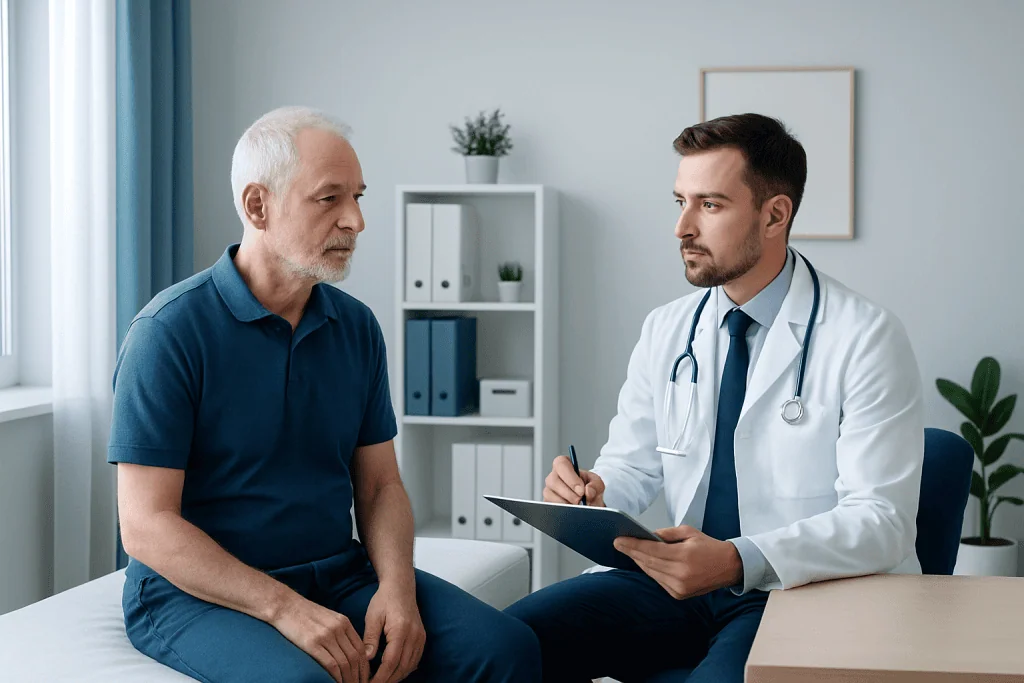
The useful question is not “Am I discharged?” but “Can I manage the next stage safely?” Rehabilitation teams look at concrete tasks: getting out of bed unaided, using the bathroom, walking a corridor, standing long enough to wash and dress, tolerating a transfer into a car. Difficulty with these tasks is what tends to shape the recommendation.
Fatigue is one of the most underestimated factors. Many patients can sit up and hold a conversation but cannot yet tolerate the sequence of a real morning: getting up, washing, dressing, packing, and moving through a building. Airports demand exactly that kind of sustained effort, often with luggage and time pressure added. A functional assessment measures this honestly, in a way that a bedside chat cannot.
Other factors that weigh into the assessment include a tendency to become dizzy on standing, an elevated risk of falls, ongoing oxygen needs, swallowing or speech difficulties after neurological treatment, and the amount of teaching still required around exercises, precautions, and equipment. The confidence of your travel companion matters too. If the person accompanying you would struggle to support your weight during a stumble, that is a relevant fact for the team planning your discharge, and it is worth stating plainly during the assessment.
None of these signs means inpatient rehabilitation is automatically required. Some patients do well with outpatient therapy and a supported hotel stay. The guide on choosing between inpatient and outpatient treatment in Turkey covers how that trade-off is usually weighed.
What a rehabilitation stay usually includes
The programme is built around your diagnosis, your current function, and your goals, not around a fixed timetable. Physical therapy typically targets walking, balance, transfers, endurance, and joint movement. Occupational therapy focuses on the practical tasks of daily life: bathing, dressing, toileting, hand function, and safe ways to work around temporary limits. Where relevant, speech and language therapy addresses communication and swallowing.
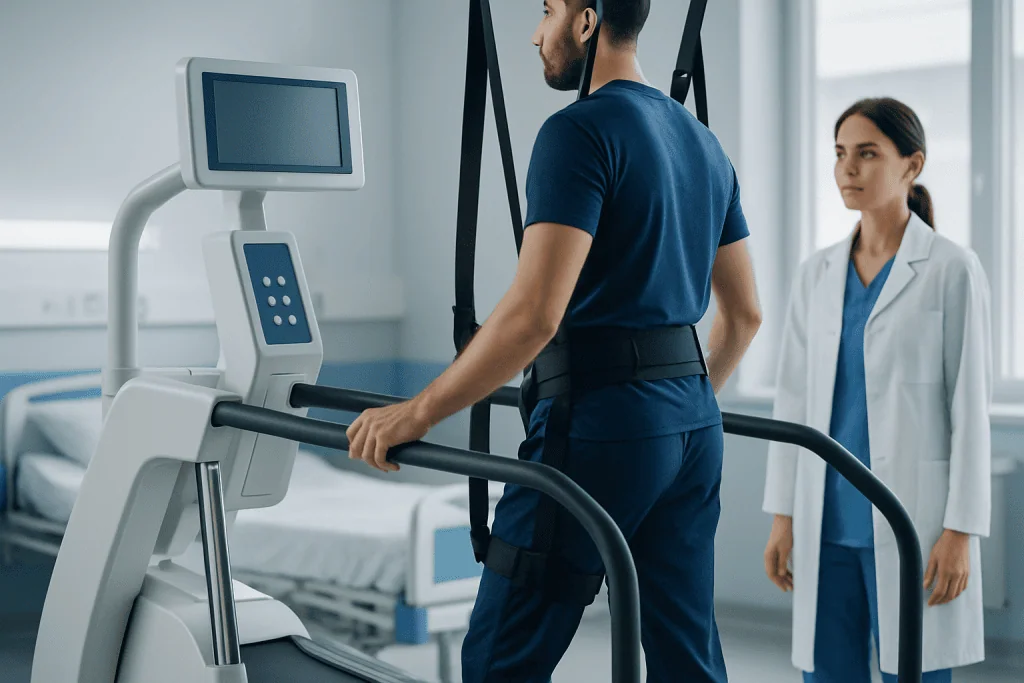
Depending on your needs, the wider team may include rehabilitation physicians, nurses, dietitians, psychologists, and pain management input. In some programmes, robotic rehabilitation devices are used to support repetitive, task-specific practice, for example, treadmill-based gait training with body-weight support after neurological injury. These tools supplement therapist-led sessions; they do not replace them.
At Acibadem, rehabilitation planning can be linked with the team that provided your original treatment. That continuity matters when recovery raises questions the rehabilitation unit cannot answer alone: a wound that needs review, imaging that should be repeated, or a medication plan that needs adjusting by the treating doctor. Any change to your medicines is made by the treating physician, not by you, and not on a schedule you set yourself.
Daily life on a rehabilitation unit is deliberately structured. Expect scheduled therapy sessions, rest periods, medication rounds, supervised mobility practice, meals, and regular reassessment of what you can do unaided. Progress is measured against practical milestones, distance walked, transfers performed independently, tasks completed without help, rather than against the calendar. Pain during activity is part of what the team monitors and manages throughout the stay.
How long you might stay and how discharge is decided
There is no standard length of stay, and any source that quotes one is guessing. Duration depends on where you start, how you respond to therapy, and what you need to be able to do before moving on. Some patients need only a short, focused period to become safe for hotel recovery or air travel. Others need longer before stairs, transfers, and self-care are manageable with little or no help.
Discharge from rehabilitation is a functional decision, not a scheduling one. The team looks at whether you can move between bed and chair, walk a meaningful distance, manage personal care to a realistic standard, tolerate sitting and sustained activity, and follow your medication and exercise instructions accurately. For international patients, the journey itself enters the equation: a long-haul flight is a physical event, and readiness to fly is assessed separately from readiness to leave the unit. The guide on when it is safe to fly home after surgery in Turkey covers that question in detail.
Rehabilitation is also not all-or-nothing. If full inpatient care is more than you need, the team may recommend outpatient therapy, hotel-based recovery with scheduled sessions, a home exercise programme, or handover to physiotherapy in your home country. The right answer is the setting that matches the amount of help you genuinely need, leaving too early carries risks, but so does staying in a level of care beyond what your recovery requires.
Rehabilitation within Turkey’s healthcare system
Patients researching this topic often ask broader questions about Turkey itself, so it is worth answering them plainly. Turkey has a large healthcare sector with both public and private hospitals, and the major private groups run dedicated international patient departments. Foreign patients can be treated in Turkish hospitals; private facilities routinely admit international patients, handle documentation in English, and provide interpreter support. You do not need Turkish residency or citizenship to receive care.
Turkey is widely known internationally for orthopaedic surgery, cardiology and cardiac surgery, oncology, ophthalmology, dental treatment, and aesthetic and reconstructive procedures, and structured rehabilitation services have developed alongside these specialties. Whether inpatient rehabilitation is needed after treatment in Turkey is a question that comes up across all of them, because any major procedure can leave a temporary gap between medical recovery and functional independence.
As for which hospital in Turkey is “best”: there is no honest single answer. The right hospital depends on your condition, the specialty involved, and the specific team’s experience with cases like yours. A hospital that is strong in one field is not automatically the right choice for another. Judge a rehabilitation setting by concrete questions, what the multidisciplinary team includes, how often therapy is delivered, how progress is measured, and how discharge and handover are organised, rather than by rankings.
Practical planning for international patients
If rehabilitation is a realistic possibility for your type of treatment, factor it into your planning early, ideally while your treatment itinerary is still being drawn up. It is far easier to hold flexible flights and accommodation than to renegotiate everything on discharge day. The guide on rehabilitation planning after medical treatment in Turkey walks through this stage in more depth.
Practical points worth clarifying during a stay: who coordinates the transition between the treating team and the rehabilitation unit, what language support is available in therapy sessions, whether your companion can stay nearby, and what personal items you should keep with you. International patient coordinators at Acibadem typically handle communication between departments, interpreter scheduling, and the logistics of discharge and onward travel, so that clinical decisions and travel arrangements are made with the same information.
Before leaving the rehabilitation setting, make sure you understand your medicines, your exercise plan, any wound or device care, and your follow-up schedule. Ask for a medical summary in English, rehabilitation notes, and a fit-to-fly opinion where relevant. Ask about airport wheelchair assistance, seating needs, compression measures, and rest stops for the journey. If you intend to claim from an insurer, gather paperwork before you leave the country: the guide on documents needed for insurance reimbursement after treatment lists what insurers typically expect.
Step by step
- Raise rehabilitation early. If your treatment is likely to affect mobility or independence, ask about rehabilitation before the procedure or as soon as recovery begins. Early planning gives you time to compare hotel recovery, outpatient therapy, and inpatient rehabilitation on real information rather than under pressure.
- Ask for a functional assessment, not only a discharge date. Medical stability and functional readiness are different things. Ask specifically how safely you can walk, transfer, dress, use the bathroom, tolerate sitting, and manage stairs or airport distances.
- Put your travel realities on the table. The length of your flight, whether you have a companion, stairs at home, and the care available after you land all belong in the decision. State them plainly so the team can judge the full picture.
- Understand the programme you are entering. Ask how often therapy is scheduled, which disciplines are involved, and which goals are being targeted, walking, balance, speech, endurance, self-care. A programme you understand is one you can commit to.
- Plan for discharge from day one. Ask on arrival which milestones you need to meet before moving on. Knowing the discharge goals keeps your planning practical and lets your family prepare the next setting in parallel.
- Collect documents before you leave. Request a medical summary, medication list, rehabilitation notes, relevant imaging, and follow-up instructions in English. These serve airport assistance requests, insurers, and the doctors who will see you at home.
- Confirm follow-up in your home country. Recovery continues well beyond your stay in Turkey. Ask what local physiotherapy, specialist review, or remote follow-up is recommended, and make sure the handover documents support it.
Your checklist
- Ask whether you are medically stable but still functionally unsafe without support
- Check whether you need help with walking, transfers, bathing, dressing, or toileting
- Review how far and how long you can sit, stand, and walk before committing to travel
- Confirm whether your companion can safely assist you if needed
- Request a rehabilitation plan with clear goals and a realistic, flexible timeframe
- Book flexible flights and accommodation in case the stay changes
- Obtain a medication list, discharge summary, and exercise instructions in English
- Ask about wheelchair assistance and fit-to-fly assessment before departure
Key takeaways
- Inpatient rehabilitation is considered when you are medically stable but still need supervised recovery and daily therapy.
- It is most often discussed after orthopaedic, spinal, neurological, cardiac, or trauma-related treatment, but function, not the procedure name, drives the decision.
- Discharge from rehabilitation is decided on safety and function, with the journey home assessed as part of the picture.
- There is no standard length of stay; progress is measured in milestones, not calendar days.
- International patients should plan early, keep travel flexible, and leave with complete documents in English for onward care and insurance.
Frequently asked questions
How is the need for inpatient rehabilitation after treatment in Turkey decided?
Through a functional assessment by the treating and rehabilitation teams. They look at whether you can walk, transfer, and manage self-care safely, whether you need daily therapy or nursing support, and whether the journey home is realistic in your current state. The decision rests on what you can do, not on the name of your procedure.
Can foreigners go to hospital in Turkey?
Yes. Foreign patients can be treated in Turkish hospitals, and private hospitals in particular routinely admit international patients. Larger groups run dedicated international patient departments that handle interpretation, documentation in English, and coordination between medical care and travel arrangements. Residency or citizenship is not required.
Is Turkey’s healthcare system good?
Turkey has a large healthcare sector with both public and private provision, and its private hospitals treat substantial numbers of international patients across many specialties. As anywhere, quality varies between institutions and departments, so it is sensible to assess the specific hospital and team handling your treatment rather than relying on general reputation.
Which hospital in Turkey is considered the best?
There is no single “best” hospital, and rankings rarely reflect what matters for an individual case. The right choice depends on your condition, the specialty involved, and the team’s experience with similar patients. For rehabilitation specifically, look at the composition of the multidisciplinary team, the frequency of therapy, and how discharge and handover are organised.
Is inpatient rehabilitation the same as staying longer in hospital?
Not quite. An acute hospital stay is organised around medical treatment; a rehabilitation stay is organised around regaining function, mobility, and independence. You remain in a medical environment with nursing cover, but the daily plan is built from therapy sessions, mobility practice, and functional reassessment rather than acute treatment.
Can I recover at my hotel instead of entering rehabilitation?
Sometimes, yes, if you are medically stable and can manage safely with outpatient therapy, rest, and companion support. A hotel offers no nursing cover, no equipment, and no supervision, so the deciding factor is whether the help you still need exceeds what a hotel setting and your companion can realistically provide.
Will inpatient rehabilitation delay my flight home?
It can, because its purpose is to make sure you are safer and more capable before travelling. Readiness to fly is assessed separately from readiness to leave the unit, and a fit-to-fly opinion is worth requesting before booking. Building function first can make the airport, the flight, and the first weeks at home considerably more manageable.
What should I arrange before leaving the rehabilitation unit?
A medication list, discharge summary, rehabilitation notes, and follow-up plan, in English where possible. Also clarify wound or device care, your home exercise programme, airport assistance and seating needs, and what follow-up is recommended once you are back in your home country.
Add us as a Preferred Source to see more of our trusted health content across Google Search, AI Overviews and Discover.

Update history
- PublishedAugust 21, 2026
- Medical review approvedSeptember 13, 2026
- Last content updateSeptember 12, 2026
References2
- Rehabilitation: World Health Organization fact sheet who.int
- Rehabilitation: MedlinePlus medlineplus.gov
More Patient Guides

Septoplasty Recovery: Week by Week
Learn what to expect after deviated septum surgery: a week-by-week septoplasty recovery timeline, when it is usually safe to fly home, and…

Gallbladder Surgery Recovery: Week by Week
Learn what to expect after gallbladder surgery: a week-by-week recovery timeline, pain, diet, wound care, when it is safe to fly home…
Robotic Hysterectomy Recovery: Week by Week
Recovery from robotic hysterectomy week by week: pain, lifting, wounds, driving, flying home safely, warning signs and questions to ask before you…

Breast Reconstruction Recovery: Week by Week
DIEP flap recovery week by week: hospital stay, drains, pain, walking, showering, driving, when it is usually safe to fly home, and…