

Trichotillomania (Hair Pulling)
Trichotillomania treatment helps people manage compulsive hair pulling through psychiatric assessment, cognitive behavioral therapy, habit reversal training, and medication when needed.
Quick answer
Trichotillomania is a hair-pulling disorder in which a person repeatedly pulls out hair from the scalp, eyebrows, eyelashes or body despite trying to stop. Treatment centres on habit reversal training, a structured form of cognitive behavioural therapy that teaches you to notice urges early and use competing responses. Medication, dermatological care and family guidance are added when the individual clinical picture calls for them.
What Is Trichotillomania?
Trichotillomania is a mental health condition in which a person repeatedly pulls out their own hair — from the scalp, eyebrows, eyelashes, beard or anywhere else hair grows — despite repeated attempts to stop. It is one of the body-focused repetitive behaviours, and it is classified alongside obsessive-compulsive and related disorders in the current diagnostic manuals. Treatment exists, and it works through structured behavioural therapy rather than willpower.
The condition varies enormously from person to person. For some, pulling produces small areas of thinning that only they notice. For others, it leads to visible bald patches, a broken eyelash line, missing eyebrows, skin irritation, wounds, infection or considerable emotional distress. Some people pull deliberately when they feel tension or discomfort. Others pull automatically — while reading, working, driving, studying or lying in bed at night — and only notice the pile of hairs afterwards. Many experience both patterns, depending on the situation, and the distinction matters because each pattern is treated differently.
Is trichotillomania a mental illness?
Yes. Trichotillomania is a recognised mental health disorder, not a bad habit, a grooming quirk or a cosmetic issue. It sits in the same diagnostic chapter as obsessive-compulsive disorder, which reflects the repetitive, difficult-to-control nature of the behaviour rather than an identical mechanism. This classification matters in practice: it means assessment is clinical rather than judgemental, that structured treatments have been developed and studied specifically for it, and that a person who cannot stop pulling has a condition worth treating — not a character flaw worth hiding. It also means the right first assessment is psychiatric or psychological, often working together with dermatology when the cause of hair loss needs clarifying.
Why is trichotillomania sometimes called TTM disease?
TTM disease is shorthand you will encounter in patient forums and support communities: TTM abbreviates trichotillomania, and the word disease reflects how consuming the condition can feel. Clinically, trichotillomania is classified as a disorder rather than a disease in the infectious or degenerative sense. There is no pathogen and no progressive tissue destruction driving it. The distinction is more than pedantry — it explains why treatment is behavioural and psychiatric rather than surgical or pharmacological alone, and why improvement depends on learning and practice as much as on any prescription.
When Hair Pulling Becomes More Than a Habit
Many people with trichotillomania spend months or years trying to hide the problem before they ask for help. They wear hats, change hairstyles, avoid swimming, use makeup or pencil to cover missing eyebrows or eyelashes, or spend long periods checking the mirror before leaving the house. Some describe a private cycle: tension builds, pulling brings temporary relief, and then shame or frustration follows. The secrecy itself becomes exhausting.
Trichotillomania is not a lack of willpower, and it is not a behaviour that can usually be stopped simply by deciding to stop. Most people with the condition have already tried that, often many times, and the failure of willpower alone is part of the diagnosis rather than evidence against the person. The condition can affect the scalp, eyebrows, eyelashes, beard area, arms, legs, pubic area or any part of the body where hair grows, and the pattern often shifts over time.
The decision to seek treatment can feel sensitive. You may be wondering whether your symptoms are serious enough, whether treatment will involve medication, whether your hair can grow back, or whether you will be judged. A careful psychiatric and psychological assessment answers these questions in a respectful, practical way. The goal is to understand the triggers and patterns behind hair pulling, reduce the behaviour, address associated anxiety or mood symptoms, and support hair and skin recovery where possible.
Treatment matters because trichotillomania can quietly narrow a person’s life. People avoid social events, professional presentations, intimate relationships, photographs, wind, rain and even routine medical appointments. Children and adolescents may be teased or misunderstood at school. Adults often feel isolated precisely because the behaviour is hidden so well — nobody around them knows, so nobody can help. With evidence-based care, many patients learn to recognise urges earlier, use competing responses, reduce automatic pulling, manage stress and rebuild confidence. Treatment is not about blame. It is about building a structured plan that fits your actual life.
What Causes Trichotillomania?
Research points to a combination of factors rather than a single cause, and the honest summary is that trichotillomania arises where biology, learning and emotion meet.
What is the root cause of trichotillomania?
There is no single root cause. The condition tends to run in families, which suggests a genetic contribution, and it involves the brain’s habit-learning circuits — the same systems that make any repeated, rewarded action progressively more automatic. Temperament plays a part: perfectionism, difficulty tolerating boredom or tension, and strong sensory sensitivity are common in people who pull. Stressful periods, hormonal transitions and major life changes often mark the onset, which most frequently falls in late childhood or early adolescence, though the condition can begin at any age. Importantly, trichotillomania is not always caused by trauma, poor parenting or another psychiatric disorder. It can occur in people whose lives are otherwise stable, and searching for a hidden cause sometimes delays the practical work of treating the behaviour itself.
Why do I pull my hair?
Most people pull for one of two broad reasons, and many for both. Focused pulling happens with full awareness: an urge builds, often tied to tension, a specific emotion, or the sensation of a particular hair that feels coarse, kinked or somehow wrong, and pulling that hair brings relief or satisfaction. Automatic pulling happens largely outside awareness, usually during sedentary, low-stimulation activities — scrolling on a phone, watching television, studying, driving, or drifting off to sleep. Common triggers include stress, boredom, fatigue, deep concentration, anger, loneliness and specific physical positions, such as resting the head on a hand. Some people search the scalp for target hairs, examine the pulled root, run the hair across their lips, or bite it. Mapping exactly when, where and why you pull is the first genuinely useful step of treatment, because the strategy for a focused evening ritual differs completely from the strategy for absent-minded pulling at a desk.
Why does trichotillomania feel good?
Pulling feels good because it briefly delivers exactly what the nervous system was asking for: relief from tension, a jolt of sensory stimulation during boredom, or a small, controllable sense of completion. That momentary reward is what teaches the brain to repeat the behaviour. Each cycle — trigger, urge, pull, relief — strengthens the loop, until pulling becomes the brain’s default answer to a widening range of internal states. This is also why the behaviour is so resistant to good intentions. Willpower argues with the outcome (hair loss, shame) hours later; the reward arrives within a second. Understanding this removes the moral judgement from the condition and explains why effective treatment targets the loop itself, giving the brain a different response that can compete at the moment the urge appears.
Is trichotillomania OCD?
No — trichotillomania is related to obsessive-compulsive disorder but is a distinct diagnosis. Both sit in the same diagnostic family, and both involve repetitive behaviour that feels difficult to resist. The differences matter for treatment. In OCD, compulsions are typically performed to neutralise a distressing obsessive thought and bring no pleasure. In trichotillomania, pulling is usually driven by urges, tension or sensory craving, and often brings genuine gratification or relief. As a result, the first-line psychological treatments differ: OCD responds to exposure and response prevention, while trichotillomania responds best to habit reversal training. The two conditions can co-occur, along with anxiety and depression, which is one reason a full psychiatric assessment — rather than a quick label — is worth having.
Trichotillomania and Related Body-Focused Repetitive Behaviours
Hair pulling rarely travels alone. Many people with trichotillomania also bite their nails, chew the inside of their cheeks or lips, or pick at their skin, and a good assessment asks about all of these, because the treatment techniques overlap and the behaviours can substitute for one another when only one is addressed. Nail biting and cheek chewing follow the same loop of trigger, urge, action and relief, and the same behavioural methods — awareness training, competing responses, stimulus control — are adapted to each of them within a single coordinated plan.
Dermatillomania Skin Picking Disorder
Dermatillomania skin picking disorder is the closest clinical relative of trichotillomania: a body-focused repetitive behaviour in which a person repeatedly picks at their skin, creating wounds, scabs and sometimes scarring, despite trying to stop. The internal experience is strikingly similar to hair pulling — a build-up of tension or a sense that a patch of skin is wrong, followed by relief and then regret. If you have ever wondered what kind of disease picking skin until it bleeds might be, the honest answer is that it is a behavioural condition, not a dermatological illness, even though dermatologists often see its consequences first. Like hair pulling, the picking disorder dermatillomania responds to habit reversal training and stimulus control, which is why the two conditions are frequently treated by the same clinicians using adapted versions of the same plan.
Skin Excoriation Syndrome
Skin excoriation syndrome is another name for the same picking condition; clinicians most often record it as excoriation disorder. The multiplicity of names — excoriation disorder, dermatillomania, compulsive skin picking — can make patients feel their problem is obscure, when in fact it is well described and treatable. During assessment for trichotillomania, clinicians routinely screen for picking as well, because a person who successfully reduces pulling can otherwise shift the same urge onto the skin. Treating the underlying habit loop, rather than one visible behaviour at a time, protects against this substitution.
Trichotillophagia: When Pulled Hair Is Swallowed
Trichotillophagia is the swallowing of pulled hair, and it deserves a plain, unembarrassed explanation because patients rarely volunteer it. Some people bite or chew pulled hairs; a proportion swallow them. Because hair is not digested, swallowed hair can — in rare cases — accumulate in the stomach or intestines as a hair mass called a trichobezoar, which can cause abdominal pain, nausea, early fullness or obstruction and is a medical problem in its own right. This is why clinicians ask about hair swallowing directly and matter-of-factly during assessment: the answer changes what the medical work-up needs to cover. Honesty here is not a confession; it is clinically useful information, and it is treated that way.
Who May Need Treatment for Trichotillomania
Treatment is appropriate when hair pulling is difficult to control, causes visible hair loss or skin injury, takes up meaningful time, creates distress, or interferes with social, academic, professional or personal life. There is no severity threshold you must reach before help is legitimate. Early symptoms, recurrent episodes, decades-long pulling and relapse after previous improvement are all valid starting points.
Common signs include:
- Repeated pulling of hair from the scalp, eyebrows, eyelashes, beard or body, with or without full awareness
- Bald patches, uneven hair length, a thinned eyelash line or missing sections of eyebrow
- Frequent touching, twisting, stroking or searching for specific hairs that feel coarse or out of place
- A sense of tension before pulling and relief or satisfaction afterwards
- Rituals with the pulled hair — examining the root, biting it, running it across the lips, or swallowing it
- Concealment: hats, hairstyles, makeup, avoiding swimming, wind or bright light
- Repeated, unsuccessful attempts to stop, and distress or shame about the behaviour
Diagnosis rests primarily on clinical assessment. A psychiatrist, psychologist or trained mental health professional asks about the history of pulling: when it began, how often it occurs, which body areas are involved, what triggers it, and what happens immediately before and after each episode. The clinician also evaluates mood, anxiety, obsessive thoughts, compulsive behaviours, attention symptoms, sleep, substance use, trauma history and — for younger patients — the family and school environment. Structured symptom scales may be used to establish a baseline and track severity over time.
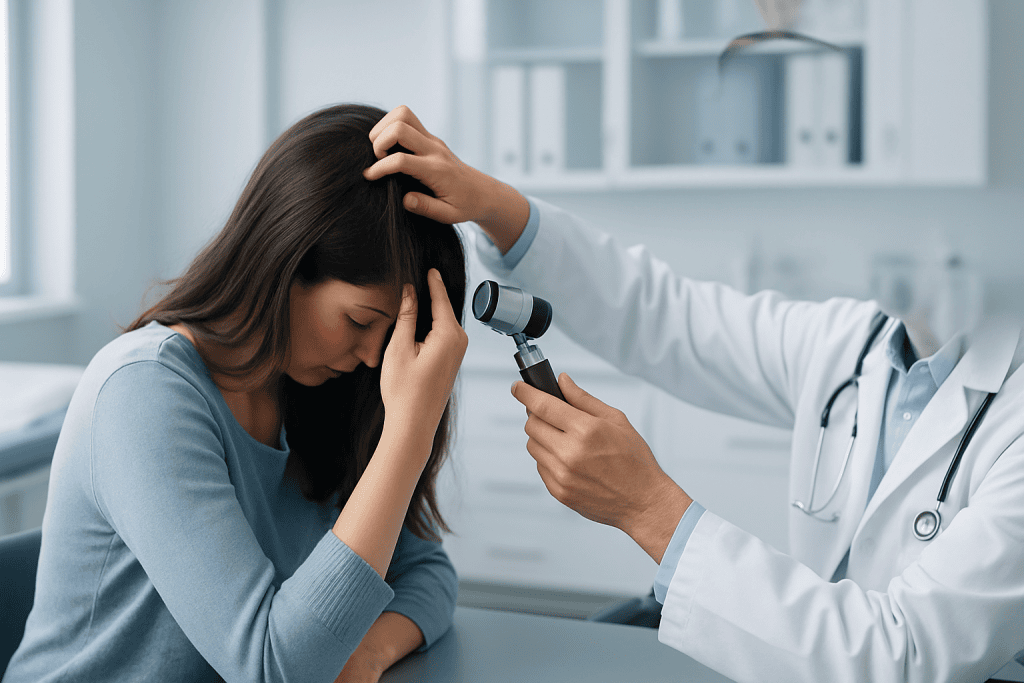
A dermatological examination often adds value, because hair loss in the same patient can have more than one cause. Trichoscopy — dermoscopic examination of the scalp — can show patterns characteristic of mechanical pulling, such as hairs broken at different lengths, coiled hair remnants and empty follicles, which help distinguish trichotillomania from alopecia areata, telogen effluvium, traction alopecia and fungal or inflammatory scalp disease. Laboratory tests may be considered if there are signs of nutritional deficiency, thyroid dysfunction or hormonal change. A skin biopsy is needed only in selected, ambiguous cases; most patients are diagnosed without any invasive testing.
People typically seek help after a visible change in appearance, a family member’s concern, an approaching wedding or professional event, a child’s difficulties at school, or a period of worsening stress. Others come for a second opinion after general counselling that never included specific habit reversal techniques — a common and fixable gap, because supportive talk therapy alone rarely changes an entrenched pulling pattern.
What Trichotillomania Treatment Involves
Trichotillomania treatment is a structured mental health programme, not a single appointment or a prescription. It begins with a psychiatric or psychological evaluation to confirm the diagnosis, map triggers, assess the extent of hair loss, and identify coexisting conditions — anxiety, depression, obsessive-compulsive symptoms, attention difficulties, trauma-related stress or skin picking — that shape the plan.
How do you stop trichotillomania?
The most reliable route is habit reversal training, a specialised form of cognitive behavioural therapy developed for body-focused repetitive behaviours; there is no switch to flip, but there is a method to learn. Habit reversal training has several components, taught in sequence and practised between sessions:
- Awareness training. You learn to detect the earliest links in the chain — the urge, the hand drifting upward, the posture, the situation — before pulling happens. Many patients are startled by how much of their pulling was invisible to them.
- Competing response training. When you notice an urge or an early movement, you perform a brief behaviour that makes pulling physically impossible for a short period: gently clenching the fists, pressing the hands flat on the thighs, holding a textured object, or changing position. The chosen response must be discreet, realistic and sustainable in your actual daily settings.
- Stimulus control. You change the environment to make pulling harder and less rewarding: covering mirrors at high-risk times, adjusting lighting, wearing fingertip barriers during television or reading, keeping tweezers out of easy reach, changing how you sit at a desk, or restructuring the bedtime routine. These are temporary scaffolds while the brain learns new responses, not permanent restrictions.
- Support. A partner, parent or trusted person is sometimes enlisted — with your agreement and on your terms — to notice progress and prompt strategies without criticism or surveillance.
Therapy usually extends beyond the mechanics of habit reversal. Cognitive work addresses the thoughts that amplify pulling — “I already pulled one hair, so the day is ruined,” or “I cannot go out unless this looks perfect” — and replaces all-or-nothing judgements with more workable responses. Acceptance and mindfulness-based techniques teach you to experience an urge as a passing internal event rather than a command. Emotion regulation skills matter when pulling functions as self-soothing during stress, frustration or low mood.
Medication may be considered when symptoms are moderate to severe, when coexisting psychiatric conditions are present, or when behavioural therapy alone has not been sufficient. There is no single medication that works for every person with trichotillomania, and decisions are individualised by the treating psychiatrist, who weighs benefits, side effects, interactions, other medical conditions, pregnancy considerations and previous treatment responses. Depending on the clinical picture, the psychiatrist may target anxiety, depression, obsessive-compulsive symptoms, impulsivity or sleep disturbance, and in some cases may discuss specific agents that have been studied in body-focused repetitive behaviours. Medication is most useful as part of a broader plan that includes behavioural therapy and follow-up — rarely as a standalone answer.
Dermatological care runs in parallel where the skin needs it: treating folliculitis, inflammation, ingrown hairs or infection, and clarifying whether follicles remain healthy. In most cases hair regrows once pulling stops, provided the follicles have not been permanently scarred; where long-standing pulling has left scarred or damaged skin, options such as those described under reconstruction after skin disease can be discussed once the behaviour is under control. Patients sometimes ask about restoring hair surgically; specialists in the hair transplant unit will generally advise that transplantation is not considered until pulling has been controlled for a sustained period, because grafted hairs placed into an active pulling zone can be pulled out like any others.
For children and adolescents, family involvement is often central. Parents need guidance on responding without punishment, criticism or constant monitoring, all of which tend to increase stress and drive the behaviour further underground. School-related stress, bullying, sensory sensitivities and developmental factors may each need attention. For adults, treatment often addresses workplace pressure, perfectionism, relationship patterns, sleep routines and the predictable periods of high emotional load that raise pulling urges.
How Treatment Is Performed: From Assessment to Recovery
Care begins with a confidential consultation. The assessment reviews previous therapy experiences, medication history and any existing dermatology findings alongside the current picture. The first priority is to understand your experience without judgement. Many patients arrive having been told to “just stop”, or having seen clinicians who treated only the hair loss or only the general stress. A skilled assessment recognises that trichotillomania involves learned behaviour patterns, emotional regulation, sensory reinforcement and neurobiological vulnerability all at once.
The clinician then maps the pulling pattern in detail: body areas affected, time of day, physical location, emotional state, which hand is used, whether tools such as tweezers are involved, what mirrors and lighting contribute, and whether episodes are focused, automatic or mixed. Focused pulling comes with awareness and a clear urge; automatic pulling happens outside full attention, usually during sedentary activities. The distinction is not academic — each pattern requires different strategies, and most treatment failures trace back to a plan that never matched the pattern.
Preparation includes education. You learn how the habit loop works: a trigger or internal sensation produces an urge, the behaviour reduces discomfort or creates satisfaction, and the brain learns to repeat the cycle. Understanding this strips the moral judgement out of the condition and makes the work practical. You may be asked to keep a brief pulling diary — not as self-criticism, but as data collection. Some patients use paper; others use mobile reminders, photographs or structured symptom scales. The diary typically reveals patterns nobody had noticed, and those patterns dictate where the first interventions go.
Therapy is then tailored session by session. Competing responses are tested and adjusted until they work in your real settings — an office, a lecture hall, a car, a bed. Stimulus control measures are added, reviewed and gradually withdrawn as awareness improves. Cognitive and acceptance-based work deepens as the mechanical skills take hold. When medication is part of the plan, the psychiatrist monitors response and tolerability over time and adjusts accordingly, coordinating with the therapist so the two strands reinforce each other.
Technology supports the process without replacing clinical judgement. Dermatological imaging documents scalp and hair-shaft findings consistently. Standardised questionnaires track urges, frequency, distress and functional impact from visit to visit, so progress is measured rather than guessed. Secure communication tools support coordination between the clinicians involved in a patient’s care. Tracking applications help some patients spot patterns, though they are used selectively — for a minority, intensive self-monitoring raises anxiety rather than insight, and the plan adapts.
Duration varies. Initial assessments are longer than follow-up visits because they cover history, diagnosis and planning. Therapy usually runs as a series of sessions over several weeks or months, with deliberate practice between appointments doing much of the real work. Some patients improve substantially with a focused course of behavioural therapy; others need longer care, particularly when symptoms have been present for many years, multiple body areas are involved, or coexisting conditions require treatment in their own right.
Recovery is not a straight line, and pretending otherwise sets patients up to interpret a normal fluctuation as failure. Periods of improvement alternate with occasional setbacks, typically during stress, travel, illness, examinations, family conflict or major life changes. A good plan anticipates this: you learn to respond early when urges climb, rather than waiting until pulling is severe again. Follow-up may include booster therapy sessions, medication review, dermatological checks and coordination between the clinicians involved in your care where needed.
Why Acting Early Matters
Early treatment reduces both the physical and the emotional cost of trichotillomania. Repeated pulling irritates the skin and inflames follicles, and over years it can contribute to scarring and more persistent hair loss in heavily pulled areas. Eyelash and eyebrow pulling changes the face in ways that are particularly distressing and hard to conceal; scalp pulling produces patches that dictate hairstyles, headwear and which activities feel possible.
Delay also strengthens the habit loop. The longer the brain pairs pulling with relief, focus, stimulation or emotional regulation, the more automatic the behaviour becomes and the more situations it colonises. This does not mean long-standing trichotillomania is untreatable — many adults improve after decades of symptoms — but earlier intervention keeps the pattern shallower and limits the secondary costs of concealment, shame and avoidance, which often end up heavier than the hair loss itself.
For children and adolescents, timely care can defuse a damaging family dynamic before it sets: parents becoming frustrated inspectors, children feeling watched and punished, peers misreading visible hair loss. A structured plan gives the family a shared, blame-free framework and gives the young person skills instead of scrutiny. For adults, earlier care limits the toll on relationships, work, self-image and daily routines.
Physical complications are part of the clinical picture rather than a footnote. Broken skin can become infected, eyelid margins can become chronically irritated, and swallowed hair can — rarely — form a trichobezoar in the stomach or intestines, a genuinely serious problem. A wound that repeatedly becomes infected is assessed by dermatology, with input from the infectious diseases department in the uncommon cases that warrant it. Severe low mood or intense distress accompanying the pulling is likewise assessed as part of psychiatric care, not left outside the plan. Trichotillomania is treatable, and it deserves proper attention whenever it affects health, safety or functioning.
Benefits of Trichotillomania Treatment
The gains from treatment are both behavioural and emotional: less pulling, but also less secrecy, less self-criticism and more of ordinary life back.
| Benefit | What It Means for You |
|---|---|
| Better awareness of triggers | You learn when, where and why pulling happens, making the behaviour easier to interrupt before it becomes automatic. |
| Practical tools to reduce pulling | Habit reversal training and stimulus control give you specific actions to use during urges — not just general advice to stop. |
| Support for anxiety, mood or stress | Associated emotional symptoms are assessed and treated, which can reduce the pressure that fuels pulling episodes. |
| Improved skin and hair recovery | Reducing pulling gives follicles and skin a better opportunity to heal, where permanent damage has not occurred. |
| Less shame and avoidance | Therapy addresses secrecy, self-criticism and social withdrawal in a respectful clinical setting. |
| A relapse prevention plan | You develop strategies for high-risk periods such as stress, travel, exams, illness or changes in routine. |
Recovery Timeline After Starting Treatment
Progress varies with age, severity, how long symptoms have been present, coexisting conditions, and how consistently skills are practised between sessions. The sequence below describes a typical shape, not a schedule to measure yourself against.
| Time Period | What Patients Can Expect |
|---|---|
| Day 1 | The first consultation focuses on understanding the pulling pattern, assessing mental and physical health, and beginning a personalised treatment plan. |
| First Week | You start tracking triggers, learning how the habit loop works, and making small environmental changes to reduce high-risk situations. |
| First Month | Habit reversal techniques become more structured. Many patients begin to see their patterns clearly and may notice early reductions in pulling. |
| Two to Three Months | Skills are refined for different settings — work, school, travel, bedtime. Medication response, where used, is reviewed and adjusted. |
| Longer Term | The focus shifts to maintaining progress, catching setbacks early, supporting hair and skin recovery, and preventing relapse during stressful periods. |
What Influences a Good Outcome
Outcome depends on more than how severe the pulling is. The single most important factor is whether treatment is specific to body-focused repetitive behaviours. General supportive counselling has value, but most patients need the structured components — awareness training, competing responses, stimulus control — matched precisely to their own pulling pattern. The closer the fit, the more useful the plan.
Consistency between sessions matters just as much. Therapy works when skills are practised in the real situations where pulling happens: boredom, stress, fatigue, deep concentration, the last twenty minutes before sleep. The goal is not perfection but repetition and adjustment. A patient who tracks urges honestly and reviews setbacks without shame gives the care team better information, and gets a sharper plan in return.
Coexisting conditions shape the trajectory. Untreated anxiety, depression, obsessive-compulsive symptoms, attention difficulties, trauma-related stress or poor sleep can each raise urges and drain the capacity to use behavioural strategies. A thorough psychiatric assessment identifies these factors, and treating them alongside the pulling gives the behavioural work a stable foundation. Equally, trichotillomania is not merely a symptom of something else — it usually needs its own targeted treatment even when mood and anxiety are already being managed.
The state of the skin and follicles determines the visible part of recovery. Where pulling has not scarred the skin, regrowth is usually possible, though it takes time and often comes in unevenly at first. New scalp hair lengthens slowly — typically around a centimetre a month — and the first regrowth may look sparse or fine before it thickens; eyelashes and eyebrows follow their own shorter growth cycles and often reappear over a period of weeks to months once pulling stops. Where there is scarring, repeated infection or long-standing follicular damage, regrowth may be limited in some areas, and dermatological evaluation helps set expectations honestly rather than optimistically. Stating that limit plainly is part of good care.
Family and social responses carry particular weight for younger patients. Criticism, punishment and constant reminders raise stress and shame, which reliably worsen pulling. What helps is supportive structure: noticing progress, dropping blame, and backing the agreed strategies. Adults benefit from the same principle applied selectively — a partner or trusted person who supports the plan without policing it.
How do you prevent trichotillomania?
Honestly: the onset of trichotillomania cannot reliably be prevented, because its causes are partly genetic and temperamental — but relapse can be planned for, and that is where prevention genuinely works. The condition fluctuates. A patient can do well for months and then feel urges return during a stressful event; this is not treatment failure, it is a signal that the plan needs reinforcing. Effective relapse prevention means knowing your personal early warning signs — increased touching or stroking of hair, longer mirror sessions, renewed searching for coarse hairs — and returning immediately to core strategies rather than waiting for visible loss. Patients who leave treatment with this map, and with a low threshold for a booster session, protect their gains through the periods that used to undo them: exams, travel, illness, conflict and change.
Trichotillomania Care at Acibadem
Patients who come to Acibadem for trichotillomania usually need more than a single appointment. They need a clear diagnosis, a coordinated plan, an answer to whether their hair loss is psychiatric, dermatological or both, and a realistic way to continue care over time. Treatment is organised around careful assessment, evidence-based psychiatric and psychological care, and collaboration with other specialties when the clinical picture calls for it.
Depending on individual needs, care may involve psychiatrists, clinical psychologists, dermatologists and paediatric specialists working together. Multidisciplinary discussion is particularly valuable when symptoms overlap with other conditions, when a child or adolescent is affected, when medication decisions are complex, or when visible hair loss needs dermatological evaluation to rule out coexisting causes. This shared approach avoids the fragmented pattern many patients describe — one clinician for the hair, another for the stress, nobody for the behaviour connecting them.
Treatment planning is personalised because the condition demands it. A patient with automatic scalp pulling at a computer needs a different strategy from a teenager who pulls eyelashes during anxiety, or an adult who uses tweezers on hairs that feel irregular. Plans may combine habit reversal training, cognitive behavioural therapy, psychiatric medication management where appropriate, family guidance, dermatological assessment and structured follow-up. Second opinions form part of routine practice: previous diagnoses, therapy experiences, medications and dermatology findings are reviewed to clarify whether the diagnosis is trichotillomania, whether other hair loss conditions coexist, and which treatment components fit best — especially useful when earlier care focused only on regrowth or only on general stress.
For mental health treatment, precise communication is essential: patients need to describe subtle urges, sensations and emotions in language that feels accurate, and care is organised with attention to the privacy that a condition so often kept secret deserves. Clinicians also plan realistically around each patient’s circumstances: some come for a focused diagnostic evaluation and a structured plan to carry into daily life; others continue with a longer therapy programme or medication review, with follow-up sessions arranged around work, school and family commitments. The aim is always a plan that keeps working in ordinary life, not one that only works inside the clinic.
Living Beyond the Pulling Cycle
Trichotillomania can make a person feel uniquely broken, but it is a recognised, well-described and treatable condition, and the private cycle of tension, pulling and shame is a pattern clinicians see and treat every week. Improvement does not begin with proving you have tried hard enough; it begins with a careful assessment and a plan that addresses the behaviour, the emotional context around it, and any physical effects on the skin and hair. With structured behavioural therapy, appropriate psychiatric care and consistent follow-up, many patients learn to catch urges before they become episodes, to reduce pulling substantially, and to stop organising their lives around concealment. Hair regrowth, where the follicles remain healthy, tends to follow the behaviour — slowly, unevenly at first, and then convincingly. What returns faster, most patients say, is the freedom: swimming again, sitting under bright light, letting the wind do what it wants, and looking in a mirror to see themselves rather than a search grid. That is what treatment is for.
Preparation
- A psychiatrist or psychologist evaluates hair-pulling patterns, triggers, anxiety, mood symptoms, and any skin or hair damage. Patients may be asked to keep a symptom diary before therapy. Current medications and previous mental health treatments should be shared during the consultation.
Aftercare
- Aftercare usually includes regular therapy sessions, trigger management, relapse-prevention strategies, and follow-up with the care team. Family support can be helpful, especially for children and adolescents. Medication, if prescribed, should be taken only as directed and reviewed regularly.
Turkey vs UK, Germany & USA
The cost of trichotillomania care varies because treatment is usually personalised after psychiatric and psychological assessment. Comparing destinations can help patients understand how access, provider setting, therapy format, and follow-up planning may affect the overall experience.
For international patients, the main differences are usually linked to private care access, clinician availability, therapy planning, language support, and what is included in the care package.
| Factor | Turkey | UK | Germany | USA |
|---|---|---|---|---|
| Care setting | Private hospital or specialist mental health service, often with coordinated international patient support | Public or private pathways; private care may offer more direct access | Public insurance or private specialist care, depending on coverage and referral route | Mostly insurance-based or self-pay private care, with wide variation by provider and plan |
| Specialist team | Psychiatry, clinical psychology, and dermatology input may be coordinated when needed | Psychiatry and psychology access depends on referral pathway and local availability | Psychiatry and psychotherapy are well established, but access routes can vary | Specialist availability can be broad, with costs strongly influenced by provider network and insurance status |
| Accreditation and quality | International patients may choose JCI-accredited hospitals with structured care coordination | Quality oversight is regulated through national and professional frameworks | Care is delivered within regulated medical and psychotherapy systems | Accreditation and quality frameworks vary by hospital, clinic, and provider group |
| Typical waiting times | Private appointments may often be arranged more flexibly for international patients | Public pathways may involve waiting; private care may reduce delays | Waiting times depend on region, insurance route, and specialist availability | Access may be rapid in private networks, but insurance authorisation can affect timing |
| Travel and language logistics | International patient teams may assist with scheduling, translation, reports, and travel coordination | Less travel support is typical unless arranged through a private provider | Language support may be available in larger centres, but may need advance planning | Language and travel assistance varies widely by provider and location |
| What a package may include | Assessment, treatment plan, therapy scheduling, medication review if needed, interpreter support, and follow-up coordination | Services are often billed or arranged separately in private care | Services may depend on insurance coverage or private package structure | Consultations, therapy, medication management, and facility fees may be separate depending on the provider |
What affects your final cost
- Psychiatric assessment complexity and whether additional evaluations are needed
- Type and intensity of therapy, such as cognitive behavioral therapy or habit reversal training
- Whether medication review and follow-up monitoring are included
- Need for dermatology care for hair, scalp, or skin complications
- Interpreter support, written reports, online follow-up, and international patient coordination
- Travel, accommodation, and length of stay if in-person care is planned
Compare your options
Trichotillomania treatment is usually tailored to the person’s symptoms, triggers, emotional state, and any related conditions. Suitability for each option is decided by a specialist after assessment.
| Option | What it is | Typical use | Key considerations |
|---|---|---|---|
| Psychiatric assessment | A specialist evaluation of hair-pulling patterns, triggers, mood, anxiety, impulse control, and related conditions | Used to confirm diagnosis, understand severity, and plan treatment | Important for distinguishing trichotillomania from dermatological or other psychiatric causes of hair loss |
| Cognitive behavioral therapy | A structured talking therapy that helps identify thoughts, emotions, and behaviours linked to hair pulling | Often used as a core treatment for compulsive hair pulling | Requires active participation and practice between sessions |
| Habit reversal training | A behavioural approach that increases awareness of pulling urges and teaches competing responses | Commonly used when pulling is automatic, tension-driven, or linked to specific routines | May be combined with stimulus control strategies, such as changing environmental cues |
| Medication management | Prescription treatment considered by a psychiatrist when symptoms, anxiety, depression, or obsessive-compulsive features are present | Used when therapy alone is not sufficient or when related symptoms need treatment | Medication choice, benefits, side effects, and monitoring should be reviewed individually |
| Combined care plan | A personalised plan combining therapy, psychiatric follow-up, lifestyle strategies, and family support when appropriate | Used for persistent symptoms, relapse prevention, or complex cases | Coordination between clinicians can improve continuity of care and follow-up planning |
| Dermatology support | Assessment of hair, scalp, skin, or follicle damage related to pulling | Used when there is visible hair loss, skin irritation, infection risk, or concern about regrowth | Dermatology care supports physical recovery but does not replace psychiatric or psychological treatment |
General information only — not medical or financial advice. Final costs depend on the factors above and your individual case; request a free, personalised quote.
Frequently Asked Questions
What affects the cost of trichotillomania treatment?
Cost depends on the assessment needed, therapy type, session format, psychiatrist involvement, medication review, dermatology support, interpreter needs, and follow-up planning. A personalised quote is prepared after reviewing your symptoms and care goals.
How can I get a personalised quote?
You can request a free consultation and share your medical history, current symptoms, previous treatment, photos if hair or scalp concerns are present, and any medication details. The clinical team can then recommend an appropriate care plan and provide a tailored estimate.
Is therapy or medication more costly?
The total cost depends on the treatment plan. Therapy-based care may involve repeated appointments, while medication management may require psychiatric reviews and monitoring. Many patients need a combined approach, depending on specialist assessment.
Can international patients receive follow-up after returning home?
Follow-up may be arranged through online consultations when clinically appropriate. This can support continuity of care, review progress, adjust strategies, and coordinate medication advice if needed.
Does the package usually include language support?
International patient packages may include interpreter assistance, appointment coordination, medical reports, and guidance for travel logistics. The exact inclusions should be confirmed before treatment begins.
Medically reviewed by the Acıbadem International Medical Board — August 31, 2026
See our medical review board →
Update history
- PublishedJune 8, 2026
- Medical review approvedAugust 31, 2026
- Last content updateAugust 31, 2026
References1
- Trichotillomania — nhs.uk