JCI-accredited · 45+ hospitals & clinics · 90+ countries served · 24/7 multilingual support
Comparison Guide

Best Dermatology Clinics in Turkey

A clinically grounded guide to choosing where to have your dermatology in Türkiye — hospital-based care, accredited facilities and physician-led teams, compared openly.

Updated July 2026 Clinically reviewed Transparent methodology
8 facilities compared

Comprehensive Check-Up — package price

Türkiye$400–$1,200
United States$1,440–$4,320
Save up to 72%JCI-accredited network

Best dermatology clinics in Turkey are often compared on social media by headline prices alone, but that approach can miss the details that matter when your skin, diagnosis, and recovery are involved. Patients traveling internationally usually want more than a treatment room and a quick appointment. They want licensed hospital settings, internationally recognized standards, physician-led planning, and clear support before and after care. In dermatology, that matters whether you are arranging an in-depth skin assessment, planning a procedure-based treatment path, or simply trying to understand which provider can manage complexity safely if your needs change once you arrive.

A useful comparison guide should help you separate marketing language from practical decision points. In Turkey, one strong starting point is to focus on hospitals with JCI accreditation and established inpatient capacity rather than viewing dermatology as a stand-alone service with no wider clinical backup. Clinical oversight also matters. A physician-led process is different from a sales-led workflow because it is built around evaluation, appropriateness, and documentation, not just scheduling. International patients should also look closely at language support, airport and hotel transfer coordination, and whether aftercare is documented instead of handled informally through scattered messages.

This guide reviews what to look for when comparing providers, why hospital infrastructure can matter even in a specialty many people think of as outpatient-only, and how package pricing should be interpreted. It also explains why the best dermatology clinics in Turkey are not defined by one building, one social post, or one advertised number, but by a combination of accreditation, clinical governance, operating environment, and patient support. The hospitals included here are all JCI-accredited facilities within the same established network, giving patients a more consistent basis for comparison across Istanbul, Izmir, and Muğla.

How this list is compiled
  • International accreditation (JCI) and licensed hospital status
  • Physician-led planning and clinical oversight rather than sales-led workflows
  • Facility capacity: operating environment, inpatient backup, infection control
  • International patient services: language support, transfers, documented aftercare

Content prepared under our Editorial Policy and reviewed under the Medical Review Board process.

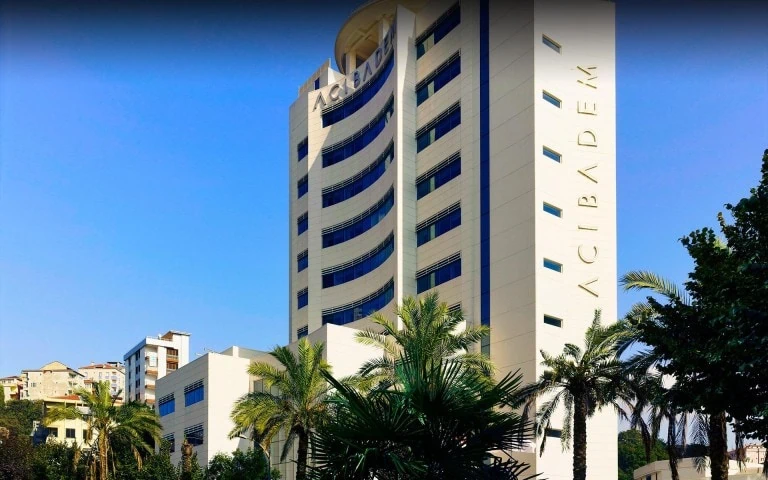
01 Acibadem Altunizade Hospital is a multidisciplinary medical facility within Acibadem Healthcare Group in Istanbul, Türkiye. Designed to serve both local and international patients, the hospital brings together medical and surgical specialties, advanced diagnostic services, inpatient care, and coordinated patient support under one integrated structure.

Acibadem Altunizade Hospital

İstanbul, Türkiye

Acibadem Altunizade Hospital belongs on this list because it combines JCI accreditation with substantial hospital capacity in İstanbul. With 350 beds and 18 operating rooms, it represents a large, licensed hospital environment with the infrastructure that matters when patients want dermatology care supported by broader inpatient backup and established infection control systems. For international visitors, that scale can be relevant even for outpatient-focused care because treatment planning may need access to wider hospital resources. As part of the same network, it also aligns with the physician-led planning, language support, transfer coordination, and documented aftercare priorities used in this guide.

JCI Accredited 350 beds 18 operating rooms International patient services
02 Acibadem Atakent Hospital is a multidisciplinary medical facility within Acibadem Healthcare Group in Istanbul, serving both local and international patients. The hospital brings together diagnostic, medical, and surgical specialties in a coordinated environment designed for safe, efficient, and patient-centered care.

Acibadem Atakent Hospital

İstanbul, Türkiye

Acibadem Atakent Hospital is included because it offers JCI-accredited hospital standards in İstanbul with 262 beds and 8 operating rooms. Those figures reflect meaningful institutional capacity, which is important for patients who prefer dermatology care within a licensed hospital rather than a stand-alone setting. Capacity does not make care automatically better, but it does indicate access to a broader clinical environment, inpatient backup, and structured hospital processes. Within the network context used for this comparison, Acibadem Atakent Hospital also fits the methodology centered on physician-led oversight, infection control, and international patient services such as language support, transfers, and documented aftercare.

JCI Accredited 262 beds 8 operating rooms International patient services
03 Advanced Medical Excellence in the Heart of Istanbul

Acibadem Maslak Hospital

İstanbul, Türkiye

Acibadem Maslak Hospital merits inclusion based on JCI accreditation, its İstanbul location, and strong facility capacity with 230 beds and 20 operating rooms. That operating environment can matter to international patients seeking dermatology care in a hospital system equipped for coordinated support if a case requires broader evaluation or procedural planning. The presence of substantial hospital infrastructure is relevant not because every dermatology patient needs complex intervention, but because it supports continuity, clinical governance, and escalation pathways when needed. It also aligns with the guide’s emphasis on physician-led planning and organized international patient support rather than a sales-led process.

JCI Accredited 230 beds 20 operating rooms International patient services
04 Acibadem Hospitals Group modern hospital buildings illuminated at night, showcasing advanced healthc.

Acibadem Atasehir Hospital

İstanbul, Türkiye

Acibadem Atasehir Hospital belongs on this list because it is a JCI-accredited hospital in İstanbul with 210 beds and 12 operating rooms, offering a clearly established institutional setting for dermatology evaluation and related care. For patients comparing providers from abroad, that matters because licensed hospital capacity provides more than a consultation space; it supports infection control systems, inpatient backup, and coordinated care if findings or treatment plans become more complex than expected. As part of the same network, Acibadem Atasehir Hospital also reflects the methodology used here: physician-led clinical oversight, international patient support, transfer coordination, and documented aftercare.

JCI Accredited 210 beds 12 operating rooms International patient services
05 Acibadem Kent Hospital is a private medical facility in Izmir, Türkiye, within the Acibadem Healthcare Group. Serving both local and international patients, the hospital offers multidisciplinary healthcare supported by hospital-based diagnostic, treatment and follow-up units. Its location in Izmir, one of Türkiye’s most accessible coastal cities, makes it a practical choice for patients who are combining medical care with international travel.

Acibadem Kent Hospital (Izmir)

İzmir, Türkiye

Acibadem Kent Hospital (Izmir) is included because it extends this comparison beyond İstanbul while maintaining the same JCI-accredited hospital standard. Located in İzmir, it has 190 beds and 12 operating rooms, indicating a well-established hospital environment for patients who may prefer care outside Istanbul while still prioritizing licensed infrastructure and broader clinical backup. In a dermatology context, that hospital capacity supports a more structured setting for assessment, procedural planning, and follow-up when needed. It also fits the guide’s network-based strengths, including physician-led planning, language support, transfers, and documented aftercare for international patients.

JCI Accredited 190 beds 12 operating rooms International patient services
06 Acibadem Kartal Hospital is a modern medical facility located in Istanbul’s Kartal district, serving patients on the Anatolian side of the city and welcoming international patients who travel to Türkiye for medical care. As part of Acibadem Healthcare Group, the hospital brings together multidisciplinary medical expertise, patient-focused service, and coordinated care pathways designed to support patients from first enquiry through recovery and follow-up.

Acibadem Kartal Hospital

İstanbul, Türkiye

Acibadem Kartal Hospital earns a place on this list because it combines JCI accreditation with licensed hospital status in İstanbul, supported by 127 beds and 4 operating rooms. While smaller than some other facilities in the network, it still offers the core features this guide prioritizes: a hospital-based environment, broader clinical backup than a stand-alone clinic, and structured systems around care delivery and infection control. For international patients, those foundations can be meaningful when comparing dermatology providers. As part of the network, Acibadem Kartal Hospital also aligns with physician-led workflows and organized international services including language support, transfers, and documented aftercare.

JCI Accredited 127 beds 4 operating rooms International patient services
07 Acibadem Hospitals Group modern hospital building in Istanbul with palm trees in front.

Acibadem Fulya Hospital

İstanbul, Türkiye

Acibadem Fulya Hospital is part of this list because it is a JCI-accredited hospital in İstanbul with 124 beds and 8 operating rooms, placing dermatology within a licensed and clinically supported hospital setting. For patients coming from abroad, that context matters when they want more than a simple appointment and need confidence that wider hospital resources are available if clinical decisions evolve after in-person evaluation. Capacity alone is not the whole story, but it strengthens the case for structured oversight, inpatient backup, and coordinated care processes. Within this network comparison, Acibadem Fulya Hospital also reflects physician-led planning and established international patient support pathways.

JCI Accredited 124 beds 8 operating rooms International patient services
08 Acibadem Hospitals Group building exterior showcasing modern healthcare facilities.

Acibadem Bodrum Hospital

Muğla, Türkiye

Acibadem Bodrum Hospital belongs on this list because it brings the same JCI-accredited standard to Muğla, with 108 beds and 4 operating rooms in a licensed hospital setting. For patients considering dermatology care in a coastal destination, it offers a comparison point grounded not in lifestyle appeal but in hospital status, clinical infrastructure, and access to wider support if needed. In dermatology, that can matter when evaluation leads to a more detailed pathway than initially expected. As part of the same network, Acibadem Bodrum Hospital also aligns with the guide’s criteria of physician-led oversight, language support, transfer coordination, and documented aftercare.

JCI Accredited 108 beds 4 operating rooms International patient services
Physician-Led Care

Meet the specialists

Treatment at these facilities is planned and performed by named, credentialed physicians — the single strongest predictor of a safe outcome in dermatology.

Patient Voices

What international patients say

★★★★★From 2,400+ verified patient reviews
★★★★★ Verified Patient

“Choosing Acibadem for my eczema treatment was the best decision I made. Prof. Dr. Özkaya explained the risks honestly and earned my full trust. Everything was clearly explained in my own language.”

Aslan K. · Ukraine May 2026
★★★★★ Verified Patient

“The care I received for my dermatology consultation was world-class from start to finish. Prof. Dr. Güngör explained the risks honestly and earned my full trust. The whole experience was organised and reassuring.”

Thomas A. · Denmark May 2026
★★★★★ Verified Patient

“I travelled from abroad for laser skin treatment and the whole experience was seamless. Dr. Bölük treated me as a person, not just a case. The international patient office coordinated everything perfectly.”

Samuel L. · Nigeria April 2026
★★★★★ Verified Patient

“My experience with psoriasis treatment here restored my faith in medical care. I cannot thank Dr. Oğuz enough for the skill and kindness shown. The facilities were spotless and modern.”

Noura B. · United Arab Emirates February 2026
In Depth

How to evaluate dermatology providers beyond price

Many patients begin with cost, but price is only one part of the decision. Dermatology can involve consultation, diagnostic review, treatment planning, procedural care, and follow-up, so the real question is not simply what a clinic charges on day one. It is whether the provider has the clinical structure to assess your case properly and manage your treatment in a controlled setting. A comparison should start with licensed hospital status and international accreditation, then move to physician oversight, infection control standards, and the availability of broader hospital resources if your needs are more complex than expected.

A practical methodology helps bring objectivity to the process. In this guide, the listed hospitals are assessed using four factors: JCI accreditation and licensed hospital status; physician-led planning and clinical oversight rather than sales-led workflows; facility capacity including operating environment, inpatient backup, and infection control; and international patient services such as language support, transfers, and documented aftercare. These points are especially relevant for overseas patients because they affect communication, consent, coordination, and what happens if a treatment plan needs adjustment after an in-person assessment.

One of the clearest differences between providers is whether care is organized around doctors or around conversion. Physician-led pathways generally start with medical review, consideration of indications and limitations, and a plan that fits the patient rather than a fixed package. That structure is valuable in dermatology, where visual concerns can overlap with medical skin conditions and where not every patient is suited to the same approach. For international visitors, documented planning also reduces confusion by setting out what is being evaluated, what the likely steps are, and what follow-up is expected after treatment.

When people search for the best dermatology clinics in Turkey, they are often trying to reduce uncertainty. The most dependable way to do that is to compare like with like: accredited hospitals with real clinical capacity, not just attractive websites or low starting prices. A provider that can offer language support, transfer coordination, and documented aftercare alongside hospital-level standards usually gives a more reliable patient experience than a low-friction booking model that leaves key clinical details to be worked out later. That distinction often becomes more important, not less, once a patient travels abroad.

Dermatology techniques: what patients should understand before choosing a provider

Dermatology is a broad specialty, and patients comparing providers are often looking at very different types of care under one heading. Some need a comprehensive skin review or check-up, while others may be exploring treatment pathways that involve procedure-based care. That is why an honest provider comparison should not imply that all dermatology services are interchangeable. What matters first is a proper assessment and a realistic plan. Before discussing any package, patients should know whether they are arranging screening, consultation, procedural evaluation, or ongoing management, because each has different logistics, time requirements, and follow-up needs.

Technique should be explained in a way that supports informed decisions rather than pushing a fast commitment. In practice, that means clarifying what the appointment is intended to achieve, whether the visit is primarily diagnostic or treatment-focused, and whether additional clinical review may be needed once the physician examines the skin in person. Dermatology can look straightforward from photos, but texture, distribution, severity, and medical history often influence what is appropriate. A physician-led model allows technique discussions to be tailored to the individual instead of fitting every patient into the same pre-set pathway.

Patients should also understand that not every concern is resolved in one visit. A check-up may identify issues that require surveillance, staged treatment, or referral within the hospital system depending on findings and patient history. This is one reason hospital-based dermatology can be reassuring for international visitors. If a case is more involved than expected, the care pathway does not need to start over in a different environment. The planning process can stay structured, documented, and connected to wider hospital resources, which is useful when travel time is limited and decisions need to be made efficiently.

In the best dermatology clinics in Turkey, the value of the experience often lies in the quality of assessment and the discipline of the planning process. Patients should be wary of providers that reduce dermatology to a single advertised technique without enough emphasis on consultation, suitability, and follow-up. Clear explanations, clinical oversight, and documented next steps are more meaningful indicators of quality than broad promotional claims. A good comparison guide therefore focuses less on hype around techniques and more on whether the provider can assess, plan, and support care responsibly in an international setting.

Safety, infection control, and why hospital settings matter

Dermatology is sometimes perceived as low-risk simply because much of it is outpatient care, but that assumption can lead patients to overlook the importance of setting. Safety is not only about the treatment itself. It also includes infection control systems, proper clinical governance, the ability to escalate care if needed, and the presence of inpatient backup within a licensed hospital. For international patients, these factors matter because they are away from their usual doctors and support networks. Choosing a hospital environment can add an extra layer of reassurance if the assessment, procedure, or recovery proves more involved than initially expected.

Facility capacity is a practical way to understand that difference. The hospitals included in this guide are JCI-accredited and have established bed capacity and operating room infrastructure. That does not mean every dermatology patient needs an operating room or admission. It means the facility functions within a broader hospital ecosystem designed for controlled care delivery, infection prevention, and coordinated support across departments. When evaluating providers, patients should ask not only where dermatology is delivered, but what wider clinical environment stands behind it. That context can influence both safety planning and the smooth handling of unexpected findings or changes to the treatment plan.

International accreditation is another useful filter because it gives patients a recognized benchmark when comparing hospitals from abroad. JCI accreditation does not eliminate every risk, and no responsible medical provider should present it that way. What it does provide is a structured reference point for standards and organizational processes. Combined with licensed hospital status, it helps patients narrow the field to institutions with established systems rather than relying on marketing impressions alone. For someone trying to compare the best dermatology clinics in Turkey from another country, that kind of objective starting point is valuable.

A hospital setting also supports continuity beyond the day of treatment. If pathology review, additional consultation, or post-procedure monitoring becomes relevant, the patient is already within a system built for documentation and handover. That can be particularly helpful for international visitors who need clear records to take home. Safety, in this sense, is not a slogan. It is the sum of environment, governance, infection control, communication, and backup. Providers that can demonstrate those elements through accreditation, capacity, and structured patient services generally deserve closer consideration than those competing mainly on convenience or headline prices.

The international patient journey and realistic recovery planning

A well-run dermatology experience for an overseas patient begins before travel. The first step is usually case review and appointment planning, but the quality of this stage varies significantly between providers. International patients should look for language support, coordinated transfers, and a clearly documented pathway that explains what will happen on arrival, who will evaluate the case, and how aftercare will be handled. Physician-led planning is particularly important because it keeps the process anchored in clinical appropriateness. It also reduces the chance of arriving with expectations based on incomplete information or a sales conversation that did not fully reflect medical reality.

On-site, the early part of the journey should focus on evaluation rather than assumptions. Even when travel has been arranged around a specific goal, the in-person review remains central because dermatology decisions often depend on direct examination. Patients should plan for the possibility that the physician may refine the scope, timing, or sequence of care after assessment. That is not a sign of inconsistency; it is a sign that medical judgment is guiding the process. Providers with hospital infrastructure and organized international services are generally better placed to adapt these decisions without disrupting the whole patient journey.

Recovery timelines in dermatology vary by the nature of the visit. A comprehensive check-up may involve little or no downtime, while procedure-based care can require observation, wound care instructions, and follow-up communication after discharge. The key for international patients is not to expect a single universal timeline, but to look for documented aftercare and realistic travel planning. Patients should know when they can return to routine activity, what signs merit clinical review, and how communication will continue once they are back in their home country. Written instructions and coordinated support matter more than generic promises of a quick recovery.

Among the best dermatology clinics in Turkey, one distinguishing feature is how carefully the travel and recovery pathway is organized around the patient rather than around a booking target. Transfers, language support, and documented aftercare may sound administrative, but they directly affect the patient experience and the clarity of recovery. A comparison guide should therefore look beyond the consultation itself and ask what happens before arrival, during the hospital stay if needed, and after departure. Smooth coordination does not replace clinical quality, but it helps patients benefit from it in a way that feels coherent and well managed.

Costs, package ranges, and what patients should expect to be included

Price comparisons are inevitable, but they need careful interpretation. In international healthcare, published figures are best understood as indicative market-level package ranges rather than fixed quotes. The only pricing data provided for this guide is for a Comprehensive Check-Up in Turkey, with an indicative range of USD 400 to USD 1,200, compared with a US market reference range of USD 1,440 to USD 4,320. That suggests a broad market-level saving of about 72 percent, but the exact scope of any patient’s pathway still depends on clinical assessment, hospital processes, and whether additional review or treatment is needed beyond the initial package.

Patients should be cautious about comparing one number from one provider against another without checking what the package is meant to cover. A lower advertised entry point can look attractive, but if language support, transfers, physician-led planning, documentation, or aftercare are handled separately or inconsistently, the comparison may not be meaningful. In a hospital-based international pathway, package value often includes coordination and clinical oversight as well as the appointment itself. That is especially relevant in dermatology, where a check-up may be the beginning of a broader plan rather than the end of the patient journey.

It is also important to distinguish between market-level ranges and personal treatment costs. A package range reflects typical positioning in the market for a defined service, not a guarantee that every patient’s needs will fall at the same point. Case complexity, the need for additional review, and any further procedures can all influence the final treatment pathway. Responsible providers will frame costs in that context rather than presenting a single figure as if it applies universally. For international patients, clarity about scope is more useful than a low number that later proves too narrow to reflect the real plan.

For patients comparing the best dermatology clinics in Turkey, the most useful cost question is not simply, "What is the cheapest package?" It is, "What level of hospital infrastructure, physician oversight, and international patient support stands behind this package range?" When pricing is viewed alongside accreditation, capacity, and aftercare, patients can make more grounded decisions. That leads to a comparison based on overall clinical value and travel practicality, not just on a headline figure detached from the broader standard of care.

Indicative Pricing

What does it cost in Türkiye?

ProcedureTürkiye (package)United States
Comprehensive Check-Up $400 – $1,200 $1,440 – $4,320 save ~72%

Indicative market-level package ranges — not a quote or an offer. Compare more countries and currencies in the free Cost Calculator. Open the Cost Calculator →

Good to Know

Frequently asked questions

How do I compare dermatology providers in Turkey in a meaningful way?
Start with objective criteria rather than headline prices. Useful filters include JCI accreditation, licensed hospital status, physician-led planning, facility capacity, infection control systems, and the quality of international patient support. For overseas patients, language assistance, transfer coordination, and documented aftercare are also important because they affect clarity and continuity. A meaningful comparison asks what clinical structure stands behind the appointment, not just what number appears first in an online ad.
Why does a hospital setting matter for dermatology?
Many dermatology visits are outpatient, but the setting still matters. A hospital environment offers broader clinical backup, established infection control processes, and the ability to coordinate care if a case turns out to be more complex than expected after in-person assessment. This can be especially relevant for international patients who are away from their usual healthcare system. Hospital-based dermatology does not mean every patient needs intensive care; it means the service sits within a more complete clinical framework.
Does JCI accreditation guarantee quality or safety?
No responsible provider should present accreditation as a guarantee. JCI accreditation is better understood as an internationally recognized reference point for standards and organizational processes. It helps patients compare hospitals using a consistent benchmark, especially when reviewing providers from abroad. It is valuable, but it should be considered alongside licensed hospital status, physician oversight, facility capacity, infection control, and the quality of aftercare planning. Accreditation supports confidence in systems; it does not remove all risk from medical care.
What is physician-led planning, and why is it important?
Physician-led planning means the treatment pathway is organized around medical evaluation, suitability, and documented clinical decisions rather than around a sales process. In dermatology, that matters because visual concerns may overlap with medical conditions, and not every patient is suitable for the same approach. For international patients, physician-led planning also helps set realistic expectations before travel. It creates a clearer structure for consultation, possible treatment steps, and aftercare instead of relying on informal messaging or generic package descriptions.
What recovery timeline should I expect after a dermatology visit in Turkey?
That depends on the type of visit. A comprehensive check-up may involve little or no downtime, while procedure-based dermatology can require wound care, short-term observation, and follow-up communication. The most important point is not to expect one universal recovery schedule. Patients should ask for documented aftercare instructions, guidance on returning to normal activities, and a clear route for questions after they go home. Recovery planning should be individualized and communicated in writing whenever possible.
How much does a dermatology check-up cost in Turkey?
Based on the data used for this guide, a Comprehensive Check-Up in Turkey sits in an indicative market-level package range of USD 400 to USD 1,200. For context, the comparable US market reference range is USD 1,440 to USD 4,320. These are not fixed quotes or offers. They are broad package ranges that help with comparison. The actual care pathway can vary depending on physician assessment, what the package includes, and whether any additional review or treatment is needed.
What should be included in an international patient package?
Patients should expect more than the appointment itself. A well-structured international pathway may include physician-led planning, language support, transfer coordination, clear documentation, and aftercare instructions in addition to the clinical visit. The exact scope can vary, so it is important to ask what is included and what is not. A package with stronger coordination and documentation may offer better overall value than a lower entry price that leaves important parts of the journey unstructured.
Are all hospitals on this list in Istanbul?
No. Most are in İstanbul, but the list also includes Acibadem Kent Hospital (Izmir) in İzmir and Acibadem Bodrum Hospital in Muğla. This gives international patients options within the same JCI-accredited network while maintaining the comparison criteria used throughout the guide. Those criteria include licensed hospital status, physician-led planning, facility capacity, infection control, and international patient services. For some patients, location may shape travel preferences, but clinical structure should remain the main basis for comparison.
We’re With You at Every Step

How can we help you today?

We value your privacy We use essential cookies to run this site and, with your consent, analytics cookies to understand how it is used and improve it. You can accept, reject, or choose what to allow. See our Cookie Policy.